Painting with Light

paintbox.jpg

The Quantel Paintbox was one of the first computer systems designed to create and manipulate digital graphics in a manner that was much closer to painting and drawing than computer programming. The technology was launched in 1981, and was essentially Photoshop ten years before Adobe Inc. announced its own image-editing system. Rather like the Fairlight CMI, being a pioneer had its disadvantages for Quantel, one of them being the enormous expense of the Paintbox system. Photoshop was never really cheap if you were buying it new but it was still only a software package; with the Fairlight and the Paintbox you also had to buy the computer and all the peripherals that ran the software. Consequently, Paintbox systems were mostly used by TV studios for on-screen graphics during throughout the 1980s, although Quantel also created a parallel system for print graphics which was used for image processing and photo collaging until Macintosh and Adobe started to dominate design studios.

pwl1.jpg

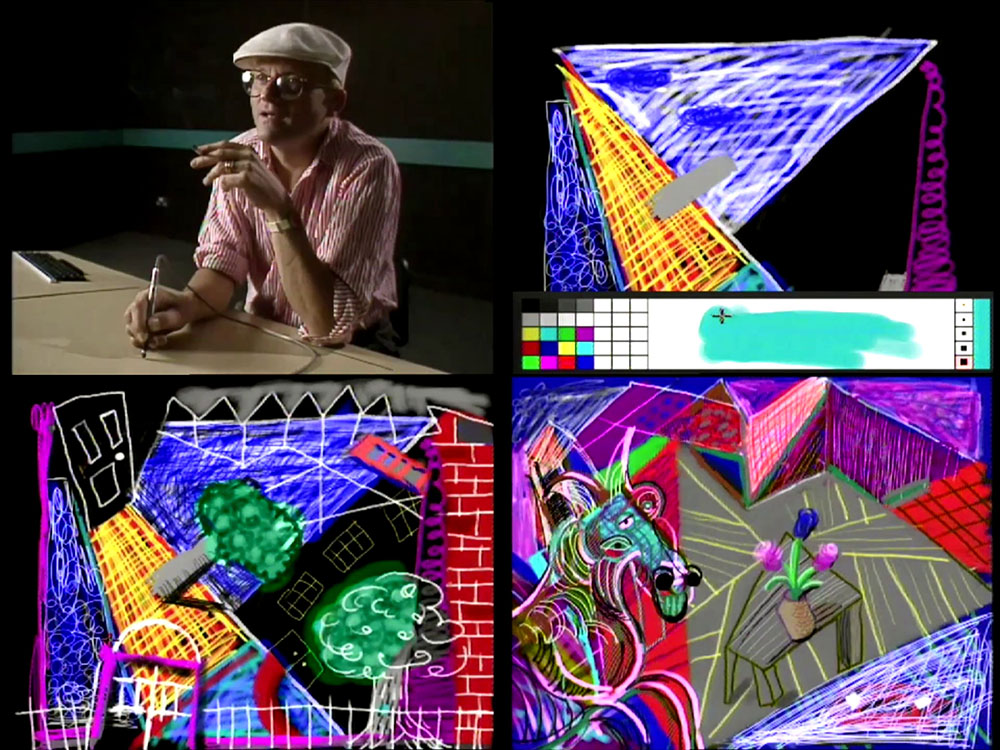
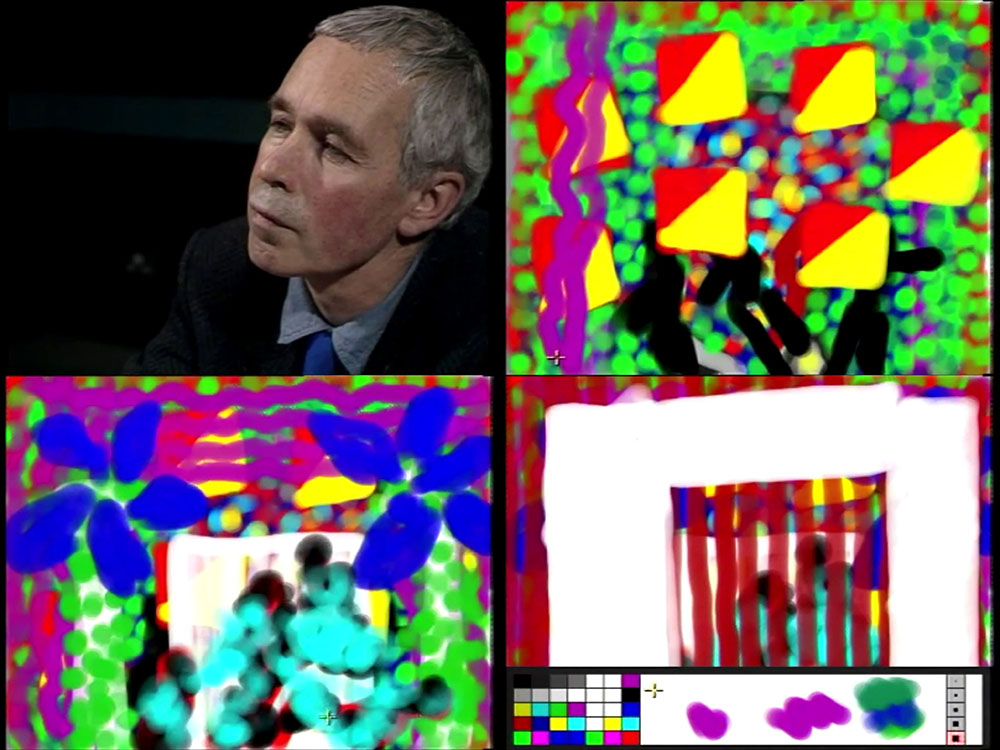
David Hockney.

Painting with Light was a BBC series intended to explore Quantel’s technology by inviting six artists to spend a day playing with the Paintbox. It was the recent news about David Hockney that reminded me of this series. I definitely remember watching the first episode when it was broadcast in 1987 but couldn’t recall anything of the rest, which suggests I may not have seen them all. Each episode is narrated by Leslie Megahey who also receives a credit as executive producer. Nearly everything that Megahey was involved with at the BBC had some connection with art or painting which suggests the series may have been his idea.

pwl2.jpg

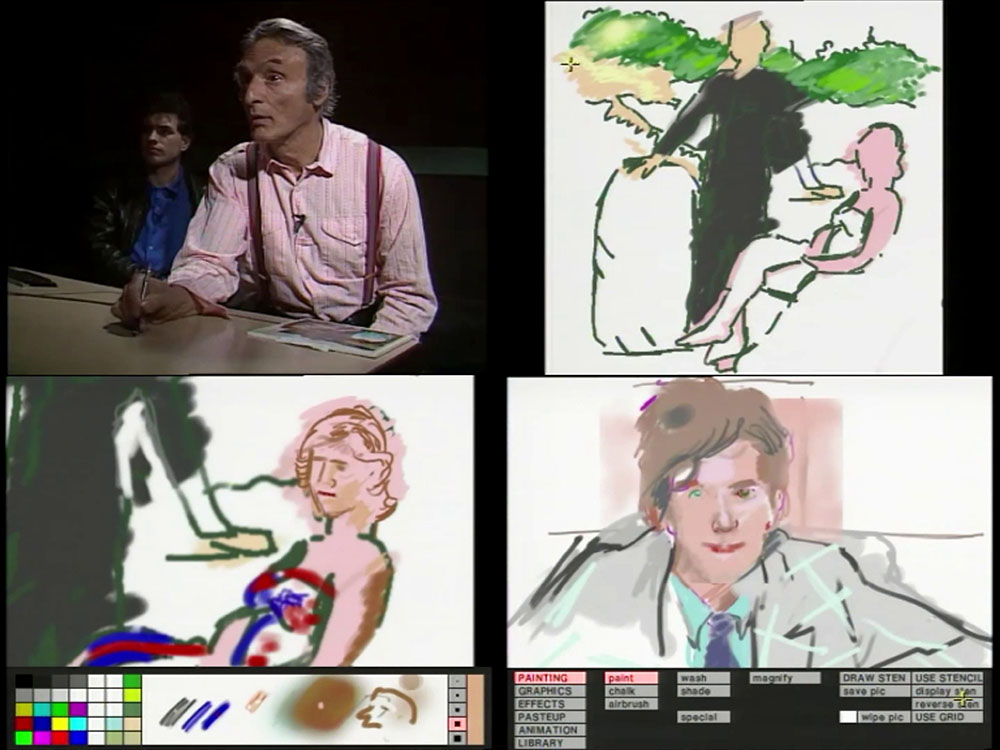
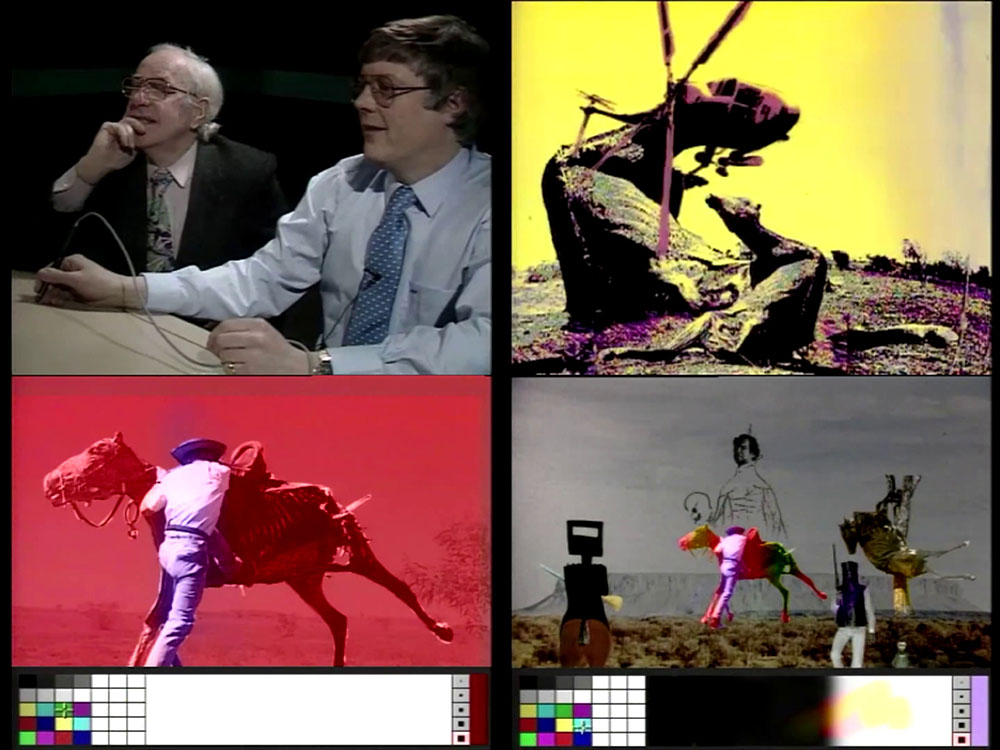
Larry Rivers.

It’s been fascinating watching these programmes after 40 years of technological development. In 1987 I was working with pens and sheets of paper most of the time, and didn’t give much thought to the idea of creating computer art since all the most interesting gear was prohibitively expensive. How things change… I now find myself watching the reactions of these artists as they struggle with a rudimentary version of the kind of technology I use every day. I also sympathise with their frustrations. The Paintbox was a magical device for the time but the brush settings are very limited when compared to the endless variety that Photoshop offers. The drawing table and stylus of the Paintbox are also big and bulky in comparison to one of today’s small and very precise Wacom tablets.

pwl3.jpg

Howard Hodgkin.

David Hockney was an obvious choice to open the series when he was often described as “Britain’s favourite artist”. Popularity aside, he was a good choice for his restless curiosity and interest in all forms of pictorial representation. That curiosity prompted his famous and controversial theories about the use of optical devices in the creation of paintings from the Renaissance on; it also kept him experimenting with different media, leading eventually to the iPad paintings he was making in the last years of his life. Of the other contributors we have an American Pop artist (Larry Rivers), a British abstract painter (Howard Hodgkin), an Australian painter (Sidney Nolan), an American painter (Jennifer Bartlett), and a British Pop artist (Richard Hamilton).

pwl4.jpg

Sidney Nolan.

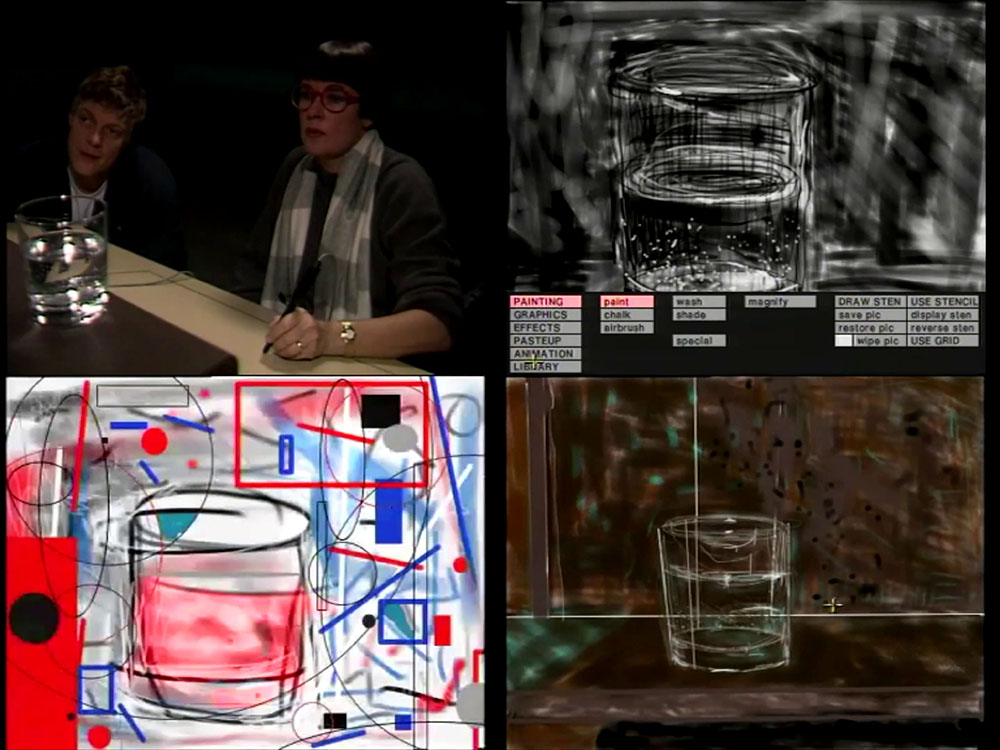
Hockney and Bartlett both use the technology for painterly improvisation, with Hockney drawing continually over the same piece, while Bartlett draws different versions of a glass of water. The latter sounds boring but her curiosity about the new medium makes her the only artist of the six to try out all the available drawing tools. Rivers, Nolan and Hamilton all begin with scanned photographs which they manipulate in various ways, Rivers by painting over his, Nolan (via a Quantel assistant) creating photographic collages that are forerunners of the familar Photoshop style.

pwl5.jpg

Jennifer Bartlett.

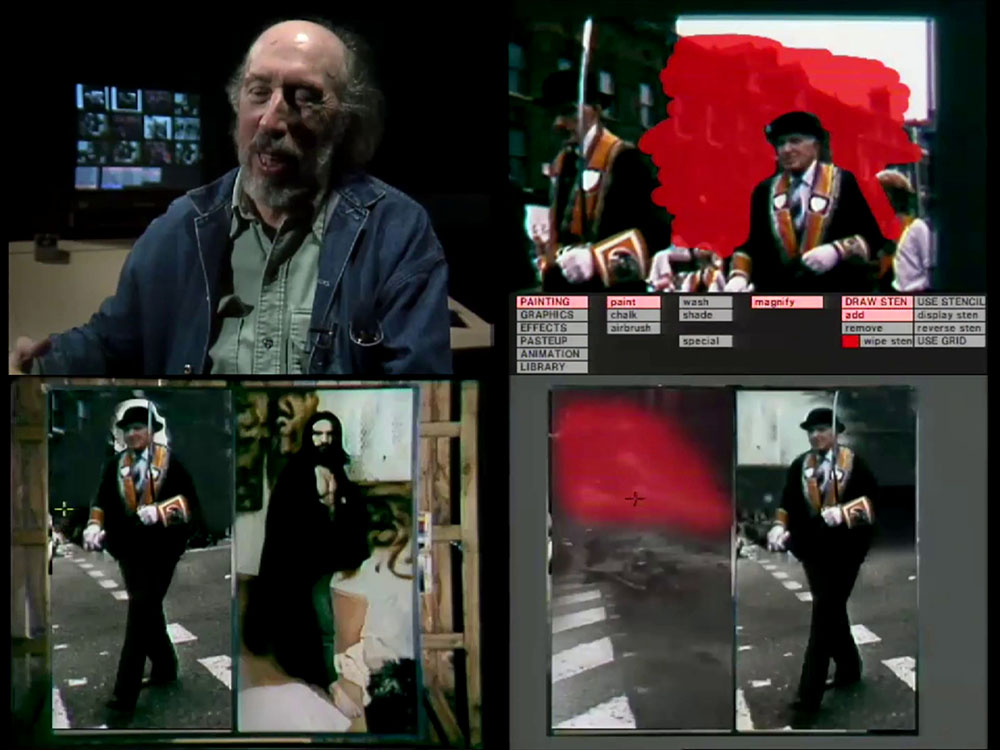
Hamilton does something similar but also takes over from the Quantel assistant in order to paint onto the image in a much more careful manner than the rest. Of the six artists he’s the only one who attempts to create something that might be exported as a properly finished piece. He also notices how the cut-and-paste concept which was becoming widespread in word processing was now applicable to digital graphics. As for Hodgkin, I’ve always regarded him as a limited and not very interesting abstractionist, so it was no surprise to see him creating a pixel imitation of the same lines and blobs he was always doing in his paintings. Hodgkin’s film is the least interesting one to watch but his encounter with the technology is just as revealing about his character as an artist as the other films are for the individuals involved.

pwl6.jpg

Richard Hamilton.

• Further reading: The Quantel Paintbox

Weekend links 834

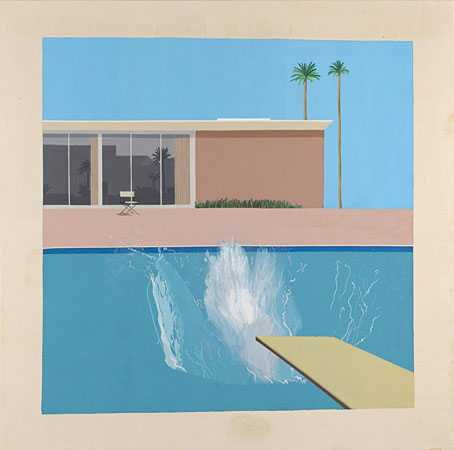
hockney.jpg

A Bigger Splash (1967) by David Hockney.

• I was interviewed this week at Retrofuturista, the first interview I’ve done in a while, and more wide-ranging than they sometimes are. Subjects covered include illustration, design, weird fiction, the Reverbstorm comics, the Bumper Book of Magic, underground culture, and the deficiencies of AI art. Also my ongoing, mostly unseen, Axiom project.

• At Nautilus: Kristen French conducts a lengthy and fascinating interview with Andrew Gallimore and Donald Hoffman, a pair of reseachers seeking to upend theoretical physics by making consciousness the foundation of reality, rather than its inconvenient and inexplicable by-product.

• “My audience is film-smart, and I always say, ‘If they don’t get something, then do your homework.’ Sometimes you have homework when you come to see my movies to figure out what the references are.” John Waters talking to Marya E. Gates at RogerEbert.com.

• The Morgan Library & Museum in NYC launches an exhibition later this month: Tarot! Renaissance Symbols, Modern Visions. At Colossal there’s a look at some of the 20th-century art, while Smithsonian Magazine has a selection of older card designs.

Inferno by Boards Of Canada is “probably as close to a political statement as these mystery men will ever approach.” Thus Simon Reynolds looking back over the history of the group following the release of their marvellous new album.

• Among the new titles at Standard Ebooks, the home of free, high-quality, public-domain texts: The Necromancers by Robert Hugh Benson.

• New music: Demand To Be Taken To Heaven Alive by Horse Lords; A Wave Of Alarm by Comdex; Teleportations by Danalogue.

Dennis Cooper’s favourite fiction, poetry, non-fiction, film, art, and internet of 2026 so far. Thanks again for the link here!

• At Public Domain Review: Venetian Bridge Brawls in 17th and 18th Century Art.

• At Door of Perception: Sibylle Ruppert—The Inward Gaze of the Flesh.

• RIP David Hockney and James Blood Ulmer.

• The Strange World of…Melinda Gebbie.

Splash One (Now I’m Home) (1966) by 13th Floor Elevators | Splash (1968) by Miles Davis | Splash (1974) by Can

A Q&A with artist Mel Odom

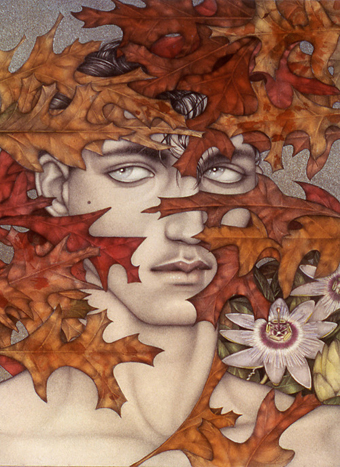
odom1.jpg

First Eyes (1982).

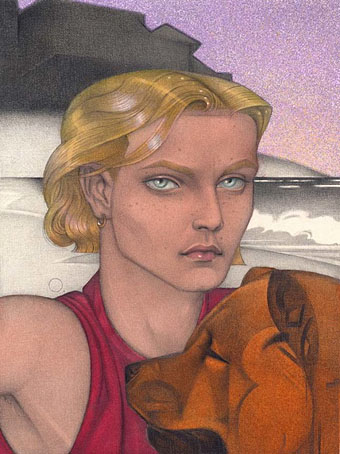
I’ve emphasised the artist label to distinguish this Mel Odom from the very prolific writer of the same name. The artist received a fleeting mention here in the Gay artists archive but for many years he’s been a highly regarded book and magazine illustrator, with a Gold Medal from the American Society of Illustrators among his accolades. (By coincidence, one of his covers was for an Ellen Datlow horror collection, and I happen to be illustrating a new Ellen Datlow collection of horror stories this week.) More recently Odom has gained a very different audience for his doll designs which are mentioned in passing below. I’m grateful again to John Wisniewski for offering me this piece. Thanks to John and to Mel, more of whose gorgeous art can be seen at his website.

*

John Wisniewski: When did you begin drawing and painting?

Mel Odom: I’ve been drawing since I was about 4 years old and painting since my early teens. I have scribbles in an early picture book of mine that I’m sure were my first attempts at drawing.

JW: Whom are some of your favorite artists?

MO: I like so many different artists. The Pre-Raphelites were a huge influence on me as well as artists like Edward Hopper and Georgia O’Keefe. Aubrey Beardsley has been an early and constant favorite of mine. Representational art moves me more than the abstract for the most part. Disney animation also shaped what I still think of as being beautiful.

odom2.jpg

JW: Have you had any exhibitions? If so, what was the reaction to your work?

MO: I’ve really never had a one-man exhibition. When I was illustrating I was too busy to bother and illustration was not considered gallery worthy. Then when I quit illustrating to create Gene [Marshall] there was simply no time to even consider it. I’ve been in tons of group shows where the reaction has been everything from adoring to dismissive. I’ve been working on a series of oil paintings towards a show.

JW: Your work is easily recognizable to those in the art world, Mel. Did you expect this to happen, when you began?

MO: When I started out I knew my drawings didn’t look like anyone else’s, but it wasn’t a conscious ploy for recognition. I devised my style by the process of elimination. I knew what I didn’t want them to look like. I just drew with a vision that made me need to see what the drawing looked like completed. My drawings were always based on a very personal sense of beauty.

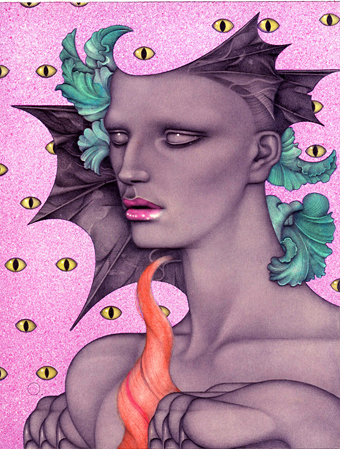
odom3.jpg

Hello, I Lied (1997).

Continue reading “A Q&A with artist Mel Odom”

Weekend links 188

blackwell.jpg

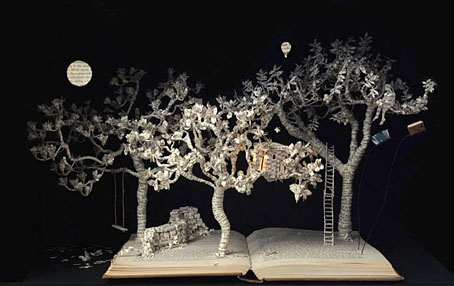
The Baron in the Trees (2011), a book-cut sculpture by Su Blackwell.

Kurt Andersen at Vanity Fair examines the latest claims that Vermeer used a combination of lenses and mirrors to aid the creation of his remarkable paintings. David Hockney caused a considerable fuss in 2006 when he made similar assertions. Andersen recounts how Tim Jenison (who isn’t an artist) decided to test the hypothesis by building a replica of the room from Vermeer’s The Music Lesson (1662–65) which he then painted with the assistance of a lens-and-mirror apparatus. I’m agnostic on this issue, and don’t regard it as a devaluing of the work of Vermeer (or any other artist) if some special apparatus was used to help create the paintings; artists for centuries have been using whatever technology was available.

One point which isn’t mentioned in the article: lens optics were being developed to a high standard in the Netherlands during Vermeer’s time. One of the developers of the microscope, Antonie van Leeuwenhoek, was a contemporary of Vermeer’s in Delft, and is even alleged to be portrayed in some of the artist’s paintings.

• Before Alfred Hitchcock’s film and Daphne Du Maurier’s short story, The Birds was an “eerie yet satirical and rather metaphysical novel” by Frank Baker, inspired in part by Arthur Machen. Michael Dirda reviews a new edition. Related: “The Day of the Claw: A Synoptic Account of Alfred Hitchcock’s The Birds“, an essay by Ken Mogg examining avian menace through the ages.

Kevin Brownlow and Carl Davis on how they brought Abel Gance’s 270-minute silent masterwork, Napoleon (1927), back to the screen.

Finally, he was asked about the growth of surveillance and the militarization of the police.

“The phenomenon itself shouldn’t be surprising—the scale was surprising—but the phenomenon itself is as American as apple pie,” Chomsky said. “You can be confident that any system of power is going to use technology against its enemy: the population. Power systems seek short-term domination and control, not security.”

Matthew Robare on “American Anarchist” Noam Chomsky in (of all places) The American Conservative.

• “Why the hell wouldn’t I?” Evan J. Peterson on reading/performing his poetry in public, and his new book, The Midnight Channel.

The adversaria of Google Books: captured mark of the hand and digitization as rephotography.

• No surprise that the rabies-haunted town of Scarfolk is soon to have its history fixed in print.

Mazzy Star made a rare TV appearance last week, playing a song from their recent album.

The Sorcerer Blog is obsessively devoted to William Friedkin’s cult film.

• Unexpected Artefacts: Pushing the envelope with Bristol’s Emptyset.

• Mix of the week: Secret Thirteen Mix 097 by Lee Gamble.

• At PingMag: Ryokudo—Tokyo’s Green Roads.

Norman Records’ Top 50 albums of 2013.

Birds Of Fire (1973) by Mahavishnu Orchestra | Attack Of The Killer Birds (2006) by Émilie Simon | One Thousand Birds (2012) by Six Organs of Admittance

Patrick Procktor, Art and Life

procktor.jpg

Nasturtiums, Wusih (1980) by Patrick Procktor.

Ian Massey was in touch last week to alert me to Patrick Procktor, Art and Life, an exhibition of Patrick Procktor’s art he’s curated at the Huddersfield Art Gallery in Yorkshire:

Patrick Procktor was part of a bohemian circle in 1960s and 1970s London that also included his great friends the artist David Hockney and the fashion designer Ossie Clark.

The focus of this exhibition is on the artist’s paintings on canvas and works on paper, and includes portraits of quintessential Sixties figures including Derek Jarman and Jimi Hendrix, alongside topographical pictures painted in countries such as India, Italy, Egypt and China.

I really like that nasturtiums print. For those who can’t get to Huddersfield there’s Ian’s monograph of the artist, also entitled Patrick Procktor, Art and Life, which was published by Unicorn Press in 2010. The exhibition runs to 10th November, 2012.

procktor2.jpg

Da Miou Mountains, Kweilin, aquatint (1980).

Update: Ian says although the nasturtiums are on the gallery website they aren’t in the show because the print was sold just beforehand. He’s sent this print from the same series. The exhibition was reviewed by Charles Darwent in The Independent on Sunday.

Previously on { feuilleton }
Gervase and Patrick