Weekend links 318

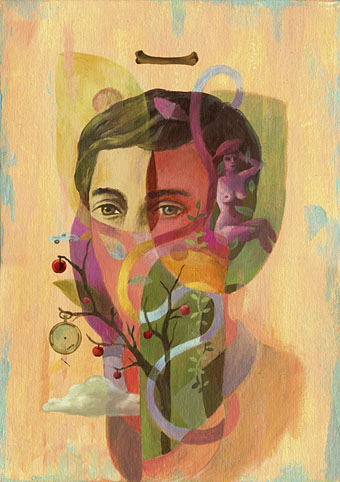
wellinger.jpg

The Meaning of Life by Alice Wellinger.

• A Kickstarter for A Hidden Landscape Once A Week edited by Mark Sinker: “How UK music-writing became a space for unruly curiosity, in the words of those who made it happen”.

• RIP Steven Young, one of the musicians in a cult group of mine, Colourbox, and the “S” in M|A|R|R|S, creators of Pump Up The Volume in 1987.

• At Greydogtales: The Pale Brown Thing & A Dose of De Quincy—Fritz Leiber, Dario Argento, Megapolisomancy, and The Three Mothers.

Pye Corner Audio lists some influences. Zones by Head Technician, another Martin Jenkins project, has just been reissued on vinyl.

• Mixes of the week: The Middle Eastern & African playlist For July by John Doran, and a Pye Corner Audio mix for 20jazzfunkgreats.

Evan Kindley on how the Proust Questionnaire went from literary curio to prestige personality quiz.

• To Surprise a Voice: Max Nelson on the subtitling and translation of foreign-language films.

• How the ’70s dethroned the ’60s as popular music’s Golden Age: Judy Berman investigates.

• “It puts a spell on people.” Ryan Gilbey on Stanley Kubrick’s Barry Lyndon.

• “Dennis Cooper fears censorship as Google erases blog without warning.”

Charlie Kaufman on freedom, the future, and the failure of Anomalisa.

Danny Heitman on why Nabokov’s Speak, Memory still speaks to us.

Daphne Oram‘s radical turntable experiments finally come to life.

Adam Kirsch on Walter Benjamin’s genius for surreal visions.

Shotgun (1983) by Colourbox | Baby I Love You So (1986) by Colourbox | Looks Like We’re Shy One Horse/Shoot Out (1986) by Colourbox

Weekend links 315

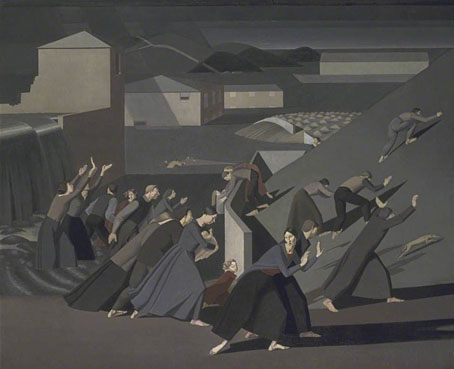
knights.jpg

The Deluge (1920) by Winifred Knights.

Dennis Cooper‘s favourite fiction, poetry, nonfiction, film, music, art & internet of 2016 so far. (Thanks again for the nod to this blog!)

• At Literary Hub: Jonathan Russell Clark on Jorge Luis Borges, and Jon Sealy on why indie presses [in the US] are opening bookstores.

• “It’s not just about the music.” A conversation on the occult practices in the arts between poet Janaka Stucky and Peter Bebergal.

• Daisy Woodward talks to Andreas Horvath about Helmut Berger, Actor, a documentary about Visconti’s muse and lover.

• More Fritz Leiber: Brian J. Showers on his decision to republish Leiber’s horror novel, The Pale Brown Thing.

• Mixes of the week: Sextape 4 by Drixxxe, and Radio Oscillations #96 (Richard Pinhas/Heldon) by Iron Blu.

• The 5th Young One: Pay No Attention to the Girl Behind the Sofa; John Reppion on a television mystery.

• More reading suggestions: Cheerless beach reads for gloomsters and saddies by S. Elizabeth.

• Never the same film twice: Seances by Guy Maddin, Evan Johnson, Galen Johnson.

• How painter Winifred Knights became Britain’s “unknown genius”.

• The Journey & The Destination: An interview with Hawthonn.

Robert Latona goes in search of the grave of Constance Wilde.

• Invisible by Day: photos by Mikko Lagerstedt.

• A Queer Lit Q&A with Evan J. Peterson.

• RIP Michael Herr and Bernie Worrell.

Bridget Riley: The Curve Paintings.

• The typography of Blade Runner.

Japanese matchbox labels

SOS by Portishead

A Rainbow In Curved Air (1969) by Terry Riley | The Great Curve (1980) by Talking Heads | Dangerous Curves (2003) by King Crimson

Weekend links 314

alderslade.jpg

Avebury Kite (2006) by David Alderslade.

• “Klaus Mann, son of Thomas Mann, author of Mephisto, was one of the first in Germany to write gay novels and plays.” Walter Holland reviews Cursed Legacy: The Tragic Life of Klaus Mann by Frederic Spotts.

The Pale Brown Thing, a shorter/alternate version of Fritz Leiber’s supernatural masterwork, Our Lady of Darkness, is given a limited reprinting by Swan River Press next month.

• “Not only is metal not directly harmful to adolescent minds, as the thinking goes, it may actually be helpful.” Christine Ro on the reappraisal of a once-suspect musical genre.

Something of that tension between past and future is visible in Beardsley’s work. It is the art of a dying era peering, with a mixture of excitement and trepidation, into the next. For all the prancing and bravado, Beardsley’s art was really about finding something in which to believe—and if Beardsley came to believe in anything it was the deep black line. Shading held little interest for Beardsley, and color fascinated him not at all. The black line and white space were all he needed.

Morgan Meis on Aubrey Beardsley

• More of my art for Bruce Sterling’s forthcoming Dieselpunk novella, Pirate Utopia, has been revealed. Tachyon will be publishing the book in November.

• “Secretly, though, I frequent junk shops because I am wishing for some kind of transcendence,” says Luc Sante.

• Mixes of the week: Gizehcast #28 by Christine Ott, and a mix for The Wire by Asher Levitas.

• “It took centuries, but we now know the size of the Universe.” Chris Baraniuk explains.

Barnbrook Studios creates identity for Kubrick exhibition at Somerset House.

• Watch a haunting video from Subtext Recordings and Eric Holm.

• Folklore Tapes: A Rum Music Special by Joseph Burnett.

Brion Gysin’s Dreamachine is on sale again.

Rhys Chatham’s favourite albums.

A Guide to Occult London

Skulls and Bones

Zero Time (1979) by Chrome | Zero-Gravity (1996) by Sidewinder |  Zero Moment (2016) by Contact

Weekend links 312

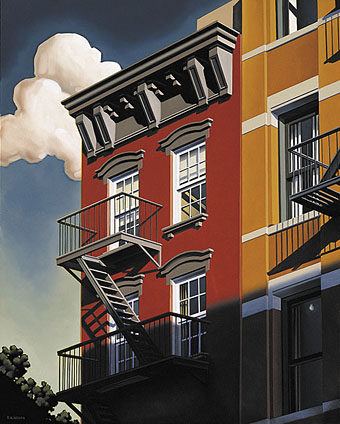
nelson.jpg

The Shadow by Kenton Nelson.

• The week in Coil: An interview by Derek de Koff, plus an extract from the new edition of England’s Hidden Reverse by David Keenan. Opening later this month at Ludwig, Berlin, is Chaostrophy, a Coil-related exhibition/celebration.

Strange Flowers remembers the incomparable Marchesa Casati, a woman who happens to feature in the book I’ve been designing and illustrating for the past few weeks. (More about that later.)

• “It wasn’t about how we could meet the demands of the book, but rather how the book meets us.” Ben Wheatley (again) talking to Jamie Sherry about bringing High-Rise to the screen.

• The latest release from Hawthonn is Sea-Spiral Spirit. The album has two accompanying videos: Pan Laws and Last Chimes From A Dormant Moon.

Alan Moore celebrates Chris Petit’s The Psalm Killer—a nerve-shredding Irish noir.

• Not a mix but a reading guide: The Brit Horror Mixtape collated by Mark West.

• More Penda’s Fen: Graham Fuller on the Romantic tradition in British film.

• Previews of Tooth by Raime, “a steadfast concoction of brooding dystopia”.

• “How big an issue is the nausea problem for Virtual Reality products?”

• FACT chooses 16 of the best songs powered by Sly and Robbie.

Geeta Dayal on the pioneering computer music of Bell Labs.

• Mix of the week: Finders Keepers’ Space Rock Special.

Paul Schütze: The True Art of Fine Fragrance

The Surrealist Legacy of Claude Lalanne

Les illustrateurs de Baudelaire

• RIP publisher Peter Owen

• Perfumed Garden Of Gulliver Smith (1967) by John’s Children | Perfumed Metal (1981) by Chrome | Fragrance (Ode To Perfume) (1981) by Holger Czukay

Weekend links 310

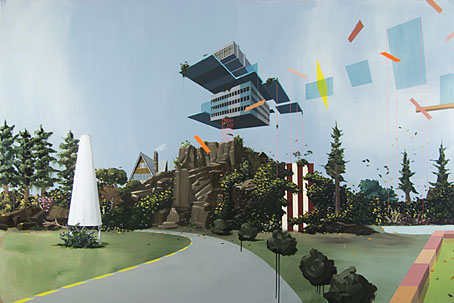
monogenis.jpg

Parkland (2012) by Dean Monogenis.

• “The Story Behind the Planet’s Most Influential Road Map of ‘Weird Music’“. Gustavo Turner investigates the enduring influence of The Nurse With Wound List. Related: A Discogs list of links to all the NWWL discographies, and a recommended listening guide by Ultima Thule.

Tokyo Melody: Un film sur Ryuichi Sakamoto (1985) by Elizabeth Lennard features Sakamoto at work on Illustrated Musical Encyclopedia, together with Akiko Yano, Haruomi Hosono and Yukihiro Takahashi.

• “We wanted to fuse the aesthetics, histories and values of witchcraft, the traditional ideas with a contemporary edge,” says editor and creative director of Sabat magazine, Elisabeth Krohn.

There is a very seductive and very dangerous demon: the demon of generalities. He captivates man’s thought by marking every phenomenon with a little label, and punctiliously placing it together with another, similarly carefully wrapped and numbered phenomenon. Through him a field of human knowledge as changeable as history is turned into a neat little office, where this many wars and that many revolutions sleep in folders – and where we can pore over bygone ages in complete comfort. This demon is fond of words such as “idea”, “tendency”, “influence”, “period”, and “era”. In the historian’s study this demon reductively combines in hindsight the phenomena, influences and tendencies of past ages. With this demon comes appalling tedium – the knowledge (utterly mistaken, by the way) that, however humanity plays its hand or fights back, it follows an implacable course. This demon should be feared. He is a fraud. He is a salesman of centuries, pushing his historical price list.

Vladimir Nabokov in a previously unpublished lecture, On Generalities

• More Tom Phillips: 20 Sites n Years, a film by Jake Auerbach & David Thorp about the artist’s long-term urban photography project, is showing at Camberwell College of Arts next month.

• Mixes of the week: Sass In Pocket by Abigail Ward, Near Mint, 17th May 2016 by Robin the Fog & Hannah Brown, and Secret Thirteen Mix 184 by Andi Stecher.

• Grey Dog Tales talks to Brian J Showers of Swan River Press about horror and supernatural fiction.

• “Magic mushrooms lift severe depression in clinical trial.” But their use is still illegal in the UK.

• “Your brain does not process information, and it is not a computer,” says Robert Epstein.

Cliff Martinez’s theme for Nicolas Winding Refn’s forthcoming The Neon Demon.

Diamanda Galás, Still Wild and Primal, Returns to the New York Stage.

Janae Corrado on the photography of Joel-Peter Witkin.

Alastair Gee on gay home movies from the 1940s on.

People Laugh At Me (Coz I Like Weird Music) (1980) by The Instant Automatons | Weird Caravan (1980) by Klaus Schulze | Call It Weird (1983) by Xymox