Weekend links 353

tuke.jpg

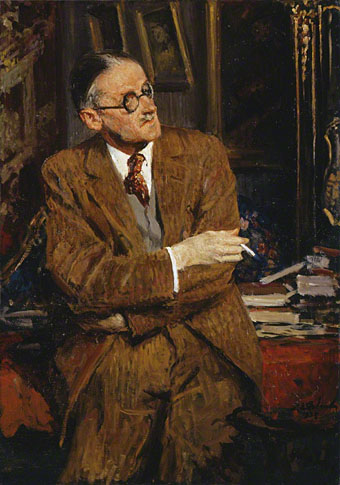
The Critics (1927) by Henry Scott Tuke.

• Geeta Dayal talks to ambient musician Midori Takada about Through The Looking-Glass (1983), an album being reissued this month by Palto Flats/We Release Whatever The Fuck We Want Records.

Jacob Brogan reviews The Abominable Mr. Seabrook by Joe Ollmann, a graphic biography of writer, occultist, explorer and determined cannibal, William Seabrook.

• More from the usual suspects (on these pages at least): Jonathan Meades on his new cookbook and a recent bout of heart surgery; and Iain Sinclair on The Last London.

The law only applied to men, but that didn’t mean same-sex relationships between women were immune to opprobrium. Dorothy Todd was hired as the editor of British Vogue in 1922. Under her visionary stewardship, the magazine became a bastion of high modernist style, swapping petticoats and corsets for Picasso, Cocteau, Man Ray and Woolf. Todd lived with her lover, the fashion editor Madge Garland. Sacked in 1926 because of declining circulation, she planned to sue the magazine, but was silenced when the publisher Condé Nast threatened to publicly expose her “morals”.

In such an inimical climate, it’s not surprising that art became a zone of enchantment as well as resistance. The plenitude of camp aesthetics, the lush excess, the cross-pollination of high and low forms might be conceived as a direct response to the paucity and hostility of the culture at large. From the mannered decadence of Aubrey Beardsley’s naughty woodcuts, to Cecil Beaton’s portraits of Stephen Tennant as a radiant boy prince, to the cabaret high jinks of Danny La Rue, to the wickedly doctored library book covers made by the playwright Joe Orton (a crime for which he received a jail sentence), camp offered a way of remaking the world, cutting it down to size and reassembling it in richly strange and strangely rich new forms.

Olivia Lang on the British artists working in defiance of iniquitous laws prior to the (partial) decriminalisation of homosexual acts in 1967.

• Due for publication later this year, You Should Come With Me Now, a new collection of short fiction by M. John Harrison.

Daniel Marner reviews Scarred For Life Volume One: The 70s, a book about the dark side of British pop culture.

Jay Babcock talks to Erik Davis about the end of Arthur magazine and his new life in the Californian desert.

• The nature photography of Nobuyuki Kobayashi and the ruin photography of Gina Soden.

Jon Forss of design team Non-Format on his time designing The Wire magazine.

Mac McClelland on how doctors treat mental illness with psychedelic drugs.

• Mix of the week: Secret Thirteen Mix 216 by WSR.

Hisham Matar on Jorge Luis Borges.

London Boys (1976) by T. Rex | Last Train To London (1979) by Electric Light Orchestra | London (2004) by Patrick Wolf

Weekend links 352

taggart.jpg

Table-Tipping Workshop at Rev. Jane’s House, Erie, Pennsylvania, 2014 by Shannon Taggart.

• Canadian electronic musician Sarah Davachi talks to Erik Davis about analogue synthesizers, reverberating cathedrals, attention spans, and her ambient drone album All My Circles Run.

• Orson Welles’ The Other Side of the Wind may now be released by Netflix. (I’m restraining my excitement for the moment since this one has been a long time arriving.)

• Mixes of the week: VF Mix 86: Jah Shaka by Roly Porter, Secret Thirteen Mix 215 by Twins, and What Good Is God? (1:11:11.111 Melon Collie Mix) by Gregg Hermetech.

• Making sense of The Weird and the Eerie: Roger Luckhurst reviews the final book from the late Mark Fisher.

• Pye Corner Audio has been very productive this year (I’m not complaining); the latest release is The Spiral.

• “I don’t like acceptance,” says Cosi Fanni Tutti, “it makes me think I’ve done something wrong.”

• Jon Brooks on the Continental inspiration for his next album, Autres Directions.

Séance: Spiritualist Ritual and the Search for Ectoplasm by Shannon Taggart.

• Corny and clichéd: Matthew Bown on bad painting in the twentieth century.

• At Wormwoodiana: Douglas A. Anderson on Borges and a forgotten book.

• At the BFI: Samuel Wigley chooses 10 great films set in the jungle.

Jungle Flower (1951) by Les Baxter | Jungle Fever (1973) by The Upsetters | The Jungle Dream (1973–1980) by Patrick Cowley

Weekend links 346

brocklehurst.jpg

Red Queen (no date) by Jo Brocklehurst.

• Happy birthday to Kenneth Anger, 90 years old this week. In 2008 Anger was interviewed by Nicolas Winding Refn at the National Gallery of Denmark, Copenhagen.

• “Fabeness be to the Auntie, and to the Homie Chavvie, and to the Fantabulosa Fairy”. “Church ‘regret’ as trainees hold service in gay slang.”

Andrew Male on Michael Chapman, an exceptional guitarist, and “the man who connects Elton, Bowie, Nick Drake and Sonic Youth”.

• A trailer for A Life In Waves a documentary about synth composer Suzanne Ciani by Brett Whitcomb and Bradford Thomason.

• The website for design company Barnbrook has been relaunched, as has the site for Jonathan Barnbrook‘s personal work.

• Mixes of the week: Secret Thirteen Mix 209 by Umwelt, and XLR8R Podcast 475 by Melina Serser.

Ryan Gilbey: “From Sean Connery to Harrison Ford: actors who secretly played roles gay.”

• Writer and editor Russ Kick is selling his huge book collection.

Lucifer Sam (1967) by Pink Floyd | Lucifer (1968) by The Salt | Lucifer Rising (2002) by John Zorn

Weekend links 344

axiomdub.jpg

Axiom Dub – Mysteries Of Creation (1996), a Bill Laswell production. Art by James Koehnline.

• As noted earlier, the great Bill Laswell has made some of his sprawling back catalogue available at Bandcamp, news of which has prompted Vinyl Factory to put together a recommended listening guide. Judging by the comments I’m not the only Laswell-head deploring the absence of the masterpiece from Material, Hallucination Engine. Linked here before, and happily still being updated, the comprehensive Bill Laswell discography at Silent-Watcher. Related: An ESP-Disk Primer by Marc Masters.

Listen to the Voice of Fire, a symposium concerning alchemy in sound art, takes place at the National Library of Wales at the beginning of March. Phil Legard offers some thoughts on alchemy, music and John Dee.

• The guilty cinematic pleasures of John Carpenter. Related: Director and actor Alice Lowe chooses seven favourite horror films.

The Broomway, Essex, a tidal path known as “The Doomway” for its reputation as the most dangerous walk in Britain.

• Mixes of the week: K-Punk presents Return to the Fourth World, and FACT Mix 584 by Lawrence English.

• “There was more to the late John Berger than that TV series and art book”, says Richard Turney.

• “Music’s cassette-tape revival is paying off,” says John Paul Titlow.

Diamanda Galás announces two new albums.

Bob Dylan paints a Blackpool pier.

• Pixel art by Uno Moralez

One Letter Words

Reduction (1980) by Material | Ghost Light/Dread Recall (1996) by Material | No Guts No Galaxy (1999) by Material (feat. Ramm Ell Zee & phonosycographDISK)

Isles of the Dead

iod_leipzig.jpg

The Isle of the Dead (version five, 1886) by Arnold Böcklin, Leipzig, Museum der bildenden Künste.

Reading old comics recently turned up the page below by Philippe Druillet which I didn’t remember having seen before. The drawing is from Gail, one of Druillet’s Lone Sloane stories (but not one included in the Six Voyages of Lone Sloane), and shows the entrance to a typically sinister Druillet city modelled on one of Arnold Böcklin’s Isle of the Dead paintings. (Druillet’s original was in black-and-white but was later coloured.) This derivation manages to keep all of Böcklin’s details while cleverly turning the cypresses into a fanged mouth.

isle1.jpg

Philippe Druillet (1976).

isle2.jpg

Böcklin’s cemetery isle has been the subject of several posts here, being one of my favourite paintings and also an object of fascination for its continuing influence in a variety of media: novels, films, music and, of course, comics. Druillet quotes from other artists in his Lone Sloane stories—notably Escher and Grandville—so the Böcklin quotation wasn’t too much of a surprise. Toteninsel.net, the website devoted to works influenced by The Isle of the Dead, turned up a few more comic-related examples, some of which are featured below. What’s notable about the examples at Toteninsel is that they’re all from European artists; that’s not to say there isn’t an example to be found in American comics but European comic art seems much more aware of Symbolist painting.

Continue reading “Isles of the Dead”