Weekend links 103

fripp.jpg

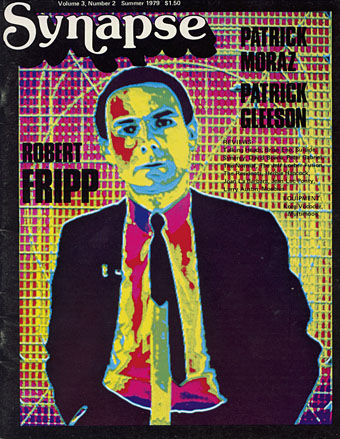
Robert Fripp photographed by Chris Stein. Video posterization by Michael Schiess.

Scans of Synapse, “The electronic music magazine”, are posted here. Issues range from 1976 to 1979, and include interviews with the more notable synthesists of the period, Kraftwerk included. Brian Eno was regularly interviewed by synth mags despite always being reluctant to talk about what equipment he might be using; sure enough he’s featured here. Far more interesting is a longer interview with Robert Fripp that catches the guitarist as he emerged from his self-imposed retirement in the mid-70s with the extraordinary Exposure album. (See a 1979 promo video for that here.) Related: TR-808 drum sequences in poster form by Rob Ricketts.

• More electronic music from the 1970s: “[Don Buchla] showed me that the idea of playing a black-and-white keyboard with one of these instruments was completely ridiculous. It was inappropriate and had nothing to do with the way you would use an electronic instrument.” Suzanne Ciani talks to John Doran about electronic music composition. A collection of her early recordings, Lixiviation, is released by Finders Keepers. Related: The Attack of the Radiophonic Women: How synthesizers cracked music’s glass ceiling.

• “Her writing—full of immigrants, circus animals, freaks, socialists, hipsters, servants, and suffragettes—revels in the atmosphere of the ‘Yellow Nineties,’ a period characterized by Wildean decadence and art for art’s sake.” Jenny Hendrix on Djuna Barnes.
brunovsky.jpg

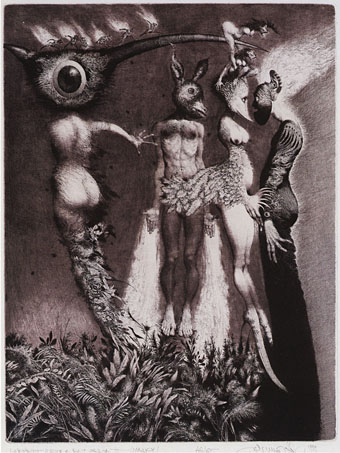
More etchings by Albin Brunovsky at But Does It Float.

• More scanned magazines: the Fuck You Press archive at Reality Studio. A trove of rare publications produced by Ed Sanders in the 1960s with contributions from world-class writers, William Burroughs included.

• “[My parents] were horrified by what I did, but they encouraged me to keep doing it because I was obsessed, and what else could I do?” John Waters writing in (of all places) the Wall Street Journal.

• A time-lapse assembly of Alfred Hitchcock’s Rear Window (1954) by Jeff Desom who explains how he did it here.

• The Occult Experience: a 95-minute documentary on the international occult scene, filmed in 1984–85.

• Compost and Height re-post A Gold Thunder, a song by Julia Holter first sent to them in 2010.

• Drawings by Bette Burgoyne.

• Schroeter’s Salomés

• Cats are liquids

• Fade Away And Radiate (1978) by Blondie (featuring Robert Fripp) | Exposure (1978) by Peter Gabriel (produced by and featuring Robert Fripp) | Exposure (1979) by Robert Fripp | Babs And Babs (1980) by Daryl Hall (produced by and featuring Robert Fripp) | Losing True (1982) by The Roches (produced by and featuring Robert Fripp).
Brothers Quay scarcities

quays7.jpg

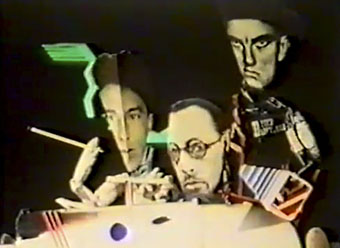
Igor: The Paris Years (1982).

More animation, and scarce in the sense that some of these films were omitted from the core Quay Brothers canon released in the UK by the BFI as Quay Brothers: The Short Films 1979-2003. Quay obsessives such as myself would have been happy to pay for an extra disc featuring more of their oeuvre but we can at least turn to YouTube to fill in some gaps. This is by no means everything so I may add more discoveries at a later date. Some of the DVD-issued films can be seen on the BFI’s official Daily Motion channel.

I was eager to see the Stravinsky film again having watched it one time only in a Channel 4 screening some 25 years ago. After a fresh viewing it’s not as impressive as I remembered, in part because the Quay’s distinctive approach to animation—and filmmaking generally—developed a great deal following the unforgettable Street of Crocodiles (1986). Igor: The Paris Years concerns the composer’s relationship with Jean Cocteau and Vladimir Mayakovsky, all of whom are animated as cut-out figures in a Modernist cityscape with The Rite of Spring playing on a piano.

quays6.jpg

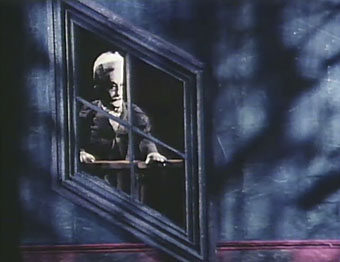
Leos Janácek: Intimate Excursions (1983). Part 2 is here.

In a similar vein, but more successful, is this portrait of Czech composer Leos Janácek. This uses the same cut-out character style but places the composer in Eastern European settings similar (down to the floating tram pantographs) to those seen in the very first Quay film, Nocturna Artificialia (1979). Among the other puppet characters there’s one figure singing an aria who later appears as Enkidu in This Unnameable Little Broom (1985).

quays1.jpg

Old Piano (1988).

A very short (and poor quality) ident for MTV.

Continue reading “Brothers Quay scarcities”

Weekend links 102

flannery.jpg

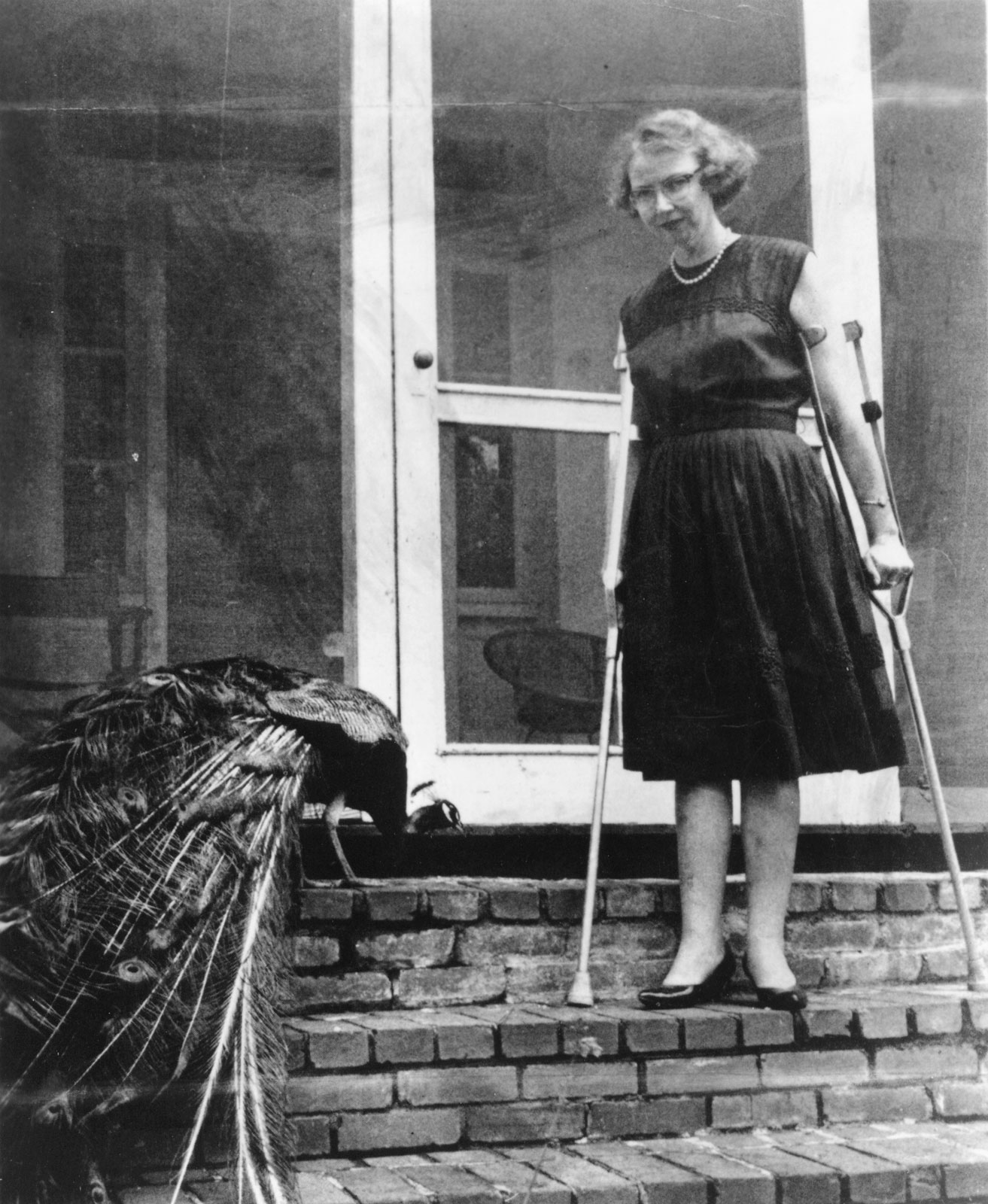
Flannery O’Connor with one of her many peacocks.

When the peacock has presented his back, the spectator will usually begin to walk around him to get a front view; but the peacock will continue to turn so that no front view is possible. The thing to do then is to stand still and wait until it pleases him to turn. When it suits him, the peacock will face you. Then you will see in a green-bronze arch around him a galaxy of gazing haloed suns. This is the moment when most people are silent.

Flannery O’Connor

Essay of the week was without a doubt Living with a Peacock by the great Flannery O’Connor, originally published in Holiday magazine in September 1961. I’d heard about Flannery’s peacocks before but had no idea she was such a pavonomane. Thanks to Jay for the tip!

• “‘He’s chameleon, comedian, Corinthian and caricature.’ But he was more like the very hungry caterpillar, munching his way through every musical influence he came across…” Thomas Jones reviews two new books about David Bowie for the LRB.

• In June Mute Records release The Lost Tapes by Can, a 3-CD collection. Here’s hoping this doesn’t merely repeat the outtakes that’ve been circulating for years as the Canobits bootlegs. This extract is certainly new.

• Animator Suzan Pitt, director of the remarkable Asparagus (1979), discusses her new film, Visitation, inspired, she says, by reading HP Lovecraft in a cabin while wolves howled outside.

• Night Thoughts: The Surreal Life of the Poet David Gascoyne, a biography by Robert Fraser reviewed by Iain Sinclair.

oelze.jpg

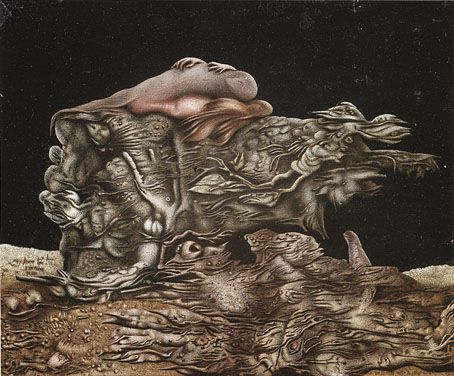
The Dangerous Desire (1936) by Richard Oelze (1900–1980) at But Does It Float.

• Making the Mari: the stuff of nightmares brought into the world by Jefferson Brassfield.

• The Background to the Moorcock Multiverse: Karin L. Kross reviews London Peculiar.

• Orson Welles’s lost Heart of Darkness screenplay performed for the first time.

• The Erotic Films of Peter de Rome: the new BFI DVD collection reviewed.

• Page designs by Alphonse Mucha for Ilsée, Princess de Tripoli (1897).

• A Slow-Books Manifesto by Maura Kelly.

• Tim Parks asks “Do we need stories?”.

• Musical table by Kyouei Design.

• Horror Asparagus Stories (1966) by The Driving Stupid | Peacock Lady (1971) by Shelagh McDonald | Peacock Tail (2005) by Boards of Canada.

Val Denham album covers

denham01.jpg

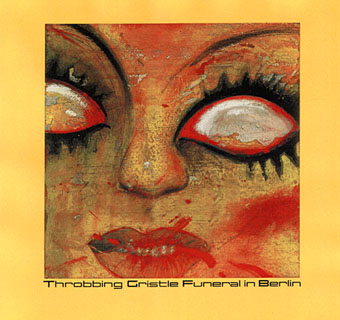
Funeral In Berlin (1981) by Throbbing Gristle.

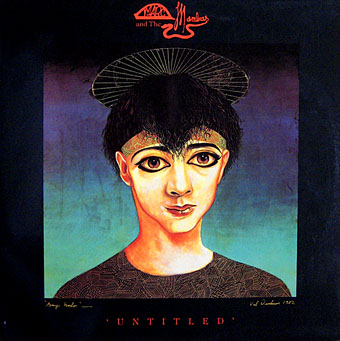
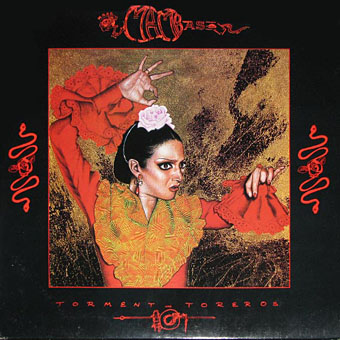
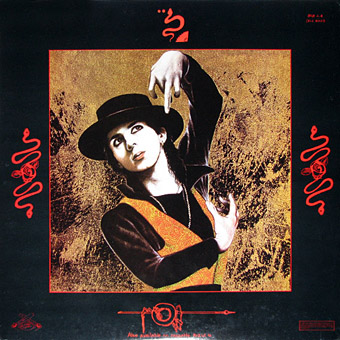
British artist and musician Val Denham was mentioned in yesterday’s post so I thought it worthwhile following up with a selection of the painter’s record sleeves. Denham’s art stood out for me when I first saw the cover of Throbbing Gristle’s Funeral In Berlin album, and for its visceral immediacy this is still a big favourite. The early 1980s were the perfect time for Denham’s paintings to appear on record sleeves, the diminished area of CD packages providing a poor stage for work that’s this vivid and dramatic. Her associations with Throbbing Gristle extended to work with Marc Almond, a cover for the Some Bizzare compilation If You Can’t Please Yourself You Can’t, Please Your Soul which featured ex-TG members Coil and Psychic TV, and further associations with Coil via allies Black Sun Productions. Many of these connections can be explored at Denham’s detailed website which has a great gallery section showing work in a variety of media from the past thirty years. Her art is surreal, intense, often disturbing, and deeply personal in its exploration of shifting gender boundaries. Isn’t it time someone published a Val Denham book?

Some cover samples follow. More can be seen at the artist’s website.

denham02.jpg

Untitled (1982) by Marc and The Mambas. Design by Huw Feather.

denham03.jpg

Torment And Toreros (front, 1983) by Marc and The Mambas. Design by Huw Feather.

denham04.jpg

Torment And Toreros (back, 1983) by Marc and The Mambas. Design by Huw Feather.

Continue reading “Val Denham album covers”

A Moment of Inspiration, 1983

marc.jpg

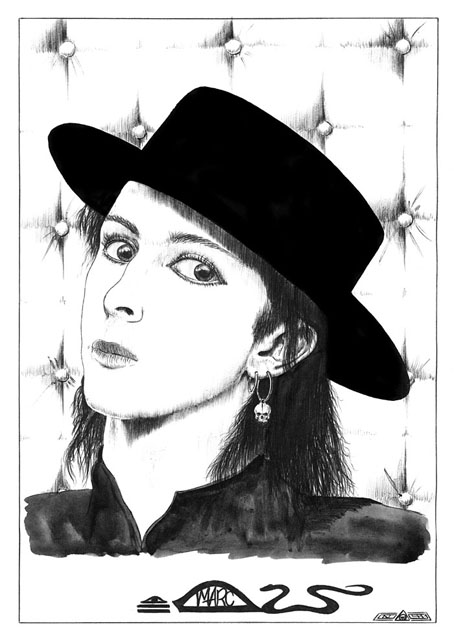
Marc Almond (1983) by John Coulthart.

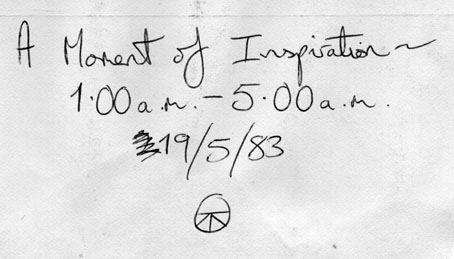
This, girls and boys, is how we occupied ourselves in the long nights before the advent of 24-hour television: we sat up drawing portraits of Marc Almond. A conversation on Twitter reminded me of this, a drawing that’s never before appeared in public but which is now added to the web collection. For a quick piece of art it’s actually a lot more successful than many of the more laboured things of mine that were printed far and wide at this time. The portrait was copied from a magazine photo, I forget which one, possibly Flexipop if it was still going, an increasingly wayward title that had a soft spot (so to speak) for Soft Cell. The Spanish hat identifies it as being from the Torment and Toreros period while the lettering was taken from Val Denham and Huw Feather’s cover design for the first Marc and The Mambas album, Untitled (1982). The padded-cell background refers, of course, to Marc’s former group, and was copied from the back of the Bedsitter 12″. Most of the drawing is done in black Biro pen with the hat and shirt in gouache. On the back I happened to make a note of the date, something I seldom bother with.

moment.jpg

The Twitter conversation was prompted by the appearance of Soft Cell’s notorious Sex Dwarf video at Dangerous Minds; Flexipop enjoyed the scurrilous side of Soft Cell so much they printed a still from this Bacchanal as a centre-spread in one of their issues. Meanwhile Marc himself was writing in the Guardian this week about Bowie manqué Jobriath, one of the real-life inspirations for the Brian Slade character in Todd Haynes’ Velvet Goldmine, and the subject of a feature-length documentary, Jobriath A.D., by Kieran Turner, currently showing at the BFI’s London Lesbian & Gay Film Festival.

Previously on { feuilleton }
• Derek Jarman’s music videos