Decoder, a film by Jürgen Muschalek

decoder1.jpg

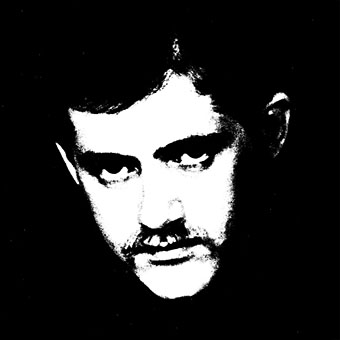
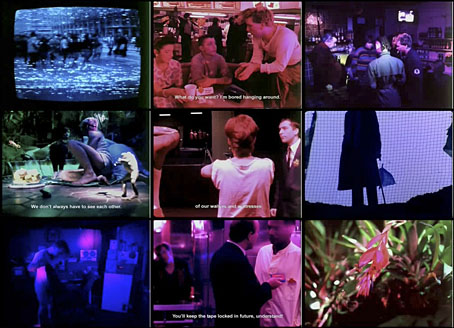
The Burroughs Centenary approaches, and this month sees the 30th anniversary of this Burroughs-related item. Decoder is a low-budget feature film from 1984 written by Klaus Maeck, and directed by Jürgen Muschalek (aka Muscha). Despite the constraints of budget and casting—many of the actors are amateurs—Decoder is truer to the techno-anarchist strand of Burroughs’ fiction than anything attempted before or since, and it’s arguably truer to the spirit of his works as a whole than David Cronenberg’s Naked Lunch.

decoder2.jpg

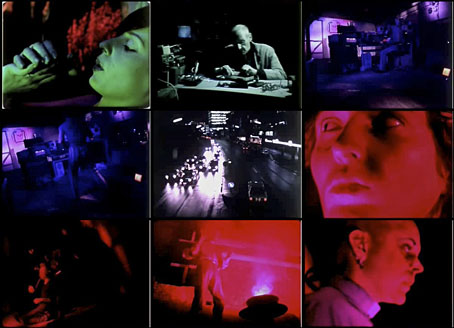
Decoder was shot in Hamburg in the early 1980s although the city is never properly identified in order to maximise the film’s near-future qualities. The narrative concerns attempts by FM (played by FM Einheit from Einstürzende Neubauten) to combat the insidious effects of muzak in burger restaurants using tapes created with his home-made electronics. William Burroughs makes a couple of brief appearances as the “Old Man” with a shop full of electronic components. Among the rest of the cast there’s Christiane Felscherinow, dividing her time between peep-show sex-work and languishing in a room filled with her pet frogs; and Genesis P-Orridge in his Psychic TV gear as the head of an underground pirate cult who encourage FM to launch an offensive against the muzak signals. Original music is provided by Dave Ball (from Soft Cell) and FM Einheit. The complete score is very good, featuring additional tracks by Soft Cell, Einstürzende Neubauten and Matt Johnson. Watched today, the narrative seems very much a product of its time, and somewhat outmoded. In 1984 home computing was increasingly prevalent, and cheap sound-sampling was just around the corner; Decoder is the last hurrah of an analogue struggle against the agents of the Control Virus.

decoder3.jpg

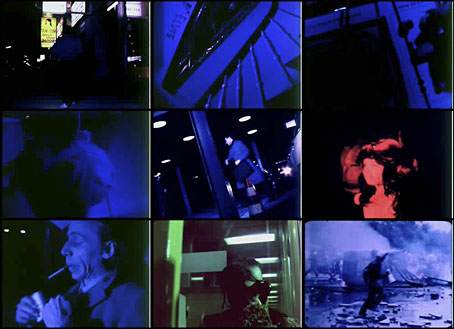
It’s a shame Jürgen Muschalek didn’t get to make anything else when he was obviously trying for some kind of cross between Burroughs’s The Electronic Revolution (1970) and Godard’s Alphaville (1965). Low-budget films often suffer visually but this one makes impressive use of vivid lighting and plenty of shadow which helps alleviate some of the weaknesses elsewhere. David Cronenberg has often acknowledged the influence of avant-garde types such as Burroughs and Warhol but his own films tend to be very conservative in their presentation. Muschalek at least tries to parallel some of Burroughs’ fragmented narrative techniques with an abrupt and disjunctive editing style. The film as a whole is much more in tune with the early Industrial Culture ethos than Peter Care’s noir pastiche, Johnny YesNo, but suffered from being more read about than seen in the 1980s. A few copies can be found online. In 2010 it finally appeared on DVD with extra material and a soundtrack disc.

Elsewhere on { feuilleton }
The William Burroughs archive

Weekend links 197

field.jpg

Posters by Jay Shaw for Ben Wheatley’s A Field in England which receives a US release this month.

Alvin Baltrop’s Gay New York: “the clandestine activities taking place under New York piers between 1975 and 1986”. AnOther samples some of the work on display at the Open Eye Gallery, Liverpool. Meanwhile, BUTT has some shots from Texas Porno Road Trip, a photo series by Mike McLeod. Related: HBO will show you anything but a male erection, says Justin Moyer.

• “[Robert] Desnos quickly proved himself to be one of the most gifted in these experiments – eventually known as ‘the period of sleeping fits’. He was capable of writing, speaking, drawing and composing entire fantastical narratives.” Eugene Thacker on the Surrealist séances of the 1920s.

• “It’s history, not a viral feed,” says Sarah Werner. A complaint about the way the ongoing decontextualisation of images is both pernicious and potentially lucrative.

His prose is a palimpsest of echoes, ranging from Eliot’s Preludes and Rhapsody on a Windy Night (lines like “Midnight shakes the memory / As a madman shakes a dead geranium” are Burroughsian before the fact) to Raymond Chandler’s marmoreal wisecracks and Herbert Huncke’s jive. I suspect that few readers have made it all the way through the cut-up novels, but anyone dipping into them may come away humming phrases. His palpable influence on JG Ballard, William Gibson, and Kathy Acker is only the most obvious effect of the kind of inspiration that makes a young writer drop a book and grab a pen, wishing to emulate so sensational a sound. It’s a cold thrill.

Peter Schjeldahl reviews Call Me Burroughs by Barry Miles.

• “Dance music was born in LGBT communities, but has this been forgotten?” Luis-Manuel Garcia on an alternate history of sexuality in club culture.

• Avant-Grade Hallucinogens: the Poetics of Psychedelic Perception in Moving Image Art by Stuart Heaney.

No Condition Is Permanent: weekly radio shows from Count Reeshard at LuxuriaMusic and iTunes.

The Golem: where fact and fiction collide. David Barnett on 100 years of Gustav Meyrink’s novel.

• Don’t Let Harlan Ellison Hear This: Nick Mamatas on a great writer.

• Mix of the week: the Ela Orleans Mix at A Sound Awareness.

Amon Düül II playing live on French TV, 1971 & 1973.

• A soundmap of London canals and minor rivers.

The Peculiar Underworld of Rare-Book Thieves.

• At Pinterest: William Burroughs and Phalluses.

Architecture of Doom

Hallucinations (1967) by Tim Buckley | Phallus Dei (1969) by Amon Düül II | Hallucinations (In Memory of Reinaldo Arenas) (1994) by Paul Schütze

Weekend links 196

wellcome1.jpg

Cochemare (1810) by Jean Pierre Simon. One of 100,000 high-resolution images now available from Wellcome Images.

• Ted Morgan’s Literary Outlaw: The Life and Times of William S. Burroughs (1990) was a solid biography blighted by a bizarrely bad-tempered and judgemental attitude towards many of Burroughs’ friends and colleagues. Morgan says Burroughs disliked the book (he also says his subject died in 1993, not 1997…) so I’m looking forward to the new biography by Barry Miles, Call Me Burroughs: A Life. There’s a curious detail in Jeremy Lybarger’s piece about August Derleth, HP Lovecraft’s publisher and lifetime champion, causing a fuss after the Chicago Review published extracts from Naked Lunch in 1958. Burroughs enjoyed Lovecraft’s fiction but it’s unlikely that Lovecraft would have been anything other than appalled by Burroughs’s work. Barry Miles will be holding a Q&A session at the ICA, London, next month following a screening of Howard Brookner’s restored documentary, Burroughs: The Movie.

• Mix of the week: Secret Thirteen Mix 105 by Sturqen. At 3quarksdaily Dave Maier writes in praise of drones (the musical variety), and links to three mixes.

• Interviews: Haakon Nelson talks to Harold Budd, Joseph Burnett talks to William Basinski, John Stezaker talks to Nicolas Roeg.

Derek responded to an invitation to address [AIDS] hysteria by lining the gallery with a set of tarred and feathered mattresses loaded with the traces of queer love-making and then framing them against wallpaper made from Xeroxed, blood-spattered front pages. In the middle of all this he then constructed a makeshift barbed-wire cage that imprisoned and protected a pair of apparently naked lovers – usually a pair of handsome, sleeping boys, but for one afternoon at least Tilda Swinton dropped by, just to make the point that the boys didn’t have an exclusive stake in or artistic rights to this crisis. Between the walls and the cage, the air of the gallery was thick with tension and hatred – sometimes literally so, as visitors to the gallery objected vociferously to what they were seeing.

Neil Bartlett on celebrating Derek Jarman 20 years after his death.

• William Friedkin’s Wages of Fear remake, Sorcerer (1977), receives an overdue reissue on DVD/Blu-ray in April.

James Knowlson asks “What lies beneath Samuel Beckett’s half-buried woman in Happy Days?”

• The UK’s web filtering seems to be blocking common sense says Jane Fae.

wellcome2.jpg

A devil buggering a man (19th century).

• The poetry of Hart Crane, from the American epic to personal belonging.

The Sonny Sharrock Quartet play Stupid Fuck, live 1988.

Pinterest nightmares

Borogoves

• Lutinemusic: Espera | Died Of Love | All I Have Is Gold

Weekend links 195

ethellerossignol.jpg

Untitled painting (c. 1920–1933) by Ethel le Rossignol depicting “the Sphere of the Spirit”. An exhibition of  Ethel le Rossignol’s channelled paintings takes place at the Horse Hospital, London, next month.

• “It’s always disconcerting to discover a favourite writer was kind of a jerk. How does this realization effect our understanding of Walter Benjamin’s work?” asks Morgan Meis.

• Mixes of the week: Georges Vert (aka Jon Brooks) presents The Pan-Europa Mix. Mr Brooks also unveiled another seasonal mix which he calls Winter Velvet.

Knopheria by Chrome Hoof ft. Shingai Shoniwa. A video from the band’s latest album.

Without sci-fi trappings of any kind, The Metamorphosis forces us to think in terms of analogy, of reflexive interpretation, though it is revealing that none of the characters in the story, including Gregor, ever does think that way. There is no meditation on a family secret or sin that might have induced such a monstrous reprisal by God or the Fates, no search for meaning even on the most basic existential plane. The bizarre event is dealt with in a perfunctory, petty, materialistic way, and it arouses the narrowest range of emotional response imaginable, almost immediately assuming the tone of an unfortunate natural family occurrence with which one must reluctantly contend.

David Cronenberg on Franz Kafka’s story.

• “I was very much into now-ism.” Laraaji talks to Bobby Barry about his music.

The Edge Question for 2014: “What scientific idea is ready for retirement?”

Storybook Apocalypse: Beasts, Comets, and Other Signs of the End Times.

• Return of the wunderkammer: Philip Hoare on cabinets of curiosities.

• Birditis: Ian Penman on the “full catastrophe” of Charlie Parker.

Rick Poynor on The Compulsively Visual World of Pinterest.

• RIP psychedelic poster artist Gary Grimshaw.

• At PingMag: The automaton clocks of Tokyo.

Dust & Grooves: Vinyl music culture.

Wunderkammern at Pinterest.

Ligeti: String Quartet No. 1 “Metamorphoses nocturnes” (recorded 1978) The Arditti Quartet | Thru Metamorphic Rocks (1979) by Tangerine Dream | Metamorphosis (2012) by Demdike Stare

The Last Angel of History: Afrofuturism, science fiction and electronic music

lastangel1.jpg

There’s been a resurgence of interest recently in Afrofuturism (see this recent newspaper article, and this site), not before time when the term has been around since 1993. The concept itself goes back a long way, at least as far as the remarkable body of work produced by Sun Ra (1914–1993) whose vast discography dates from 1956, and has to be considered the first concerted attempt to craft an expansive cosmic/futuristic mythos in music.

lastangel2.jpg

Sun Ra and his Arkestra make fleeting appearances in The Last Angel of History (1997), a 45-minute documentary by John Akomfrah which looks at Afrofuturism via its manifestations in fiction, contemporary music, and in space travel. The connecting tissue is a somewhat dated bit of cyperpunk fluff but it’s worth sticking around for the cast of interviewees. On the musical side there’s George Clinton, Derrick May, Juan Atkins, Carl Craig, DJ Spooky, Goldie, and A Guy Called Gerald; on the writing side there’s Ishmael Reed (whose early novels would have been published by my colleagues at Savoy Books if the company hadn’t gone bust in the early 80s), Samuel R. Delany (Savoy did publish one of his novels), Octavia Butler, Kodwo Eshun and Greg Tate; Nichelle Nichols has a chance to talk about something other than Star Trek for once, since she helped with NASA’s recruitment programme. There’s also Bernard A. Harris Jr, one of the first African-Americans in space. The techno-fetishism seems overheated now that we’ve all calmed down about computers and the internet, but that doesn’t negate the important points: SF as a reflection of the present moment and a means to imagine a different situation or way of life. With 2014 being Sun Ra’s centenary year I’m anticipating a lot more of this.

The Last Angel of History: part 1 | part 2 | part 3

Previously on { feuilleton }
Rammellzee RIP