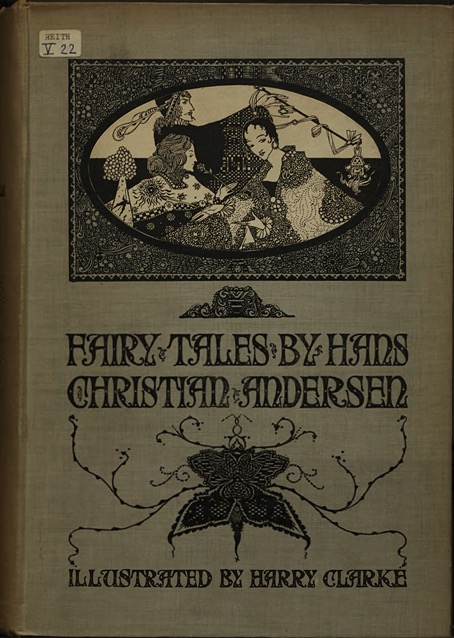
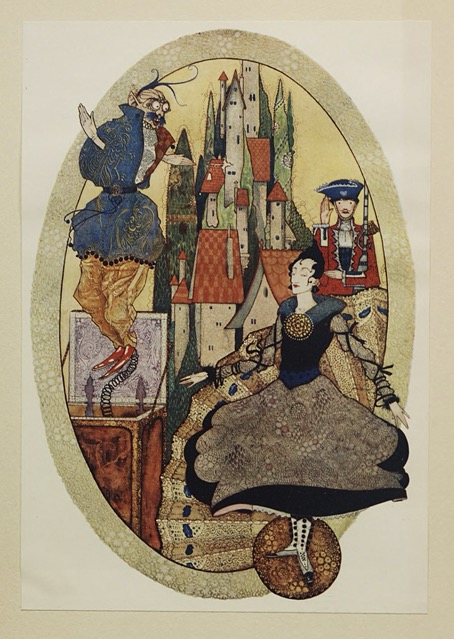
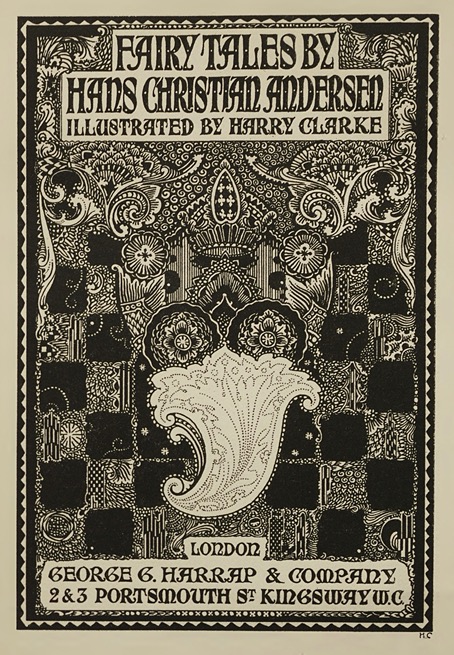
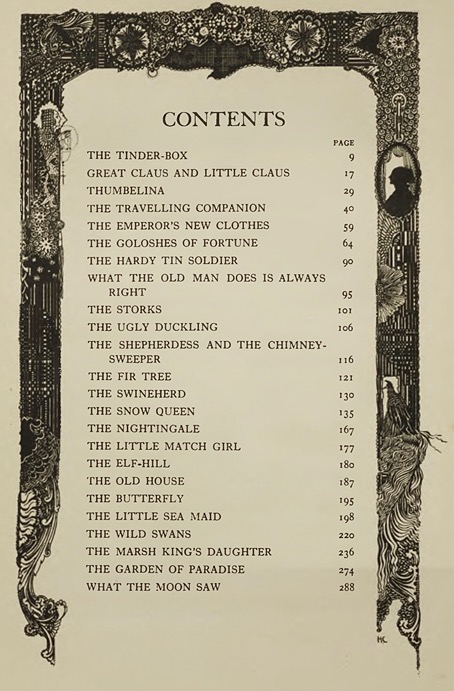
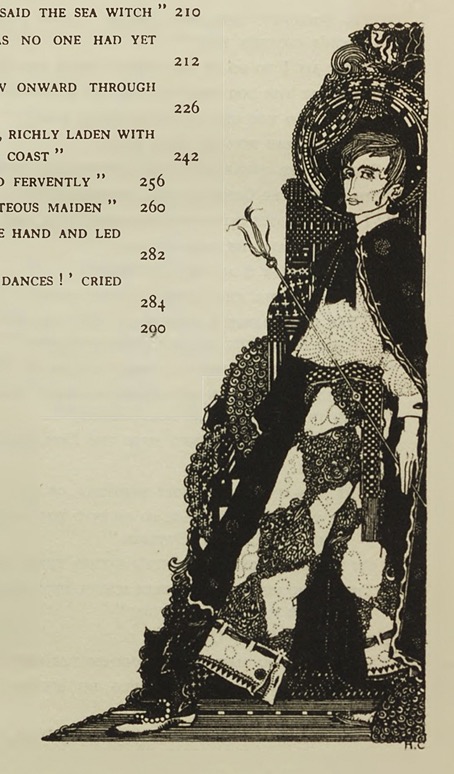
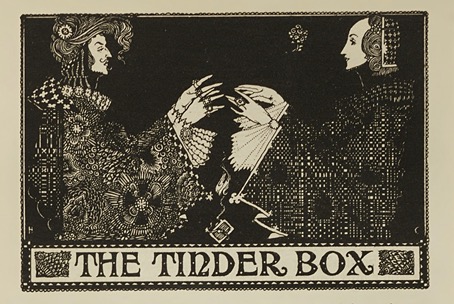
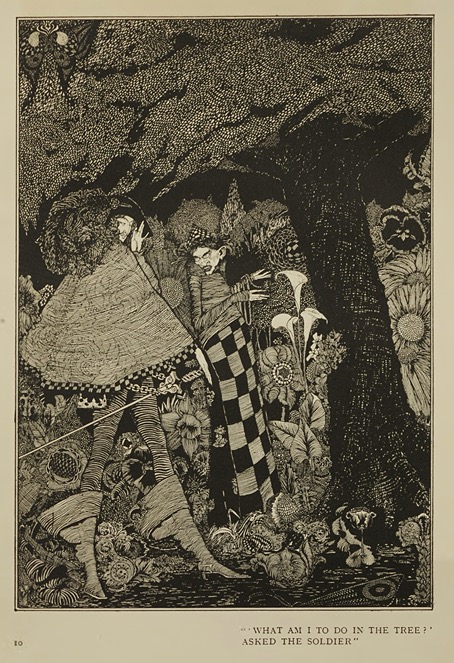
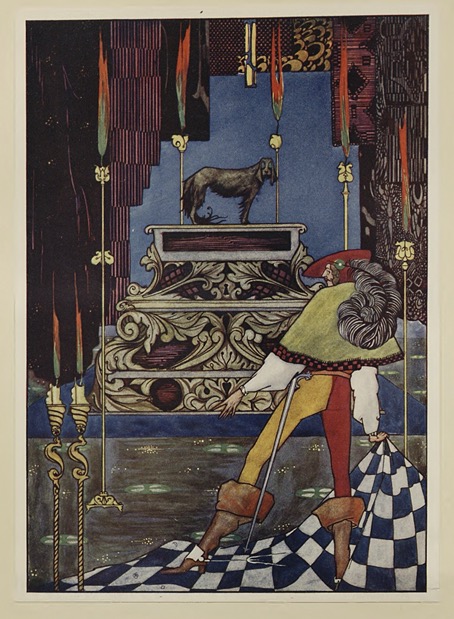
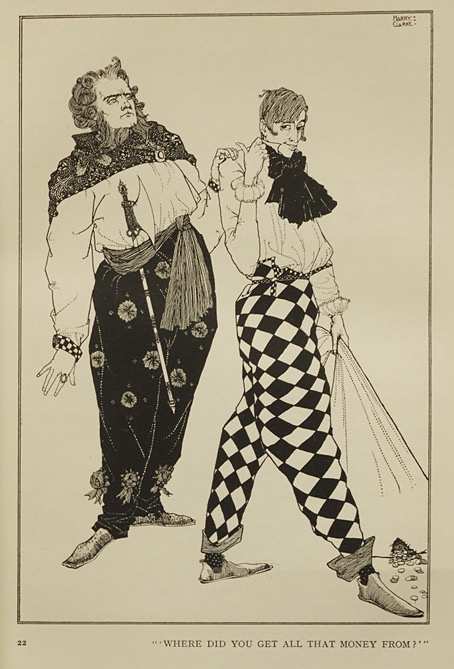
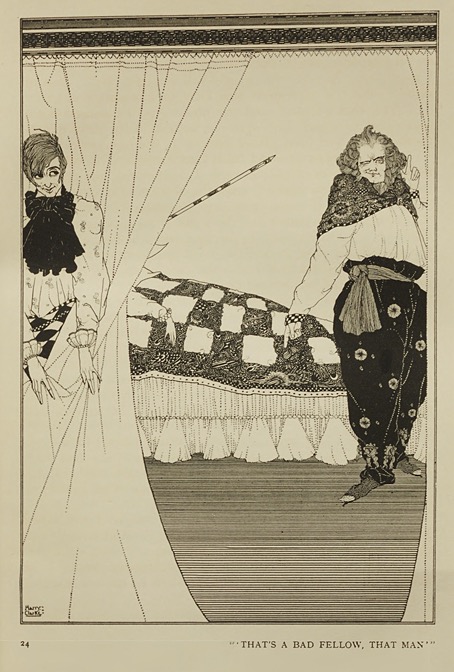
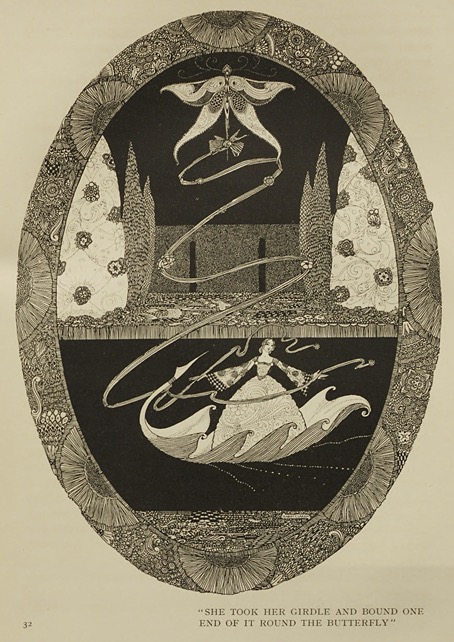
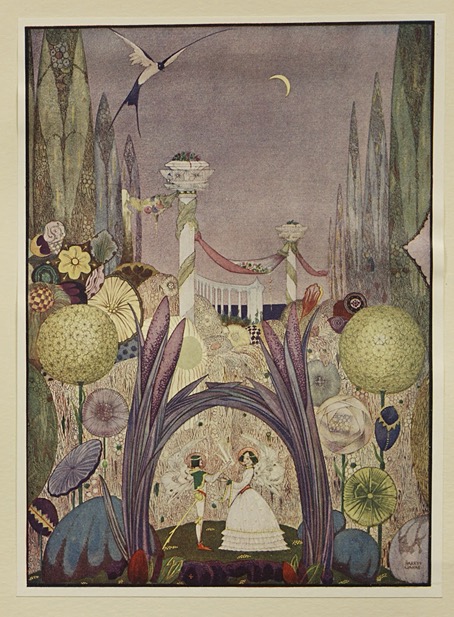
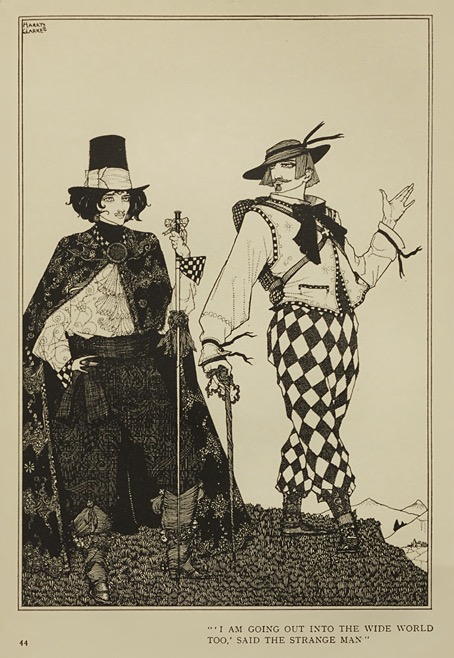
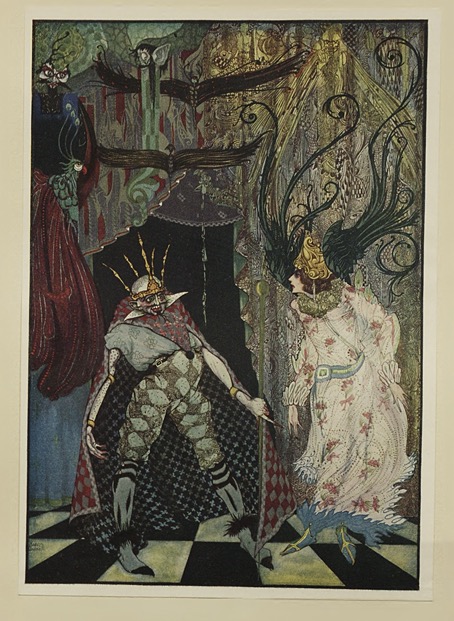
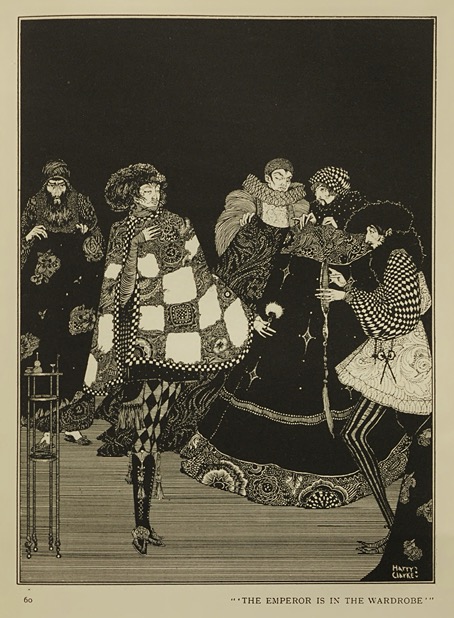
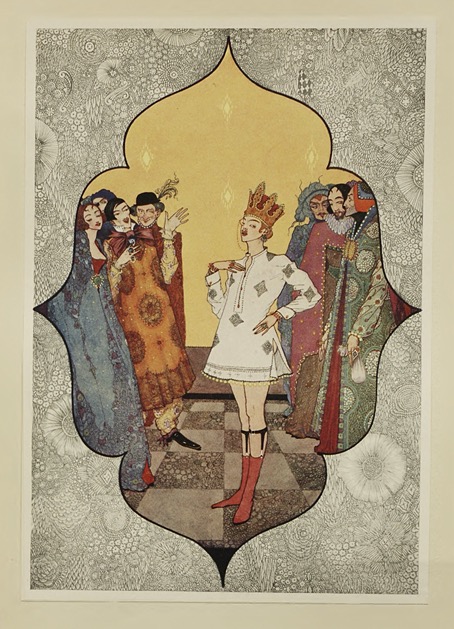
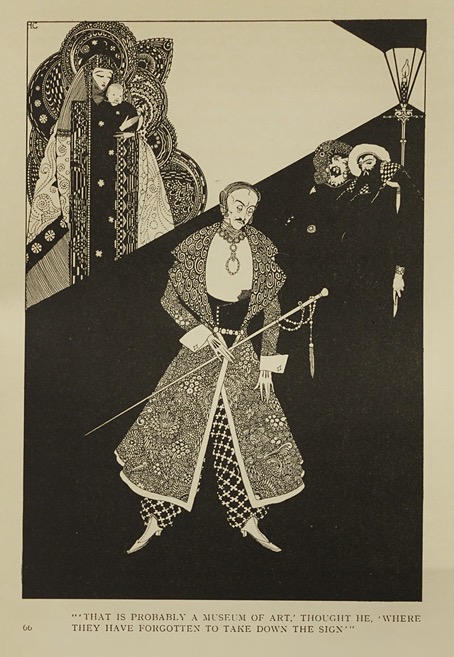
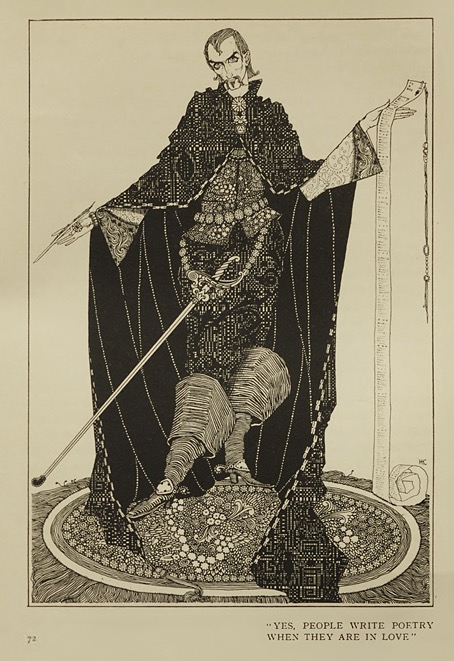
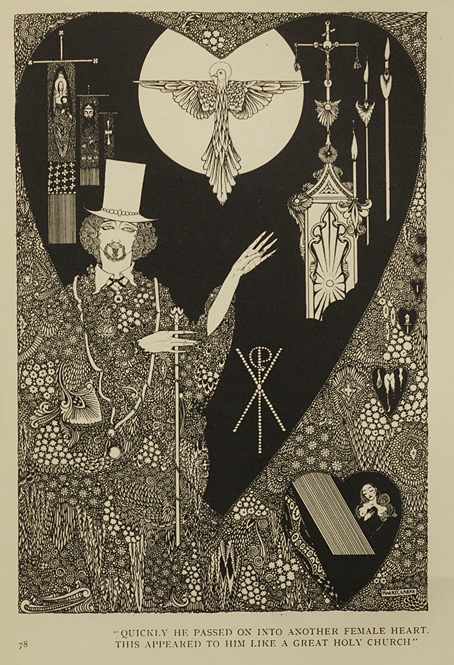
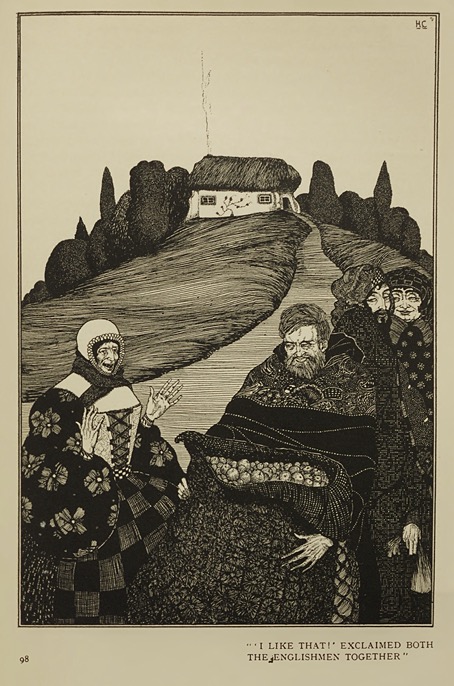
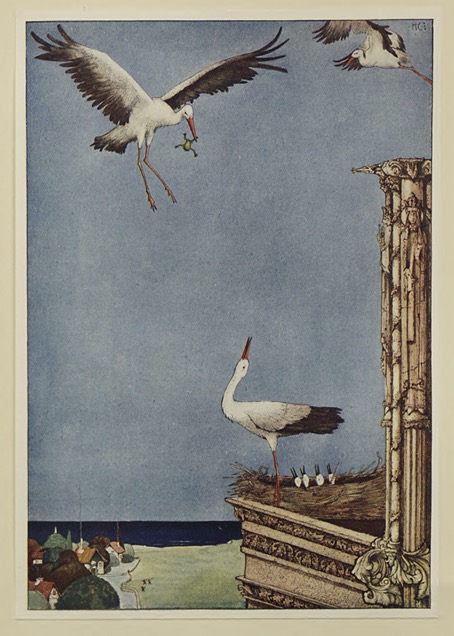
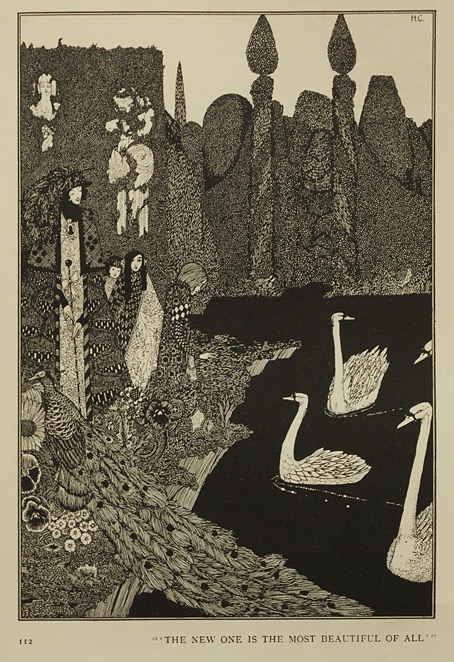
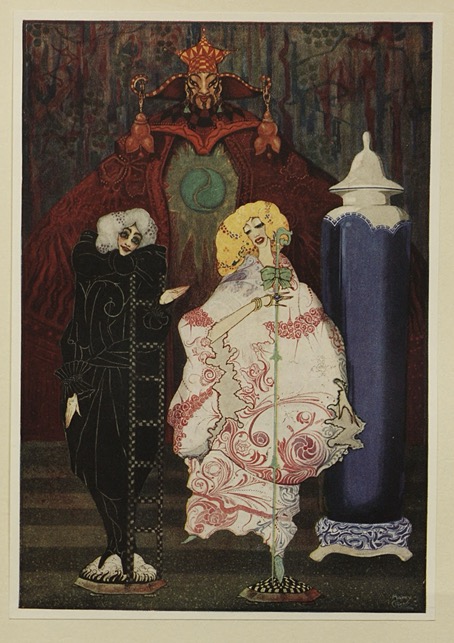
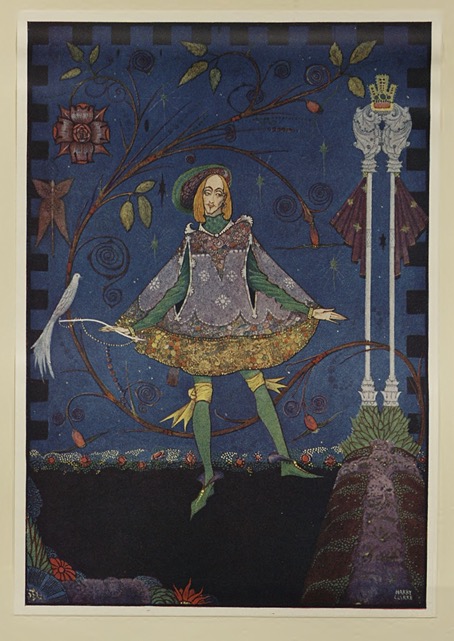
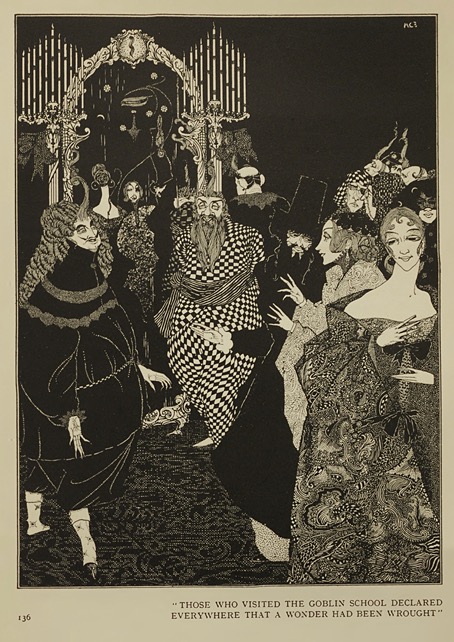
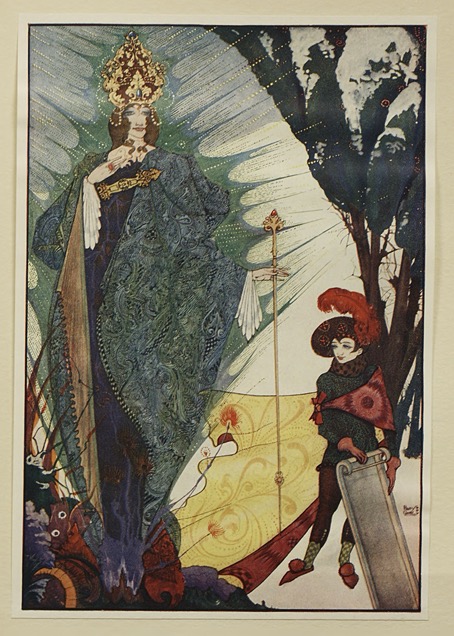
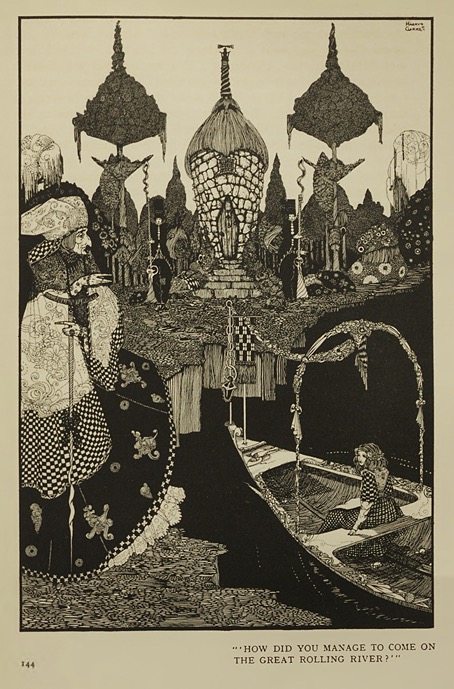
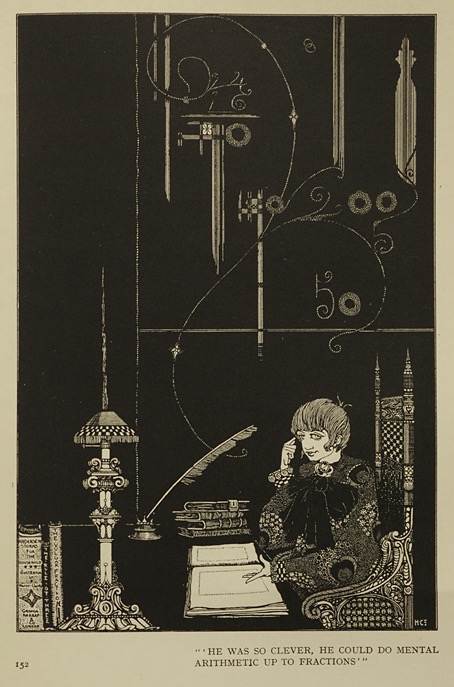
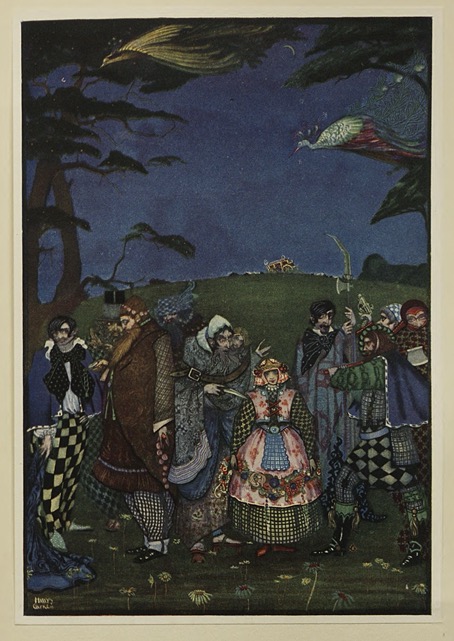
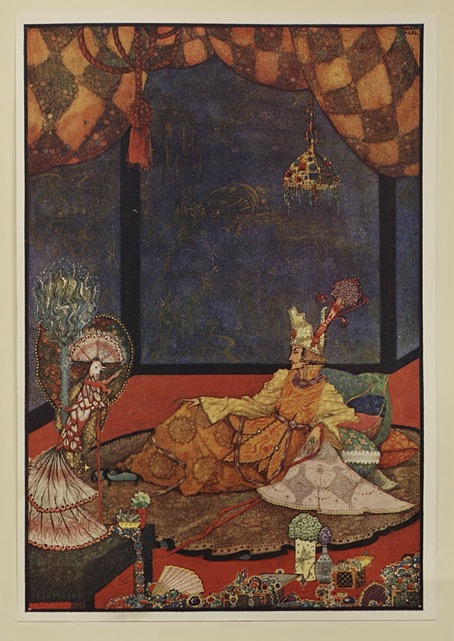
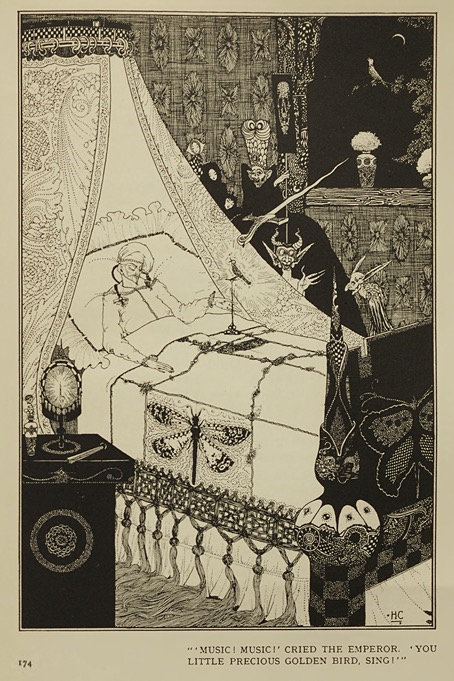
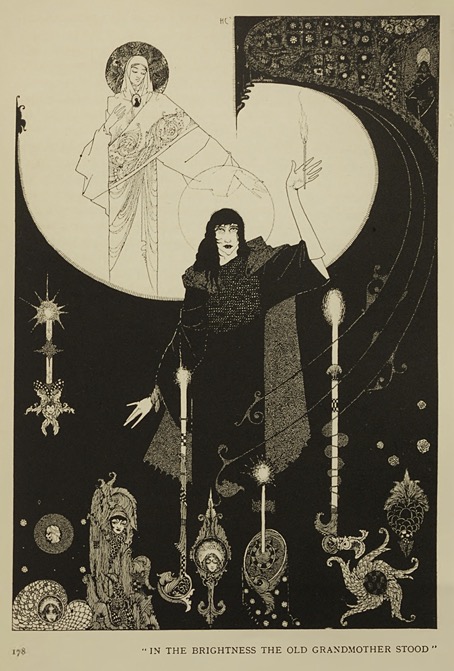
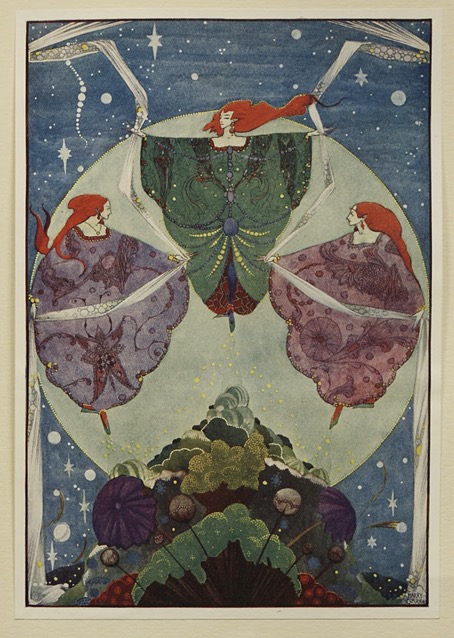
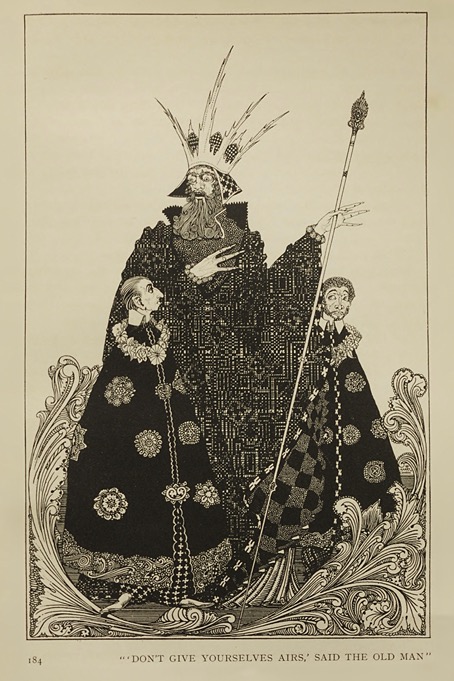
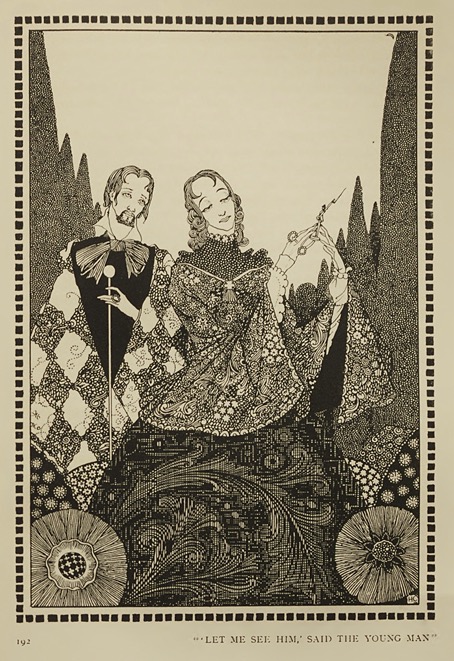
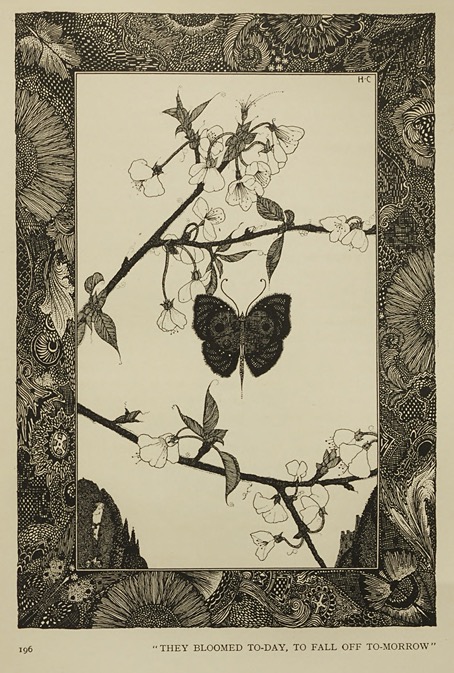
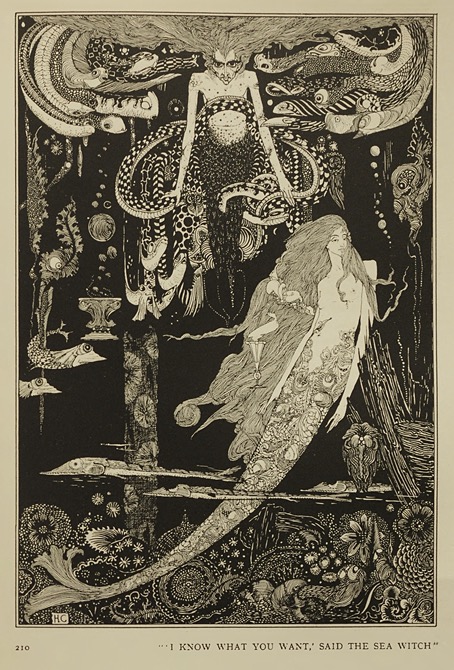
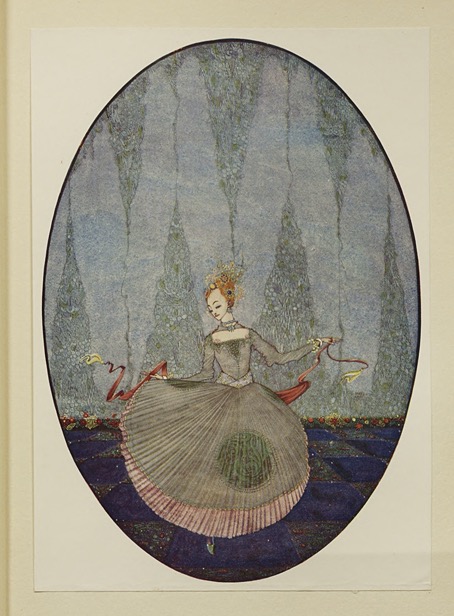
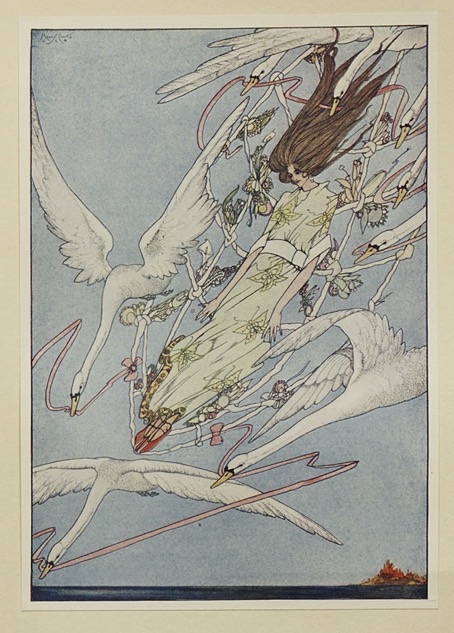
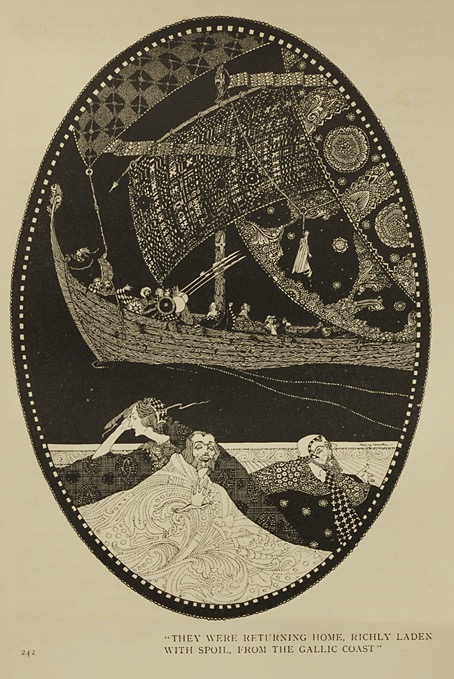
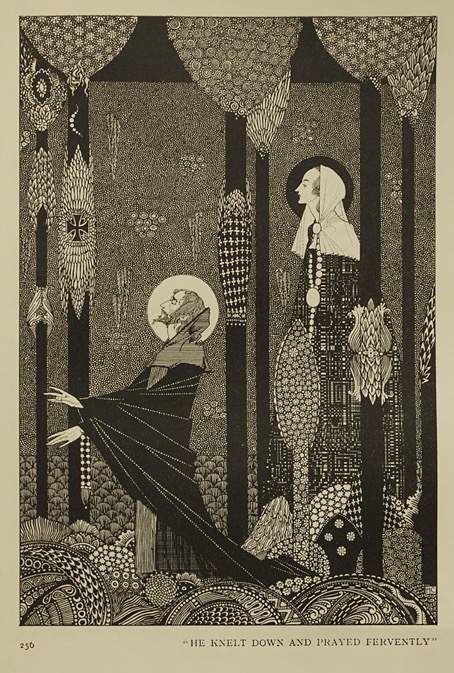
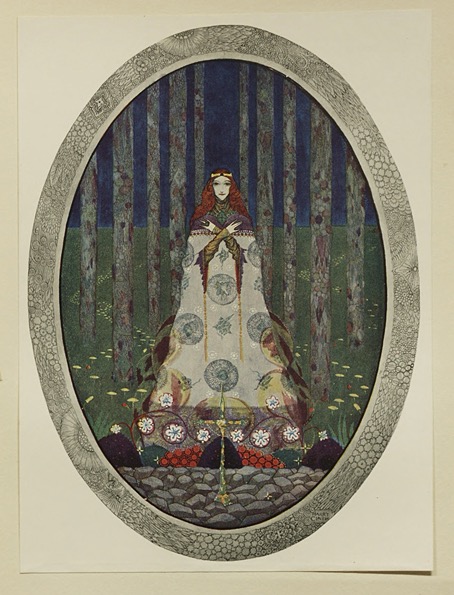
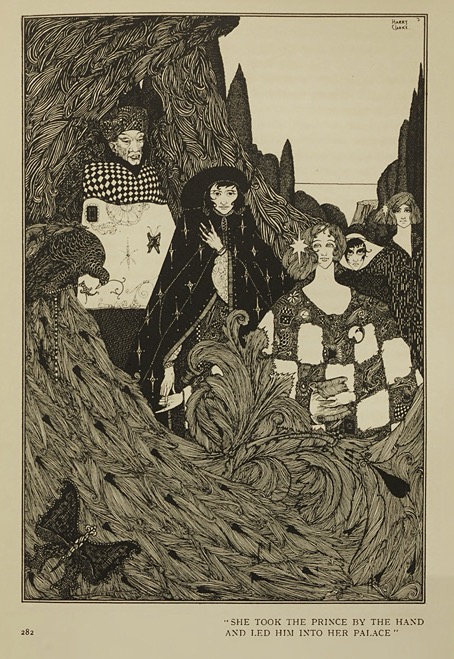
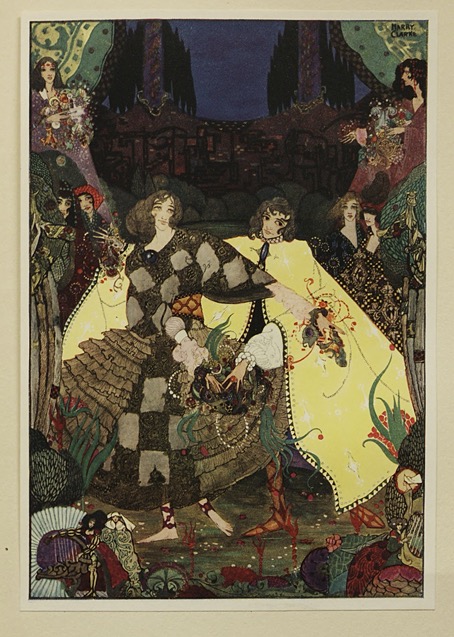
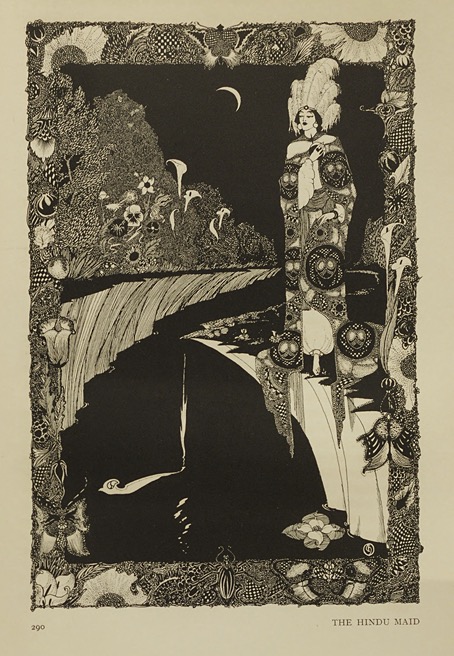
Six years ago I put together a post of links to online sources for all of Harry Clarke’s major works of illustration. His first illustrated book, Fairy Tales of Hans Christian Andersen, was among these but the best link I could find at the time was to a set of scans at Flickr which didn’t include things like the board illustrations. (And Flickr is a generally unstable host for anything.) The images here are from this page which was added recently to Wikimedia Commons, and are taken in turn from a collection of book scans at Maastricht University.
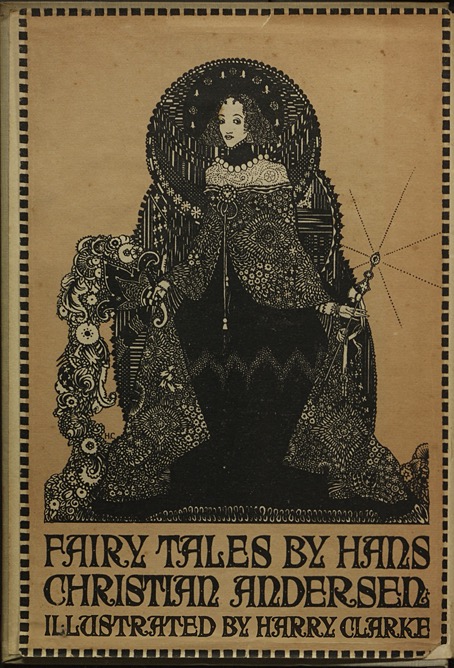
Clarke’s book of fairy tales was published by Harrap in 1916 but wasn’t intended to be his first illustrated edition. Harrap’s first commission had been for an edition of Coleridge’s Rime of the Ancient Mariner but the project was abandoned when most of the art was destroyed during Ireland’s Easter Uprising. Further plans for an edition of Pope’s The Rape of the Lock were also abandoned. Harrap’s decision to launch a new artist with yet another collection of Hans Christian Andersen stories seems surprising when there were already many fine editions for British book-buyers to choose from. The Robinson brothers—Thomas, Charles and William—had collaborated on a huge story collection published in 1899, with their individual contributions being subsequently repackaged as separate volumes. The same year saw another edition for which Helen Stratton provided over 400 illustrations. Edmund Dulac and Dugald Stewart Walker had produced books of their own by the time Clarke’s edition was being prepared, and there were others besides these.
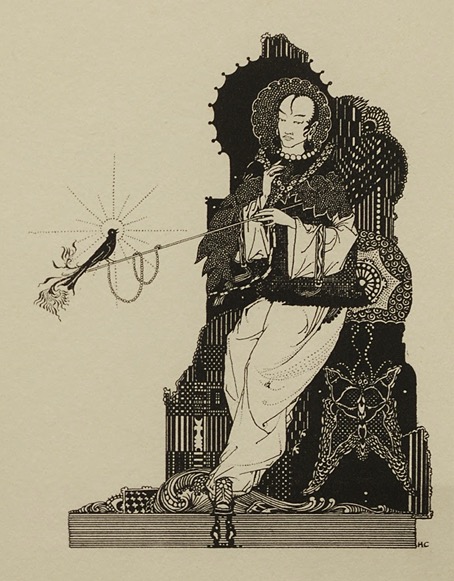
Clarke’s collection has more stories than some of those illustrated by his contemporaries but his art is also a little less assured than it would be in his later books. As a fairy-tale collection it lacks the delicate touch he brought to his illustrated edition of Perrault’s tales. There are many excellent compositions, especially among the black and white drawings but also a few pieces which aren’t so much composed as filled with competing areas of decoration that overwhelm the subject of the picture. Clarke never abandoned his fondness for minute details but in his later books his arrangements of tiny circles and baroque curlicues are much more successful.
Elsewhere on { feuilleton }
• The illustrators archive
Previously on { feuilleton }
• Harry Clarke’s Elixirs of Life
• Fire in the Blood: Harry Clarke
• Harry Clarke’s illustrated Swinburne
• More Harry Clarke online
• Harry Clarke online
• Harry Clarke record covers
• Thomas Bodkin on Harry Clarke
• Harry Clarke: His Graphic Art
• Harry Clarke and others in The Studio
• Harry Clarke’s Fairy Tales of Charles Perrault
• Harry Clarke in colour
• The Tinderbox
• Harry Clarke and the Elixir of Life
• Cardwell Higgins versus Harry Clarke
• Modern book illustrators, 1914
• Illustrating Poe #3: Harry Clarke
• Strangest Genius: The Stained Glass of Harry Clarke
• Harry Clarke’s stained glass
• Harry Clarke’s The Year’s at the Spring
• The art of Harry Clarke, 1889–1931