Weekend links 227

grim.jpg

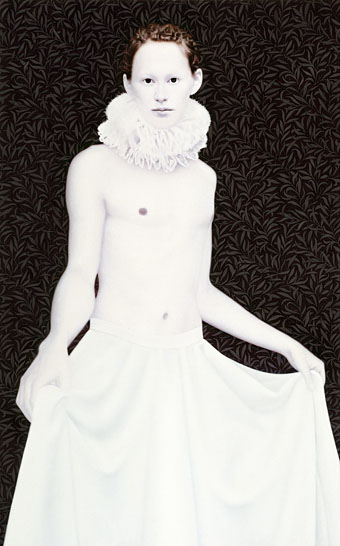
A Follower by Jason Grim.

Haunted Futures, a multi-genre anthology from Ghostwoods Books, will feature stories by Warren Ellis, John Reppion, Liesel Schwarz, Chuck Wendig, Richard Kadrey, Stephen Blackmoore and others. It will also feature some of my illustrations but only if this this Kickstarter fund is successful.

• “…at issue here is restriction versus potential: protect a specific set of choices versus open the field to the exploration of everything.” Sam Potts offers a refutation of Robert Bringhurst’s design textbook The Elements of Typographic Style.

• “I discovered that if one looks a little closer at this beautiful world, there are always red ants underneath.” Morgan Meis quoting David Lynch in a review of David Lynch: The Unified Field, a new exhibition of Lynch’s paintings.

But among these novels only Moravagine, first discovered for English-speaking readers by Henry Miller and a direct ancestor of Céline’s Voyage au bout de la nuit, has survived as an underground classic. A monstrous admixture of Lautréamont’s Maldoror, Feuillade’s Fantômas, Nietzsche’s Superman, Jack the Ripper and (according to the Cendrars scholar Jay Bochner) the deranged Jung and Freud disciple Otto Gross, Moravagine remains Cendrars’s most nihilistic and darkly comic other.

Richard Sieburth on Blaise Cendrars and his “Dada update of Dostoevsky”, coincidentally the subject of a post here earlier in the week.

• “…the duchess became enthralled with the idea of creating a garden of plants that could kill instead of heal.” Natasha Geiling on Jane Percy’s Poison Garden.

• Mix of the week: Kosmik Elektronik [part 3] by The Kosmische Club. More Kosmische musik: Agitation Free on French television in 1973.

• At Dangerous Minds: Secret Weapons (1972), 22 minutes of made-for-TV dystopian science fiction directed by David Cronenberg.

Project Praeterlimina, “a journal of daemonology, magic, and the human condition”.

The NOS Project: download Shed’s score for Murnau’s Nosferatu.

• At Lambda Literary: Toy, a poem by Evan J. Peterson.

Drew Daniel doesn’t want to play the listicle game.

Surrealism and Magic

Stuff in old books

Haunted Island (1973) by Agitation Free | Haunted Heights (1977) by Peter Baumann | Haunted Dancehall (1994) by The Sabres of Paradise

Weekend links 225

mori.jpg

Still from The Shaman-Girl’s Prayer (1997), a video piece by Mariko Mori. This page has pictures of Mori’s futuristic/cosmic performances, films & environments.

Time Out of Mind (1979) was a BBC TV series about science fiction writers, five short films concentrating on Arthur C. Clarke, John Brunner, Michael Moorcock, Anne McCaffrey and an sf convention. I was only interested in the Moorcock film at the time, not least because it featured a short clip of Hawkwind playing Silver Machine, and inserted scenes from the film of The Final Programme (1973) between the interviews. The Moorcock episode is less about his books than about New Worlds magazine and the so-called New Wave of sf in general, so you also see rare footage of M. John Harrison in a Barney Bubbles “Blockhead” T-shirt talking then ascending a limestone cliff, and bits of interviews with Brian Aldiss and Thomas Disch. Ballard isn’t interviewed but is present via a scene from the Harley Cokeliss film Crash! (1971) in which Gabrielle Drake slides in and out of a car while someone reads Elements of an Orgasm from The Atrocity Exhibition.

• “…there happened to be a book on Ritual Magick that talked about John Dee and summonings and Dr. Faust and all that kind of stuff. So then obviously at that age, too, I read HP Lovecraft and then Michael Moorcock and what they call fantasy literature. Through HP Lovecraft I discovered Arthur Machen, and I think that sort of percolated down inside…” Dylan Carlson of Earth talking to Steel for Brains. The Wire has the vinyl-only track from the new Earth album, Primitive And Deadly, and a track from Carlson’s solo album, Gold. Related: Artwork by Samantha Muljat, designer/photographer for the new Earth album.

Phantasmaphile has details of the next two issues of deluxe occult magazine Abraxas. Issue 6 includes a major feature on Leonora Carrington while Luminous Screen is a special issue devoted to occult cinema.

• More Broadcast: Video of a performance at Teatro Comunale di Carpi, March 2010 (part 2 here), and “constellators and artifacts” at A Year In The Country.

• “Petition demands return of ‘Penis Satan’ statue to Vancouver.” There’s an uncensored photo of the contentious statue here.

• Literary Alchemy and Graphic Design: Adrian Shaughnessy on James Joyce’s writings among graphic designers.

• Frank Pizzoli talks to John Rechy about “the gay sensibility”, melding truth and fiction, and his literary legacy.

• Mixes of the week: Secret Thirteen Mix 127 by Roberto Crippa, and FACT Mix 459 by Craig Leon.

Alan Moore has finished the first draft of his million-word novel, Jerusalem.

• Crazy pavings: Alex Bellos on Craig Kaplan’s parquet deformations.

Noise Not Music: “Live recordings, obscure cassettes and more…”

Pylon of the Month

Zoot Kook (1980) by Sandii | Rose Garden (1981) by Akiko Yano | Telstar (1997) by Takako Minekawa

Pierre-Yves Trémois’s Fleurs du Mal

tremois1.jpg

A couple of works by Pierre-Yves Trémois appeared in one of the very first posts here back in 2006 as part of the feature that began the long-running Recurrent Pose series. I like Tremois’s work a great deal so it’s good to find these pages from his 1971 edition of Baudelaire’s Les Fleurs du Mal. There were ten illustrations in all, some of them in the clear-line etching style familiar from his many prints. The Tremois edition is unusual in having some (all?) the poems written out by the artist. He’s also one of the few illustrators to do justice to Baudelaire’s scandalous lesbian verses by showing women who actually seem attracted to one another. Earlier illustrators—if they depicted the theme at all—were much more coy.

tremois2.jpg

tremois3.jpg

Continue reading “Pierre-Yves Trémois’s Fleurs du Mal”

Weekend links 223

paez.jpg

Step Up (2014) by Angelica Paez.

• Lots of attention this week for Kevin Martin whose latest album as The Bug, Angels And Devils, is out now on Ninja Tune. The previous Bug release, London Zoo (2008), was a fierce collection that stood apart from the Grime pack not only for its guest vocalists but also for being informed by Martin’s broad range of influences: industrial and extreme electronics, heavyweight dub, metal and avant-garde jazz. Martin was interviewed by The Quietus and FACT who also asked other musicians to choose their favourite Martin recordings. Elsewhere, The Wire has Swarm, a track not included on the album.

Related: Martin’s four superb compilation albums for Virgin Records have been deleted for years but are worth seeking out: Ambient 4: Isolationism, Macro Dub Infection Volume One & Volume Two, and Jazz Satellites Volume 1: Electrification (Virgin cancelled volume 2). From the NME, 1995: Kevin Martin’s Ten Commandments For All Time.

• “…it never becomes quite clear why two grown men would want to write to each other in the guise of a horse and a cat.” Henry Giardina reviews The Animals: Love Letters Between Christopher Isherwood and Don Bachardy, edited by Katherine Bucknell.

Shufflepoems: A Deck of Poetry by Lydia Swartz. “100 cards, four suits, one stanza per card. Shuffle for a new adventure every time.” The project needs a last-minute push to gain Kickstarter funding so if this sounds interesting go, go, go!

The Haxan Cloak’s favourite heavy metal albums. Metallica’s Master Of Puppets still gets my vote. More from The Quietus: David Stubbs on the Werner Herzog soundtracks of Popol Vuh.

• At Strange Flowers: Waking the witch, a remembrance of occult artist Rosaleen Norton and other characters from Sydney’s Kings Cross area, with news of a planned Norton documentary.

• A nine-note motif has for decades signalled “Asian” in popular music. Kat Chow looks at the history of a musical stereotype.

Joseph Conrad’s Heart of Darkness is the subject for entrants in the Folio Society’s latest illustration competition.

• Irradiating the Object: Rhys Williams talks to writer M. John Harrison.

Does the Sea Serpent Really Look Like an Art Nouveau Oar-fish?

Schrödinger’s cat caught on quantum film.

70s sci-fi art: a Tumblr.

Demodex Invasion (1995) by Techno Animal | Piranha feat. Toastie Taylor (2001) by Techno Animal | Poison Dart feat. Warrior Queen (2008) by The Bug

Weekend links 222

wicker.jpg

A self-portrait by Nadia Wicker from her Projectie series.

• “And boy, did that Rain Parade sleeve look cool with its picture of the insouciant band sitting in front of large hot-house (or glass palace), the sky behind them tinted a sickly shade of apocalypse pink…” Joe Banks on the Rain Parade’s finest moment, Explosions In The Glass Palace.

• “…there are pleasures to be had from books beyond being lightly entertained. There is the pleasure of being challenged; the pleasure of feeling one’s range and capacities expanding…” Rebecca Mead on the pleasure of reading to impress yourself.

• “If Gengoroh Tagame performed the acts he drew in his comics he’d probably be dead or in jail,” says Zac Bayly, interviewing Tagame for BUTT.

Crime does not fascinate James Joyce as it fascinates the rest of us—the suggestion of crime dismays him. He tells me that one of his handicaps in writing Work in Progress is that he has no interest in crime of any kind, and he feels that this book which deals with the night-life of humanity should have reference to that which is associated with the night-life of cities—crime. But he cannot get criminal action into the work. With his dislike of violence goes another dislike—the dislike of any sentimental relation. Violence in the physical life, sentimentality in the emotional life, are to him equally distressing. The sentimental part of Swift’s life repels him as much as the violence of some of his writing.

Padraic Colum attended Joyce’s 47th birthday party.

• I’m currently reading The Wanderer, “a weird document” by Timothy J. Jarvis, which is officially published this week.

The Changes, another remarkable children’s TV series from the 1970s, is out on DVD next week.

Sir Richard Bishop has made all 14 of his solo albums available as free downloads.

• “How long do CDs last? It depends, but definitely not forever,” says Laura Sydell.

• “Readers absorb less on e-readers than on paper, study finds

• Book designer Craig Mod wants to talk about margins.

• Mix of the week: a mix for The Quietus by Helm.

Ozu’s passageways

• The Rain Parade: No Easy Way Down (BBC TV, 1984) | No Easy Way Down (studio, 1984) | No Easy Way Down (Tokyo, 1984)