Picturing Dorian Gray

dorian1.jpg

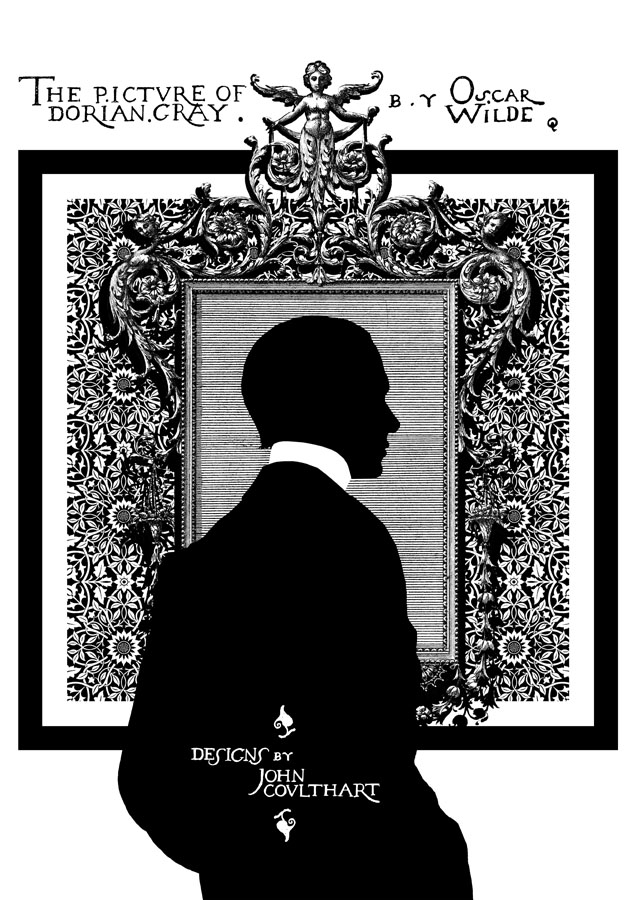
It’s taken a while but here at last are some of the pages from my series of illustrations based on The Picture of Dorian Gray, as featured in volume 2 of The Graphic Canon (“The World’s Great Literature as Comics and Visuals”) edited by Russ Kick. I agreed with Russ not to run everything so there’s some incentive to buy the book (or books…there are three volumes altogether). Now I’ve seen the printed edition the whole project seems even more remarkable: 500 large illustrated pages in a variety of media and art styles. Volume 2 runs through the 19th century and ends with my contribution; I opted to do this story in black-and-white but there’s colour used throughout the books. I especially like the Moby-Dick sequence by Matt Kish, a very different take on a very familiar tale.

As with many of the things I’ve been doing recently I opted for adapting materials of the period. Since I have a lot of Oscar Wilde-related reference material I was able to go further and incorporate details that relate directly to the book and Wilde’s life. All the text is taken from a scan of the first printing of the novel at the Internet Archive, the title lettering being drawn originally by Wilde’s friend, publisher and illustrator Charles Ricketts. A heavy black square on each page provides some continuity as well as resembling the frames of comic pages. (Or a picture frame.) The silhouette on the opening page is another of Wilde’s friends, the writer Max Beerbohm, taken from a drawing by William Rothenstein. The pair were dandyish Café Royal regulars throughout the 1890s.

dorian2.jpg

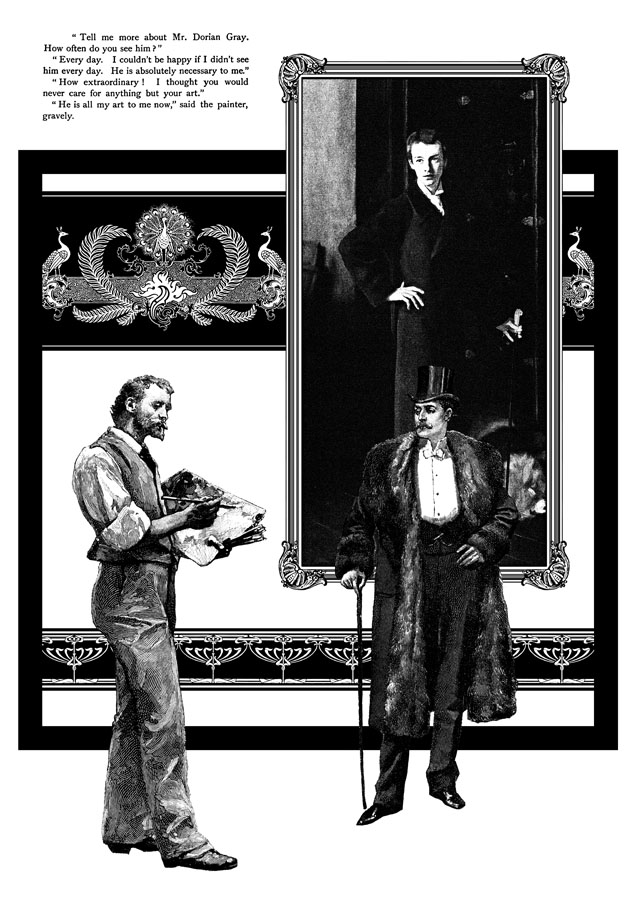
This is my favourite page. I liked the way the composition came together and also enjoyed being able to use John Singer Sargent’s portrait of W. Graham Robertson as the picture of Dorian. I’ve noted in an earlier post the similarity between this painting and the portrait seen in the BBC’s adaptation of the novel by John Osborne. Robertson was a theatre designer and illustrator who Wilde consulted when planning stage designs for what would have been the London debut of Salomé. Robertson was also (so far as we know) homosexual which adds an extra resonance.

dorian3.jpg

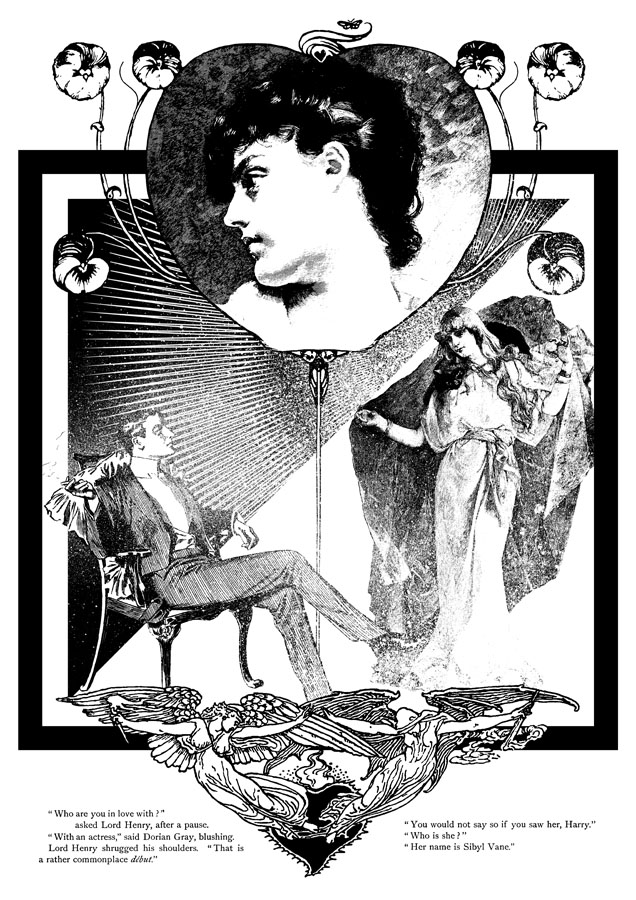
The Sibyl Vane page: a combination of details from The Studio, The Strand and The Magazine of Art. The motif at the foot of the page is by Walter Crane. Nothing of Wilde’s appeared in The Strand but that magazine’s most popular writer, Arthur Conan Doyle, had his second Sherlock Holmes adventure, The Sign of Four, commissioned at the same dinner that saw the commissioning of Dorian Gray, both novels being published by Lippincott’s Monthly Magazine in 1890.

dorian4.jpg

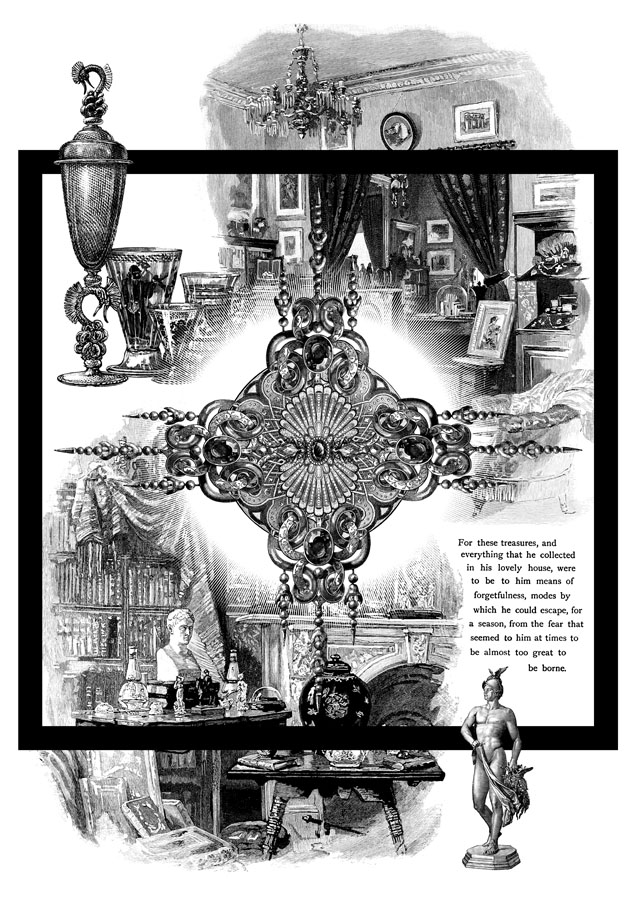
A page depicting Dorian’s distracting obsession with jewels and luxurious goods. This chapter can seem somewhat superfluous unless seen in the light of Wilde’s intention to write something like Huysmans’ À rebours (1884).

dorian5.jpg

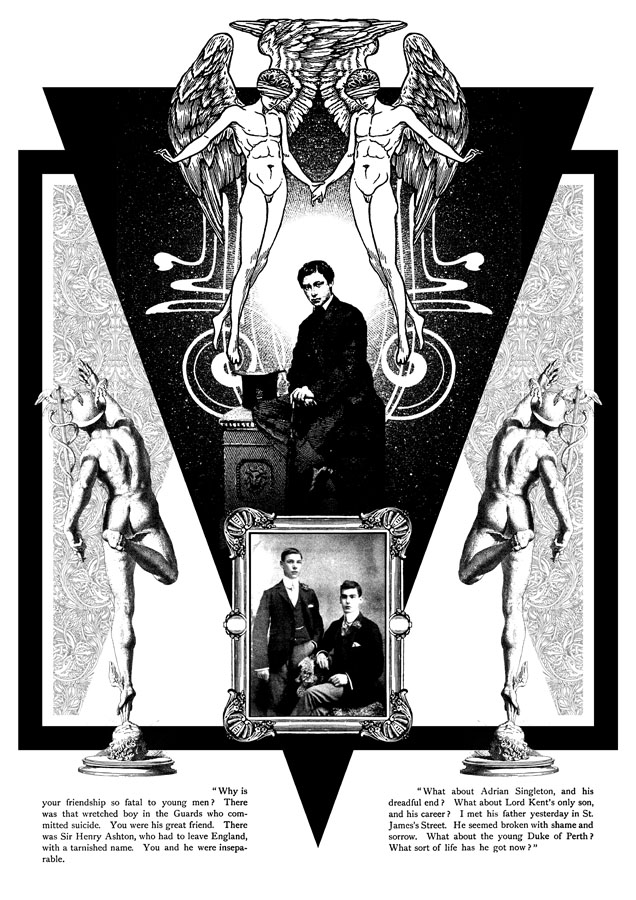
The “Love that dare not speak its name” page. This makes explicit the subtext of the book although if you read the two paragraphs I selected it’s evident enough why Dorian is causing a problem for so many young men. The blindfolded Eros was a drawing by Walter Crane which I doubled then re-drew slightly so the pair were holding hands. The boy below is a picture from The Strand of the young Edward VII, a robust heterosexual in later years but with a son, Prince Albert Victoria, who became linked to the notorious Cleveland Street Scandal which involved a male brothel catering to aristocrats. The two young men in the picture frame are described as a pair of “panthers” in Neil McKenna’s The Secret Life of Oscar Wilde (2003), by which he means that they were fin de siècle rent boys (as in Oscar’s remark about “feasting with panthers”); McKenna doesn’t give any further details about the photo but it suited the picture.

In addition to this series of illustrations, volume 2 of The Graphic Canon includes two of my Lewis Carroll illustrations in a section by different artists based on the Alice books. I’d be recommending The Graphic Canon even if I wasn’t a contributor, as I said above it’s a remarkable achievement. Watch out for it.

Elsewhere on { feuilleton }
The Oscar Wilde archive

Weekend links 134

ulian.jpg

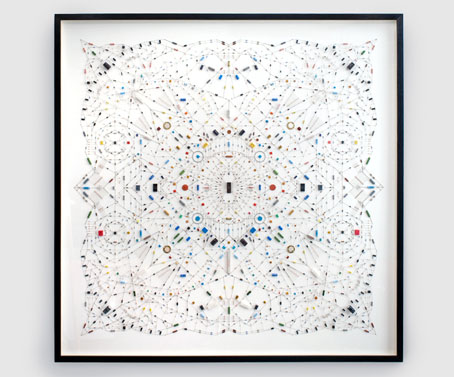
Technological mandala 02 (The beginning) (2012) by Leonardo Ulian.

• The Yellow Magic Orchestra really were the Japanese equivalent of Kraftwerk in 1978. I’d not seen this video for Firecracker before. Same goes for the Technopolis and Rydeen videos. Related: YMO’s synth programmer, Hideki Matsutake, showing off his modular Moog on a Japanese TV show.

Sra is the final book in the Aedena Cycle by Moebius. It’s never been translated into English but Quenched Consciousness has just finished posting the entire book in an unofficial translation.

• “It’s better to have a small amount of good comics, than a big amount of mediocre comics.” Dutch comic artist Joost Swarte interviewed.

• From 2007: The Strange Lovecraftian Statuary of Puerto Vallarta (Thanks, Ian.) Related: More art by Alejandro Colunga.

steam.jpg

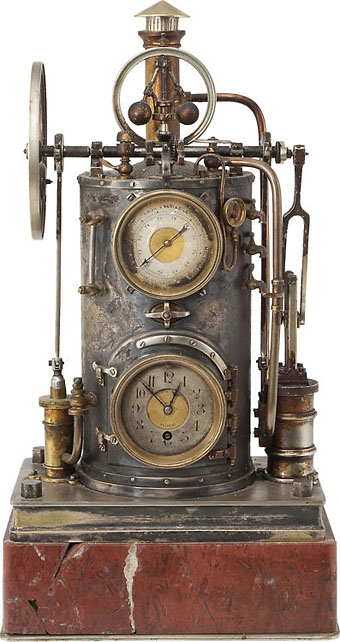
A novelty mechanical clock barometer in the form of a steam engine (c. 1885).

The MR-808: a room-size TR-808 drum machine by Moritz Simon Geist with real instruments played by robot hands.

• “Shoot us and dig the grave; otherwise we’re staying.” The women living in Chernobyl’s toxic wasteland.

Hotel Room Portraits 1999–2012 by Richard Renaldi, a new photo exhibition at Wessel + O’Connor.

Lane’s Telescopic View of the Opening of the Great Exhibition, 1851.

• “I’m the target market, and I don’t like it!” A Creative Catharsis.

Brian Eno’s new ambient album, Lux, is released on Monday.

Collages by Sergei Parajanov.

Techno City (1984) by Cybotron | Techno Primitiv (1985) by Chris & Cosey | Techno Dread (2008) by 2562.

Reverbstorm in print

rev1.jpg

A couple of months ago I was starting to wonder whether I’d ever see this book printed, the production process became so tortuously drawn out. But Reverbstorm is finally in print and looking exactly the way I intended with black boards, black endpapers and black ink on the page edges. The latter proved to be a costly extra which explains why it’s an uncommon effect.

rev2.jpg

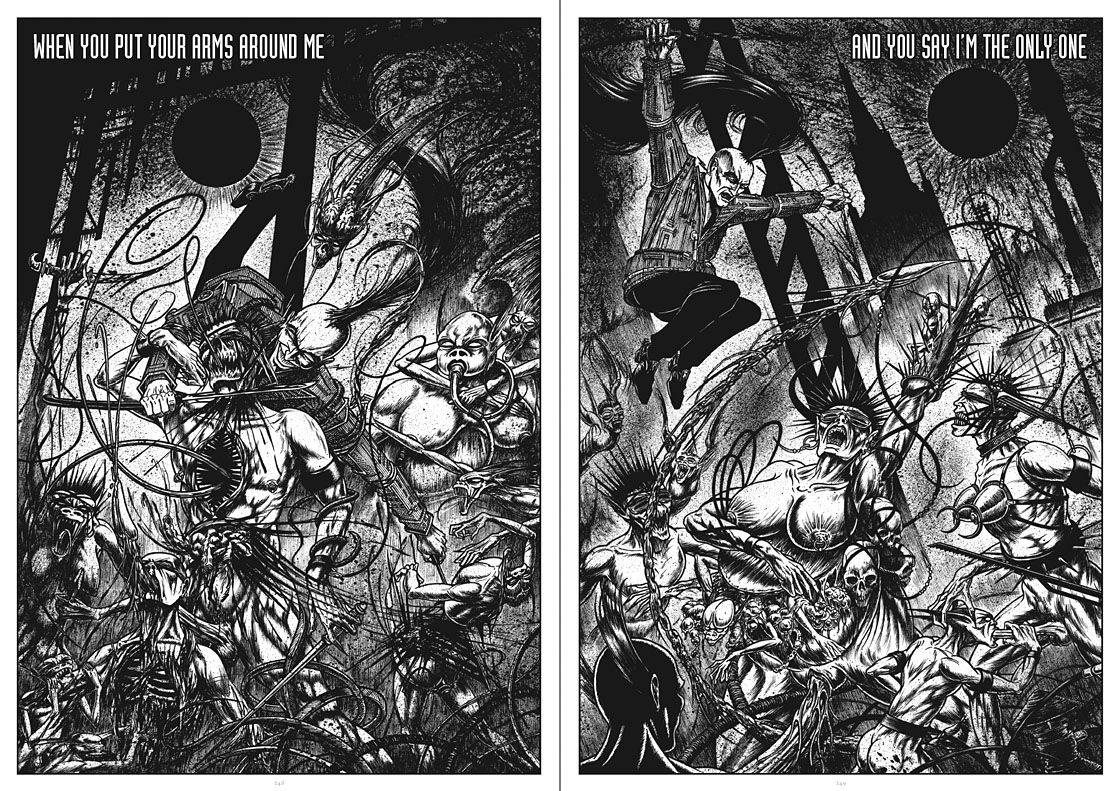
More important than the book design is that the printing of the artwork is excellent, with rich blacks and pin-sharp detail throughout. You’d think that printing black-and-white pages was a fairly straightforward business but the first set of proofs were pretty disastrous, the ink bleeding over the edges of many panels and detail elsewhere being blacked in. A combination of copious cross-hatching, spattered ink and—on later pages—brush shading and monochrome painting proved to be too much when the A3 artwork was reduced to half its size. This was particularly galling since these pages had never been properly printed since they were drawn: the original comics looked glossy enough but were all produced by back-street printers who didn’t bother too much about quality, and even made mistakes. They were a necessary evil at a time when other Savoy books had been refused by printers who objected to the material they contained. The relief at finally seeing the series completed and printed to this standard is considerable.

rev3.jpg

However, I’m afraid would-be purchasers still have a slight wait before they can buy a copy. The official publication date will now be early February but copies will be available to buy from the first week in January after distribution details have been finalised. I tried to persuade Savoy to relent on this and let a few copies go out prematurely but that won’t be happening. Sorry to anyone who’s been waiting since April (!) for the book but the decision is out of my hands. I believe it’ll be worth the wait. This is a better book than The Haunter of the Dark, and the best (and last) thing I’ll do in the comics medium. Next up is Axiom, a different world entirely. More about that later.

rev4.jpg

Previously on { feuilleton }
Reverbstorm update
James Joyce in Reverbstorm
A Reverbstorm jukebox
Reverbstorm: Bauhaus Horror
Reverbstorm: an introduction and preview

Weekend links 133

woods1.jpg

Lower Manhattan (1999) by Lebbeus Woods.

RIP Lebbeus Woods, an architect and illustrator frequently compared to Piranesi not only for his imagination and the quality of his renderings but also for the way both men built very little from a lifetime of designs. Lots of appreciations have appeared over the past few days including this lengthy piece by Geoff Manaugh at BLDGBLOG. (Geoff interviewed Woods in 2007.) Elsewhere: A slideshow at the NYT, Steven Holl remembers Lebbeus Woods and Lebbeus Woods, visionary architect of imaginary worlds. See also: Lebbeus Woods: Early Drawings and this post about Woods’ illustrations for an Arthur C Clarke story collection. Woods was at his most Piranesian with Gothic designs for an artificial planet that would have been the principal location in Vincent Ward’s unmade Alien 3.

Arkhonia draws to the end of a year of blogging about and around the Beach Boys’ errant masterwork, Smile (1967). Witty, discursive and frequently scabrous accounts of how Brian Wilson’s magnum opus was derailed and marginalised until it became convenient for commercial interests to exploit its reputation. Anyone following those posts won’t have been surprised by Wilson’s sacking from his own group by Mike Love in September.

• “We’ve been underground for 27 hours now. Everyone is caked in mud, with grit in their hair.” Will Hunt explores the catacombs and sewers of Paris.

I think the only remotely interesting drug was acid. I had a slightly peculiar attitude towards it I think. Just about everything about hippydom I hated. I liked the 60s up to about ’65 or ’66. I liked the mod clothes, I liked the look. I wasn’t a keen taker of speed because I didn’t like the comedown from it. Then everything changed and became looser, I didn’t like the clothes at all. I felt rather out of step with it. The acid thing was interesting though. I come from Salisbury and from the age of 12 I had a friend who was 30 years older than I was who I saw regularly up until when he died a couple of years ago, whose obituary I wrote in The Times. This man was called Ken James and he was deputy head at the chemical warfare unit at Porton Down [the MOD’s Defence Science and Technology Laboratory]. He then became head of the scientific civil service; he was the man who introduced computing into the civil service and he had taken acid as early as 1950. This was long before Aldous Huxley.

Sharp Suits And Sparkle: Jonathan Meades On Acid, Space And Place by John Doran. Marvellous stuff. Meades’ new book is Museum Without Walls.

• In New York later this month: A Cathode Ray Séance – The Haunted Worlds of Nigel Kneale.

• More acid: Kerri Smith talks to Oliver Sacks about his drug experiences.

• “It starts with an itch”: Alan Bennett (again) on his new play, People.

nymag.jpg

Lower Manhattan last Wednesday. Photo by Iwan Baan.

• Back issues of OMNI magazine can now be found at the Internet Archive.

• Alan Moore & Mitch Jenkins present their new film, Jimmy’s End.

• At BibliOdyssey: Atlas title pages part one & part two.

• Raw Functionality: An interview with Emptyset.

Athanasius, Underground

Vintage Caza

Stormy Weather (1979) by Elisabeth Welch.

Weekend links 132

janini1.jpg

La Hora del Fantasma (no date) by Joaquim Pla Janini.

• Many of the art links featured here are tips from Thom Ayres, so it’s only right to point to his new album project which he’s funding through Kickstarter and embellishing with his own nature photography.

• Anne Billson is another writer beguiled by Philippe Jullian’s masterwork, Dreamers of Decadence. And thanks to Ms Billson for drawing attention to the insane opening of Crime Without Passion (1934).

• Does this fake ad for The Necronomicon use one of my Cthulhu pictures? Possibly. Get the picture for yourself in this year’s Cthulhu calendar. (My thanks to everyone who’s bought a copy so far.)

To break the ice, I talk about books: he is delighted to discover that I have read his beloved Denton Welch, also J. W. Dunne’s An Experiment With Time. I have found them in my old school library, and know both have been a tremendous influence on him in different ways. Knowing of his interest I also mention that I have just read Colin Wilson’s The Quest For Wilhelm Reich, published the year before. He likes Wilson, he says, jokes that “the Colonel” with his cottage in Wales in Wilson’s Return of the Lloigor and his own Colonel Sutton-Smith from The Discipline of DE are one and the same. On something of a roll, I mention Real Magic by Isaac Bonewits, and he acknowledges that it has “some good information” – but is much more enthusiastic about Magic: An Occult Primer by David Conway [years later I would discover that Burroughs & Conway had in fact exchanged letters on various subjects pertaining to magic, occultism, and psychic phenomena – but that is decidedly another story!]

Matthew Levi Stevens recalls The Final Academy and an encounter with William Burroughs thirty years ago.

Locomotif: A short survey of trains, music & experiments: Gautam Pemmaraju on Kraftwerk, Pierre Schaeffer, Luigi Russolo and others.

A flip-through of The Graphic Canon, volume 2. Wait to the end and you’ll see a couple of my Dorian Gray pages. Imprint has a review of the book.

• Julian Bell reviews two new books about Romantic painter Caspar David Friedrich.

Alan Moore talks to The Occupied Times about art, education and anarchism.

• Colin Dickey reviews Vilém Flusser’s Vampyroteuthis Infernalis: A Treatise.

janini2.jpg

Las Parcas II (1930) by Joaquim Pla Janini.

• Michael Newton reviews A Natural History of Ghosts by Roger Clarke.

• Golden Age Comic Book Stories revisits the work of Sidney Sime.

Front Free Endpaper asks “What’s in an inscription…?”

Mormon Missionary Positions

Amateur Aesthete

Ghosts (1981) by Japan | Ghosts (2008) by Ladytron | Ghosts (2012) by Monolake.