Chronopolis by Piotr Kamler

chronopolis3.jpg

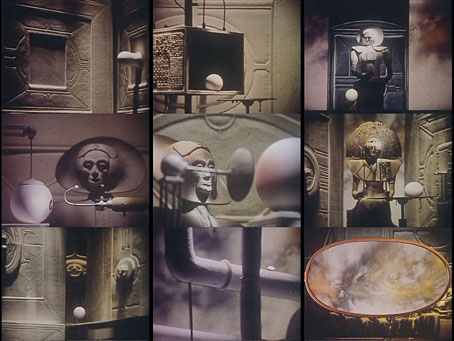
Another gem at Ubuweb, and nothing to do with JG Ballard’s SF story of the same name, Piotr Kamler’s Chronopolis (1983) is a 50-minute animated science fiction film, albeit science fiction of a much more abstract variety than one usually finds in cinema. I’m generally exasperated by the way film and TV SF does little more than play Cowboys & Indians in space so it’s refreshing to see something that’s unashamedly strange and doesn’t feel the need to explain itself. There is apparently a version of this with some English narration for those benighted American audiences everyone feels a need to pander to but the Ubuweb version is wordless, and if you can’t read French then you won’t understand the few lines of text prologue at the opening.

chronopolis1.jpg

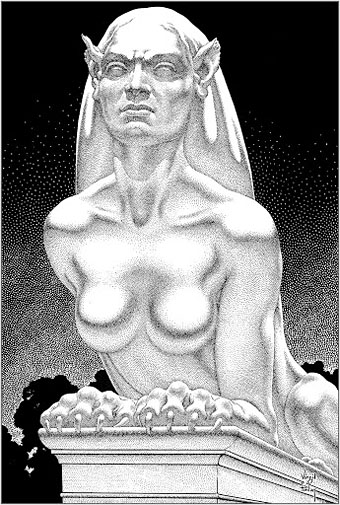
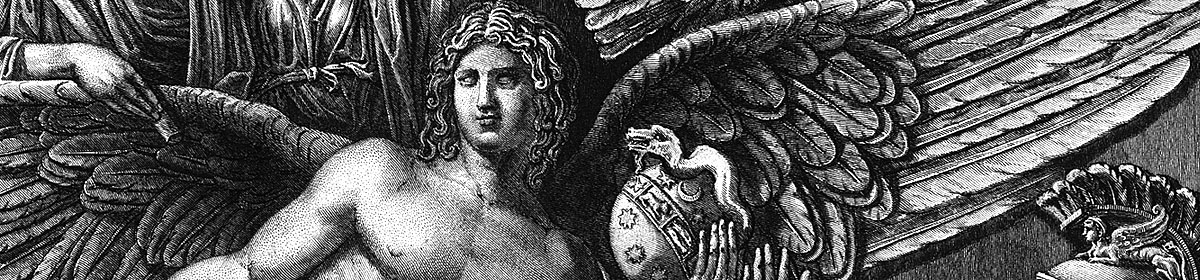
Accompanying Kamler’s beautifully crafted and quite inexplicable scenes there’s an electronic score by composer Luc Ferrari, mostly analogue timbres whose origin is as mysterious as the events taking place on-screen. Kamler’s statuesque figures remind me of the gods and aliens that Moebius and co. were drawing in Métal Hurlant during the 1970s. Chronopolis was a French production begun in 1977 so it’s possible that French comics were an influence. Moebius himself worked on another animated SF film during this period, René Laloux’s Time Masters (1982). Chronopolis is closer in tone to the weirdness of Laloux’s earlier Fantastic Planet (1973), and all the better for it.

chronopolis2.jpg

Previously on { feuilleton }
Les Jeux des Anges by Walerian Borowczyk
Les Temps Morts by René Laloux

Weekend links 139

barnes.jpg

Lucy in the Sky with Diamonds (2012) by Lesley Barnes. She also has peacock wrapping paper.

Big thanks to Dennis Cooper for including this blog in his favourite music, fiction, poetry, film, art & internet lists for 2012. Lots of good company there. One benefit of end-of-year lists is the way they suggest things to look for in January.

• “…the best pictures of dicks that I’ve ever seen…” Rudy Rucker reviews Malcolm McNeill’s The Lost Art of Ah Pook Is Here and Observed While Falling, out at last from Fantagraphics. Rucker notes that William Burroughs’ text is still only available in out-of-print editions in which case you’ll need a book dealer. Elsewhere, Burroughs: The Movie has cleared 50% of its restoration Kickstarter goal but still needs supporters.

• Julia Holter has been a recurrent presence in these posts since the release in March of her acclaimed second album, Ekstasis. FACT has an alternate version of the album’s opening song, Marienbad, one of the extra tracks on the recent UK reissue.

Suttree’s saga carried me down, down, down to the bottom of a heightened surrogate reality, a nadir where the rarest jewels of clarity are found. The fourth time through the novel I arrived at a state of barometric equipoise, a balancing between my mental state and Suttree’s. Then, as he descended again, I began to rise. There was a hypnotic poetry to his fall — his life disintegrated, then the fragments disintegrated, then those fragments followed suit ad infinitum.

Jim White on the life-preserving qualities of Suttree by Cormac McCarthy.

• “An 18-year-old boy who discovers he has a fetish for the aged gets a job in a nursing home and develops an intimate relationship with one particular old man.” Gerontophilia, a proposed film by Bruce LaBruce, is looking for funding.

• Can’t wait for this: Groenland Records announces Who’s That Man?, a four-CD set of music produced and performed by Conny Plank. FACT has a track list.

• At BUTT magazine: Pink Courtesy Phone Mix by Richard Chartier, a great selection of electronica old and new.

• Another end-of-year list: Volumes 1 & 2 of The Graphic Canon are in NPR’s Indie Bookseller best of 2012 selection.

The Nightmare Paintings: art by Aleister Crowley currently touring Australia.

• Christmas with Monte: Colin Fleming on the ghost stories of MR James.

• “The war on drugs is a war on human nature” says Lewis Lapham.

Alan Moore: why I turned my back on Hollywood.

• More electronica: Chris Carter discusses synths.

Saul Bass poster sketches for The Shining.

• At Pinterest: The Pan Within.

Ah Pook Is The Mayan God Of Death (1975) by William Burroughs | Panic (1985) by Coil | Light Shining Darkly (1992) by Coil.

Witkinesque

supervert.jpg

Arriving in the post this week, a Christmas gift from Supervert, a chapbook featuring a new piece of writing that purports to be the unauthorised biography of American artist/photographer Joel-Peter Witkin. The premise is that the facts of the real Witkin’s life are far too mundane to account for his extraordinary photo tableaux so Supervert supplies details such as “Mary Witkin [his mother] worked as a bookkeeper in a DDT plant, slowly saving to enrich the unfathomable reservoirs of the absurd.” A metaphysical portrait of the artist, then, with echoes of David Lynch or Bruno Schulz. Inside the chapbook was a promo postcard bearing pictures of the delightful Ms. Stoya whose reading of Necrophilia Variations has now gained over four million YouTube views.

The Witkin book isn’t for sale but copies are available to those who enter the Supervert contest which is running throughout December. All you need do is enter an email address here then keep your fingers crossed.

witkin.jpg

Sanitarium, New Mexico (1983) by Joel-Peter Witkin.

Witkin’s tableaux made an immediate impression circa 1993 when I bought a copy of PhotoVision, a Spanish photography journal which had devoted an entire issue to his work. This arrived at a point when I was halfway through drawing the Reverbstorm comic series, and Witkin’s parade of unorthodox humanity, crucified apes and sundry body parts seemed an ideal complement for the parade of similar grotesqueries (and sundry body parts) we were putting into the comic pages. I also liked the way Witkin worked his own variation on familiar scenes from art history, something we were doing throughout Reverbstorm (Witkin’s Vase: Study For the Base of the Crucifix just happens to combine a partly dissected human skull with Picasso’s Guernica, a recurrent motif throughout the series).

reverbstorm1.jpg

Above and below, some of the more Witkinesque details from part seven of Reverbstorm. The main figure above was a direct reference to Witkin’s Sanitarium, New Mexico. Many figures in other drawings are given Witkin-like blindfolds.

Continue reading “Witkinesque”

Gekko Hayashi revisited

hayashi02.jpg

It remains a fact that the most popular posts here are the sex-related ones. The post about Clayton Cubitt’s Hysterical Literature project continues to rack up views despite having been written about at greater length on far more popular sites; this weekend Facebook users were flocking to see the phallic plaster casts (why now?).

One of the perennial favourites from the gay artists archive is the post I made two years ago about the homoerotic art of Gekko Hayashi, the pseudonymous alter ego of Goji Ishihara (1923–1997). This has managed to become an almost universal point of reference despite all my knowledge about the artist being gleaned from other websites. The popularity would appear to be due to a generally high level of visibility in Google rankings combined with a tendency to write about recherché subjects which don’t receive high-profile attention elsewhere. Talking to Anne Billson yesterday about Ishihara’s monster art had me searching around for more of the Hayashi material. There’s still little to be seen outside some Japanese reprints. Given the language barrier when searching the Japanese book world it’s difficult to say whether any of these are still in print.

hayashi05.jpg

After turning up a few more examples of Hayashi’s work I’m increasingly struck by the strangeness of some of his art as well as the rare disjunction of seeing a commercial illustration style serving semi-pornographic ends. The latter effect is like seeing the libido of an artist such as Look and Learn painter Ron Embleton suddenly laid bare. A similar disjunction can be found in Oliver Frey’s work where a polished illustration and comic strip technique is applied to raw sexual scenarios. (I should note that Ron Embleton’s libido was on display in his comic strips for Penthouse magazine while—going in the opposite direction—Oliver Frey worked for a while at Look and Learn.)

hayashi07.jpg

You can find a polished style elsewhere but few artists get quite as weird with their erotic fantasies as the picture below showing a pair of penis-headed males embracing, and the one of a boy in what may be a bath full of blood being menaced (?) by an ambulatory midget phallus. Weirdness is familiar in the fetish world—everyone’s fetish is inherently weird to those who don’t share it—but always within strict limits, and besides, these aren’t fetishes. What’s odd about the pictures (especially the first) is the way they overburden the eros with a peculiarity you’d think would defeat the purpose of the painting. Hayashi/Ishihara worked as a comic artist as well as an illustrator so perhaps they’re part of a larger narrative; they may also be illustrating a text piece like some of the other pictures. For the moment they appear caught between the gay work and the monster illustration from the 1970s. This isn’t a complaint, it makes the art all the more intriguing and worth searching for.

hayashi09.jpg

Continue reading “Gekko Hayashi revisited”

Weekend links 137

jacobsen.jpg

Self-portrait by Jon Jacobsen from his Home series.

Steven Arnold: Cabinet of Curiosities is “a retrospective exhibition of this groundbreaking yet under-recognized queer artist at the ONE Archives Gallery & Museum in West Hollywood. The exhibition celebrates Arnold’s radical imagination, presenting many of his tableaux vivant photographs alongside never before exhibited drawings, sketchbooks, paintings and original poster art. In conjunction with the exhibition, ONE will screen Arnold’s four films, including Luminous Procuress (1970), which featured The Cockettes and was lauded by Salvador Dalí.” The exhibition runs to  January 12, 2013.

• “The boundary-pushing techno/sound design duo Emptyset will transform London’s cavernous industrial space Ambika P3 into an immersive sound installation for one night only—and here’s how they’re going to do it”.

• “At one time he was a well-known figure in Montparnasse, where he had a reputation as a master of the occult sciences.” Aleister Crowley is interviewed about his expulsion from France in 1929.

Our normal waking consciousness, rational consciousness as we call it, is but one special type of consciousness, whilst all about it, parted from it by the filmiest of screens, there lie potential forms of consciousness entirely different. We may go through life without suspecting their existence; but apply the requisite stimulus, and at a touch they are there in all their completeness… No account of the universe in its totality can be final which leaves these other forms of consciousness quite disregarded… [T]hey forbid our premature closing of accounts with reality.

William James (1842–1910) quoted in What Should We Do With Our Visions of Heaven—and Hell? by John Horgan at Scientific American.

Screws is an album of piano music by Nils Frahm that’s currently available as a free download (inc. aiffs).

• At Pinterest: Art Visonnaire. Related: Ain’t We Got Fun: The magical surrealism of Jen Ray.

Rowan Somerville “challenges the purpose and legitimacy” of the Bad Sex Awards.

Jimmy’s End: the website for the film by Alan Moore & Mitch Jenkins.

Douglas Rushkoff in conversation with Genesis Breyer P-Orridge.

• Linda Rodriguez McRobbie explores The History of Boredom.

• Recreating the sounds of the BBC Radiophonic Workshop.

Alchemical Emblems, Occult Diagrams, and Memory Arts.

Rocaille: A Blog about Decadence, Kitsch and Godliness.

• A new video for Goddess Eyes II by Julia Holter.

• The complete audio recordings of Jean Cocteau.

The Rumpus interview with Russ Kick.

Forgotten Bookmarks

• RIP Spain Rodriguez

Astradyne (1980) by Ultravox (produced by Conny Plank) | Biomutanten (1981) by Les Vampyrettes (Conny Plank & Holger Czukay) | Never Gonna Cry Again (1981) by Eurythmics (feat. Holger Czukay, produced by Conny Plank).