Weekend links 831

blackhole.jpg

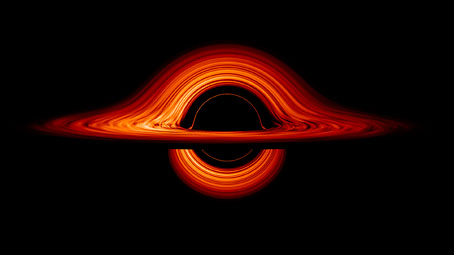
Black Hole Accretion Disk Visualization by NASA’s Goddard Space Flight Center/Jeremy Schnittman.

• The summer catalogue of lots for the After Dark: Gay Art and Culture online auction. Homoerotic art, photos, historic porn, etc.

• New music: The Sanctity Of Rust by Hollan Holmes; Heavy Water by Magic Tuber Stringband; Sorry I Didn’t Realize by iNFO.

• In another of those foolhardy numbered lists, Alexis Petridis attempts to rank Laurie Anderson’s greatest songs.

“The best of mathematics is a way of thinking,” [Klainerman] said. Progress in the field is made through discoveries rather than inventions, by following its own version of the scientific method. In 1911, for example, Roald Amundsen and four fellow explorers were the first people to reach the South Pole. “The South Pole was there to be discovered,” Klainerman noted, “but the path you take to get there, and the equipment you bring, depends on human inventiveness.” When he and Christodoulou spent six and a half years proving that Minkowski space is stable, they too had to invent the tools to get there. But the stability itself was not their creation. It was a fact to be divined.

A long read by Steve Nadis on Sergiu Klainerman and his conviction that mathematics has an existence that precedes human thought

• At the BFI: Tony Rayns on Lino Brocka’s Macho Dancer (1988), a trip into Manila’s gay underworld.

• Read an extract from In Another World: The Four Seasons Of Talk Talk by Graeme Thomson.

• At The Daily Heller: The Serene Surrealism of Guy Billout.

• At Dennis Cooper’s it’s a Malcolm Le Grice Weekend.

Mathematics And Electronics (1995) by Gas | True Mathematics (2002) by Ladytron | Music Is Math (2002) by Boards Of Canada

Weekend links 823

crab.jpg

NASA’s Hubble revisits Crab Nebula to track 25 years of expansion.

Snakes and Ladders is a video adaptation of the one-off Moon and Serpent performance presented by Alan Moore and Tim Perkins at Conway Hall, London, in 1999. With visual samples from Eddie Campbell’s comic-strip adaptation of the audio recording, plus my artwork from the CD release. (Thanks to Francis for the tip!)

• The spring catalogue of lots for the After Dark: Gay Art and Culture online auction. Homoerotic art, photos, historic porn, etc.

• New music: State Of Matter by Dobrawa Czocher; Plague Dogs by The Heartwood Institute.

• “Why we made a film about Mark Fisher called We Are Making A Film About Mark Fisher.

• At Colossal: “Ambiguity reigns in Olaf Hajek’s mysterious illustrations”.

• At Public Domain Review: Monet’s early caricatures (ca. late 1850s).

• At the BFI: George Orwell, film critic.

• The Strange World of…Ladytron.

The Plague (1967) by Scott Walker | A Plague Of Angels (2007) by Earth | The Plague (2014) by Cosmic Ground

Weekend links 794

views.jpg

Green Castle (1975) by Roger Dean.

• Roger Dean’s first book, Views, was published 50 years ago this month. The book sold 60,000 copies in its initial run, and was reprinted twice the following year. This extraordinary success gave Dean and his associates at the newly-formed Dragon’s Dream the resources to publish a line of art books by other imaginative artists such as Chris Foss, Ian Miller and Syd Mead. Without Views there wouldn’t have been a Dragon’s Dream, and without Dragon’s Dream there wouldn’t have been Paper Tiger, a publishing house launched by Roger Dean, Martyn Dean and Hubert Schaafsma in 1976. All this activity made a huge impression on me at the time, with books that provided a showcase for artists whose work would otherwise only be seen on the covers of paperbacks or vinyl records.

• At Alan Moore World: 3 novels and The Great When, an extract from a new video interview in which Alan talks about three of the books that have influenced his novels.

• At the BFI: “Dead of Night: 80 years on, Ealing’s anthology horror is still a waking nightmare,” says Edward Parnell.

…Drexler’s vision of nanotechnology was a chimera. It was like the philosophers’ stone of the alchemists: magic dressed in the science of its time, by means of which almost anything becomes possible. I call these oneiric technologies: they do not and quite probably cannot exist, but they fulfil a deep-rooted dream, or a nightmare, or both.

These are not simply technologies of the future that we don’t yet have the means to realise, like the super-advanced technologies that Arthur C Clarke said we would be unable to distinguish from magic. Rather, oneiric technology takes a wish (or a terror) and clothes it in what looks like scientific raiment so that the uninitiated onlooker, and perhaps the dreamer, can no longer tell it apart from what is genuinely on the verge of the possible. Perpetual motion is one of the oldest oneiric technologies, although only since the 19th century have we known why it won’t work (this knowledge doesn’t discourage modern attempts, for example by allegedly exploiting the ‘quantum vacuum’); anti-gravity shielding is probably another.

Philip Ball on unrealistic prognostications in science, from nanotechnology to artificial intelligence

• New music: Rún by Rún; Other Sides Of Nowhere by Underwater Sleep Orchestra; I Believe In You by Ladytron.

• At Dennis Cooper’s it’s Curtis Harrington‘s Day.

• Steven Heller’s font of the month is Ritualist.

A View From Her Room (1982) by Weekend | A Private View (1982) by Bill Nelson | Aerial View (2014) by Jon Hassell

Weekend links 596

hoshiyama.jpg

Jam III (2021) by Kotaro Hoshiyama.

• “Powell and Pressburger are peerless in realizing what Orson Welles would term plotless scenes—extra bits that ostensibly do not advance the story, but are a story unto themselves, and aggregate such that they’re vital to how we understand the characters who are living the story.” Colin Fleming says thanks for the Archers.

• A short promo for The Incal: The Movie. Hmm, okay. A film that adapted all 300 pages of the original story without changing anything or trying to explain away the weirdness would be worth seeing. But I doubt that’s what this will be. Read the book.

• “If a single word distills the New Wave aesthetic, it’s plastic…ironically flaunted artificiality became a leitmotif of the era.” Simon Reynolds reviews Reversing Into the Future: New Wave Graphics 1977–1990 by Andrew Krivine.

• Mixes of the week: a mix by Princess Diana Of Wales (not that one) for The Wire, and At The Outer Marker Part I, a Grateful Dead Twilight Zone mix by David Colohan.

The Bloomingdale Story: read the never-before published Patricia Highsmith draft that would become Carol (aka The Price of Salt).

• At Spoon & Tamago: Multiple panels form collaged portraits painted by Kotaro Hoshiyama.

• New music: Pyroclasts F (excerpt) by Sunn O))), and Loop return with Halo.

• At Dennis Cooper’s: William E. Jones Day.

Plastic Bamboo (1978) by Ryuichi Sakamoto | Barock-Plastik (2000) by Stereolab | Black Plastic (2002) by Ladytron

Weekend links 594

klinger.jpg

Eva und die Zukunft (1898) by Max Klinger.

• “It is no exaggeration to say that MAD invented the modern, postwar American takedown.” Thomas Larson reviews Seeing MAD: Essays on Mad Magazine’s Humor and Legacy.

• At the Internet Archive: Cartoon Modern: Style And Design In Fifties Animation (2006) by Amid Amidi, a book which has been made available as a free download by its author.

• New music: A preview of Metta, Benevolence by Sunn O))), recorded live in the Mary Anne Hobbs’ radio show in 2019; Veils by Víz; The Mountain (Blakkat Dub) by Ladytron.

• At Public Domain Review: Claude Mellan’s The Sudarium of Saint Veronica (1649), an engraving made with a single continuous line.

• “For Harry Houdini, séances and Spiritualism were just an illusion,” says Bryan Greene.

TheStencil is Steven Heller’s font of the month.

• At Dennis Cooper’s: Derek Jarman Day.

Nicky Mao’s favourite music.

Mad Man Blues (1951) by John Lee Hooker | Mad Pierrot (1978) by Yellow Magic Orchestra | Mad Keys (2002) by Al-Pha-X