Subterranean Modern: The Residents, Chrome, MX-80 Sound and Tuxedomoon

submod0.jpg

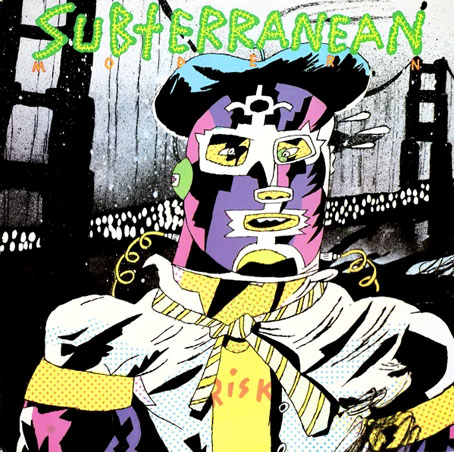
Subterranean Modern (1979). Sleeve art by Gary Panter.

As often happens, one post leads to another and the next thing you know there’s a themed week happening, so here’s something more about Tuxedomoon. Subterranean Modern was a compilation album released by The Residents on their Ralph Records label in 1979. The idea was to showcase The Residents along with three other groups from contemporary San Francisco, all of whom were underground acts, hence the “subterranean” title. (Just to confuse matters, Subterranean was also a San Francisco record label.) Three of those groups—Chrome, Tuxedomoon, The Residents themselves—have since developed cult followings; hard-rock outfit MX-80 Sound seem a little ordinary and out-of-place in this unique company but such is the nature of the compilation album. The Residents wanted each group to provide an interpretation of I Left My Heart In San Francisco but none of the others were very interested; Chrome’s offering, which lasts all of 27 seconds, is hilariously contemptuous of the idea, a squall of riff and vocals that fades in then quickly fades away. Cartoonist Gary Panter illustrated the cover which is also given the Rozz Tox seal of approval. For more about Rozz Tox, whose enigmatic presence can be found on other Ralph Records releases, see this.

I’d already heard Chrome and The Residents when I bought Subterranean Modern but this was first place I encountered Tuxedomoon’s music. Chrome, who appear on the back cover wearing their Clockwork Orange droog outfits, contribute two tracks that are as good as anything on their early records, Anti-Fade and the chugging Meet You In The Subway, for which they made a video filmed on the city’s BART platforms. I listened to those tracks, and the Tuxedomoon ones, much more than the rest of the album. With the exception of the pieces by MX-80 Sound, everything on the album has since been reissued on other compilations (Tuxedomoon’s tracks are on the Pinheads On The Move collection).

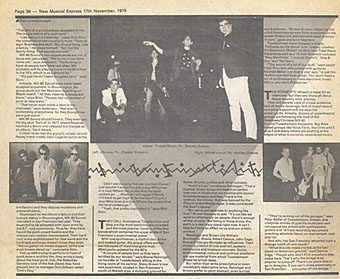
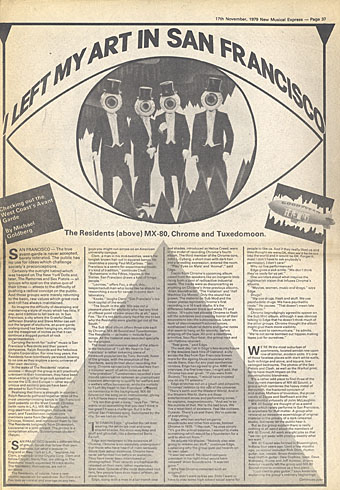
The following is a two-page feature from the NME for 17th November, 1979, profiling the album and the people who made the music. I don’t know whether this was Tuxedomoon’s first UK interview but it says it’s the first interview given by Chrome which gives it some vague contemporary relevance. Helios Creed recently re-formed Chrome, and played a show in London earlier this month. There’s also a new Chrome album, although for me Chrome proper requires Damon Edge, and he died in 1995. (Thanks to Gav for saving the pages!)

* * *
submod5.jpg

submod6.jpg

I LEFT MY ART IN SAN FRANCISCO

Checking out the West Coast’s Avant Garde by Michael Goldberg
ralph.jpgSAN FRANCISCO—The true avant-garde is never accepted, barely tolerated. The public has no use for ideas which challenge society’s preconceptions.

Certainly the outright hatred which was heaped on The New York Dolls and, later, The Ramones and Sex Pistols—all groups who spat on the status quo of their times—attests to the difficulty of pushing a radical concept on the public. And those groups were merely returning to the basic, raw values which great rock and roll has always maintained.

So imagine the difficulty of developing and maintaining a style of music which has little, if any, solid tradition to fall back on. In San Francisco, a city where the Grateful Dead, Jefferson Starship and Steve Miller can sell out the largest of stadiums, an avant-garde underground has been hanging on, etching out the meagrest of niches so that it can continue a dogged pursuit of rock experimentation.

Carrying the torch for “outre” music is San Francisco’s Residents and their parent companies, Ralph Records and the nebulous Cryptic Corporation. For nine long years, the Residents have relentlessly persisted, bowing to no one as they explore a sonic universe of their own devising.

In the wake of The Residents’ relative success—though the group is still practically unknown in their hometown, they have been received by a rather large cult spread out across the U.S. and Europe—other equally unique and esoteric groups have been attracted to San Francisco.

Realising that there is strength in numbers, Ralph Records gathered together three of the most uncompromising bands in San Francisco (and possibly on the West Coast): Chrome (with roots in L.A.), MX-80 Sound (who migrated from Bloomington, Indiana, last year), and Tuxedomoon (whose core members came from Denver, Colorado and Chicago, Illinois), and convinced them to join The Residents (originally from Shreveport, Louisiana) in a joint project. The project is a compilation album, Subterranean Modern (Ralph).

Continue reading “Subterranean Modern: The Residents, Chrome, MX-80 Sound and Tuxedomoon”
Tom of Finland redesigned

tof2.jpg

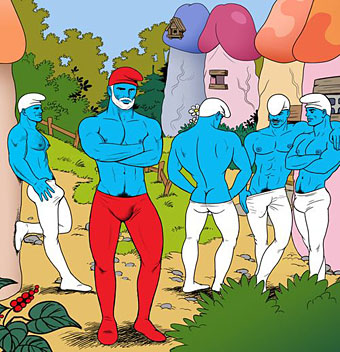
Tom of Smurfland by Alessio Slonimsky.

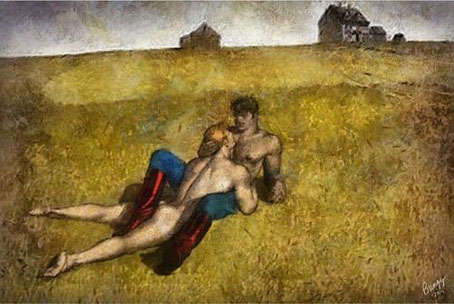
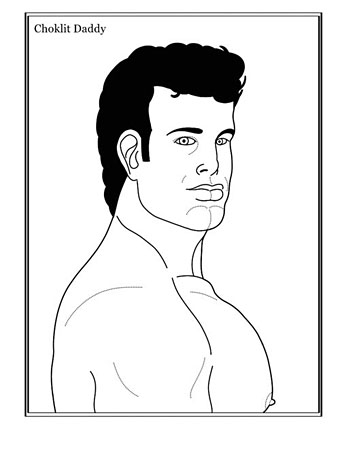
Rest assured this is about the only time anything Smurf-related will be allowed on these pages, the blue wretches having been partially redeemed for artist writer Dale Lazarov’s pin-up challenge for the month of May. Lazarov regularly proposes homoerotic redesign challenges on his Tumblr pages, something I wasn’t aware of until reading about this recent one. The challenge was to reimagine the artist’s beefcake clones in different comics or cartooning styles but some contributors took things a little further, as with the Wyeth and Beardsley pastiches below. This month there’s the Gay Propaganda Poster Pin-Up Challenge, entries for which have been posted here. I wouldn’t mind offering something to one of these challenges myself if I can find a spare moment.

Find out more about Dale Lazarov’s “smart, wholesome gay comics smut” at his website.

tof1.jpg

Wyeth of Finland by KnottyBits.

tof3.jpg

Twinks of Finland by Alexander.

tof4.jpg

Tom’s Man drawn in the style of Aubrey Beardsley by Choklit Daddy.

Elsewhere on { feuilleton }
The gay artists archive

Previously on { feuilleton }
Tom of Finland postage stamps

Weekend links 209

soundcarriers.jpg

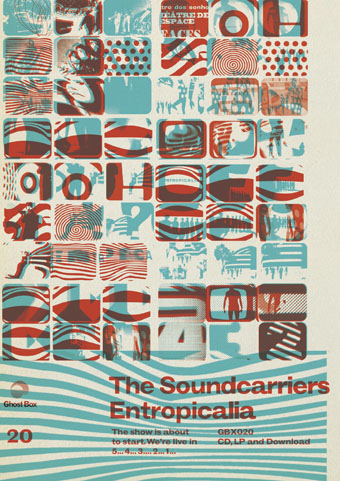
Soundcarriers poster by Julian House.

A new release on the Ghost Box label is always a welcome thing but Entropicalia by The Soundcarriers, out on May 20th, is one I’m especially looking forward to. Julian House has made a video for new song Boiling Point, and there’s also the poster above which can be downloaded at larger size here. The Ghost Box Guest Shop has a couple of new additions including the recent Man Woman Birth Death Infinity album by Raagnagrok.

• “It’s a funny time to be making music, because we’re a generation of people who make music with screens instead of with ears.” Ben Frost talking to Tristan Bath.

• At Dangerous Minds: You Gotta Say Yes to Another Excess, a rare glimpse of Yello live in concert, 1983.

Our movements about London are closely circumscribed, and while we may imagine ourselves to be free, the truth is that the vast majority of our journeys are undertaken for commercial imperatives: we travel either to work or to spend. All about us during our daily existence we are presented with buildings we cannot enter, fences we cannot climb and thoroughfares it would be foolhardy to cross. We are disbarred from some places because we don’t have the money — and from others because we don’t have the power. The city promises us everything, but it will deliver only a bit.

The place-hackers draw our attention to how physically and commercially circumscribed our urban existence really is. […] As more and more international capital flows into London, so public space is increasingly eroded — it’s just too valuable for us ordinary folk to paddle about in any more.

Give the freedom of the city to our urban explorers, says Will Self. Related: Robert Macfarlane accompanied urbexer Bradley Garrett on a night-time jaunt.

Black Sabbeth: Metal band Gonga covering a classic with Portishead’s Beth Gibbons on vocals.

• Pelican books take flight again; Paul Laity on the resurrection of the non-fiction imprint.

• Finland’s homoerotic stamps are an ocular feast for women, too, says Nell Frizzell.

• “I guess you could say I am a Pagan.” Kenneth Anger on the occult.

• “How much gay sex should a novel have?” asks Caleb Crain.

• Mix of the week: Secret Thirteen Mix 112 by Kyoka.

The Gibraltar Encyclopedia of Progressive Rock

Zombi’s Guide to Goblin

Decadence Comics

Zombie Warfare (1979) by Chrome | Escape From The Flesheaters (Zombie) (1979) by Fabio Frizzi | Zombie’ites (1993) by Transglobal Underground

Weekend links 205

lin.jpg

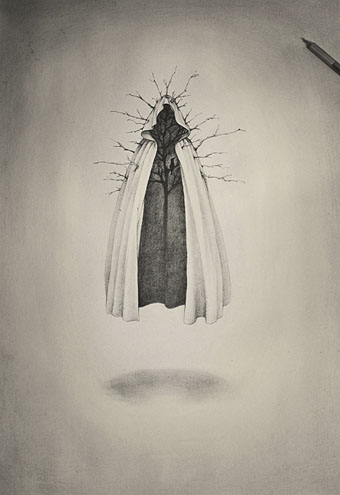
King’s Cloak (2012) by Alice Lin.

• The week in Finnegans Wake: illustrations by John Vernon Lord for a new Folio Society edition; The Guardian‘s review from 1939; Christina Scholz explores Joyce’s use of the Ant and the Grasshopper fable; Sheng Yun wonders when Dai Congrong will compete the first Chinese translation of the book; Stephanie Boland on riverrun, the latest theatrical adaptation.

• It’s Robert Aickman‘s centenary year so Faber are reissuing several volumes of his peerless “strange stories”. And it’s good to see the great Clark Ashton Smith finally receive the blessing of Penguin Classics.

• The Teenage Boyfriend of the Beat Generation: Marcus Ewart slept with Allen Ginsberg (who showed him how to give a proper blowjob), and had an eight-year relationship with William Burroughs.

Yet another advocate of shorter work time was JS Mill. He dismissed the ‘gospel of work’ proposed by Thomas Carlyle in part because it drew a veil over the real costs of work, including slave work that Carlyle sought to defend. Instead, Mill advocated a ‘gospel of leisure’, arguing that technology should be used to curtail work time as far as possible. This stress on technology as a means to shorten work time was later to feature in Bert­rand Russell’s 1932 essay, ‘In Praise of Idleness’.

David Spencer on The Case for Working Less

• More Steve Moore memorials: Mitch Jenkins put the pages from Unearthing online, while Pádraig Ó Méalóid posted a personal appreciation at The Beat.

Linda Marsa on how psychedelics are helping cancer patients deal with their illness.

• The Weird Album: art by Enrique Alcatena (including some Lovecraftian pieces).

• Didgeridoom: Director Ted Kotcheff talks to Robert Barry about Wake in Fright.

The Jealous God (1985), a comic strip by Alejandro Jodorowsky & Silvio Cadelo.

• The Dune in Your Head: Ethan Gilsdorf on the greatest SF film never made.

50 minutes of Kraftwerk on Rockpalast in 1970. Astonishing.

• At 50 Watts: Sheet-music covers from Sweden in the 1920s.

Harvard discovers old library books bound in human skin.

Same-sex marriage is now legal in England and Wales.

Wyrd Daze has reached issue 5.

Kaleidoscopes at Pinterest.

Flight From Ashiya (live on TV! 1967?) by Kaleidoscope (UK) | Lie To Me (1969) by Kaleidoscope (US) | Kaleidoscope (1984) by The Rain Parade

Weekend links 204

somnium.jpg

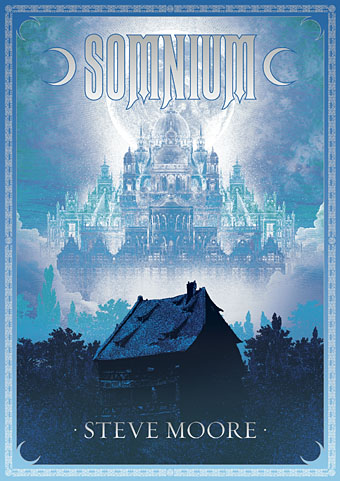
RIP Steve Moore. We never met, unfortunately, but I was very pleased he asked me to create a cover for his unique occult novel, Somnium, in 2011. Prior to this we’d been connected by shared acquaintances, colleagues, and membership in the informal cabal that was (and maybe still is) The Moon & Serpent Grand Egyptian Theatre of Marvels. Steve’s long friendship with Alan Moore (no relation) is well-documented, not least by Alan himself who made Steve the subject of his Unearthing project. One surprising connection for me was that Steve also had a link to Savoy Books. In the late 1960s he was working for comics publisher Odhams where he was able to copy for David Britton some Ken Reid comic art which Odhams had refused to print. Dave published the forbidden pages in his first magazine, Weird Fantasy, in 1969. In 2011 Steve talked to Pádraig Ó Méalóid about Somnium, and also to Aug Stone at The Quietus. Aug Stone penned a few memorial words here.

• “People love using the word ‘porn’ as long as there’s a partner for it. Pair ‘porn’ with something else and it’s usually a good thing. A celebration of style and culture. But that word on its own? Well.” Porn star Conner Habib asks why people have such a problem with porn actors.

Dave Maier‘s Russian cinema recommendations. Several favourites there including the magical and remarkable Shadows of Our Forgotten Ancestors (1964) which, as Maier notes, isn’t really Russian but should be seen in any case.

Shakespeare uses verbal magic, cantrips and ditties, nonsense songs and verses throughout the plays, but in Othello he gives a glimpse of how powerful a spell becomes when it’s no longer oral, but fixed in material form. The fatal handkerchief is no ordinary hanky; it’s a love spell, and it was made with gruesome and potent ingredients (mummified “maiden’s hearts”) by a two-hundred-year-old sibyl in Egypt—Egypt being the birthplace and pinnacle of magic knowledge.

Marina Warner on magic.

• Mixes of the week: an hour of electro-acoustics and contemporary classical recordings sequenced by Laurel Halo, and (from 2010) 36-minutes of “umbral electronic hypnagogia” by The Wyrding Module.

• “This is the book that, 10 years later, inspired Richard Hollis’s landmark design for John Berger’s Ways of Seeing.” Rick Poynor on Chris Marker’s Commentaires.

• Is the Linweave Tarot the grooviest deck ever made? Dangerous Minds thinks so.

• Bobby Barry talks to Holger Czukay about his 1969 audio collage, Canaxis 5.

• “What Happened to Experimental Writing?” asks Susan Steinberg.

Aldous Huxley‘s lectures on visionary experience at MIT, 1962.

Laura Palmer will see Agent Cooper again in just a few hours.

Callum found a copy of The Gay Coloring Book (1964).

Metal Cats

Moonshake (1973) by Can | Lunar Musick Suite (1976) by Steve Hillage | Dark Moon (1993) by Holger Czukay | Boy In The Moon (2012) by Julia Holter