Weekend links 249

ulrich.jpg

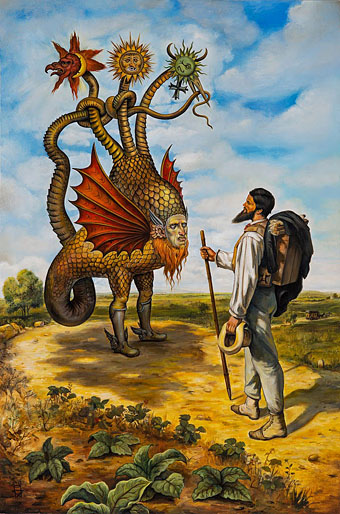
The Philosophers (Homage to Courbet) by Christopher Ulrich. Another great tip from Full Fathom Five.

• “Mushrooms are the only psychedelic drugs that I take, and I don’t take them very often. But I would trust them. Once you’ve done them a few times it’s very easy to feel a sense of entity. You can feel that there is a characteristic in this level of consciousness which almost seems…playful? Or aware, or sometimes a bit spooky.” Alan Moore discussing art and psychedelics in Mustard magazine. Related: “Psychedelics not linked to mental health problems or suicidal behavior: A population study.”

• “Leonora Carrington transcended her stolid background to become an avant-garde star,” says Boyd Tonkin. At the BBC Chris Long looks at Leonora Carrington’s journey from Lancashire to Mexico. The Carrington exhibition at Tate Liverpool opened on Friday.

• A Savoyard’s First Brush with Censorship, Clara Casian’s proposed documentary film about Savoy Books, is looking for Kickstarter funding.

Warner suggests that there are four characteristics that define a veritable fairy tale: first, it should be short; second, it should be (or seem) familiar; third, it should suggest ‘the necessary presence of the past’ through well-known plots and characters; fourth, since fairy tales are told in what Warner aptly calls ‘a symbolic Esperanto’, it should allow horrid deeds and truculent events to be read as matter-of-fact. If, as Warner says, ‘the scope of a fairy tale is made by language’, it is through language that our unconscious world, with its dreams and half-grasped intuitions, comes into being and its phantoms are transformed into comprehensible figures like cannibal giants, wicked parents or friendly beasts.

Alberto Manguel reviewing Once Upon a Time: A Short History of Fairy Tale by Marina Warner

• De Natura Sonorum (1976) by Bernard Parmegiani: a free download at AGP of the original vinyl recording, something I overlooked several years ago.

• At Dangerous Minds: Real Horrorshow!: Malcolm McDowell and Anthony Burgess discuss Kubrick and A Clockwork Orange.

• Meeting Bernard Szajner, a short film about the French electronic musician by Tom Colvile, Nathan Gibson & Abdullah Al-wali.

• Dismembrance of the Thing’s Past: Dave Tompkins on John Carpenter’s The Thing.

• That Battle Is Over, a new song by Jenny Hval.

• Mushroom (1971) by Can | The Mushroom Family (2010) by The Time And Space Machine | Growing Mushrooms Of Potency (2012) by Expo ’70

Homosurrealism

oldham.jpg

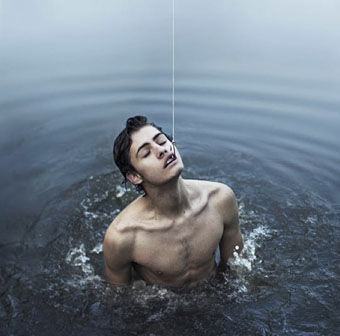
Untitled (2012) by Brian Oldham.

Jack Sanders was in touch recently about his online art showcase Homosurrealism, a gallery of homoerotics, the surreal and the occult. The fourth issue has just gone live, and the contents could just as well be described as Homo-occultism given the predominance of esoterica. Jean Cocteau and Kenneth Anger are in there, also William Burroughs via Gus Van Sant’s film of the Thanksgiving Prayer which receives a lot of exposure at this time of year.

waiblinger.jpg

La Petite Mort by John Waiblinger.

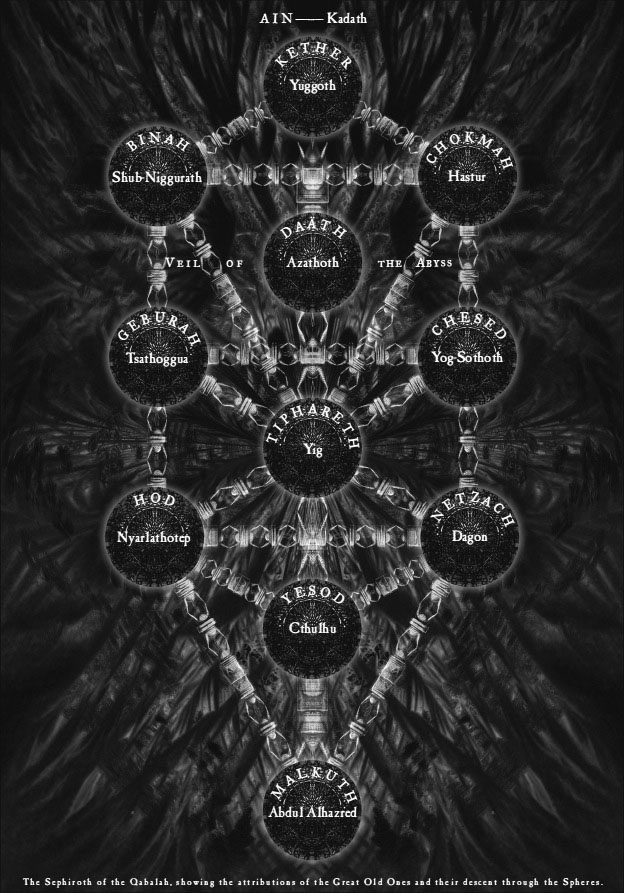
Also featured is my Sephiroth of the Great Old Ones from the Haunter of the Dark collection. Credit should be given there to Alan Moore who was responsible for the attribution of the various gods to the different spheres. In the book the chart is followed by my renderings of the sinister pantheon together with Alan’s description of each god and sphere.

sephiroth.jpg

The Great Old Ones: Sephiroth (1999) by John Coulthart & Alan Moore.

Elsewhere on { feuilleton }
• The gay artists archive

Previously on { feuilleton }
• The Salivation Army, a film by Scott Treleaven

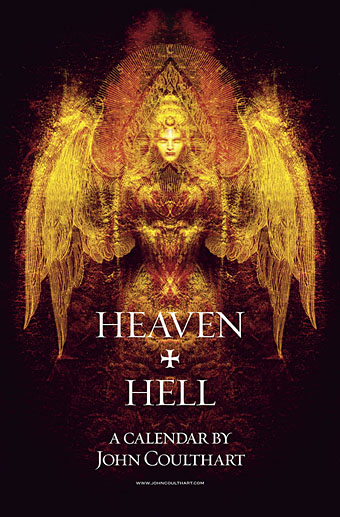
Heaven and Hell calendar

heavenhell00.jpg

Painting from the poster art for The Highbury Working (2000) by Alan Moore & Tim Perkins.

Unlike last year, this year’s CafePress calendar arrives on time, its creation being eased by the fact that it’s a reworking on an earlier version. The idea with the previous Heaven & Hell calendar had been to alternate various pieces of infernal Cradle of Filth artwork with contrasting imagery; as things turned out I had more offerings for Hell than for Heaven—no surprise there—so the reality wasn’t very satisfying.

This year I’ve managed to fill out the Heaven sequence with more recent works, all of which have been slightly adjusted to fit the square page ratio required by CafePress. So even though these are old pieces many of them are unique to this printing. Larger copies of the pages may be seen here while the CafePress purchase page is here. As always, my thanks to everyone who buys these things.

And as before, the calendars for previous years are now available all year round; see the full range here. Note that this means you need to select January as the starting month if you want the months to run for a single year only.

heavenhell01.jpg

JANUARY: Variation of the poster art for Angel Passage (2001) by Alan Moore & Tim Perkins.

Angel Passage was Alan and Tim’s album about the life and work of William Blake. I designed the CD, a poster, and also produced a video for the multi-media performance of the piece at the Purcell Room, London, in February 2001.

heavenhell02.jpg

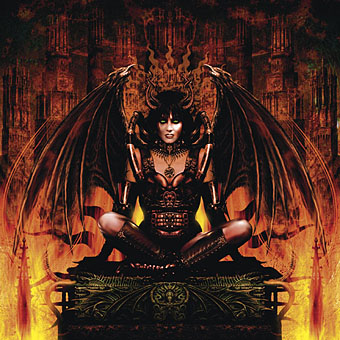
FEBRUARY: Cover for Bitter Suites To Succubi by Cradle of Filth (2001).

My first piece of Cradle of Filth art. I was a little surprised when working on this that they really did want the wings and horns; Dani loved that kind of imagery. I was even more surprised when this cover was subsequently showcased in an entire window in Tower Records’ main London shop in Piccadilly.

Continue reading “Heaven and Hell calendar”

Weekend links 230

bebergal.jpg

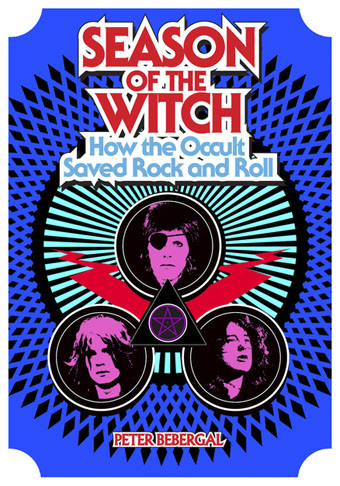
Cover art by Arik Roper.

Peter Bebergal’s Season of the Witch: How the Occult Saved Rock and Roll was published this week. Articles about rock music’s occult preoccupations have been a recurrent feature of music magazines, especially around Halloween, but Bebergal’s book is the first attempt at a wide-ranging, full-length study. Despite the subtitle, the scope goes beyond the familiar—David Bowie’s Golden Dawn references, Jimmy Page’s Aleister Crowley obsession—to take in the pagan nature of the blues, pre-Beatles rock’n’roll, and the byways of electronic music. My old employers, Hawkwind, provide a title (Space Ritual) for one section, and I was pleased to see the Krautrock scene receiving some attention: years ago you couldn’t have counted on this from an American music study. As Bebergal notes, Can’s Aumgn on Tago Mago (1971) isn’t the hippy Aum/Om but originates in a mantra defined in Crowley’s Magick in Theory and Practice.

• “We don’t just have skeletons in our cupboard, we have an ossuary.” Another week, another Alan Moore interview, but Tim Martin‘s piece is as much a portrait of the man as a conversation about the usual subjects: art, science, magic, etc.

• “Europe’s history of penis worship was cast aside when the Catholic Church realized Jesus’s foreskin was too potent to control.” Stassa Edwards on venerated members.

Gays and horror actually have  somewhat of a lost history. FW Murnau, the director of Nosferatu, was openly gay. Frankenstein’s real creator, James Whale, was also out. Given the talent involved, and the illicit nature of the genre, amateur and professional critics have been divining queer themes from horror films for decades.

Patrick Rosenquist on Gory, Gay & Loving It: Why Homosexuals Heart Horror

• “I thought that fine art was fairly dishonest as an industry. It pretends to be about culture but it’s really about money.” Andy Butler interviews designer Neville Brody.

• Snapping, Humming, Buzzing, Banging: Richard B. Woodward on the creative partnership between David Lynch and sound-design genius Alan Splet.

• Also published this week: Discovering Scarfolk, Richard Littler’s guide to the occult-obsessed, rabies-infested English town.

• More rock music: When Art Rocked: San Francisco Music Posters, 1966–1971 by Ben Marks.

• The trailer for 808, a documentary about Roland’s celebrated drum machine.

• At The Millions: Devin Kelly on the collaborative art of words and images.

• More Crowley: Strange Flowers goes looking for Aleister Crowley’s Berlin.

• Mix of the week: Secret Thirteen Mix 130 by Gábor Lázár.

• Yello’s Boris Blank on his 10 favourite electronic records.

• Richard Hirst‘s Top 5 Robert Aickman Stories.

• I Put A Spell On You (1968) by Arthur Brown | I Put A Spell On You (1992) by Diamanda Galás | I Put A Spell On You (2004) by Queen Latifah

Weekend links 228

moss.jpg

White, Red and Black (1949) by Marlow Moss.

• British television’s greatest director, Alan Clarke, rates on the cult scale here for his work on Penda’s Fen but his career was long, uncompromising and still hasn’t received the full appraisal it deserves. His more violent dramas—Scum, Made in Britain, The Firm, etc—have all appeared on DVD but many of his less notorious films can be hard to find. Paul Duane looks back at the remarkable Contact (1985), an hour-long study of the conflict in Northern Ireland, and a better film about soldiering than any number of big-budget features.

• I’ve wondered for years why one of the Daft Punk helmets seemed so familiar. It’s because they swiped the design from industrial designer and visual futurist, Syd Mead. Mark Wilson talked to Mead about wearable technology; Mr Mead, it seems, isn’t impressed by the French popsters. Related: paintings from Mead’s Sentinel (1979), and Syd Mead designs at Pinterest.

• Remembering that time in 1982 when Alan Moore interviewed Hawkwind. More interviews: Adam Bychawski talks to Jenny Hval about “sonic extremity, the violence of voyeurism and inhabiting bodies”, and Laurent Fintoni talks to (that man again) Bernard Szajner about Visions Of Dune, laser shows, and finding his way back to music.

Our attitudes towards work are extremely schizophrenic: we secretly aspire to sloth, while we loudly praise work. There isn’t an election poster that doesn’t promise more jobs. The call for more work is similar to the Stockholm syndrome, in which the victims of hostage-taking eventually develop a positive relationship with their captors.

Patrick Spaet on the universal employment fetish

• “Marlow Moss was one of Britain’s most important Constructivist artists…a radical lesbian and Drag King,” says Dal Chodha. An exhibition of Moss’s work has just opened at Tate Britain. Related: Marlow Moss: forgotten art maverick.

• Yuki Koshimoto plays the Hang, aka the Spacedrum. Via Metafilter where there are more Hang links. The instrument was prominently featured in the score Cliff Martinez wrote for Solaris (2002).

• Broadcast’s Trish Keenan would have been 46 last week. James Cargill posted two demo songs for her birthday.

• At the BFI: Exclusive materials from the making of Powell and Pressburger’s The Tales of Hoffmann.

• Of Tutus and Tortures: Thoughts on the Decadent and the Weird by Christopher Burke.

• Faber has launched a Modern Classics imprint with some smart cover designs.

• At Dangerous Minds: Good to see big scans of the Surrealists’ playing cards.

• Mix of the week: Afrofuturist Flowering by Nigel Rampant.

• Writer and editor Russ Kick has a new website.

• Infographic: Why Readers Still Prefer Paper.

• Superficial Music 1–3 (1981) by Bernard Szajner | Fahrenheit 451 (1982) by Hawkwind | Black Lake (2014) by Jenny Hval & Susanna