The art of John Thompson

thompson01.jpg

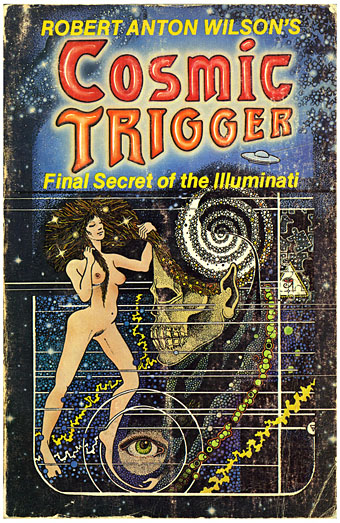
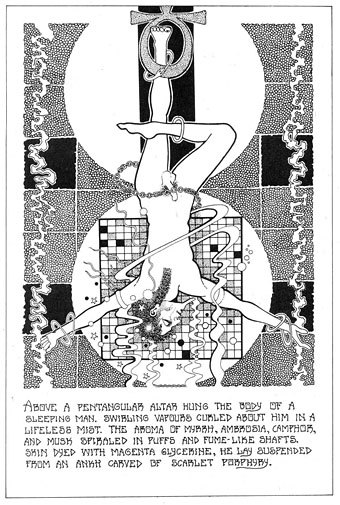
Cosmic Trigger: Final Secret of the Illuminati (And/Or Press, 1977).

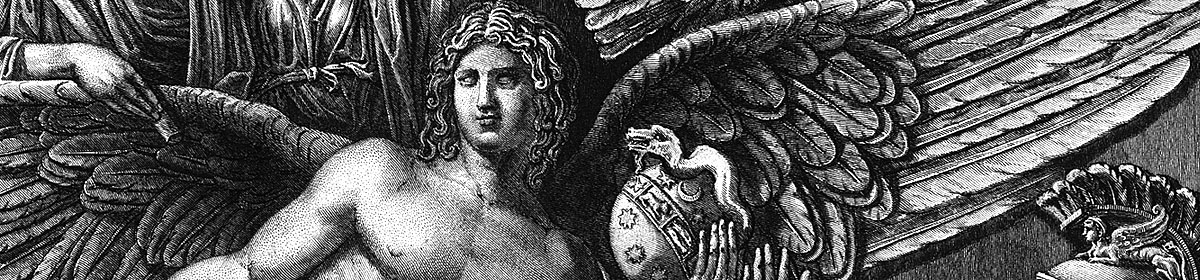
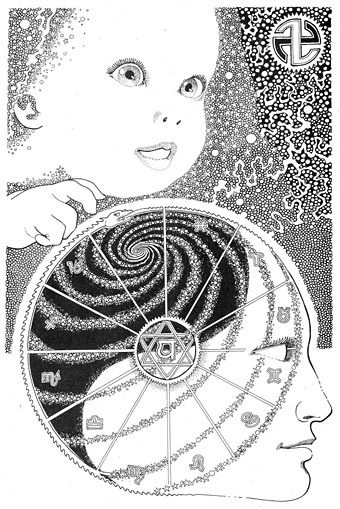
John Thompson’s detailed, mystical and erotic illustrations gained prominence in the San Francisco comic scene in the late 1960s–early 1970s, appearing in a handful of titles drawn in their entirety by Thompson or done as collaborations with local artists including Robert Crumb. But it’s as an illustrator of Robert Anton Wilson’s Cosmic Trigger that Thompson is probably best known, something I was reminded of recently with the opening of Daisy Campbell’s play based on Wilson’s book. Wilson had seen Thompson’s comics work, and approached him as illustrator of his (ostensibly) non-fiction sequel to the very popular Illuminatus! trilogy, an encounter that Thompson elaborates on in this interview.

thompson02.jpg

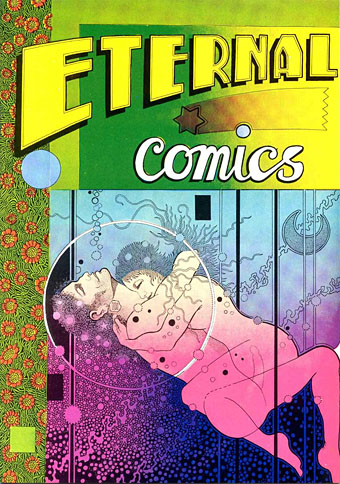
Here in the UK the comics published by Last Gasp et al weren’t always easy to find (imported comics were still being seized by UK customs into the 1990s), so Cosmic Trigger was my first introduction to Thompson’s art via a sighting of the US edition in a London shop in 1978. The UK paperback was a disappointment when it appeared a year or so later: Thompson’s cover art had been replaced with something more generic but they did at least retain the interior illustrations, albeit shrunk to fit the smaller book size. Many of the drawings in Cosmic Trigger had appeared already in Thompson’s comics which may seem surprising when they don’t resemble typical comic pages, but Thompson’s comics are unusual even compared to the undergrounds of the time. The undergrounds were most obviously radical in the wildness and excess of their content, especially where sex and drugs were concerned. But there’s a smaller subset of underground strips whose approach to narrative is so far removed from typical comic storytelling as to verge on the abstract. Victor Moscoso’s comics exemplify this style but even an ostensible traditionalist like Robert Crumb could experiment with the form (see his Cubist Bee Bop Comics in XYZ, 1972). Thompson’s comics are of this type at all times, blending motifs from a variety of myths and religions with Tantric yoga, astrology, alchemy and pop culture. When speech balloons appear they often contain allusive, esoteric phrases along with untranslated Greek or Hebrew text. It’s a beguiling mix which shows the ability of the comic book to do more than simply ape the stories of film or television. As with many other things from the late 1960s it’s a direction that hasn’t been pursued very much since.

thompson03.jpg

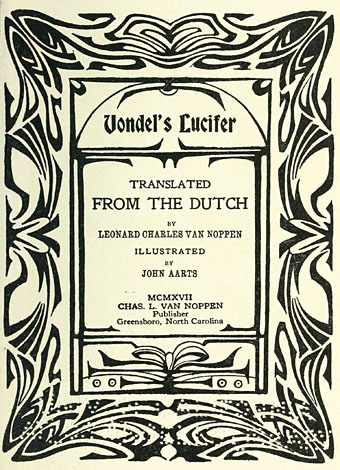
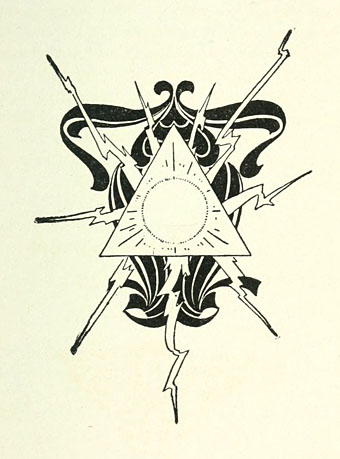
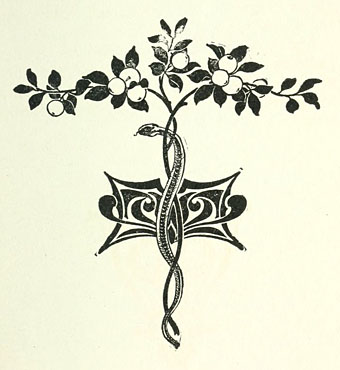
The interview with Thompson explains why he seemed to vanish after the work for Cosmic Trigger: he says he quit comics and illustration to become a therapist although he still creates private work. The examples here are from The Kingdom of Heaven is Within You (1969), Kukawy [sic] Comics 1 (1969; “Kukawy” is actually a Greek word meaning Cyclops), Tales from the Sphinx 2 (1972) and Eternal Comics (1973).

thompson04.jpg

Continue reading “The art of John Thompson”

Weekend links 359

azuma.jpg

An urban scene from Yotsuba&! by manga artist Kiyohiko Azuma.

• The resurgence of interest in Alice Coltrane’s music is very welcome even if she joins for the moment the list of those artists (usually women: see Leonora Carrington) tagged by editors as “lost”, “forgotten”, “unrecognised”, etc. Alice Coltrane was only ever lost if you weren’t paying attention, and was notable enough fifteen years ago to be given the cover of The Wire magazine. Articles appearing this week have been prompted by a compilation of the devotional music that Coltrane recorded for a series of self-released cassettes in the 1980s. Geeta Dayal writes about the creation of the ashram recordings, while Stewart Smith suggests starting points for new listeners.

• Mentioned here before, but there’s now a page for the book: a new edition of Hashish (1902) by Oscar Schmitz will be published by Wakefield Press in November. “A collection of decadent, interweaving tales of Satanism, eroticism, sadism, cannibalism, necrophilia, and death”, illustrated by Alfred Kubin.

• Mixes of the week: A Dark Entries mix for the 400th issue of The Wire, Procedure, LA, April 25, 2017 by Pinkcourtesyphone, and Secret Thirteen Mix 220, a 4-hour epic by Ricardo Gomez Y De Buck.

• More off-the-beaten-path film lists: Sarah Lyons for Dirge Magazine on three occult documentaries, and Terry Ratchett for Dennis Cooper on 18 needlessly obscured avant-garde films.

• An Island of Peace: James Conway on Amanda DeMarco’s new translation of Walking in Berlin: A Flâneur in the Capital by Franz Hessel.

Ryuichi Sakamoto talks to Aaron Coultate about overcoming cancer, The Revenant and his new album, async.

Ingrid D. Rowland on Caravaggio: The Virtuoso of Compassion.

• “I think I am weirdly politically correct,” says John Waters.

Mnemonic Generator

• Berliner Nächte Part 1 (1990) by Seigen Ono | Berlinerstrasse (1995) by Coco, Steel & Lovebomb | Berlin (1998) by Pole

Weekend links 346

brocklehurst.jpg

Red Queen (no date) by Jo Brocklehurst.

• Happy birthday to Kenneth Anger, 90 years old this week. In 2008 Anger was interviewed by Nicolas Winding Refn at the National Gallery of Denmark, Copenhagen.

• “Fabeness be to the Auntie, and to the Homie Chavvie, and to the Fantabulosa Fairy”. “Church ‘regret’ as trainees hold service in gay slang.”

Andrew Male on Michael Chapman, an exceptional guitarist, and “the man who connects Elton, Bowie, Nick Drake and Sonic Youth”.

• A trailer for A Life In Waves a documentary about synth composer Suzanne Ciani by Brett Whitcomb and Bradford Thomason.

• The website for design company Barnbrook has been relaunched, as has the site for Jonathan Barnbrook‘s personal work.

• Mixes of the week: Secret Thirteen Mix 209 by Umwelt, and XLR8R Podcast 475 by Melina Serser.

Ryan Gilbey: “From Sean Connery to Harrison Ford: actors who secretly played roles gay.”

• Writer and editor Russ Kick is selling his huge book collection.

Lucifer Sam (1967) by Pink Floyd | Lucifer (1968) by The Salt | Lucifer Rising (2002) by John Zorn

Weekend links 339

hiorns.jpg

Untitled (2011) by Roger Hiorns. Photograph by Kate Green.

• “Most surprising and troubling of all is the status of a series of new paintings, also depicting naked male bodies. The figures look archaic, painted using latex and molten and folded plastic. They have sex with each other and with themselves. Extra penises float about, and fill any otherwise unoccupied orifice. There’s a lot of rogering going on, anal and oral, the figures consumed entirely by the act.” Adrian Searle reviews Roger Hiorns’ latest show at the Ikon Gallery, Birmingham.

• “At the heart of magical belief is the belief in your own free will, in your ability to make changes and influence the world. It wasn’t accepting your circumstances, it was working to understand and directly change them.” Jessa Crispin on the women of the Hermetic Order of the Golden Dawn.

Addison Nugent on William Hope Hodgson: “The Forgotten Bodybuilding, Shark-Fighting Sailor who Invented Cosmic Horror (and annoyed Houdini)”. I’d quibble with the “forgotten”—Hodgson is sometimes overlooked but not exactly unknown—but the appraisal is welcome.

• More end-of-year lists: The Quietus posts its Albums of the Year, Bandcamp does the same, while Adrian Curry at MUBI announces his favourite film posters of the year.

Callum James has devised The Quite Difficult Book Quiz for those who’d like a challenge (and a donation to charity) over Christmas.

• “A profoundly poetic anomaly”: Kenan Malik on the Tantric paintings that pre-empt Modernist abstraction.

Patricia M’s Flickr albums contain a wealth of antique graphic design, advertising art and undigitised letterforms.

• “Cronky, shonky, soggy, knackered”: Simon Reynolds on ten years of Moon Wiring Club.

Michael LePointe on the delightful mysteries of The Voynich Manuscript.

Veloelectroindustrial: Wandering the wastelands of former industry.

• Mix of the week: Secret Thirteen Mix 202 by JG Biberkopf.

• “Was Edmund Wilson jealous of Lolita?” asks Alex Beam.

• “Research finds MP3s drain your music of emotion.

Richard H. Kirk‘s favourite albums.

Pavel Banka‘s surreal abstractions.

Dennis Cooper‘s Alan Clarke Day.

Cosmic Surfin’ (1978) by Yellow Magic Orchestra | Cosmic Meditation (1991) by Moondog | Cosmic Call (2006) by The Evpatoria Report

Weekend links 317

mucha.jpg

Alphonse Mucha’s Le Pater, a book of mystical Symbolism written, designed and illustrated by the artist, was published in a limited edition in 1899. The book has been out of print ever since but Thomas Negovan at Century Guild will be reprinting it later this year.

• “Five axioms to define Europe: the coffee house; the landscape on a traversable and human scale; these streets and squares named after the statesmen, scientists, artists, writers of the past; our twofold descent from Athens and Jerusalem; and, lastly, that apprehension of a closing chapter, of that famous Hegelian sunset, which shadowed the idea and substance of Europe even in their noon hours.” George Steiner explores his idea of Europe.

Journey To The Edge Of The Universe by Upper Astral, 43 minutes of cosmic ambience, is a cassette-only release from 1983. The album has never been reissued so secondhand copies command excessive prices but it may be downloaded here.

• Mixes of the week: Three hours of ambience by Gregg Hermetech, XLR8R Podcast 446 by [Adrian] Sherwood x Nisennenmondai, and Secret Thirteen Mix 190 by Shxcxchcxsh.

Today [Angela] Carter is well known, widely taught in schools and universities, and much of what she presaged—in terms of recycling and updating (“old wine in new bottles”, she called it), or gender role play and reversal—has become commonplace in the culture. Despite this, many critics find it difficult to situate her work properly. This is partly because Carter is so sui generis (she has literary offspring but few antecedents), and partly because many struggle with the relationship of politics and aesthetics in her writing.

Kate Webb reviews two new books about Angela Carter

• Words that will forever pursue us: Tim Page on the late Michael Herr, “rock’n’roll voice of the Vietnam War”.

• From 2015: Luigi Serafini on how and why he created an encyclopedia of an imaginary world.

James Campbell on Ginsberg, Kerouac and Burroughs: celebrating the Beats in Paris.

Fragile Beasts, an exhibition of grotesque print ornaments at Cooper Hewitt, NYC.

• Not before time, Guy Gavriel Kay wants to see an end to the plague of writing tips.

• David Bowie and Buster Keaton by Steve Schapiro.

Tom Charity on the films of Michael Cimino.

Alison Goldfrapp: photographer.

Golem Mecanique

European Man (1981) by Landscape | Europe After The Rain (1981) by John Foxx | Trans Europe Express (1994) by The One You Love