Weekend links 524

heisler.jpg

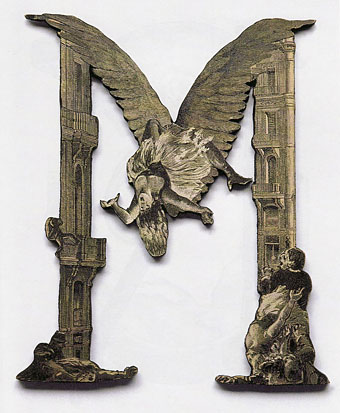
Letter M from Abeceda (1942) by Jindrich Heisler.

• At the BFI: Matthew Thrift chooses 10 essential Ray Harryhausen films. “This is, I can assure the reader, the one and only time that I have eaten the actors. Hitchcock would have approved,” says Harryhausen about eating the crabs whose shells were used for Mysterious Island. Meanwhile, Alfred Hitchcock himself explains the attraction and challenges of directing thrillers.

“Although largely confined to the page, Haeusser’s violent fantasies were even less restrained, his writings littered with deranged, bloodthirsty, scatological scenarios.” Strange Flowers on Ludwig Christian Haeusser and the “Inflation Saints” of Weimar Germany.

• Death, Pestilence, Emptiness: Putting covers on Albert Camus’s The Plague; Dylan Mulvaney on the different design approaches to a classic novel.

• A trailer (more of a teaser) for Last and First Men, a film adaptation of Olaf Stapledon’s novel by the late Jóhann Jóhannsson.

• At Dennis Cooper’s: Spotlight on…James Purdy: The Complete Short Stories of James Purdy.

• Al Jaffee at 99: Gary Groth and Jaffee talk comics and humour.

• Steven Heller on Command Records’ design distinction.

• Czech Surrealism at Flickr.

• Sisters with Transistors.

• Solitude by Hakobune.

• Mysterious Semblance At The Strand Of Nightmares (1974) by Tangerine Dream | Mysterious Traveller (Dust Devils Mix) (1994) by System 7 | The Mysterious Vanishing of Electra (2018) by Anna von Hausswolff
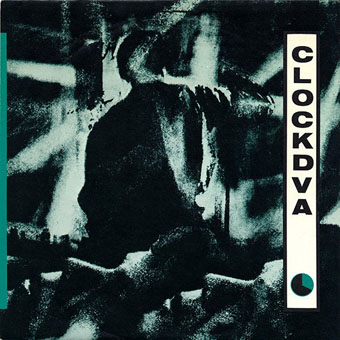
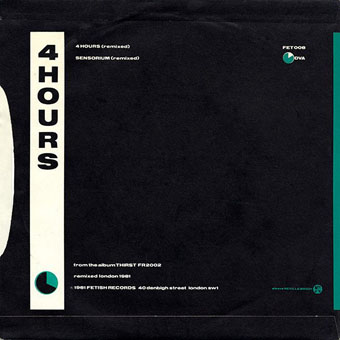
4 Hours by Clock DVA

clockdva1.jpg

Sleeve by Neville Brody.

After mentioning Clock DVA’s Thirst (1981) a couple of days ago I’ve been playing the album together with Pow-Wow ever since. 4 Hours was Thirst‘s accompanying 7-inch single, a marvellous slice of rumbling post-punk angst. The B-side, Sensorium, includes the words “Uptown apocalypse” among its lyrics, a phrase that’s also the title of the second track on the equally marvellous Music For Stowaways (1981), an instrumental album by the post-Human League, pre-Heaven 17 offshoot British Electric Foundation. This isn’t a coincidence; the latter number was co-written by Clock DVA’s Adi Newton, and features him playing guitar and synth, Newton having been in The Future with BEF’s Marsh & Ware prior to the formation of Clock DVA and The Human League. And to further complicate this tangle of Sheffield connections, 4 Hours was reissued in 1985 in 12-inch format on Cabaret Voltaire’s Doublevision label. I bought almost all the Doublevision releases but this was one I missed. (Was the title of Cabaret Voltaire’s Sensoria derived from Sensorium? Maybe…)

clockdva2.jpg

Previously on { feuilleton }
• Pow-Wow by Stephen Mallinder
• Old music and old technology
• Neville Brody and Fetish Records

Weekend links 523

miller.jpg

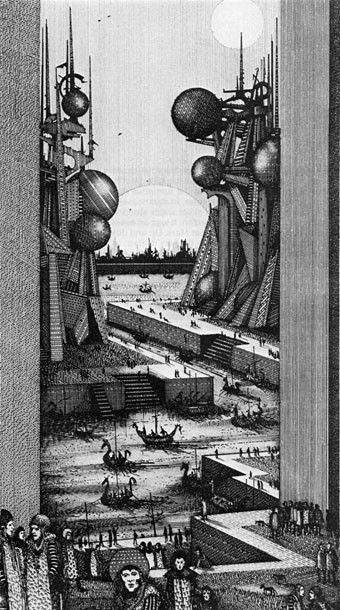
One of Ian Miller‘s drawings from the illustrated edition of Ray Bradbury’s The Martian Chronicles, 1979.

• “I always said we were kind of an electronic punk band, really. We were never New Romantics, I don’t like it when we get lumped in with that.” Dave Ball of Soft Cell and The Grid talking to Duncan Seaman about his autobiography, Electronic Boy: My Life In and Out of Soft Cell. I’ll now be waiting impatiently for the unreleased Robert Fripp/Grid album to appear.

• “[Patricia] Highsmith’s writing—often eviscerating, always uncomfortable—has never been more relevant,” says Sarah Hilary.

• Ron Peck’s debut feature, Nighthawks (1978), is “a nuanced look at gay life in London,” says Melissa Anderson.

And then there are those figures who seem to flit around the edges of movements without ever being fully involved in any of them, who pursue their own eccentric paths no matter what is going on around them. These are the writers who make up the secret history of literature, the hidden history that’s not easily reduced to movements or trends, and who always waver on the verge of invisibility until you stumble by accident onto one of their books and realize how good they actually are, and wonder, Why wasn’t I told to read this before? But of course you already know the answer: You were not told because it doesn’t fit smoothly into the story those in authority made up about what literature is—it disrupts, it can’t be reduced to the literary equivalent of a meme.

That’s the kind of writer Pierre Klossowski (1905–2001) is. He is not a joiner. He has his own particular and often peculiar concerns, and pursues them. He does not particularly welcome you in. The content of his writing, too, has the feel of a gnostic text, as if you are reading something that, if only you were properly initiated, you would understand in a different way. In that sense his work has an esoteric or occult quality to it—and likewise in the sense that it returns again and again to the intersection of religion and pornography, the sacred and the profane.

Brian Evenson on The Suspended Vocation by Pierre Klossowski

• Chad Van Gaalen creates a psychedelic animation for Seductive Fantasy by the Sun Ra Arkestra.

• More sneak peeks from the forthcoming The Art Of The Occult by S. Elizabeth.

• More Robert Fripp: Richard Metzger on Fripp’s sui generis solo album, Exposure.

• Pamela Hutchinson on the pleasures of David Lynch’s YouTube channel.

• Mix of the week: a second Jon Hassell tribute mix by Dave Maier.

• At Dennis Cooper’s: Ferdinand presents…Dark Entries Day.

• 15 fascinating art documentaries to watch now.

• Soft Power by Patten.

• RIP Milton Glaser.

• hauntología

• Aquarium (1992) by The Grid (with Robert Fripp) | Soft Power (2005) by Ladytron | The Martian Chronicles (2007) by Dimension X

Weekend links 522

moesman.jpg

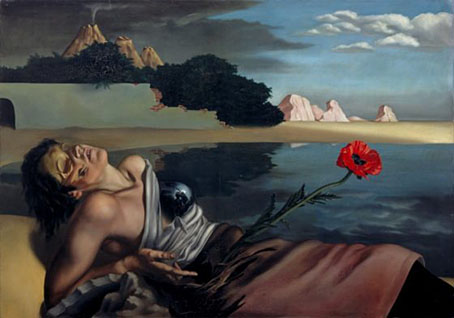
Self-Portrait (1935) by Johannes Hendrikus Moesman.

• At Bibliothèque Gay, René Bolliger (1911—1971), an artist whose homoerotica is being celebrated in an exhibition, Les Beaux Mâles, at Galerie Au Bonheur du Jour, Paris, next month. There are more beaux mâles in a new book of photographs, Hi, Hello!, by Roman Duquesne.

• The summer solstice is here which means it’s time for Dennis Cooper‘s favourite fiction, poetry, non-fiction, film, art and internet of the year so far. As before, I’m flattered to be listed in the internet selection. Thanks! Also at DC’s, Michael Snow Day.

• “I hope Roger Corman is doing okay,” I was thinking last week while rewatching one of Corman’s Poe films. He’s been overseeing the production of three new features during the lockdown so, yes, he’s doing okay. I loved the Cries and Whispers anecdote.

• “Unsettling and insinuating, fabulously alert to the spaces between things, Harrison is without peer as a chronicler of the fraught, unsteady state we’re in.” Olivia Laing reviewing The Sunken Land Begins to Rise Again by M. John Harrison.

• The original Brain label release of Aqua (1974), the first solo album by Tangerine Dream’s Edgar Froese, had a different track list and different mixes from the Virgin releases. The album has never been reissued in this form.

• New music at Bandcamp: Without Thought, music for an installation by Paul Schütze; and Hatching Under The Stars, songs by Clara Engel.

• Deborah Nicholls-Lee on Johannes Hendrikus Moesman (1909–1988), “the erotic Dutch surrealist you should have heard of”.

• Kate Solomon on where to start with the Pet Shop Boys. I’d also recommend Introspective.

• Dalí in Holographic Space: Selwyn Lissack on Salvador Dalí’s contributions to art holograms.

• At Spoon & Tamago: An obsession with retro Japanese round-cornered windows.

• John Boardley on the “writing mistresses” of the calligraphic golden age.

• Mark Duguid recommends Michael Reeves’ Witchfinder General (1968).

• The favourite music of Crammed Discs boss, Marc Hollander.

• Occult/erotic prints by Eleni Avraam.

• Aqua: Every Raindrop Longs For The Sea (Jeder Tropfen Träumt Vom Meer) H2O (1973) by Achim Reichel | Aqua (1979) by Dvwb | Aqua (1981) by Phew

Weekend links 521

parent.jpg

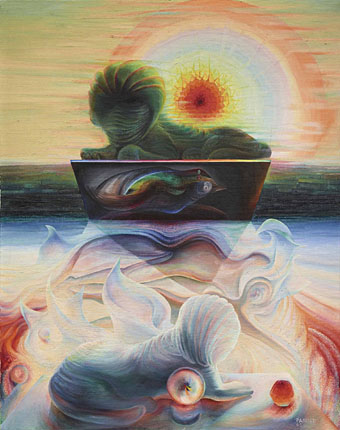
Au Lion d’or (1965) by Mimi Parent.

• After the recent announcement of Jon Hassell’s health issues it’s good to see he has a new album on the way at the end of July. Seeing Through Sound (Pentimento Volume Two) follows the form of the first volume, Seeing Through Pictures (2018), in reworking elements of earlier recordings into new forms. Not remixes, more reimaginings, and a process that Hassell has been applying to his own work for many years, most notably on his collaboration with Peter Freeman, The Vertical Collection (1997). The latter is an album which is impossible to find today and really ought to be reissued, together with more scarcities from the Hassell catalogue.

• Death of a typeface: John Boardley on Robert Granjon’s Civilité, a type design intended to be the national typeface of France but which fell out of favour. It wasn’t completely forgotten however; I was re-reading Huysmans’ À Rebours a couple of weeks ago, and Civilité is mentioned there as being a type that Des Esseintes chooses for some of his privately-printed books.

• At Plutonium Shores: Kurosawa versus Leone in A Fistful of Yojimbo. Christopher Frayling makes a similar analysis in his landmark study, Spaghetti Westerns (1981), but I didn’t realise that Leone had based so many of his shots on Kurosawa’s film.

• More lockdown art: Seen from Here: Writing in the Lockdown is a collection of new writing edited by Tim Etchells and Vlatka Horvat. A PDF book whose sales will go to support the Trussell Trust, a UK food bank charity.

• The week’s culture guides: Ben Cardew on where to start with the back catalogue of Miles Davis, and Hayley Scanlon on where to begin with the films of Yasujiro Ozu.

• “We can no longer ignore the potential of psychedelic drugs to treat depression,” says Robin Carhart-Harris.

• At Dangerous Minds: Laraaji returns with a new album, Sun Piano, and a preview of the same, This Too Shall Pass.

• Mixes of the week: The Ivy-Strangled Path Vol. XXI by David Colohan, and XLR8R Podcast 647 by The Orb.

• Penelope Rosemont on the humorous Surrealism of Mimi Parent.

• At Dennis Cooper’s: Jeff Jackson presents Free Jazz Day.

• The Golden Lion (1967) by Lomax Alliance | Dread Lion (1976) by The Upsetters | Gehenna Lion (1982) by Chrome