Weekend links 829

hoffmeister.jpg

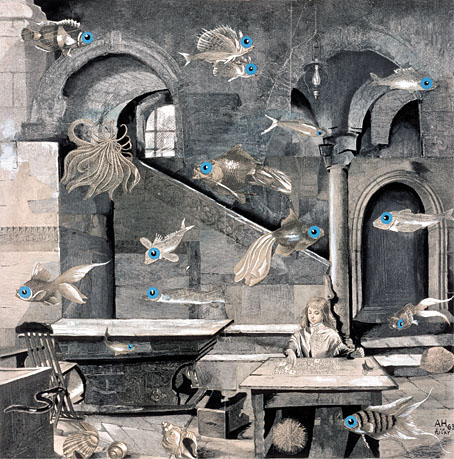
In the Constellation of Pisces by Adolf Hoffmeister.

• “Comb through many of the numerous ‘greatest post-punk albums of all time’ lists that you’ll find dotted around the internet and one fairly continual omission is Thirst, which is something of a travesty. It’s difficult to think of many albums that embody the more pioneering and progressive elements of the post-punk spirit than Thirst.” Daniel Dylan Wray on the early, anarchic performances of Clock DVA.

• Warner Brothers have decided at long last to allow the world to see a complete print of Ken Russell’s The Devils, a film they’ve effectively been censoring since 1971.

• A psychedelic Texas company powered hippie culture—then vanished. Gwen Howerton explores the history of the Houston Blacklight & Poster Company.

• “What is the world made of?” A long read by Felix Flicker looking at the nature of reality via the properties of fundamental and emergent entities.

• “My body ached from the volume”: Makoto Kubota remembers his time with the enigmatic and fearsome Japanese rock band Les Rallizes Dénudés.

• New music (and a psychedelic video by Robert Beatty): Introit / Prophecy At 1420 MHz by Boards Of Canada.

Stellar Iris, a new short film by Thomas Blanchard.

• Steven Heller’s font of the month is Puffery.

• At Dennis Cooper’s it’s Zoetrope Day.

This Website Cannot Save You

Der Prophet (1982) by Rolf Trostel | Prophecy Theme (1984) by Brian Eno, Daniel Lanois & Roger Eno | Prophecy Of The White Camel / Namoutarre (2011) by Master Musicians Of Bukkake

Weekend links 821

tevis.jpg

The first UK paperback edition, 1976. Cover art by David Bowie’s illustrator friend George Underwood.

• At the BFI: “Humanity, lost and found”. The original Sight and Sound review by Tom Milne of The Man Who Fell to Earth which was released 50 years ago this month. The film is another Nicolas Roeg project whose lofty reputation today has made everyone forget the bewildered or even hostile reaction it generated at the time, including from the US distributor, Paramount, who hated it. Milne, by contrast, had read the novel it was based on, and paid close attention to what the film’s writer, Paul Mayersberg, described as its “minefield of images”.

• Among the new titles at Standard Ebooks, the home of free, high-quality, public-domain texts: The Varieties of Religious Experience by William James.

• Issue 13 of Verbal magazine features an interview with Michael Moorcock, Iain Sinclair in the “Talking Books” section, and more.

• New music: 4 Hours (DVATION 2026 Version) by Clock DVA; -Music For Oriental Hotel Okinawa Resort & Spa- by Harikuyamaku.

• The Shaw Brothers Cinema YouTube channel has whole feature films from the studio’s huge archive free to view.

• At Colossal: “Historic architecture emerges from stone in Matthew Simmonds‘ ethereal sculptures”.

• “Music with Balls”: Terry Riley performing live with an arrangement of shiny silver spheres on KQED TV in 1969.

• Mixes of the week: DreamScenes – March 2026 at Ambientblog, and Motorik by Jon Savage.

• “What is electronic music?” Daphne Oram explains.

• RIP Country Joe MacDonald.

Stardust (1941) by Artie Shaw And His Orchestra | Stardust (1959) by Martin Denny | Stardust (1985) by Yasuaki Shimizu & Saxofonettes

Weekend links 816

rossignol.jpg

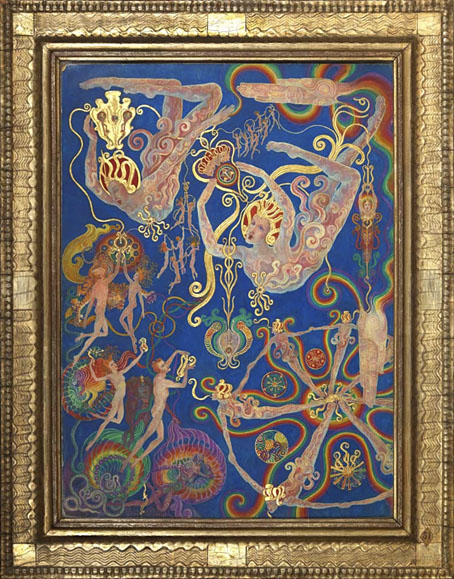
The Creative Power of the Spirit, No. 31 of A Goodly Company series, 1920–1933 by Ethel le Rossignol.

• “One moment it was a little blip. The next, our friends are dying”: the gay porn soundtrack composers lost to the Aids crisis. More gay porn: Pink Narcissus, James Bidgood’s micro-budget homoerotic fantasy, will receive a UK blu-ray release later this year.

• Old music: Thirst by Clock DVA gets a very welcome reissue later this year, having been unavailable in any form since 1992. I’m not so happy about the changes to Neville Brody’s original cover design but the album itself is a major post-punk statement.

• “Graphic design was thought to be a man’s discipline,” she says. “So I think it was quite a surprise for people to find me there.” A profile of Margaret Calvert, designer of (among other things) Britain’s road signs.

• At Colossal: A major survey in Paris chronicles Leonora Carrington’s esoteric Surrealism.

• At Public Domain Review: Sara Weiss’ Journeys to the Planet Mars (1903).

• At the BFI: The mystery music video for The Beatles’ Penny Lane.

Winners and entrants for Close-up Photographer of the Year 7.

• “Cats to blame for octopus deity enshrinement delay.”

• Steven Heller’s font of the month is Cattivo.

• At Dennis Cooper’s it’s Jack Arnold’s Day.

Pink Noir (1996) by David Toop | Pink Dust (2013) by Sqürl | The Pink Room 2 (2024) by Seigen Ono

Weekend links 793

junichiro.jpg

Shinagawa, Tokyo Tower (Tokaido Station 1) (1967) by Sekino Jun’ichiro.

• “The historical figures who interested [Cormac] McCarthy the most, judging by the number of books he owned about them, were Albert Einstein (114 books), Winston Churchill (88) and James Joyce (78). Architecture is the dominant subject in the collection, with 855 books. The human being whom McCarthy most admired, Dennis confirms, was Ludwig Wittgenstein. The team catalogued a staggering 142 books by or about the philosopher, with a high proportion annotated.” Richard Grant for Smithsonian Magazine reports on the cataloguing of Cormac McCarthy’s personal library.

• The Real City of the Future: a long read by Charles T. Rubin taking in William Gibson’s urban fictions and Paolo Soleri’s towering Arcologies.

• At Colossal: “Atmospheric oil paintings by Martin Wittfooth illuminate nature’s timeless cycles.”

• Old music: White Souls In Black Suits by Clock DVA, receiving its first reissue since 1990.

• At the BFI: Carmen Gray on where to begin with Sergei Parajanov.

• At Ultrawolvesunderthefullmoon: The art of Sekino Jun’ichiro.

• At Dennis Cooper’s: Unica Zürn Day (restored and expanded).

• New music: Imploded Versions by The Bug vs. Ghost Dubs.

• The Strange World of…Van Morrison.

Dev Hynes’ favourite albums.

Carnival Of Souls (1989) by David Van Tieghem | All Souls (1989) by Opal | The Cult Of Souls (2011) by The Wounded Kings

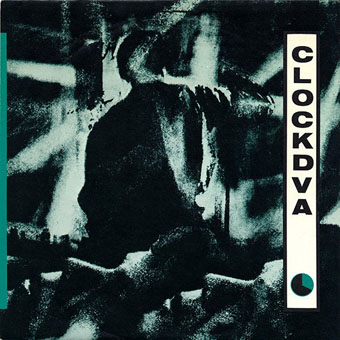
4 Hours by Clock DVA

clockdva1.jpg

Sleeve by Neville Brody.

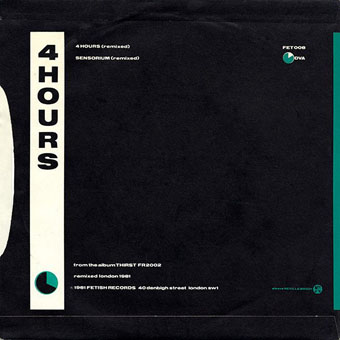
After mentioning Clock DVA’s Thirst (1981) a couple of days ago I’ve been playing the album together with Pow-Wow ever since. 4 Hours was Thirst‘s accompanying 7-inch single, a marvellous slice of rumbling post-punk angst. The B-side, Sensorium, includes the words “Uptown apocalypse” among its lyrics, a phrase that’s also the title of the second track on the equally marvellous Music For Stowaways (1981), an instrumental album by the post-Human League, pre-Heaven 17 offshoot British Electric Foundation. This isn’t a coincidence; the latter number was co-written by Clock DVA’s Adi Newton, and features him playing guitar and synth, Newton having been in The Future with BEF’s Marsh & Ware prior to the formation of Clock DVA and The Human League. And to further complicate this tangle of Sheffield connections, 4 Hours was reissued in 1985 in 12-inch format on Cabaret Voltaire’s Doublevision label. I bought almost all the Doublevision releases but this was one I missed. (Was the title of Cabaret Voltaire’s Sensoria derived from Sensorium? Maybe…)

clockdva2.jpg

Previously on { feuilleton }
Pow-Wow by Stephen Mallinder
Old music and old technology
Neville Brody and Fetish Records