Weekend links 829

hoffmeister.jpg

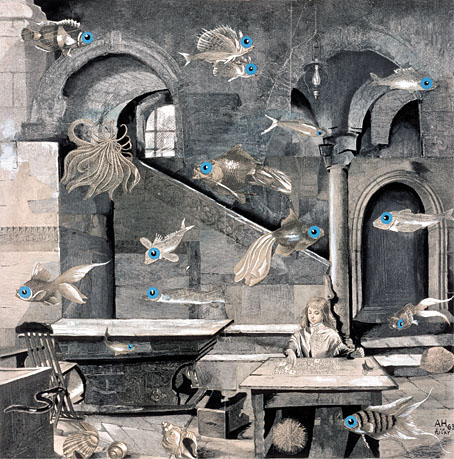
In the Constellation of Pisces by Adolf Hoffmeister.

• “Comb through many of the numerous ‘greatest post-punk albums of all time’ lists that you’ll find dotted around the internet and one fairly continual omission is Thirst, which is something of a travesty. It’s difficult to think of many albums that embody the more pioneering and progressive elements of the post-punk spirit than Thirst.” Daniel Dylan Wray on the early, anarchic performances of Clock DVA.

• Warner Brothers have decided at long last to allow the world to see a complete print of Ken Russell’s The Devils, a film they’ve effectively been censoring since 1971.

• A psychedelic Texas company powered hippie culture—then vanished. Gwen Howerton explores the history of the Houston Blacklight & Poster Company.

• “What is the world made of?” A long read by Felix Flicker looking at the nature of reality via the properties of fundamental and emergent entities.

• “My body ached from the volume”: Makoto Kubota remembers his time with the enigmatic and fearsome Japanese rock band Les Rallizes Dénudés.

• New music (and a psychedelic video by Robert Beatty): Introit / Prophecy At 1420 MHz by Boards Of Canada.

Stellar Iris, a new short film by Thomas Blanchard.

• Steven Heller’s font of the month is Puffery.

• At Dennis Cooper’s it’s Zoetrope Day.

This Website Cannot Save You

Der Prophet (1982) by Rolf Trostel | Prophecy Theme (1984) by Brian Eno, Daniel Lanois & Roger Eno | Prophecy Of The White Camel / Namoutarre (2011) by Master Musicians Of Bukkake
Weekend links 719

rimmington.jpg

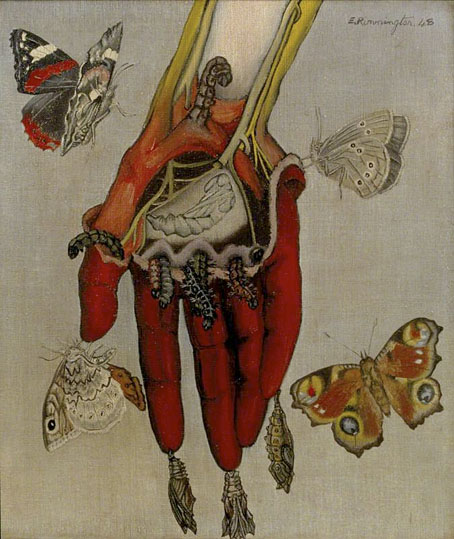
The Decoy (1948) by Edith Rimmington.

• “Among other things, [Dalí’s] storyboards involved [Ingrid] Bergman turning into a statue that would then break up into ants.” Tim Jonze talks to film scholar John Russell Taylor about the storyboards for Alfred Hitchcock’s films, including the ones for Spellbound which Taylor found in a bric-a-brac sale.

• “Of all the pop acts that proliferated in the early 80s, it was Soft Cell who retained punk’s sharp, provocative edges.” Matthew Lindsay on 40 years of Soft Cell’s This Last Night In Sodom.

• Coming soon from White Rabbit books: Futuromania: Electronic Dreams, Desiring Machines and Tomorrow’s Music Today by Simon Reynolds.

Anathema to many philosophical systems, or perhaps philosophy itself, Lovecraft’s philosophical project fundamentally holds that contemplations of higher reality or the nature of things can never be fully realised. Ultimately, the search for knowledge does not constitute some telos, some purpose, for humankind, but rather leads to the violent dissolution of the self. Higher reality is that which the limited human psyche can never fully comprehend.

Sam Woodward on the cosmic philosophy of HP Lovecraft

• At Public Domain Review: Grotesqueries at Gethsemane: Marcus Gheeraerts’ Passio Verbigenae (c.1580).

• “Here is a remarkable form of popular heraldry.” Mark Valentine on the mystique of old inn signs.

• At Bandcamp: Brad Sanders on where to begin with Lustmord’s cosmic ambient.

• New music: Eleven Fugues For Sodium Pentothal by Adam Wiltzie.

• At Aquarium Drunkard: Jason P. Woodbury talks to Roger Eno.

Gomorrha (1973) by Can | Sodom (1978) by Can | Spellbound (1981) by Siouxsie And The Banshees

Weekend links 694

sutton.jpg

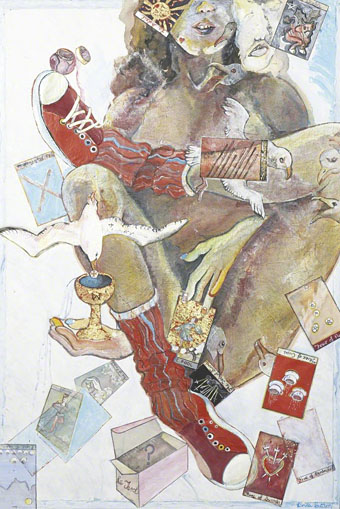
Reading the Tarot at Southend-on-Sea (c.1968) by Linda Sutton.

• “Starship Africa, released in 1980, was a densely textured audio collage emulating the sensation of intergalactic space travel, though it freaked out some in the scene. According to [Adrian] Sherwood, DJ David Rodigan told him: ‘What do you think you’re doing to reggae music?'” David Katz on the return of Creation Rebel.

• Coming soon from Strange Attractor: Subcontinental Synthesis, a history of India’s first electronic music studio, edited by Emptyset’s Paul Purgas. There’s also a related compilation album, The NID Tapes: Electronic Music from India 1969–1972.

• New music: The Lamentations Of Jeremiah by Vince Clarke, and Tidescape by Roger Eno.

But even when it’s a signal, even when it’s a microbe, we’ll likely never know if it’s aliens. Not just because of the vast distances involved or because of the wild possibilities presented by chemistry and biology, but because science seldom works that way. Discoveries almost never arrive as we think they will, as lightning bolt eurekas. They are slow, gradual, communal. Alien life may not be something we ever ‘find’, but instead inch towards, ever closer, like a curve approaching its asymptote. For all our desire to know who’s out there, that may have to be enough.

Jaime Green on the scientific method and the search for extraterrestrial life

• At Public Domain Review: Charles H. Bennett’s Shadows (ca. 1856).

• Steven Heller’s font of the month is JAF Herb.

Make a Spawn of Cthulhu mask.

Theon Cross’s favourite music.

Herb (1980) by Sly And The Revolutionaries With Jah Thomas | Pause In Herbs (1995) by Ken Ishii | Herb Is Burnin’ (2010) by Method Of Defiance

Weekend links 692

pearse.jpg

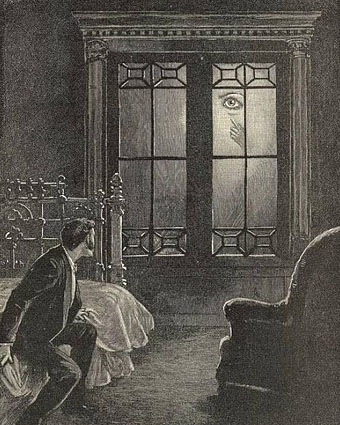
Illustration by Alfred Pearse for The Horror of Studley Grange by Clifford Halifax & LT Meade. Via.

The Haunting at 60: Guy Lodge asks “Is it still one of the scariest films ever made?” I say yes but then it’s always been a favourite. Also, Robert Wise is something of a cult figure in this house, not for his big-budget directing jobs on The Sound of Music and Star Trek: The Motion Picture, but for his RKO horror entries (The Curse of the Cat People and The Body Snatcher), his film noir (Born To Kill, The Set-Up, Odds Against Tomorrow), and two smaller science-fiction films from different decades, The Day the Earth Stood Still and The Andromeda Strain. All this and he also edited Citizen Kane.

• “This show makes an irrefutable case for her technical mastery while also affirming her as a first-rate fabulist whose disparate influences—chivalric romance, medieval architecture, tarot, psychology, astronomy, and much more—cohere into a visionary whole.” Jeremy Lybarger reviewing Science Fictions, the retrospective devoted to the art of Remedios Varo.

• New music: Improvisation On Four Sequences by Suzanne Ciani; Incorporeal by Hidden Horse; Atlas by Laurel Halo; Infinito (Version) by Moritz von Oswald.

While Ballard’s more outwardly conventional books may give us solider, more stable realities, what these realities often present…is a child (or childlike figure) frolicking against a backdrop provided by the destruction of an older order of reality that the world previously took for granted. It’s a cipher for his oeuvre as a whole: endlessly playing among the ruins, reassembling the broken or “found” pieces (styles, genres, codes, histories) with a passion rendered all the more intense and focused by the knowledge that it’s all—culture, the social order, the beliefs that underpin civilization—constructed, and can just as easily be unconstructed, reverse engineered back down to the barbaric shards from which it was cobbled together in the first place. To put it in Dorothean: In every context and at every level, Ballard’s gaze is fixed, fixated, on the man behind the curtain, not the wizard.

Tom McCarthy: JG Ballard’s Brilliant, Not “Good” Writing

• At Public Domain Review: Behold the Nebulous Smear: ‘Abd al-Rahman al-Sufi’s Illustrated Book of Fixed Stars (ca. 1430).

• At Unquiet Things: Shake, Shiver, and Shriek: The Haunted Gothic Nightmares of George Ziel.

Winners of Nature TTL Photographer of the Year 2023.

• The Strange World of…Gavin Bryars

Watch The Stars (1968) by Pentangle | Stars (1983) by Brian Eno with Daniel Lanois & Roger Eno | Kelly Watch The Stars (1997) by Air

Weekend links 545

harris.jpg

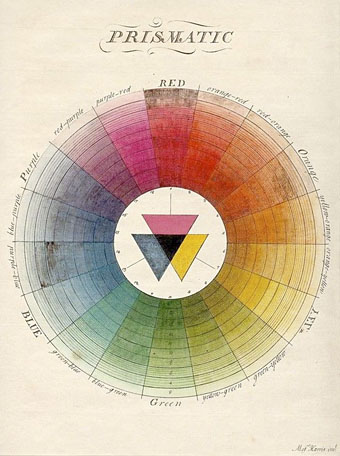
Colour wheel from The Natural System of Colours (1766) by Moses Harris.

• The Vatican’s favourite homosexual, Michelangelo di Lodovico Buonarroti Simoni, receives the ludicrously expensive art-book treatment in a huge $22,000 study of the Sistine Chapel frescos. Thanks, but I’ll stick with Taschen’s XXL Tom of Finland collection which cost considerably less and contains larger penises. Related: How Taschen became the world’s most famous erotic publishers.

• “In a metaphorical sense, a book cover is also a frame around the text and a bridge between text and world.” Peter Mendelsund and David J. Alworth on what a book cover can do.

The Night Porter: Nazi porn or daring arthouse eroticism? Ryan Gilbey talks to director Liliana Cavani about a film that’s still more read about (and condemned) than seen.

What is important about reading [Walter] Benjamin’s texts written under the influence of drugs is how you can then read back into all his work much of this same “drug” mind-set; in his university student days, wrangling with Kant’s philosophy at great length, he famously stated, according to Scholem, that “a philosophy that does not include the possibility of soothsaying from coffee grounds and cannot explicate it cannot be a true philosophy.” That was in 1913, and Scholem adds that such an approach must be “recognized as possible from the connection of things.” Scholem recalled seeing on Benjamin’s desk a few years later a copy of Baudelaire’s Les paradis artificiels, and that long before Benjamin took any drugs, he spoke of “the expansion of human experience in hallucinations,” by no means to be confused with “illusions.” Kant, Benjamin said, “motivated an inferior experience.”

Michael Taussig on getting high with Benjamin and Burroughs

• “Utah monolith: Internet sleuths got there, but its origins are still a mystery.” The solution to the mystery—if there is one—will be inferior to the mystery itself.

After Beardsley (1981), a short animated film about Aubrey Beardsley by Chris James, is now available on YouTube in its complete form.

• Mix of the week: The Ivy-Strangled Path Vol. XXIII – An Ivy-Strangled Midwinter by David Colohan.

Charlie Huenemann on the Monas Hieroglyphica, Feynman diagrams, and the Voynich Manuscript.

Katy Kelleher on verdigris: the colour of oxidation, statues, and impermanence.

• A trailer for Athanor: The Alchemical Furnace, a documentary about Jan Švankmajer.

All doom and boom: what’s the heaviest music ever made?

• At Strange Flowers: Ludwig the Second first and last.

• At Dennis Cooper’s: Krzysztof Kieślowski Day.

Ralph Steadman’s cultural highlights.

• RIP Daria Nicolodi.

Michael Angelo (1967) by The 23rd Turnoff | Nightporter (1980) by Japan | Verdigris (2020) by Roger Eno and Brian Eno