Stone Tapes and Quatermasses

penguin.jpg

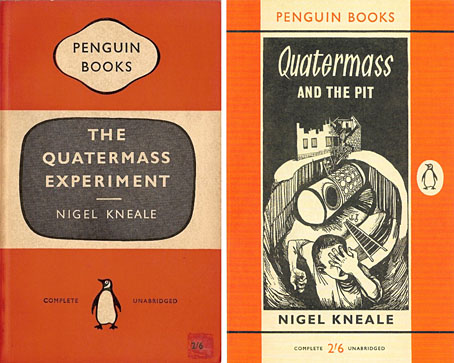
Quatermass paperbacks from Jovike’s Flickr pages.

This may be another occasional series in the making since there’s already been a post about Roadside Picnic/Stalker music, and one about music inspired by the cosmic horror of William Hope Hodgson. I was going to write something earlier this year about music derived from the works of Nigel Kneale after rewatching all of Kneale’s major works. The reappraisal was prompted by the publication in January of The Twilight Language of Nigel Kneale, an excellent anthology of essays/speculations (and a China Miéville interview) about Kneale’s film and TV dramas. The delay in writing was a result of having to wait several months after ordering a CD of the Tod Dockstader album (see below) which for some reason the distributors couldn’t manage to get in the post.

In the Twilight Language book there’s a piece by Ken Hollings about electronic music, some of which has material connections with Kneale’s work, notably the Radiophonic Workshop’s creation of sound effects for Quatermass and the Pit. Early copies of the book came with a bonus cassette tape of Kneale-inspired music; more about that below. The men and women of the Radiophonic Workshop are the godparents of the following Kneale soundworks, most of which are British, and inevitably tend towards the grinding, droning and doom-laden end of the electronic spectrum. Given the enduring influence of Kneale’s work, especially the Quatermass serials and their film equivalents, it’s surprising there isn’t more Knealesque music to be found. (I’m avoiding the obvious film soundtracks, and any bands such as Quatermass who may be named after Kneale’s work but whose music doesn’t reflect it.) If anyone can add to this list then please leave a comment.
quatermass.jpg

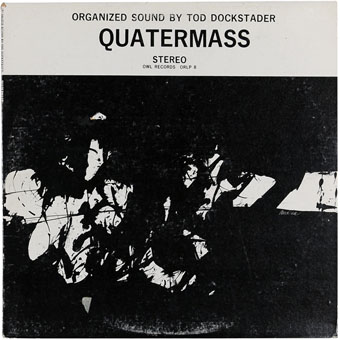
Quatermass (1964) by Tod Dockstader

The American master of tape manipulation here processes hours of recordings of cymbals, pipes, tone generators, a vacuum hose and rubber balloons to create what he calls “a very dense, massive, even threatening work”. Dockstader hadn’t seen any of the Quatermass films or serials when he chose the name but he said that it sounded right. It certainly does, as does the unnerving, shrieking morass of sound he manages to craft using the most primitive equipment. The Starkland CD containing the Quatermass suite includes two further edits of the source material entitled Two Moons of Quatermass.
seance.jpg

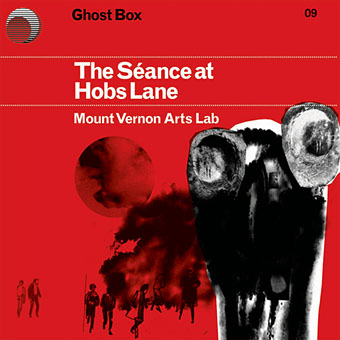
The Séance At Hobs Lane (2001) by Mount Vernon Arts Lab

Mount Vernon Arts Lab is Drew Mulholland and various collaborators. The Séance At Hobs Lane is an abstract concept album based on Mulholland’s lifelong obsession with Quatermass and the Pit (an idée fixe he writes about in the Twilight Language book), plus “Victorian skullduggery, outlaws, secret societies and subterranean experiences”. Among the collaborators are Coil, Norman Blake of Teenage Fanclub, Barry 7 of Add N to (X), and Adrian Utley of Portishead. The album was reissued in 2007 on the Ghost Box label.
ouroborindra.jpg

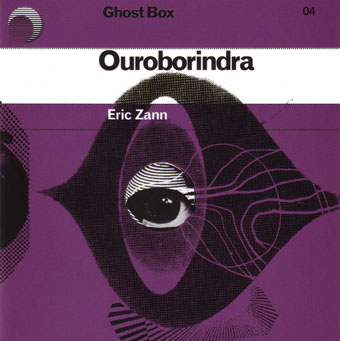
Ouroborindra (2005) by Eric Zann

And speaking of Ghost Box… This album has been mentioned here on several occasions, a one-off release that’s the most consciously horror-oriented of all the works in the Ghost Box catalogue. The artist “name” and track titles reference Lovecraft and Machen but it’s included here for the dialogue quote in the insert from Kneale’s ghost drama The Stone Tape. In addition to the Mount Vernon reissue other Ghost Box references to Kneale can be found in the samples from Quatermass and the Pit (TV version) on The Bohm Site from We Are All Pan’s People by The Focus Group, and the title of the track which follows: Hob’s Rumble. Continue reading “Stone Tapes and Quatermasses”
Weekend links 178

bantjes.jpg

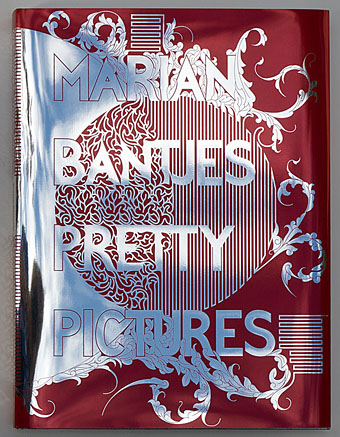
Pretty Pictures, a new book by designer Marian Bantjes, is out on October 1st.

• A writer admired by Angela Carter, Michael Moorcock, Harlan Ellison, Anthony Burgess, Jonathan Meades and Iain Sinclair; a “writer’s writer…[whose] best stories bear comparison with the Ficciones of Jorge Luis Borges”; a writer with an “unsettling quality to his writing, a whiff of brimstone that links him to fin-de-siècle occult figures such as HP Lovecraft—and even, at a further remove, Aleister Crowley”. David Collard explains why you may want to read something by Gerald Kersh (1911–1968), four of whose books are being republished.

• The Eccentronic Research Council and Maxine Peake pay homage to Delia Derbyshire’s The Dreams project with a new single out at the end of the month (Pye Corner Audio and Carol Morley appear on the flip). Ms Peake’s barm-cake reverie may be heard here.

• “Applying for grants, writing artist statements, showing up to openings—artists have to do far more than just make art if they want to find an audience for it.” Jen Graves on lies and deception in the art world.

The material does not make the work. The life does not make the art. Exactly the opposite. The work creates the material. The art creates the life. Did Trinidad exist before Naipaul? Did cargo ships exist before Joseph Conrad? Did Newark and the New Jersey suburbs exist before Philip Roth? Did women in playgrounds in New York City exist before Grace Paley? See how the writer invents the material? These places did not exist as literary subjects. They were invisible to literature. The magic of a great book is that it makes its own subject seem inevitable. The danger is, it makes the subject seem like the source of power in the work.

Phyllis Rose on life and literature.

• Mix of the week: Secret Thirteen Mix 087, 40 minutes of original electronic music by Geistform (Rafael Martinez Espinosa).

• “You’ve Got This“, an It Gets Better-style video support campaign for people recently diagnosed with HIV.

• At Dangerous Minds: Babalon Working: Brian Butler’s trippy occult odyssey with Paz de la Huerta.

Manfred Mohr‘s computer-created artwork, from the 1960s to the present.

Robert Macfarlane on the strange world of urban exploration.

Rick Poynor on Bohumil Stepan’s Family Album of Oddities.

• Oli Warwick talks to Martin Jenkins, aka Pye Corner Audio.

• The 384-page BUTT calendar for 2014 is now on sale.

• Pye Corner Audio: We Have Visitors (2010) | Toward Light (2011) | The Mirror Ball Cracked (2012)

Weekend links 177

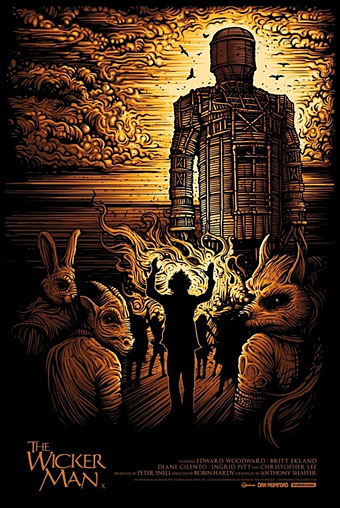
wickerman.jpg

A new Wicker Man poster by Dan Mumford appears on the cover of the forthcoming DVD/BR reissues. Prints are available.

• The long-awaited release of a restored print of Robin Hardy’s The Wicker Man approaches. Dangerous Minds has a trailer while The Guardian posted a clip of the restored footage. The latter isn’t anything new if you’ve seen the earlier uncut version, but the sound and picture quality are substantially better. I’ve already ordered my copy from Moviemail.

• “It’s a fairly bleak place, and it has this eerie atmosphere. East Anglia is always the frontline when there’s an invasion threatening, so there are lumps of concrete dissolving into sand, bits of barbed wire and tank tracks that act as a constant reminder. I really love it.” Thomas Dolby talking to Joseph Stannard about environment and memory.

Dome Karukoski is planning a biopic of artist Tom of Finland. Related: Big Joy, a documentary about the life and work of James Broughton, poet, filmmaker and Radical Faerie.

The desire to be liked is acceptable in real life but very problematic in fiction. Pleasantness is the enemy of good fiction. I try to write on the premise that no one is going to read my work. Because there’s this terrible impulse to grovel before the reader, to make them like you, to write with the reader in mind in that way. It’s a terrible, damaging impulse. I feel it in myself. It prevents you doing work that is ugly or upsetting or difficult. The temptation is to not be true to what you want to write and to be considerate or amusing instead.

Novelist Katie Kitamura talks to Jonathan Lee.

Leonora Carrington: The Celtic Surrealist opens on Wednesday at the Irish Museum of Modern Art, Dublin.

Julia Holter turns spy in the video for This Is A True Heart.

Alexis Petridis talks to graphic designer Peter Saville.

hashim.jpg

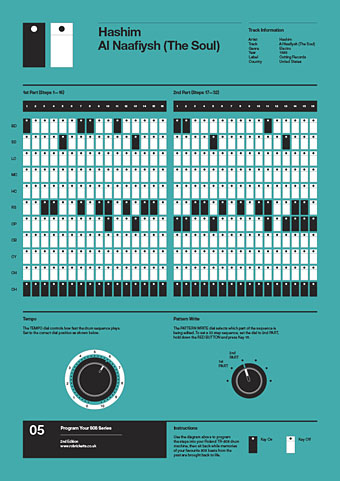
Al-Naafiysh (The Soul) by Hashim. From the Program Your 808 poster series by Rob Rickets.

Rob Goodman on The Comforts of the Apocalypse.

Post-Medieval Illustrations of Dante’s Sodomites.

• Annoy Jonathan Franzen by playing Cat Bounce!

Paolozzi at Pinterest

The Surrealist Waltz (1967) by Pearls Before Swine | The Jungle Line (1981) by Low Noise (Thomas Dolby) | Al-Naafiysh (The Soul) (1983) by Hashim

Weekend links 176

dlouhy.jpg

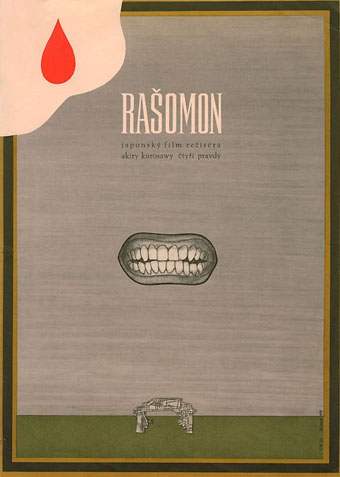
This week PingMag was looking at Czech film posters. This one by Bedrich Dlouhy is for the belated 1970 release of Kurosawa’s Rashomon.

• In October Alison Goldfrapp curates an exhibition for The Lowry, Salford, featuring her favourite art. Examples will include work by Leonora Carrington, Lotte Reiniger and Henry Darger so I’ll definitely be seeing this one. The new Goldfrapp album, Tales of Us, is released this week. Alison Goldfrapp & Lisa Gunning’s film for Annabel is here.

Michael Glover profiles artist Tom Phillips who has a new show of his paintings at the Flowers Gallery, London. The indefatigable Phillips also talked to Tracy McVeigh about his design for the new 50 pence coin which celebrates the centenary of Benjamin Britten.

Get Carter director Mike Hodges remembers re-teaming with Michael Caine for the island-set crime thriller Pulp, and shares a letter that JG Ballard wrote to him in admiration of the film.

Dismantling the surveillance state won’t be easy. Has any country that engaged in mass surveillance of its own citizens voluntarily given up that capability? Has any mass surveillance country avoided becoming totalitarian? Whatever happens, we’re going to be breaking new ground.

Bruce Schneier on how to deal with the total surveillance state.

• Babel/Salvage presents The Midnight Channel, the newest montage of poetry by Evan J. Peterson, inspired by cinema of the horrific, fantastic and bizarre.

• Mixes of the week are from composer Amanda Feery at The Outer Church, and Pinkcourtesyphone (Richard Chartier) at Secret Thirteen.

• At Dangerous Minds: Kimberly J. Bright on the psychedelic poster art of Hapshash and the Coloured Coat. Related: LSD may not be bad for you, says study.

Queer Zines: a 400-page study edited by AA Bronson & Philip Aarons.

• Justin Abraham Linds on The Walt Whitman of gay porn.

• Designs for theatre and print by Oskar Schlemmer.

Beautiful Mars: a Tumblr.

Catleidoscope!

• Goldfrapp: Lovely Head (2000) | Strict Machine (2003) | Caravan Girl (2008)

Fišer and Liška

morgiana.jpg

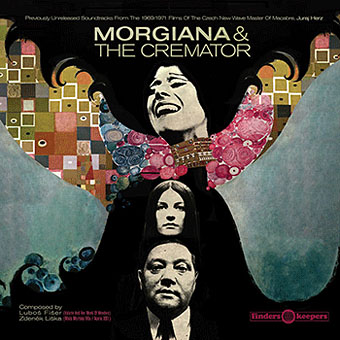
Having enthused recently about Czech soundtrack composer Zdenek Liška, and about Juraj Herz’s The Cremator (1969), I can’t avoid mentioning the release this month of Liška’s soundtrack for Herz’s film which comes twinned on CD with Luboš Fišer’s equally distinctive soundtrack for Herz’s Morgiana (1972). Both films are available on DVD from Second Run. Having only discovered these works in the past month the soundtrack collection arrives at just the right moment, another excellent reissue from the UK’s Finders Keepers label who specialise in resurrecting neglected soundtracks, electronica and other obscure music. (Highlights from the electronic catalogue have included the reissue of Suzanne Ciani’s synth music from the 1970s and 80s.)

With Morgiana and The Cremator sharing a director it makes sense to present the soundtracks as a pair, but the films also share a macabre atmosphere that verges on outright weirdness. Where the character of the Cremator is obsessed with reducing human beings to ash, in Morgiana we have a sister plotting the slow death by poison of her twin in order to gain an inheritance. Fišer’s organ-inflected score is suitably dramatic, even melodramatic for the scenes where the poisoned sister is hallucinating, or we’re seeing everything from the point-of-view of the family cat. Finders Keepers’ albums are designed by Andy Votel who for this release has had the CD booklet printed with the Cremator pages running from the back to the centre so that—in the booklet at least—neither title is favoured.

Anyone curious about the Finders Keepers’ sound world can receive a taste via this mix by Andy Votel for Self-Titled Mag. It’s intended to tie-in with Cassette Store Day (that’s today) but really functions as a good sample of the record label’s obsessions. There’s some Suzanne Ciani in there, as well as a rare piece of Cristal Baschet playing from Lasry-Baschet.

Previously on { feuilleton }
Two sides of Liška
Liška’s Golem
The Cremator by Juraj Herz