Weekend links 277

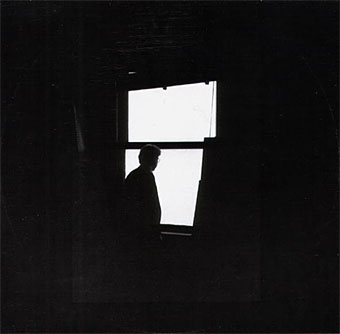
elledge.jpg

Sunday by Amanda Elledge.

• Coming from Strange Attractor this November: The Moons at Your Door, an anthology of strange tales selected by David Tibet. “The Moons At Your Door collects over 30 tales, both familiar and unknown from: Robert Aickman, Algernon Blackwood,  DK Broster, AM Burrage, RW Chambers,  Aleister Crowley, Sheridan Le Fanu, Elizabeth Gaskell, WW Jacobs, MR James, Vernon Lee, LA Lewis, Thomas Ligotti, Arthur Machen, Guy de Maupassant, Perrault, Thomas De Quincey, Saki, Count Stenbock, Montague Summers, HR Wakefield and Edith Wharton. The volume also includes extracts and translations by the author from Babylonian, Coptic and Biblical texts alongside poems and fairy tales.”

Gay-rights activists give their verdict on Stonewall: “This film is no credit to the history it purports to portray”. The only surprise about this episode is that anyone expected Roland Emmerich to make a historically accurate film in the first place. Related: Edmund White’s first-hand report written a few days after the riots.

• “If you hate [Boom!], I hate you, and I could never be your friend or your boyfriend. Divine and I had seen Boom! right before we made Pink Flamingos, and it’s about Elizabeth Taylor, retired, writing her memoirs, which is what Pink Flamingos was too, in a way.” John Waters (again) gives Hayley Campbell some dating tips.

• “We moderns may too-often suffer from a mixing up of historical sequences, but better that, surely, than risk raising a population that is entirely not-arsed about its past.” Julian Cope explores the Celts: Art and Identity exhibition at the British Museum, London.

• “But I am talking about psychedelic music, and obviously some of that comes from early psychedelic rituals, which are all about losing yourself…and I did come back into the world in a different way.” Natasha Khan on her new musical project, SEXWITCH.

• At Dangerous Minds: Vincent Price teaches the dark arts on his 1969 album An Adventure in Demonology.

• A trailer for Salthouse Marshes, “a short, landscape obsessed ghost story” by Adam Scovell.

• Rare video of Young Marble Giants playing for 45 minutes in Vancouver, 1980.

• A collection of Ghost Box posters and flyers designed by Julian House.

• Mix of the week: Secret Thirteen Mix 163 by Ssleeping desiresS.

Ministry, a new photo series by Ellen Rogers.

Julia Holter‘s favourite albums.

Boom Stix (1962) by Curley & the Jades | Things That Go Boom In The Night (1981) by Bush Tetras | Boom! (1991) by The Grid

Weekend links 275

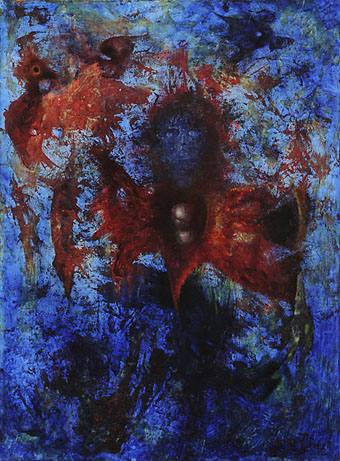
wessi.jpg

A painting from the Projekt Babelturm series by Wessi.

• “The first thing I would say is that I have no idea what authentic psych music is, and I have no wish to pursue that either. To me the idea of real psych is a paradox. I can’t see how you can have such a thing as real psychedelia when the whole thing is based on a psychedelic drug that gives you hallucinations and illusions and layers and layers of unreality.” Rob Chapman talking to Ben Graham about his new book, Psychedelia And Other Colours.

Elsewhere in a rather psychedelic week: Rob Young reviewed Chapman’s book for the New Statesman; Dangerous Minds posted “Hypnotic video of how a psychedelic masterpiece is made“; and in Germany a homeopathy conference “ended in chaos in Germany after dozens of delegates took a LSD-like drug and started suffering from hallucinations.”

• Coming soon from Dark Entries (so to speak), another collection of Patrick Cowley‘s music for gay porn films.

Jonathan Barnbrook works some quotes from JG Ballard into the British Road Sign Project.

• “Sorcery is more popular than football in Morocco,” says writer and filmmaker Abdellah Taïa.

• “If you’re going to make something, you should try and be wild,” says Mica Levi.

• Coca-Cola Milanese: Patrick Ellis considers the state of the world’s fair in 2015.

• Hear two pieces from Collapse, the forthcoming album by Drew McDowall.

• Mix of the week: Secret Thirteen Mix 162 by Ketev (Yair Elazar Glotman).

Emptyset’s Signal transforms Earth’s ionosphere into sound art.

Paul Laffoley: The Force Structure of the Mystical Experience.

• Fuck off, Star Wars, Ben Wheatley’s High Rise is on its way.

Ideologic Organ

Psychedelic Ride (1967) by The Ides | Psychedelic Warlords (Disappear In Smoke) (1974) by Hawkwind | Psychedelic Sewing Room (1989) by Bongwater

Weekend links 268

paul.jpg

A City on Pluto (1940) by Frank R. Paul. Related: Paul’s predictions about life on other planets.

23 Skidoo’s Peel Session from September 16th, 1981. Only 18 minutes of music but I’m thrilled for its being unique material that’s never been given an official release. There are many more Peel Sessions at the uploader’s channel, not all of which were reissued on the Strange Fruit label. Download favourites in their as-broadcast form (some with John Peel’s introductions) before they vanish or get blocked like the 1981 Cabaret Voltaire session. Related: Wikipedia’s list of Peel Sessions.

• Mixes of the week comprise two collections by Jon Dale of strange and beguiling Italian music: The Prevarications Of The Sky Against The Earth and La Verifica Incerta; the Summer Window Mix (“telly detritus, new-not-new synth nonsense & off-colour pop oddities”) by Moon Wiring Club; and Secret Thirteen Mix 158 by Haunter Records.

• “Hello, this is David Bowie. It’s a bit grey out today but I’ve got some Perrier water, and I’ve got a bunch of records…” Two hours of the Thin White Duke playing favourite music on BBC Radio One, 20th May, 1979.

Some of Vidal’s guests were writers, not exactly his favorite group. “Writers are the only people who are reviewed by people of their own kind,” Vidal said in an interview. “And their own kind can often be reasonably generous—if you stay in your category. I don’t. I do many different things rather better than most people do one thing. And envy is the central fact of American life.”

Frank Pizzoli reviews Sympathy for the Devil: Four Decades of Friendship with Gore Vidal by Michael Mewshaw

• Yair Elazar Glotman’s new album, Études, conjures “bone-rattling resonance, thick, alien-like atmospheres, and percussive fragments”. Stream it in full here.

• London’s Lost Department Store of the Swinging Sixties: Inge Oosterhoff on the splendours of Biba.

• It’s that Ungeziefer again: Richard T. Kelly on 100 years of The Metamorphosis by Franz Kafka.

• The History of Creepy Dolls: Linda Rodriguez McRobbie explores the uncanny valley.

• At Dangerous Minds: Matt Groening tells the story of The Residents in 1979.

• The NYT collects NASA’s photos from the New Horizons Pluto flyby.

The Museum of Imaginary Musical Instruments

Written on the Body: tattoos in cinema

The Doll’s House (1981) by Landscape | Voodoo Dolly (1981) by Siouxsie and the Banshees | Devils Doll Baby (1986) by Sonny Sharrock

Weekend links 267

morgan.jpg

Black Fever (2010) by Polly Morgan.

• “She was something of an Auntie Mame figure for me. We spent years haunting secondhand bookstores in Berkeley, Los Angeles, and New York, talking for hours over ever more bizarre dishes of Chinese Hakka cuisine in a hole-in-the-wall eatery at Stockton and Broadway in San Francisco, watching Kenneth Anger flicks and the surrealistic stop-motion puppet masterpieces of Ladislas Starevich, which Tom Luddy would screen for us at the Pacific Film Archive, over and over again until our eyeballs nearly fell out.” Steve Wasserman remembers Susan Sontag.

California Dreams is “the first career-spanning compendium of Mouse’s work; it includes his recent landscapes and figurative paintings. Taken as a whole, the work is a weird, gilded, space-age, flame-licked way to chart the rise of late-twentieth-century youth culture”. Jeffery Gleaves on the psychedelic art of Stanley Mouse.

• “Not only does moral preoccupation corrupt the artfulness of fiction, but fiction is an inefficient and insincere vehicle for moralizing,” says Alice Gregory, joining Pankaj Mishra to address the question: “Do Moralists Make Bad Novelists?”

Nabokov’s posthumously published Lectures on Literature reprints a corny magazine ad that Nabokov liked to show to his students at Cornell, as an example of a certain kind of sunny American materialism and kitsch (or poshlost, in Russian): it’s an ad for flatware featuring a young housewife, hands clasped, eyes brimming as she contemplates a place setting. Nabokov titled it “Adoration of Spoons,” and it undoubtedly played a significant role in his creation of the suburban widow Charlotte Haze. From such strangely endearing trash was a masterpiece born.

John Colapinto reviewing Nabokov in America by Robert Roper

• “How many typefaces is too many typefaces?” asks Adrian Shaughnessy. “What happens to our ability to discriminate and exercise good judgment when we have a near-infinite number of possibilities?”

• At BUTT: a clip from one of the more dreamlike scenes in Wakefield Poole’s gay porn film, Bijou (1972). Poole’s “sensual memoir”, Dirty Poole, is published by Lethe Press.

John Banville reviews The Prince of Minor Writers, selected essays of Max Beerbohm edited by Phillip Lopate.

• My thanks once again to Dennis Cooper for featuring this blog on his list of cultural favourites.

• More Moogery: Sarah Angliss, Gazelle Twin and Free School in the Moog Sound Lab.

• Mix of the week: XLR8R Podcast 394 by Francesca Lombardo.

Atlas Obscura gets to grips with the enormous Devil’s Bible.

Feel You, a new song by Julia Holter.

Spoonful (1960) by Howlin’ Wolf | Spoon (1972) by Can | Spoon (2013) by Mazzy Star