Weekend links 433

ginzburg.jpg

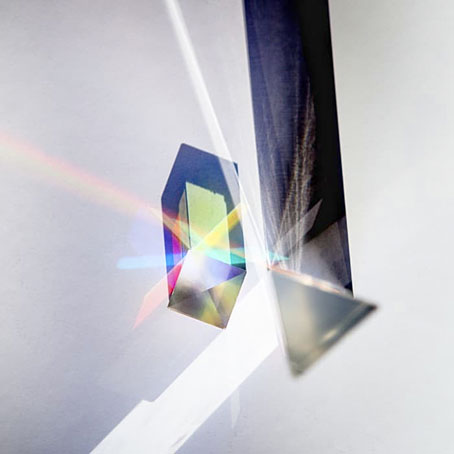
Cover art for Six Correlations, a solo album by Emptyset’s James Ginzburg which is released later this month. Photo by Clayton Welham.

• “Every single leather S&M club in London was raided by the police at least once, but they couldn’t get any convictions because juries wouldn’t convict us.” Ed Siddons on the death of London’s gay leather scene.

• I’ve been listening to a lot of Stereolab this week so this post from Dangerous Minds last year was useful: “The intriguing origins of ‘Cliff,’ the cartoon character that’s all over Stereolab’s early album art”.

• Available for pre-order: Performance – The Making of a Classic, a book by Jay Glennie celebrating the 50th anniversary of Donald Cammell & Nicolas Roeg’s cult feature film.

• Out later this month from Strange Attractor: The Haunted Writings of Lionel Johnson, the Decadent Era’s Dark Angel, edited by Nina Antonia.

• Mixes of the week: Rosemary Hill – an Autumn Autobiography by cafekaput, and Secret Thirteen Mix 267 by Drew McDowall.

The top 100 albums of The Quietus’ existence, as picked by tQ’s writers.

RC Harvey on the 50th anniversary of (American) underground comix.

• At Haute Macabre: An enigmatic baroness and her collection of skulls.

Miyu Kojima creates miniature replicas of lonely deaths.

Scratches in Kubrick’s 2001: A Space Odyssey.

Richard Thompson’s favourite albums.

Wrong Airport Ghost by Sam Slater.

Mark Valentine’s 3 Wyrd Things.

• 4/4 In Leather (1981) by Eurythmics | The Girl With The Patent Leather Face (1981) by Soft Cell | Leather Bound (1982) by Patrick Cowley

Leonor Fini

fini1.jpg

I’ve been hoping for years that a proper documentary about the enigmatic Argentinian artist might surface, and here one is at last. Leonor Fini (1987) was directed by Chris Vermorcken, and as a portrait of an artist it’s almost as good as the films the BBC used to produce for the Arena arts strand. I say “almost” because the Arena template tended to blend a biographical sketch with the life of the artist or writer at the present moment. Vermorcken encourages Fini to tell us about her early years in Trieste up to her meeting with the Surrealists in Paris, after which the discussion meanders to her vast company of Persian cats and the various forms of her painting and drawing.

fini2.jpg

Unlike most other films about Fini, this one is subtitled throughout so we can enjoy her reading from some of the stories that accompany her drawings, and also find out which films she liked. (Fellini’s Casanova was a favourite.) There’s also an appearance by Konstanty Jelenski, one of the points of the bisexual ménage à trois formed by Jelenski, Fini and Count Stanislas Lepri, all of whom lived together in the cat-infested house. Essential viewing here.

Previously on { feuilleton }
Leonor Fini: comment vivre sans chat
Angels of Anarchy: Women Artists and Surrealism
The art of Leonor Fini, 1907–1996
Surrealist women

Weekend links 432

urbanowicz.jpg

Tokyo at night, one of a series of watercolours depicting the back streets of the city by Mateusz Urbanowicz.

• “The experience of reading the book is something like watching Dr. Strangelove on one screen, Apocalypse Now on a second screen, and having both feeds interrupted by explicit gay erotica.” Bad Books For Bad People examines William Burroughs’ celebrated YA novel, The Wild Boys. The subject is a perennial one here, explored at length in this post.

• Lindsay Anderson’s The White Bus (1967), a surreal precursor to If…. and O Lucky Man!, will receive the high-quality BFI reissue treatment as part of the Woodfall Films portmanteau feature, Red, White and Zero.

• The Radiophonic Workshop have composed the score for Possum, a horror film by Matthew Holness. The main title theme is here. The film is released later next month.

Might I have written a sober affair, had I not been under the influence? Perhaps not—I have never needed tramadol to be attended by angels, or to feel demons pricking my feet. But I think of Vincent van Gogh, who looked at the world through the yellowish haze conveyed by digitalis, and grew enraptured by sunflowers and straw chairs, and I think of a glass prism through which a beam of white light passes and is split into a rainbow. What had been a single lucid idea had passed through the drugs I took and been dispersed into a spectrum of colours I had only half foreseen.

Sarah Perry on trying to write while besieged by bodily pain and prescription drugs

• Jacques Tourneur’s masterful MR James adaptation, Night of the Demon (1957), is released on region-free Blu-ray next month by Powerhouse Films.

• Mixes of the week: FACT mix 673 is The Bug presents PRESSURE, and XLR8R Podcast 561 by Zendid.

• The Space Shifters exhibition at the Hayward Gallery, London, messes with Adrian Searle‘s mind.

Gregory Wells on queers, faeries and revolutionaries in the psychedelic movement.

Wide Boys (1977) by Ultravox! | On Demon Wings (2000) by Bohren & Der Club Of Gore | Spoonful (2013) by Robert Plant and the Sensational Space Shifters

Weekend links 430

fiochi.jpg

Il Mago from the IONA Tarot by Giona Fiochi.

• “Russia’s answer to James Bond: did he trigger Putin’s rise to power?” Andrew Male on Max Otto von Stierlitz and Seventeen Moments of Spring. The whole series is on YouTube (with subtitles).

Geeta Dayal reviews High Static, Dead Lines: Sonic Spectres and the Object Hereafter by Kristen Gallerneaux, a new book about the eeriness of sound technology.

• Published next month: Strange Frequencies: The Extraordinary Story of the Technological Quest for the Supernatural by Peter Bebergal.

Let me first introduce an aside: I hate the word “queer” and all its new iterations. “Gay” was awful enough. “‘Gays’ makes us sound like bliss ninnies,” Christopher Isherwood said once. “Queer” will always be for men of my generation a word of violence and hatred, and it separates generations. And while I’m digressing, let me commit blasphemy: the over-emphasis on the Stonewall riots depletes and distorts our history of resistance and the art produced, which is determinedly referred to as “pre-Stonewall.” Resistance occurred years before Stonewall (but there were lots of writers in New York at the time to write about those riots), in San Francisco, Los Angeles, other cities, powerful confrontations with the police, powerful demonstrations. “Pre-Stonewall” writers include William Burroughs, Allen Ginsberg, strong radical voices confronting the grave dangers of the time, violence, prison.

John Rechy talking to Eric Newman about his latest novel, Pablo!, written in 1948 but only now seeing publication

Tangerine Dream performing Identity Proven Matrix, one of the standout pieces from recent album Quantum Gate, live in the studio.

Beloved is the debut solo album by Randall Dunn, record producer and member of the masterful Master Musicians of Bukkake.

• “How will police solve murders on Mars?” Geoff Manaugh on the new frontier of interplanetary law enforcement.

Milly Burroughs on how Verner Panton changed the way the world sees furniture design.

Tim Martin on the new science of psychedelics.

Werner’s Nomenclature of Colours

Next Stop Mars (1966) by Sun Ra & His Arkestra | Mars, The Bringer Of War (1976) by Isao Tomita | Mars Garden (2013) by Juan Atkins & Moritz Von Oswald

Saki: The Improper Stories of HH Munro

saki.jpg

I thought I’d written about this some time ago but it appears not so the present post can serve as a way to honour the talents of the late Fenella Fielding. The obituaries this week have inevitably emphasised her roles in the Carry On films, a series of alleged comedies that I’ve never liked, and which weren’t much liked by several of the actors who appeared in them. Fenella Fielding did much more than this, of course, especially in the theatre, on radio and in television, including appearances such as the one here from a collection of adaptations of the peerless short stories of Hector Hugh Munro, better known as Saki. Granada TV made a whole series of these in 1962, broadcasting this anthology in 1985 following the death of producer Philip Mackie. Fenella appears in the second story, A Holiday Task, as the forgetful Mary Drakmanton, and she fits so well with into Saki’s world that I really wish I’d suggested to my colleagues at Savoy Books a reading or two by Fenella from Saki. She enjoyed reading Colette for Savoy, and chose the selections herself, one of which concerned Colette’s homosexual friends. Given this, I can imagine Fenella teasing out some of the sly gay humour that runs like a scarlet thread through Saki’s Clovis stories.

The other pieces in this Granada collection are The Stampeding of Lady Bastable, The Way to the Dairy, Sredni Vashtar and A Defensive Diamond. The story editor was Gerald Savory who later did such an excellent job adapting Dracula for the BBC.

Previously on { feuilleton }
Fenella Fielding reads Colette