Planète magazine covers

planete01.jpg

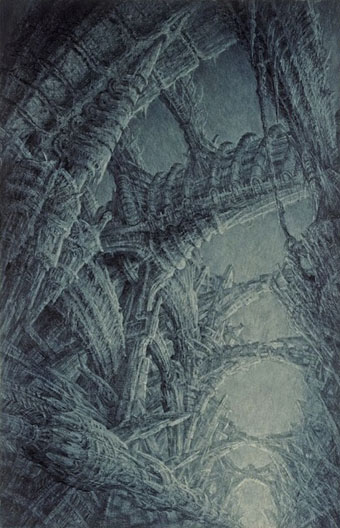
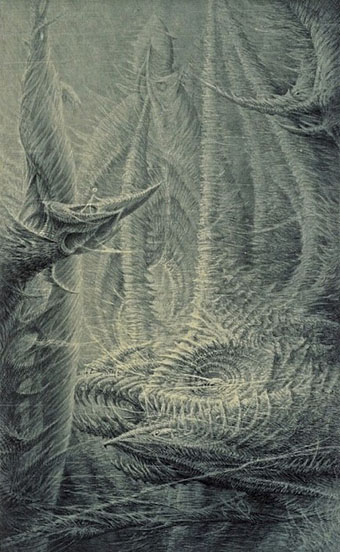
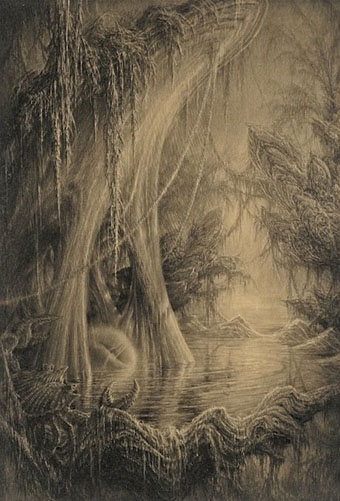
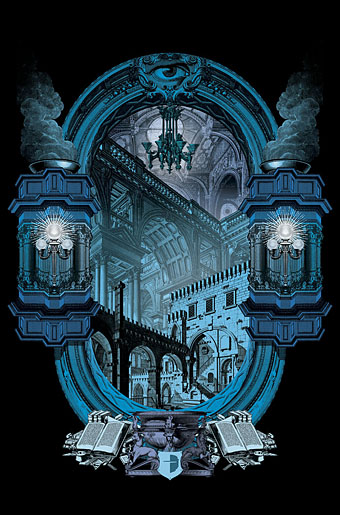
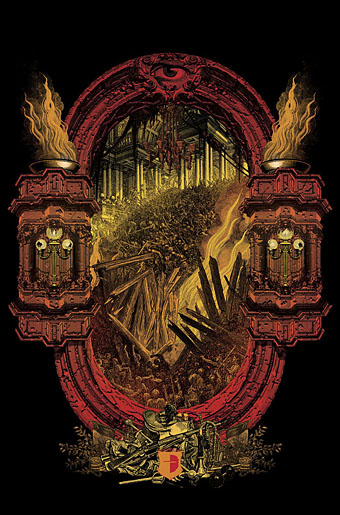
Planète was a French magazine of “Fantastic realism” which ran throughout the 1960s. I’ve never seen a copy but sight of the immediately recognisable covers has always fascinated because this was the magazine established in the wake of the huge success of The Morning of the Magicians (1960), a unique “Introduction to Fantastic Realism” by Louis Pauwels and Jacques Bergier. Rather than enthuse at length about The Morning of the Magicians I’ll simply point you to this piece by the late RT Gault from his now-defunct website.

Pauwels and Bergier’s book was oft-imitated but never equalled during the 1970s. Where later authors such as Erich von Däniken tended to plough a single, narrow furrow, Pauwels and Bergier leapt breathlessly from one subject to another: alchemy in the 20th century, Forteana, a lengthy examination of the occult preoccupations of the Third Reich, speculations about nuclear physics, speculations about biological mutation, Hollow Earth theories, etc, etc, all the time dropping quotes from HP Lovecraft, Arthur Machen and Albert Einstein. It’s a very heady mix which is great fun to read even though there’s nothing like a solid argument that comes out of it all.

planete02.jpg

Planète continued the blend of Futurology and fringe philosophy while using the magazine format to print translations of science fiction and fantasy stories; among other things it was notable for bringing the stories of Jorge Luis Borges to a wider audience in France. The magazine’s name may have been science fictional but the magazine as a whole is closer to the kind of borderline sf/art magazine that New Worlds became under Michael Moorcock’s editorship in the late 1960s. I’ve never seen Moorcock or anyone connected with New Worlds mention Planète but the covers at least pre-empt the style adopted by New Worlds during its large-format run: consistently bold typography and imagery that only obliquely relates to the contents.

planete03.jpg

All these covers are from Noosfere where the story contents for each issue are also listed. No credits for the designer, unfortunately. If anyone knows who was responsible for the magazine design then please leave a comment.

Continue reading “Planète magazine covers”

More chimeras

chimera06.jpg

The Chimera (1867) by Gustave Moreau.

It’s no easy task to catalogue all the chimeras that proliferate between the numerous examples in the work of Gustave Moreau to those produced before the First World War. Consider this a sample, then, and a pointer to further research. Several of these artists—Malczewski, Ernst, Brauner—returned to theme many times.

chimera05.jpg

The Sphinx: “My gaze, which nothing can deflect, passes through the things and remains fixed on an inaccessible horizon.” The Chimera: “I am weightless and joyful.” (1889) by Odilon Redon.

chimera08.jpg

The Chimera’s Despair (1892) by Alexandre Séon.

Continue reading “More chimeras”

The chimeras of Dimitrie Paciurea

paciurea2.jpg

Chimera (1923).

One of the many commendable things about Dreamers of Decadence (1971) by Philippe Jullian is the use of the figure of the chimera to describe the impulse that drove the development of Symbolist art in the late 19th century. A chimera is a fabulous, hybrid creature which is also a metaphor for an unfounded conception or mental phantasm, and chimeras happen to be as popular in Symbolist art as the more familiar sphinx. Both creatures had been given a heady promotion in the fin de siècle imagination thanks to Gustave Flaubert’s extravagant Temptation of Saint Anthony whose final version appeared in 1874; the fluid and metaphoric nature of the chimera, however, makes for a more useful image in art.

Romanian sculptor Dimitrie Paciurea was born around 1874 (his birthdate is uncertain), and is one of those artists who perpetuated Symbolist themes in the 20th century by which time they were rapidly losing the little grace they once possessed. In addition to the profusion of chimeras seen here Paciurea was also sculpting fauns and Pan figures, further hybrids from the Symbolist menagerie. These photos are from WikiPaintings where the artist is rather fatuously categorised as an Impressionist.

paciurea7.jpg

Chimera of the Earth.

paciurea3.jpg

Chimera of the Sky.

Continue reading “The chimeras of Dimitrie Paciurea”

Conversations with Beckford

beckford.jpg

My thanks once again to Sidney Blackmore for sending me this new publication from The Beckford Society. Conversations with Beckford reprints in facsimile Cyrus Redding’s memoirs of William Beckford, a series of essays which were published in 1844 after Beckford’s death.

beckford2.jpg

Of particular interest to this folly enthusiast is a chapter entitled The Tower of the Caliph, in which Redding relates a visit to the newly-constructed Lansdown Tower which stands on Lansdown Hill outside the city of Bath. Beckford’s Tower, as it’s known today, is only half the height of the unsound structure which the fabulously wealthy Beckford built at Fonthill Abbey but it has at least survived, unlike the constructions on his old estate. The Tower and its grounds have had a chequered history since 1844 so Redding’s piece is valuable for the impression it gives of the place shortly after it was built. (The “Caliph” of the title refers to Beckford’s celebrated Gothic novel, Vathek, an Arabian Tale.) The Tower today is a museum housing some of Beckford’s art collection and furniture. Flickr has a great selection of views of the place showing how impressive the gold belvedere can be even on gloomy winter days.

Previously on { feuilleton }
The Beckford Journal
Vathek illustrated
Fonthill Abbey

Gilles Rimbault redux

rimbault1.jpg

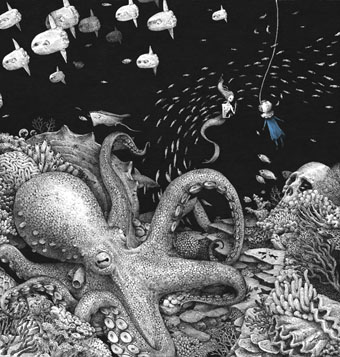
My thanks once again to DR Tenge for notifying me of a new post of drawings by French artist Gilles Rimbault. More marvellous work that this time tends to the metamorphic rather than the erotic. No details as to date or provenance but considering how little there is of Rimbault’s work online it’s good to see anything new at all.

rimbault2.jpg

rimbault3.jpg

Continue reading “Gilles Rimbault redux”