Sibylle Ruppert, 1942–2011

ruppert1.jpg

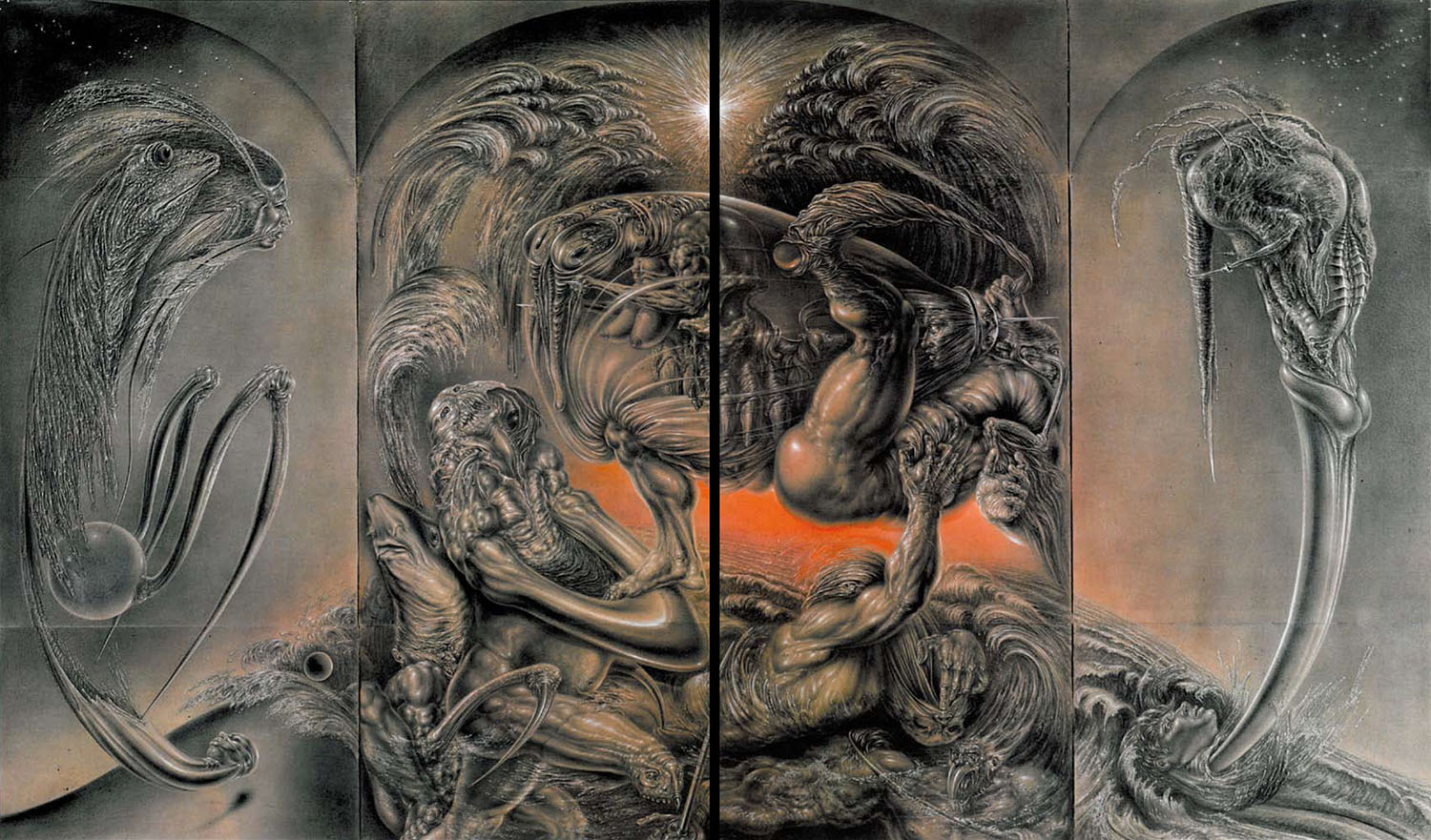
La Bible du mal (1978).

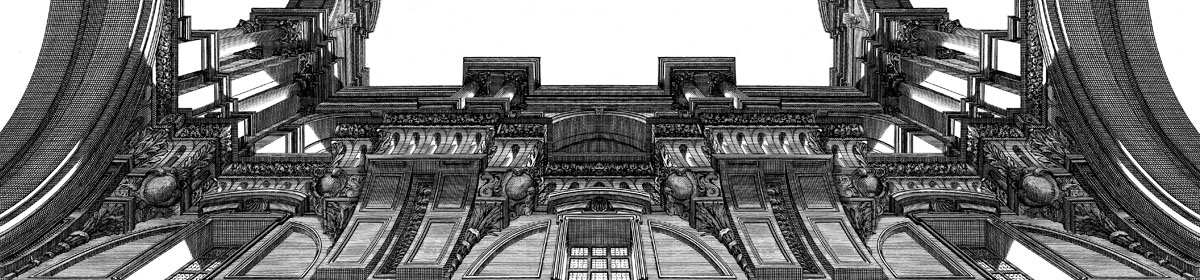
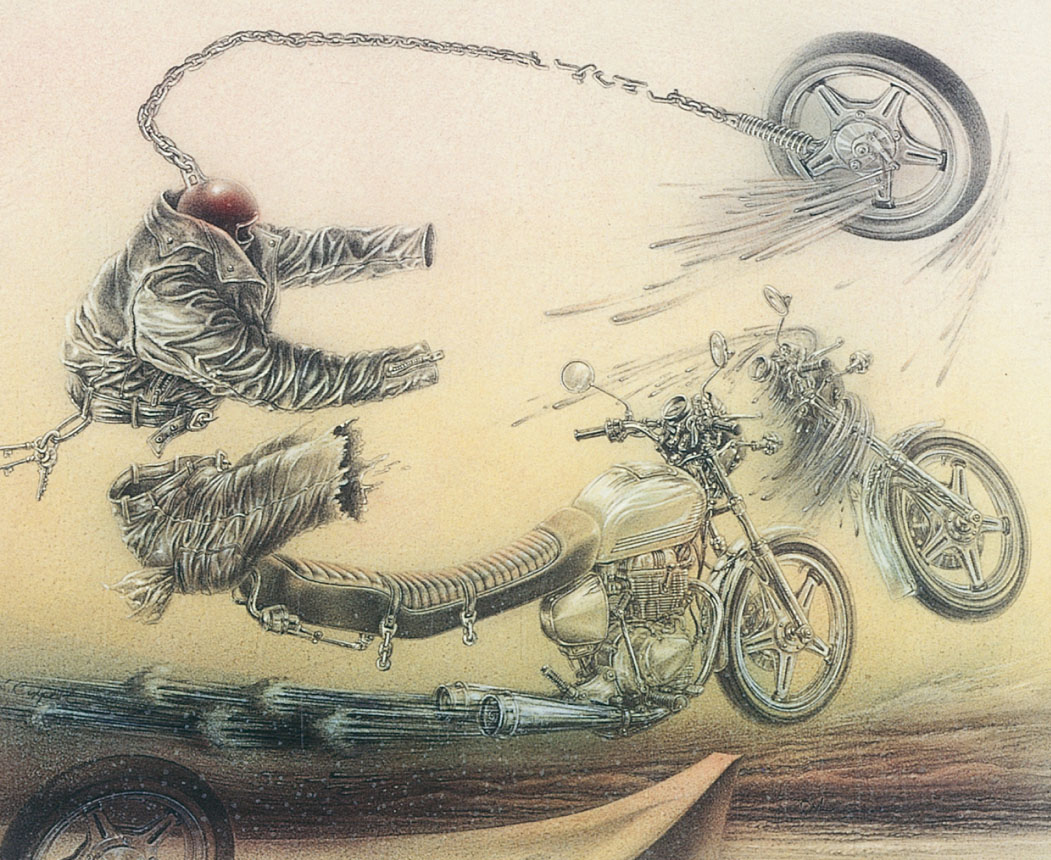
Another painter gone, and a really extraordinary one at that. I wrote something about German artist Sibylle Ruppert two years ago, and only heard about her death this week following an email from Leslie Barany of Barany Artists. Leslie also sent copies of recent exhibition material from a Ruppert show last year at the HR Giger Museum in Gruyeres, Switzerland, from which these pictures have been taken. The picture above gives some idea of the intensely visceral nature of her paintings and drawings. Giger owns (or owned) the picture below as he reproduces it in one of his books, along with other works from his personal collection.
ruppert2.jpg

Hit Something (1977).

There was an official site for Sibylle Ruppert’s work but, as is often the case with artist sites, it appears to now be defunct. This is frustrating since her work isn’t very visible on the web at all. Anyone interested could start with this set of Flickr views of the Giger Museum exhibition. She was a fantastic artist in all senses of the word.

The following is a note credited to Alain Robbe-Grillet and some biographical details taken from the gallery materials. They’re presented here as printed:

Je m’avance avec un croissant malaise, apprehension peut-etre, avec lenteur en tout cas, dans une sorte de souterrain tres encombre (engorge, meme, en depit de ses dimensions sans doute considerables), que j’imagine bourre de pieges. (J’allais dire pourri…) La lumiere est vive par endroit, sans que l’on puisse deviner d’Oll elle tombe, laissant tout a cote des plages d’ombre dense, et comme visqueuse. Cependant, meme dans les zones bien eclairees, la precision des lignes est suspecte, car on aurait du mal a rattacher ces fragments trop nets, trop dessines (le trace sans bavure d’une pointe aigue), a quelque figure d’ensemble nommement identifiable. L’impression qui domine, au milieu de cette dangereuse incertitude, est qu’il doit y avoir la une grande quantite de chevaux eventres, des etalons a musculatures massives, avec des herses, et des crocs de boucher, et des socs de charrues, avec aussi des femmes nues aux formes splendides, melees au carnage. Je pense a la mort de Sardanapale, evidemment, mais la scene qui m’entoure se situerait plusieurs minutes apres l’instant fragile immobilise par Delacroix, Oll toutes les courbes du desir sont encore rangees aleurs places diurnes. Tandis qu’icl, devant moi, derriere moi, sur ma droite ou sur ma gauche, et presque sous mes pas, ce qui s’offre aux sens revulses ce sont les hontes secretes de l’anatomie : les orifices ecarteles, les entrailles repandues, les secretions, les pertes. Une pointe aigue, ai-je ditQ Oui, le gluant et l’acere semblent, maintenant, s’engendrer en cercle l’un l’autre, le fin couteau du supplice appartenir au meme monstre que la chair ignominieuse qui s’ entaille (se debonde), les sexes s’invertir, insidieusement, et s’invaginer l’arme du crime. Parvenant non sans peine a vaincre mon horreur, ou bien au contraire enfin vaincu par elle, je me decide a toucher… J’approche une paume tendue, doigts ecartes, vers cette substance innomable… Ma surprise est immense : tout cela est en metal poli, sec, luisant mais dur, et froid comme de la glace. Non, je ne suis pas surpris : je le savais deja, bien entendu.

—Alain Robbe-Grillet

ruppert3.jpg

Sibylle Ruppert was born during an air raid on September 8th, 1942. It was the night of the first massive bombing of Frankfurt during World War II. With a numbered tag around her neck, Sibylle was, immediately whisked from the maternity ward down to the bomb shelter in the basement, while her mother was moved to safety under a supporting column of the hospital staircase.

She spent her infancy between the nursery and an improvised bomb shelter in which plaster fell from the ceiling whenever the bombs hit the neighborhood. In spring 1944 her parents decided to flee Frankfurt for the countryside. Sibylle’s first memories were of the shoving and screaming crowds on the platform of the train station desperately trying to climb into the overcrowded wagons.

Although the family spent the remainder of the war in relative security, they were subjected to mistreatment and greed at the hands of the farmers who gave them shelter. After the war they were taken in by an aristocratic family who owned a castle and Sibylle spent her early childhood years as if in a dream world. Her father was a graphic designer and young Sibylle spent hours upon hours near his desk watching as he drew. One day she seized his hand and promised him that she would paint nice colourful pictures just like him. Her first drawing surprised everyone, it was a brutal illustration of a fist stricking the middle of a face – she was 6 years old.

At age of 10 she had a religious enlightment and she insisted on becoming a nun. Only the great efforts of her parents managed to dissuade her from taking up a novitiate. In school she was not the best, except in her art classes where she far surpassed all the other students to such an extent that her instructors could not believe that she painted the pictures by herself. Secretly she took the entrance examination of the Städel Akkademie and passed brilliantly.With the support of Prof.Battke she worked relentlessly and created up to 20 drawings a day.

Sitting immobile, continuously, behind the drawing board caused her to gain quite some weight, so her mother enrolled her in the neighborhood ballet school. Sibylle tackled her new activity with the same energy and will-power as she did drawing which prompted the school authorities to give her a choice: either art or dance, but not both at the same time. As soon as she turned 18 she solved the problem her own way by escaping to Paris, the city of her dreams, where she enrolled in a dance school in Clichy. During the day she followed the strict regimen of dance classes, but at night she roamed the notorious streets of Pigalle and Montmartre, fascinated by the ambiguous characters in these neighborhoods.

As she was too tall for classical ballet she joined the famous dance ensemble of Georges Rech. This was the beginning of an adventurous life as a revue dancer touring all over Europe and the Middle East. But while her colleagues relaxed Sibylle visited all the local museums and galleries and continued drawing her every free minute. Then all of a sudden, in New York, she decided to give up on her dancing career. She returned to her family in Frankfurt and started working as a drawing instructor at the art school founded by her father.

In addition to her teaching, at night she pursued her own personal work, inspired by the „divine“ Marquis de Sade and his frightful universe. Encouraged by notable German intellectuals like Peter Gorsen, Theodor Adorno and Horst Glaser whom she later married her drawings start to become well known. The exhibitions organised by the Sydow – Zirkwitz Gallery in Frankfurt consternated as much the traditional art audience as they produced raised eye brows among the intellectuals.

In 1976 she moves to Paris and exhibits her large format charcoal drawings, inspired by the writings of de Sade, Lautréamont and Georges Bataille, her collages and paintings at the Gallery Bijan Aalam. French intellectuals and great thinkers like Alain Robbe-Grillet, Pierre Restany, Henri Michaux and Gert Schiff show interest and are fascinated by and try to interpret her infernal work. When the gallery closes in 1982 she returns to teaching drawing and painting. She starts giving art classes in prisons, psychiatric institutions and drug rehabilitation centers. Today, Sibylle Ruppert lives a cloistered life, withdrawn from the public, in Paris.

• See also this later post for more artwork: Sibylle Ruppert revisited

Elsewhere on { feuilleton }
The fantastic art archive

Previously on { feuilleton }
The art of Sibylle Ruppert

Weekend links 61

knaus.jpg

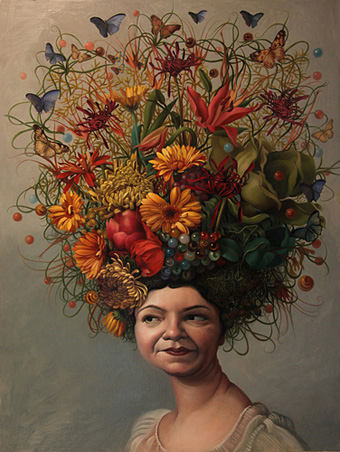
Marbles and Butterflies (2011) by Jennifer Knaus.

• “Cutter’s Way is a cinematic masterpiece” says John Patterson. Yes, it is, and it’s often been difficult to see (although it’s now on DVD) being one of those cult films that rarely surfaced on TV or video. Another cult film surfacing at last is Jerzy Skolimowski’s Deep End (yes, again…) which will be out on DVD & Blu-ray next month. I missed this Telegraph piece about the film. You want more? Lint: The Movie is showing at the Kino Club, Brighton, later this month.

• This week’s Eno haul: Developing Your Creative Practice: Tips from Brian Eno; Eric Tamm’s 1995 study Brian Eno: His Music and the Vertical Color of Sound is now available for free at the author’s website; Imagine New Times is an outtake from Eno’s forthcoming Drums Between the Bells which can be downloaded here.

• Mixtapes of the week: Demdike Stare with a suitably sinister and eclectic mix are out-curated by Current 93’s David Tibet who mashes together a unique blend of folk, prog, riffs, choral works and glam rock.

I began to realize the hypocrisy about sexual freedom in the feminist establishment was as bad as it is in the religious right. They do whatever they want. They look at whatever they want, they masturbate to whatever they want, they fuck whoever and however they like. I couldn’t even say everything I know in the book because it would just be too cruel and personally invasive. But I’ve had it with their lying. I spent so long trying to have these earnest conversations and now I’m like, “Fuck you — you’re as bad as the Vatican!”

Susie Bright interviewed by Tracy Clark-Flory at Salon sounding as happy and positive as she always does.

The Gnostic #4 is out this month featuring Alan Moore’s essay on magic and related matters, Fossil Angels, and a piece examining the Gnostic influences on Cormac McCarthy’s Blood Meridian.

• “Nobody should be sent to prison for taking drugs,” says Richard Branson. Many politicians agree with him but they’re all too cowardly to do anything about it.

eng.jpg

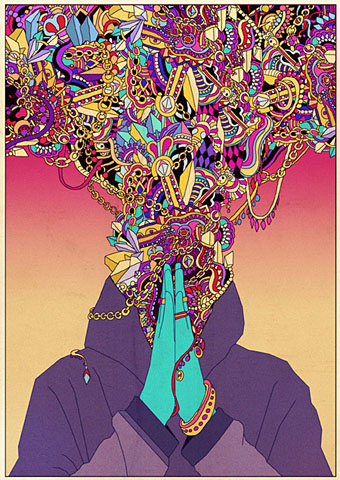
Untitled work by Kilian Eng.

The Adventures of Jerry Cornelius, The English Assassin (1969–70). A comic strip written by Michael Moorcock & M John Harrison with art by Mal Dean & Richard Glyn Jones.

The Lavender Scare: The Cold War Persecution of Gays and Lesbians in the Federal Government by David K Johnson is available as a free ebook here.

• “If I was to try to write a mainstream book I would be constantly bumping my elbows up against the restrictions.” Tim Powers is interviewed by Alison Flood.

HOMO Online, Adventures in Homosexuality: Fiction, Fact, Art and Porn.

Your Rainbow Panorama, a new work by Olafur Eliasson.

Self Suck, a poem by Angelo Nikolopoulos.

Map Of Dusk (1987) by Jon Hassell | Lam Lam (1998) by Baaba Maal (with Jon Hassell & Brian Eno) | All Is Full Of Love (1999) by Björk (Guy Sigsworth mix featuring Jon Hassell).

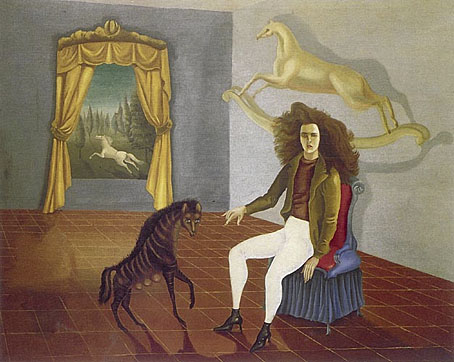
Leonora Carrington, 1917–2011

carrington.jpg

Self-portrait (1937–38) by Leonora Carrington.

Imagination and fantasy were two of the tools women artists used in the early decades of the 20th century to force their way into a male-dominated art world. The proliferation of illustrated books provided a creative platform in the Edwardian era for women shut out of art movements whose aesthetics might be avant garde but whose attitudes to sexual politics were either ignorant or reactionary. It was only with the advent of Surrealism that a notable body of women artists emerged in the field of painting and sculpture, not only Leonora Carrington but her almost namesake Leonor Fini, Dorothea Tanning, Remedios Varo, Meret Oppenheim, Kay Sage, Valentine Hugo and others. Part of this was the tenor of the time, of course, but Surrealism had no choice but to be open to anyone who came calling; if you’re going to let dreams and irrationality dictate the debate then everything that was previously fixed is up for grabs including gender dominance and sexuality. Leonora Carrington had a longer career than her contemporaries, and also distinguished herself as a writer of fantastic novels and short stories. Dalí aside, it could be argued that among the original Surrealists it was the women who stayed true to the project in subsequent decades. Max Ernst was a lover of Leonora and later married Dorothea Tanning but he left Surrealism after the Second World War for other styles of painting.

In Carrington’s work, mystical forces and surging instincts overpower the reign of reason. This is rebellion and liberation in the true surrealist sense. It is not the angry, testosterone-driven smack in the face typical of the high-profile showmen of surrealism. Rather, it is a low-key mystic subversion powered by the intrigues of seductive sibyls, sorceresses, and priestesses. (More.)

Among the obituary notices surfacing there’s a piece by Leonora’s cousin, Joanna Moorhead, who wrote a couple of years ago about her search for her celebrated relative, and a notice in the Telegraph. Ten Dreams has a small gallery of her paintings.

For Leonora Carrington by Peter Lamborn Wilson
• Coilhouse: Leonora Carrington – 6 April 1917 – 25 May 2011

Previously on { feuilleton }
Marsi Paribatra: the Royal Surrealist
Angels of Anarchy: Women Artists and Surrealism
Return to Las Pozas
The art of Leonor Fini, 1907–1996
Surrealist women
Las Pozas and Edward James

Lovecraft’s favourite artists revisited

hpl.jpg

HP Lovecraft (1937) by Virgil Finlay.

I was asked recently to join the bloggers at Tor.com writing about art as it relates to fantasy and science fiction, so for today’s post your attention is directed to this piece, an expanded version of a rather half-hearted list I put together a few years back concerning HP Lovecraft’s favourite artists. Half-hearted or not, people kept linking to that list so it seemed a good idea to make more of it. I’ll be writing these posts a couple of times a month, provided I have the time to do something worthwhile. Watch this space.

Previously on { feuilleton }
The monstrous tome

Weekend links: Apocalypse not now

apocalypse.jpg

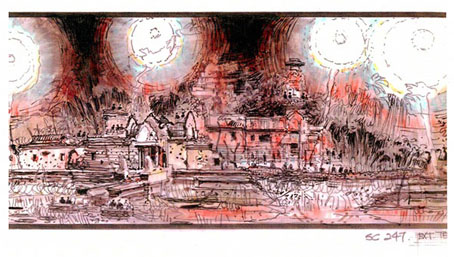
The Kurtz compound prior to destruction. An Apocalypse Now storyboard, one of a number which will be included among the extras on the Blu-Ray release of Francis Coppola’s film when it appears in the UK next month. The film is given a new cinema release on May 27th.

Radio broadcaster Harold Camping, a man denounced by fellow Christians as a false prophet, achieved one thing at least this week by making himself and his followers a global laughing-stock after the Rapture failed to materialise. I would have put money on him blaming those terrible gays somewhere along the way, such complaints being so common among a certain brand of American fundamentalist that you could write their sermons for them. Sure enough, here’s the old fool blathering about “lespianism” and describing the beautiful city of San Francisco as a cesspool. Shall we chalk this up as another victory for the gays, Harold? Related: No dogs go to heaven.

The internet has always been a home for ridicule but occasions like this bring out the wags in droves. The Oatmeal showed us how God is managing the Rapture using a Windows Install Wizard, and also pointed to a selection of sarcastic tweets. Meanwhile, this page has a comprehensive catalogue of previous apocalypse dates; the biggy is next year, of course.

Burroughs himself was no stranger to prosecution. In 1962 he was indicted on grounds of obscenity. Naked Lunch was not available in the US until 1962 and in the UK until 1964. The writer Norman Mailer and the poet Allen Ginsberg had to defend the book in court before the ruling could be reversed. In Turkey, it is now our turn to stand up for the novel.

Turkish writer Elif Shafak criticising the paternalism of the Turkish state in trying to protect its people from troubling novels. Related: William Burroughs publisher faces obscenity charges in Turkey.

An A–Z of the Fantastic City by Hal Duncan. “This guidebook leads readers and explorers through twenty-six cities of yore (Yore, while included, is one of the shorter entries).” Illustrated by Eric Schaller.

• The creepiest Alice in Wonderland of all, Jan Švankmajer’s semi-animated Alice (1988), receives a very welcome re-issue on DVD this month. With Brothers Quay extras and other good things.

smith.jpg

Robert E Howard’s sinister magus from the Conan stories, Thoth-Amon, as depicted by Barry Windsor-Smith. From a portfolio of five Robert E Howard characters, 1975.

What is computer music (or does it matter)? Related: A History of Electronic/Electroacoustic Music (1937–2001), 511 (!) downloadable pieces.

Unearthly Powers: Surrealism and SF: Rick Poynor explores the Tanguy-like strangeness of Richard Powers.

Magic Trip: Ken Kesey’s search for a kool place.

The Library of Congress National Jukebox.

Vladimir Nabokov’s butterflies.

Amy Ross’s Wunderkammer.

Rapture (1981) by Blondie | Apocalypse (1990) by William Burroughs | Rapture (2000) by Antony and the Johnsons.