Weekend links 218

white.jpg

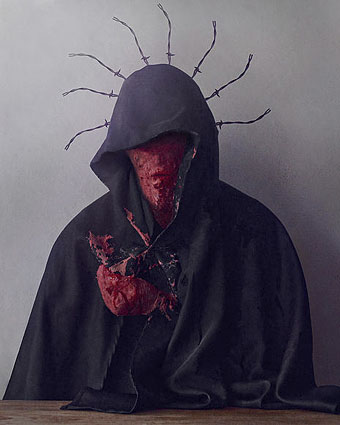
The End of a Thousand Years (2014) by Hilary White. Via Phantasmaphile.

• It’s taken a while to shamble into the world but A Mountain Walked, an anthology of Cthulhu Mythos stories edited by leading Lovecraft scholar ST Joshi, will be published by Centipede Press next month. The publisher’s page for the book shows that my contribution will be facing Joshi’s introduction which is something I wasn’t aware of until this week. It also says the 692-page limited edition is sold out, although book dealers often buy collectible volumes such as this to sell on after adding their own markup. Be warned that it was listed on Amazon at $160 so if there are copies available anywhere they won’t be cheap.

• It’s not such a surprise to hear that magic mushrooms were an inspiration for Frank Herbert’s Dune. David Lynch’s film of Dune receives passing mention in this profile by Jeremy Kay of Lynch and the Twin Peaks film/TV series.

• “Whitechapel station is one of Giambattista Piranesi’s imaginary prisons, colonised by frantic electrical engineers and watched over by CCTV.” Will Wiles on the chaos and tangled energy of modern cities.

The word perfume comes from the French root “fume”—smoke—and where there’s smoke, there’s fire! I think most people are turned on sexually by scents and smells. Certain body odours can be very sexually stimulating. We purposefully chose certain ingredients for my Obscenity perfume that are associated with occult or religious rituals, including vetiver, labdanum, and oud, and others that are considered aphrodisiacal, including patchouli and sandalwood. The point of Obscenity is that there is no conflict between the religious and the sexual, and in fact they should be completely complimentary. The fragrance is meant to stimulate you sexually, but it also literally contains water from Lourdes, so it also has religious notes and perhaps even healing properties!

Bruce LaBruce talks to Kathy Grayson about his new fragrance, Obscenity

The Baffler, “a journal of iconoclastic wit and cultural analysis” relaunches with full access to its archives from 1988 to the present.

Pineal, the new album by Othon, is dark and “properly, brilliantly queer,” says David Peschek.

• At Core77: How to improve the audio quality of vinyl records with wood glue.

• P. Adams Sitney interviews Kenneth Anger on WNYC’s Arts Forum (1972).

• At BibliOdyssey: Le Bestiaire Fabuleux by Jean Lurçat.

• Mix of the week: Secret Thirteen mix 123 by Evol.

Meawbin the Creepy Cat

Perfumed Metal (1981) by Chrome | Fragrance (Ode To Perfume) (1982) by Holger Czukay | The Perfume (2006) by Johnny Klimek, Reinhold Heil, Tom Tykwer

Du Tac au Tac: Druillet, Hogarth and Buscema

tacautac.jpg

I thought I was done with Druillet for this week but no, there’s more. I hadn’t come across Du Tac au Tac before, a French TV show from the early 70s in which three (sometimes four) different comic artists are given a total of 15 minutes to improvise a drawing on a single board. The list of contributors is a who’s who of comic talent from France, Belgium, America and elsewhere. French TV site Ina.fr (which is pay-to-view) has 130 episodes in their archive, many of which have found their way onto YouTube. Druillet was a regular contributor, as was Moebius.

I’ve singled out this episode from 1972 for the astonishing conjunction of Druillet with Burne Hogarth, two artists with a considerable influence on my own comics work. Without the example of Heavy Metal magazine in general, and Druillet in particular, I might not have bothered trying to adapt Lovecraft’s stories into comics in the 1980s; at one point I was prepared to put together a book of stories-plus-illustrations along the lines of Berni Wrightson’s Frankenstein. Burne Hogarth, meanwhile, casts a Tarzan-shaped shadow over the darker shadows of the Reverbstorm series, his work being quoted throughout, especially in the appropriation of the bizarre and sinister Ononoes from the Tarzan Sunday strips. The third artist present, John Buscema, is notable if only for representing the comics creation that I like the least: the over-muscled, flat-groined, stupidly-costumed, always-fighting, corporate superhero. As it is, Buscema doesn’t fare too well in this exchange, sketching a half-hearted Silver Surfer while Hogarth (who was left-handed; don’t think I knew that) draws a profile of Tarzan in pastels, and Druillet works furiously with markers to create a typical melange of bat-winged demon, alien glyph and screaming head. I’ve not watched any of the other episodes yet but for those interested there are two channels of the things here and here.

Previously on { feuilleton }
Sorcerer: Druillet and Friedkin
Ô Sidarta: a film about Philippe Druillet
Lovecraft: Démons et Merveilles
Heavy Metal, October 1979: the Lovecraft special
Philippe Druillet album covers
Druillet’s vampires
Salammbô illustrated
Druillet meets Hodgson

Weekend links 217

scaphandrier.jpg

Le Petit Journal, June 16, 1912. Via Beautiful Century.

Occult art by Nicomi Nix Turner, Daniel Martin Diaz, Amy Earles and William Crisafi. Related: Illustrations by Ernest M. Jessop for The Witches Frolic by Thomas Ingoldsby.

• “Our definition of ‘Industrial’ then was a very broad one, it’s definitely not so much now.” Chris Carter & Cosi Fanni Tutti on 20 Jazz Funk Greats by Throbbing Gristle.

• At Dangerous Minds: the Amok Assault Video (1988), an hour of the bizarre, the extreme and the outré which will probably get yanked from YouTube before too long.

I’ve always thought the exchange of words for money is no more and no less problematic than any other kind of prostitution—and it’s important that we prostitutes control a certain amount of our production (and reproduction, for that matter). If I’m writing a book and I’m warned, “Oh, this is unsaleable, you need to make it shorter,” or, “It has to be this, or that,” I’m proud to say I don’t pay attention.

Though this is becoming more difficult. As large publishers turn into monopolies, and the MBAs who are running them—maybe editors used to run them before—are steadily tightening the screws, they feel more and more that they get to call the shots.

Writers can do anything, says William T. Vollmann

• Mixes of the week: Over two hours of Coil and other artists sequenced by Surgeon, and Secret Thirteen Mix 122 by DJ Skirt.

Alan Moore calls for a boycott of the “wretched” new Hercules film on behalf of his friend Steve Moore.

Joe Orton‘s first play, Fred and Madge, will receive its world premier in September.

tentacles.jpg

Ned Raggett found the drawing of mine that’s part of the Tentacles exhibition currently showing at the Monterey Aquarium, California. Thanks, Ned! There’s a sepia-toned version of the drawing in my Cthulhu calendar.

• “Weird is a wayward word,” says Erik Davis in an exploration of weirdness old and new.

• More details about the forthcoming Scott Walker + Sunn O))) collaboration.

• A trailer for a reissue of Robert Wiene’s The Cabinet of Dr. Caligari (1920).

A history of sex toys in pictures.

Books on Book Covers

Octopus’s Garden (1969) by The Beatles | The River (1970) by Octopus | Octopus (1970) by Syd Barrett

White Lady by David Rudkin

whitelady1.jpg

Amy: Dad? What’s a parable.

Gil: Parable? A sort of story, with something in it…strange. To help you remember it. And think. About something important.

I first heard about David Rudkin’s White Lady (1987) from Grant Morrison during a conversation about Penda’s Fen, Morrison having been a Rudkin-head as far back as the original screening of that TV film in 1974. This was at a time when you couldn’t call up details of somebody’s entire career in a couple of seconds, so all I knew of Rudkin’s television work aside from Penda’s Fen was Artemis 81 (1981) and his adaptation of The Ash Tree (1975) by MR James, one of the BBC’s Christmas ghost stories.

vampyr.jpg

Vampyr (1932).

All of those films feature sinister, possibly supernatural events taking place in the English countryside, and this theme is continued in White Lady, a 45-minute drama which Rudkin wrote and also directed. In dramatic terms the film is a minimal piece concerning a divorced father trying to set himself up as a farmer while also taking care of two young daughters. In the fields surrounding the farm pesticides are being used, although we see little direct evidence of this. More overt are the disturbing interjections and animated graphics which show photographs and X-rays of laboratory animals suffering from pesticide exposure. Rudkin’s dialogue tells us at the outset that this is a parable, hence the deadly effects of the pesticide being embodied by the White Lady of the title, a spectral figure who carries a scythe.

whitelady2.jpg

The first time I saw this I thought the scythe was a heavy-handed device, despite its obvious farming connections; watched again I realise that Rudkin would have been alluding (if only for himself) to the scythe-bearing ferryman in Carl Dreyer’s Vampyr (1932), a film Rudkin subjected to very close scrutiny in 2005 for the BFI’s Film Classics series. In his book Rudkin notes a shot in which a sleeping figure is menaced by the shadow of a scythe on a wall; that shot is recapitulated in White Lady.

whitelady3.jpg

It’s unfair to compare this to the eerie, intellectual masterpiece that is Penda’s Fen, but White Lady is still worth a look for anyone interested in Rudkin’s dramas, especially with it being his sole directing credit. If the dire warnings of genetic mutation haven’t come to pass there’s relevance in our present concern about the effects of nicotinoids on bee and bird populations. The White Lady still has plenty of work to do.

White Lady: part one | part two

Previously on { feuilleton }
The Horror Fields
Robin Redbreast by John Bowen
Red Shift by Alan Garner
Children of the Stones
Penda’s Fen by David Rudkin
David Rudkin on Carl Dreyer’s Vampyr

Blaine L. Reininger: An American Friend

blaine1.jpg

Blaine L. Reininger, Tuxedomoon co-founder, singer, violinist and composer, is profiled in this 50-minute documentary made by George Skevas for Paraskinio, a Greek television series. Tuxedomoon have long been popular in Europe, and seem to have struck a particular chord in Greece. These days Reininger is something of a star over there, a fact which surprises him still but which has no doubt helped with Tuxedomoon’s fortunes in recent years.

blaine2.jpg

Skevas’s film comprises a long biographical interview with Reininger, relating his progress from childhood in Colorado, and the formation of Tuxedomoon in San Francisco, to the group’s inadvertent exile in Europe. There a wealth of historical film footage throughout, some of which is familiar from the official Tuxedomoon DVDs but other clips are exclusive to this programme. Among the notable pieces for me were a glimpse of Winston Tong’s pre-Tuxedomoon puppet performances, a performance by the band on Andy Warhol’s Interview TV show, and shots of the recording of the Desire album in London. Few bands from the 1970s have been this diligent in documenting their activities on film and video. In addition to discovering why Reininger’s first solo album is called Broken Fingers, you also get to see some scenes from the Ghost Sonata film/performance, an ambitious project that I’d known about for years but didn’t get to see until it was released on the 30th anniversary box set in 2007.

Previously on { feuilleton }
Tuxedomoon: some queer connections
Made To Measure
Subterranean Modern: The Residents, Chrome, MX-80 Sound and Tuxedomoon
Tuxedomoon on La Edad de Oro, 1983
Tuxedomoon designs by Patrick Roques
Pink Narcissus: James Bidgood and Tuxedomoon