Weekend links 285

graphic.jpg

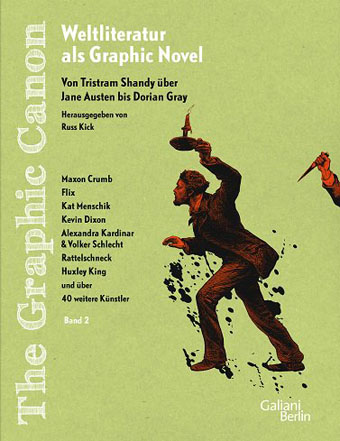
Some of the art from my collage adaptation of The Picture of Dorian Gray appears on the cover of The Graphic Canon: Volume 2, published this month in a German edition by Verlag Galiani. Out next month (although possibly available now) is the same book in a Brazilian edition from Boitempo Editorial. One of the disappointments this year was having to abandon plans to contribute to Russ Kick’s forthcoming graphic canon of crime fiction. I was overstretched during the summer, and what with projects slipping their deadlines and the trip to Providence there wasn’t any time left for other things.

• For those who missed the first edition, a second and final expanded edition of the Penda’s Fen study/celebration The Edge Is Where The Centre Is.

• Whipping up a storm: how Robert Mapplethorpe shocked America; Kevin Moore on the photographer’s Perfect Moment exhibition.

In the best scenario, metaphysical art distributes the work of understanding among cultural traditions and symbolic systems, and it is along these lines that Carrington’s work has been described as a productive combination of Mexican, Egyptian, Hebrew, Celtic, Greek, and Mesopotamian elements. Her paintings, plays, and stories mix the symbols of alchemy, astrology, Tarot, herbalism, magic, witchcraft, and a personal iconography.

Leif Schenstead-Harris on the life, art and fiction of Leonora Carrington

• Mixes of the week: Hieroglyphic Being collects favourite cosmic jazz of the 1970s; NTS Radio presents an hour of Annette Peacock.

• At Kill Your Darlings: Alexandra Heller-Nicholas enthuses about Dario Argento’s delirious masterwork, Suspiria.

Pye Corner Audio releases a new album (only limited vinyl at the moment—boooo!) and remixes Stealing Sheep.

• The Trip Planners: Emily Witt meets the founders behind Erowid, the online drug encyclopedia.

Woven Processional (1985), music on the Long String Instrument by Ellen Fullman.

• “The Paris attacks prove Charlie Hebdo’s critics wrong,” says Dorian Lynskey.

• Photographs by Danila Tkachenko of abandoned Soviet technology.

Come Wander With Me / Deliverance by Anna von Hausswolff.

• The collages of Guy Maddin.

CAN HALEN

Let’s Take A Trip (1965) by Godfrey | Trip On An Orange Bicycle (1968) by The Orange Bicycle | Last Trip (1968) by We Who Are
Weekend links 284

molinier.jpg

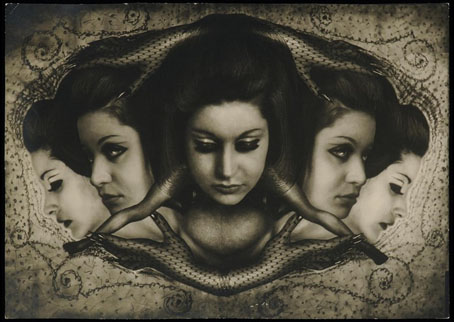
Les Hanel I by Pierre Molinier. There’s more at The Forbidden Photo-Collages of Pierre Molinier.

• Western anti-hero Josiah Hedges, better known as Edge, was the creation of prolific British author Terry Harknett. The famously violent Edge novels, credited to “George G. Gilman”, were ubiquitous on bookstalls in the 1970s. They were Harknett’s most successful works, and are still collectible today; if you’re interested there are 61 of them to search for. Amazon Originals have just launched Edge as a new TV series although anything for a mass audience is unlikely to retain the exploitative qualities of novels that often sound like pulp precursors of Blood Meridian.

Related: Terry Harknett discusses the creation of the Edge series at Drifter’s Wind; Ben Bridges on Harknett’s career, including a look at the writer’s many other Western and thriller novels; Bill Crider on Edge, Harknett and the British group of Western novelists known as “The Piccadilly Cowboys”.

• Boyd McDonald’s queer-eye film guide, Cruising the Movies: A Sexual Guide to Oldies on TV (1985), has been republished by Semiotext(e) in an expanded edition. Related: True Homosexual Experiences: Boyd McDonald and Straight to Hell by William E. Jones.

• “…a film that plumbs the dark recesses of all our imaginations: dangerous, glorious, absurd, vivid and terrifying by turns.” Charlotte Higgins on her favourite film, The Red Shoes (1948).

Art Forms from the Abyss, a new collection of illustrations by Ernst Haeckel for the report of the HMS Challenger expedition (1872–76). Related: Silentplankton.com

• “The biggest kick I ever get is to find myself pursuing some group of images without knowing why,” says M. John Harrison in conversation with Tim Franklin.

• “Plots didn’t interest him much. They were just pegs on which to hang characters and language.” Barry Day on Raymond Chandler.

• “Zdeněk Liška’s music thrived in unrealities,” says David Herter in a lengthy appraisal of the great Czech film composer.

• At Dirge Magazine: S. Elizabeth delights in the dark decor of Dellamorte & Co.

• Nabokov scholar Brian Boyd selects his ten favourite Nabokov books.

• Mix of the week: The Ivy-Strangled Path Vol. XIII by David Colohan.

Take me to the cosmic vagina: inside Tibet’s secret tantric temple.

• Pour Un Pianiste (1974) by Michèle Bokanowski | 13’05” (1976) by Michèle Bokanowski | Tabou (1992) by Michèle Bokanowski

Weekend links 282

ligotti.jpg

Thomas Ligotti photographed by Jennifer Gariepy.

• More Thomas Ligotti (he’s been marginalised for decades, the attention is overdue): “Songs of a Dead Dreamer and Grimscribe are fugues of the creeping unknown,” says Peter Bebergal who profiles Ligotti for The New Yorker, and gets him to talk about the impulses that produce his fiction; at the Lovecraft eZine eleven writers and editors ask Ligotti a question related to his work.

• As usual, Halloween brings out the mixes. This year there’s a choice of The Ivy-Strangled Path Vol. XII by David Colohan, Samhain Séance 4 : The Masks of Ashor by The_Ephemeral_Man, The Voluptuous Doom of Bava Yaga by SeraphicManta, Spool’s Out Radio #27 with Joseph Curwen, and The Edge Of The Holloween Oven – 10/26/15 by The Edge Of The Ape Oven.

Broadcast’s James Cargill has provided a soundtrack for Peter Strickland’s radio adaptation of The Stone Tape by Nigel Kneale. John Doran and Richard Augood review the new and old versions for The Quietus. Related: Peter Strickland’s favourite horror soundtracks.

My mission was to make sounds that didn’t exist in reality, whether it’s a star ship or a laser or a monster or an exploding planet. You started with basic sounds that were acoustic and then you manipulated them. There’s a scene in Raiders of the Lost Ark, when he falls into the well of souls and pushes over that statue and there are all those snakes? The sound of the snakes was made by pulling masking tape off glass. When the statue falls over and breaks the wall there’s the noise of lots of big rocks breaking. We just took some bricks and smashed them up and then slowed the tape recording down. I remember doing a lot of great scary effects using dry ice and a bunch of pots and pans out of the kitchen. You heat them up really hot and then you drop a load of dry ice into the hot pan so the rapid thermal change would make it scream.

Composer and sound designer Alan Howarth talks to Mat Colegate about working for films

Jordan Hoffman reviews Jacques Rivette’s legendary 13-hour feature film Out 1: Noli Me Tangere (1971). The film will be in cinemas next month, and available on DVD/BR in January.

The Stone Tape was originally a one-off TV drama shown at Christmas in 1972. Michael Newton looks at the BBC’s habit in the 1970s of screening ghost stories at Christmas.

Steven Arnold’s Epiphanies: A look back at some of the artist’s surrealist photographs.

Greydogtales just concluded a month of posts dedicated to William Hope Hodgson.

• At Dirge Magazine: Tenebrous Kate on seven songs based on dark literary classics.

Phil Legard opens some grimoires for a short history of signs and seals.

Micah Nathan on Tuesday’s Child, “LA’s best Satanist magazine”.

• “The Occult was a kind of awakening,” says Colin Wilson.

Shagfoal: witchcraft and horror-blues by Dante.

Jenny Hval‘s favourite albums.

The Attic Tapes (1975) by Cabaret Voltaire | Those Tapes Are Dangerous (1997) by The Bug | The Black Mill Video Tape (2012) by Pye Corner Audio

Six Into One: The Prisoner File

prisoner1.jpg

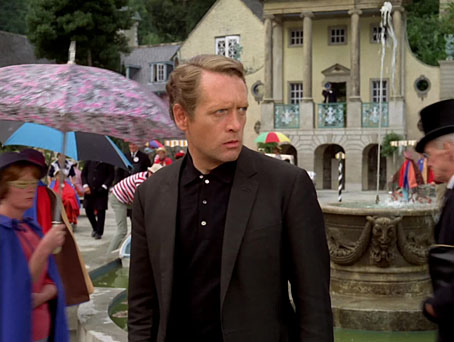
Patrick McGoohan.

Network DVD had a sale recently so I finally capitulated and bought the blu-ray set of The Prisoner which I finished watching this weekend. The picture quality is so outstanding it might have been made yesterday, and many of the extras are also essential for Prisoner obsessives, not least a restored print of the original cut of the first episode, something that was believed lost for years.

prisoner2.jpg

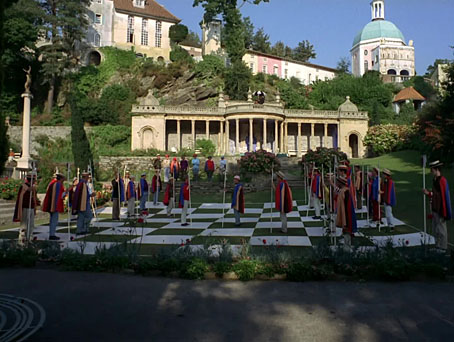
Episode 9: Checkmate.

There’s no need to enthuse about the series when I’ve done so already; this time round I’ll note that while the Cold War background is thoroughly outmoded some of the themes of particular episodes seem more relevant than ever. The model of total surveillance seen in the Village has for some time seemed to be one that Western governments and tech corporations would love to emulate. (“The whole world as the Village?” asks The Prisoner. “That’s my hope,” says Number 2.) The Prisoner isn’t the only drama to deal with authoritarian control, of course, but it also deals with the soft tyranny of closed communities, ideology and group-think. Episode 12, A Change of Mind, concerns a process whereby disobedient Villagers are confronted by their peers, declared “unmutual” then bundled off for corrective therapy; when they return they repent their antisocial crimes in public. In 1967 such a scenario would have seemed reminiscent either of McCarthyite America, or Soviet Russia and Maoist China; in 2015 you can be declared “unmutual” for minor infractions every day on the internet, and find yourself rounded upon by a sanctimonious horde.

prisoner5.jpg

The allegorical and symbolic qualities of The Prisoner have kept the series fresh for almost 50 years while the character who launched the genre that gave rise to series—James Bond—has required several overhauls in order to keep up with changing times. Bond may bicker with his superiors but he’s always been a tool of the status quo, an agent of the Control virus in Burroughsian terms. In episode 8, The Dance of the Dead, The Prisoner is lectured by a judge in a kangaroo court on the importance of “the rules”. “Without rules, we have anarchy,” she says. The Prisoner, who happens to be dressed in a Bondian dinner jacket, replies “Hear, hear.”

Continue reading “Six Into One: The Prisoner File”

Relativity

escher1.jpg

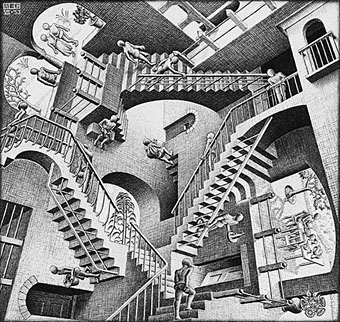
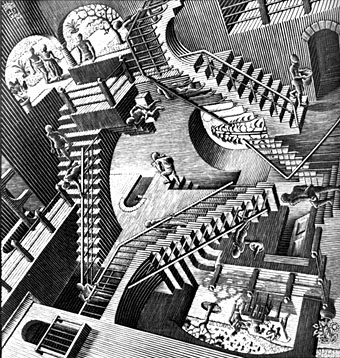
Relativity (1953) by MC Escher.

Escher’s famous lithograph has a less familiar companion piece in the woodcut below.

escher2.jpg

escher3.jpg

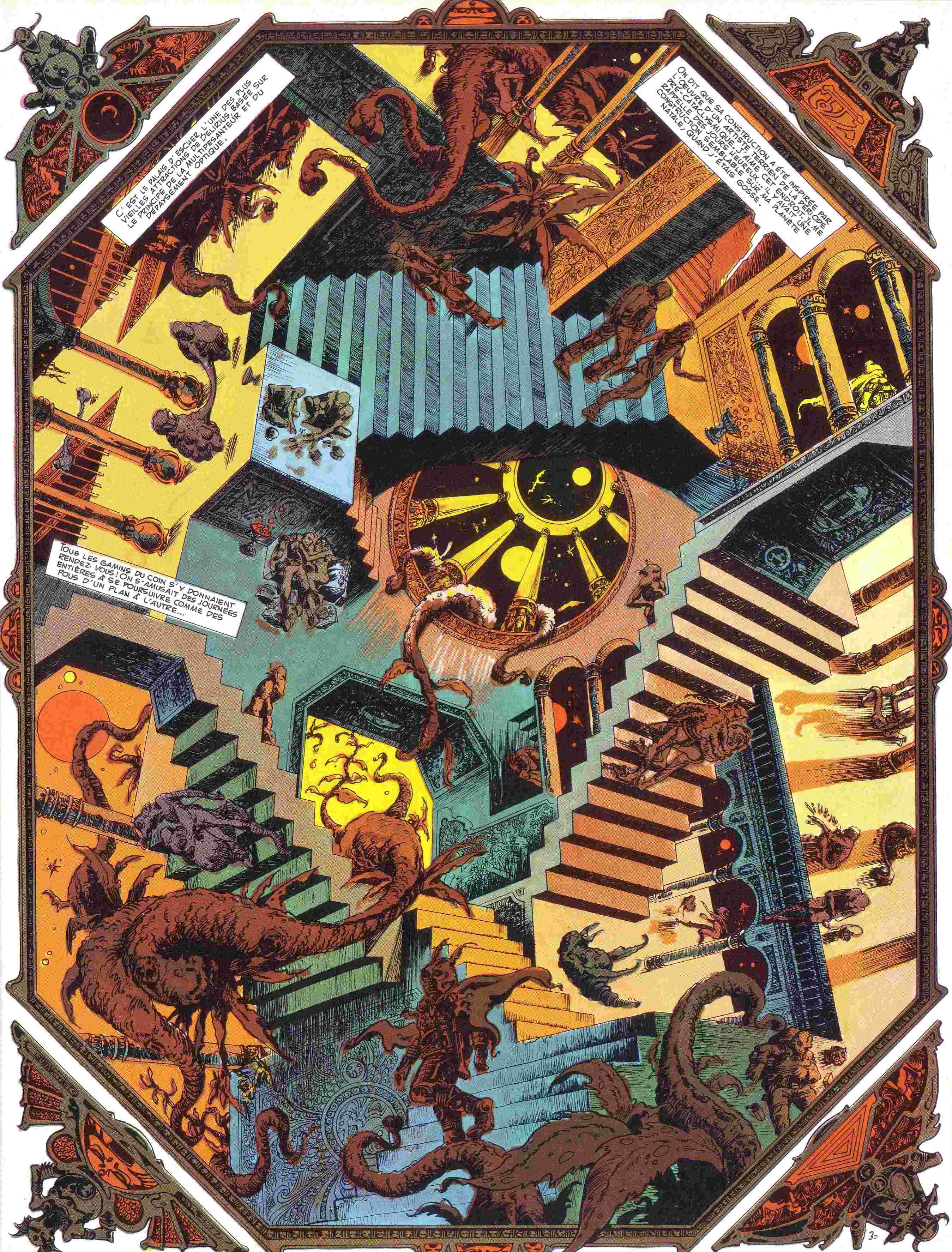
Delirius (1972) by Philippe Druillet.

Lone Sloane’s adventure on the pleasure planet of Delirius was written by Jacques Lob, and features this diversion in the Palais d’Escher. Possibly the first fictional use of one of Escher’s prints.

Continue reading “Relativity”