The Cube by Jim Henson

cube1.jpg

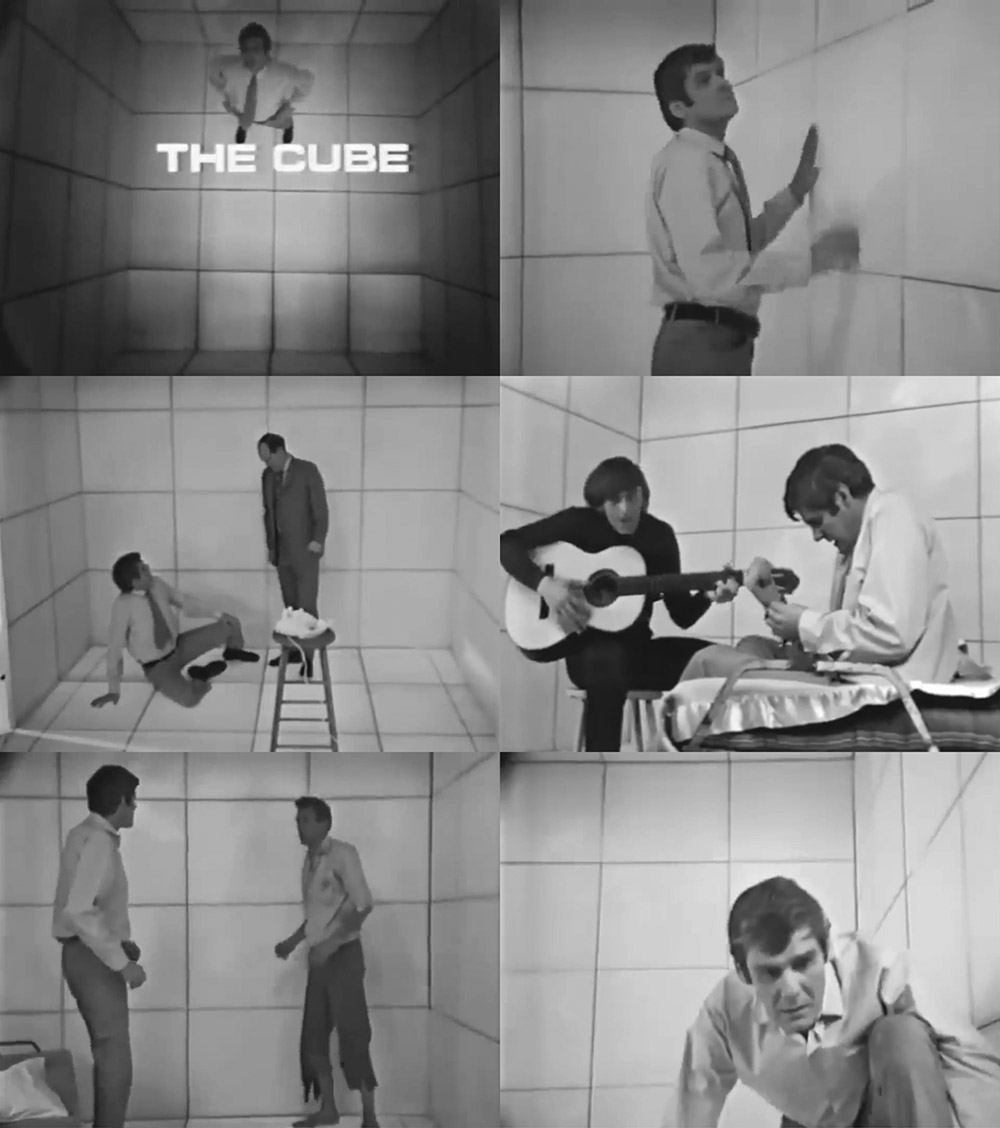
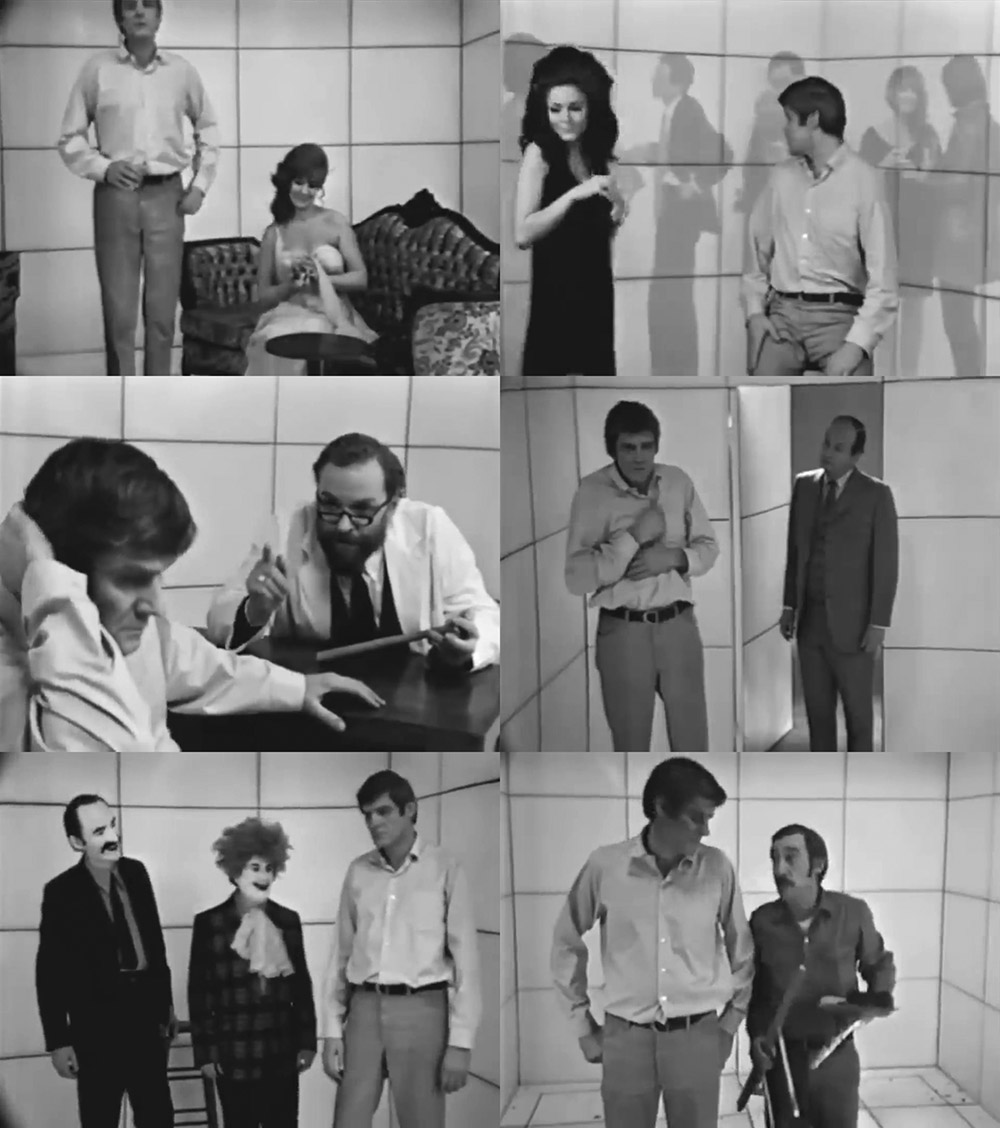
Yes, it’s that Jim Henson but you won’t find any Muppets here. The Cube was an hour-long TV play made in 1969 for NBC Experiment in Television, a series with a contents list that shows the US channel making a break from the conservatism and formula-chasing that’s always dogged the medium. Henson co-wrote The Cube with Jerry Juhl, and directed the play himself.
cube2.jpg

The scenario is the kind of thing you’d be more likely to find in an animated film: an unnamed man (Richard Schaal) inside a room-sized cubic space which he’s unable to leave. Furniture and other objects appear then vanish; doors open in the walls from time to time, other people enter and leave but the man himself is always told his exit through the doors his visitors use is forbidden. Either that or he misses the opportunity to leave when he might have the chance. The visitors range from the helpful (Arnie the repairman) to the annoying and the hostile, especially the latter. While enduring a variety of taunts and insults the man is asked to consider the quantum nature of reality, and the possibility that he may be insane or even dead. Henson and Juhl keep things light for the most part—Juhl was later the head writer for The Muppet Show—but it’s easy to see how their idea might shift into nightmare with only a slight change of emphasis. Vincenzo Natali’s Cube (1997) is only the most obvious example of this.

Previously on { feuilleton }
The Telephone Box

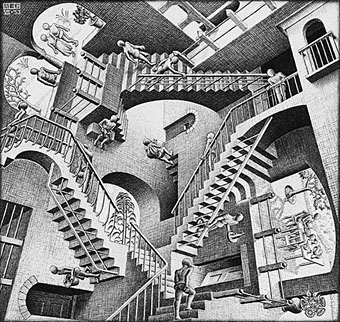
Relativity

escher1.jpg

Relativity (1953) by MC Escher.

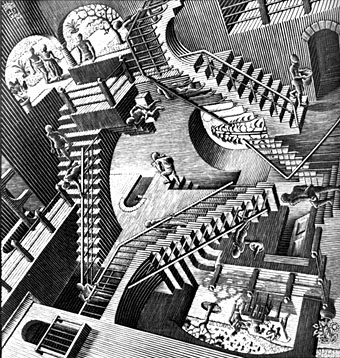
Escher’s famous lithograph has a less familiar companion piece in the woodcut below.

escher2.jpg

escher3.jpg

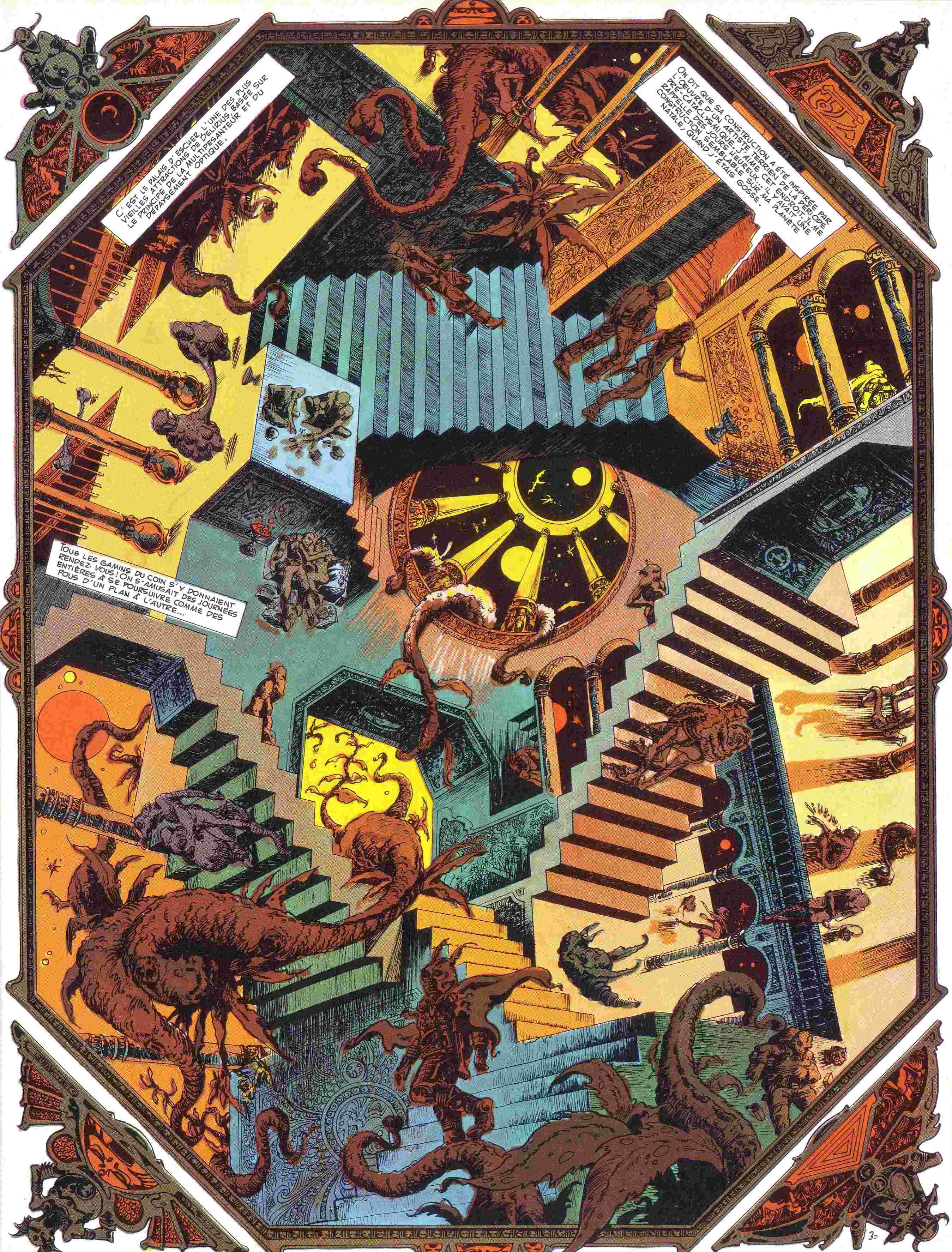
Delirius (1972) by Philippe Druillet.

Lone Sloane’s adventure on the pleasure planet of Delirius was written by Jacques Lob, and features this diversion in the Palais d’Escher. Possibly the first fictional use of one of Escher’s prints.

Continue reading “Relativity”

The writhing on the wall

hands9.jpg

Dracula (1992).

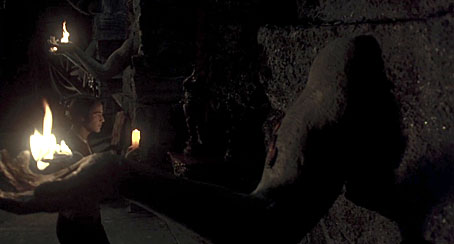
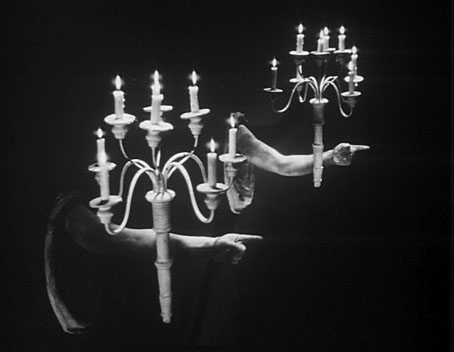
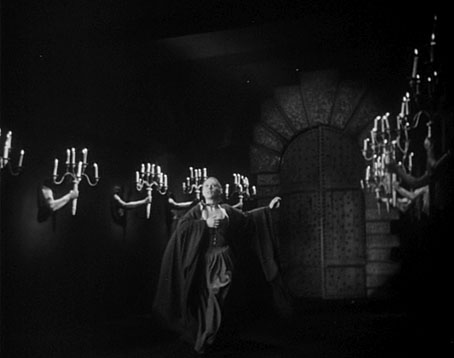
This is the closest you’ll get to a guest post here even though it’s been done remotely and I’ve changed things around a little. Following my mention yesterday of the Cocteau-derived lantern-arms in Francis Coppola’s Dracula, Jescie sent me an abandoned blog post which collected similar examples of the arms-through-the-walls motif. I’ve done this kind of thing here in the past so it’s good {feuilleton} material. Almost all these examples are fantasy- and horror-related which isn’t too surprising, and I’m sure there’ll be other examples in films I haven’t seen. If anyone has any suggestions just remember that hands grasping through doors and windows don’t count with this, it’s through the wall or not at all.

hands1.jpg

La Belle et la Bête (1946).

Jean Cocteau sets things off in 1946, a perfect piece of fairytale Surrealism and one of the many memorable aspects of this film.

hands2.jpg

La Belle et la Bête (1946).

Continue reading “The writhing on the wall”