The artists of Future Life

future.jpg

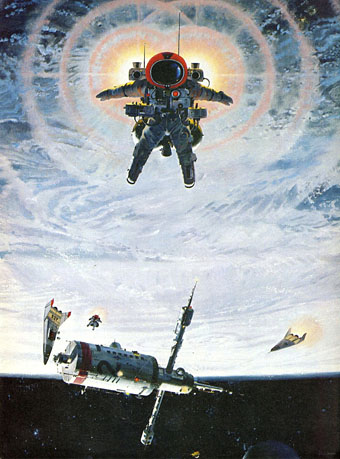
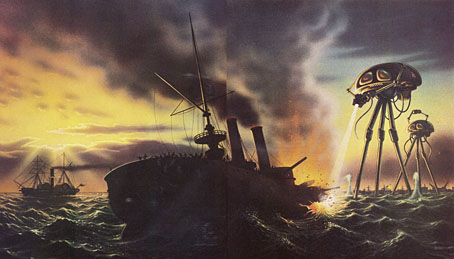
My earlier post about Future Life magazine mentioned the regular Portfolio series which featured interviews with illustrators and space artists, the latter group being the people who providing conceptual paintings for astronomy books and government entities such as NASA. Since the magazine files at the Internet Archive aren’t searchable I thought it worth making note of the interviews here, for my own benefit as much as anything else. (This blog has often served as a useful notebook.)
fl01-bonestell.jpg

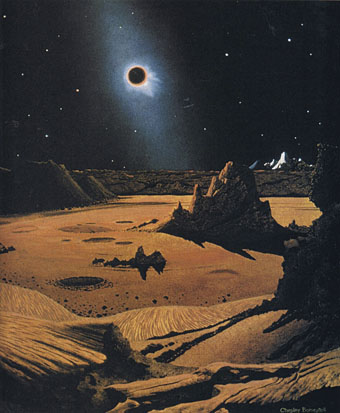
Issue 1: Chesley Bonestell.

Many of the artists featured in Future Life were receiving their first (in some cases, only) high-profile feature at a time when little attention was given to the producers of this kind of work even in popular science-fiction magazines. The story magazines have always run interviews with writers but prior to Future Life, Science Fiction Monthly was the only magazine that I’d seen with a regular illustration feature, and that title didn’t last very long. Future Life covered some of the same people, Chris Foss, for example, while seeking out the prominent figures of the US illustration world. Not all the art is to my taste at all but the interviews are of interest even if you don’t like the pictures. One surprise was finding an interview in one of the issues that I’d missed with Ludek Pesek, a Czech artist whose views of the Solar System and depictions of the evolution of life on Earth I knew from the Puffin books he worked on with Peter Ryan. Those books were aimed at a young readership and were great favourites of mine before I’d seen anything by Foss and co. Another of the space artists interviewed is David Hardy, a British contemporary of Pesek’s whose view of an alien planet will be familiar to Hawkwind enthusiasts on the back cover of Hall Of The Mountain Grill. Another notable feature of the series is the lack of women artists, although this isn’t so surprising given that women creating pictures of space hardware are few even today. All the same, they might have featured Rowena Morrill, a popular cover artist for SF and fantasy novels at the time, and someone whose work I prefer to many of the people they did profile.
fl03-boris.jpg

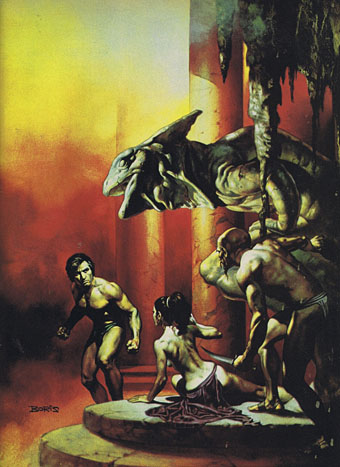
Issue 3: Boris Vallejo.

fl04-mccall.jpg

Issue 4: Robert McCall.

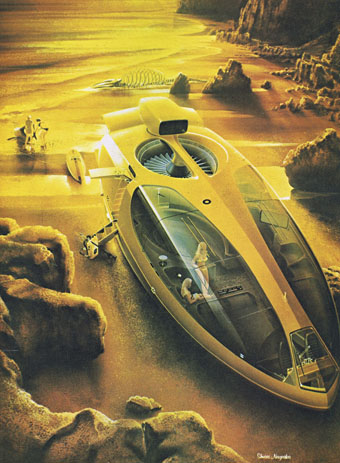
fl05-nagaoka.jpg

Issue 5: Shusei Nagaoka.

A Japanese artist best known in the West for his album-cover art for ELO, Earth, Wind and Fire, and many others.
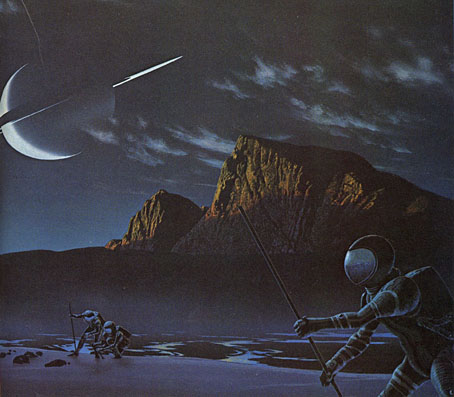
fl06-miller.jpg

Issue 6: Ron Miller.

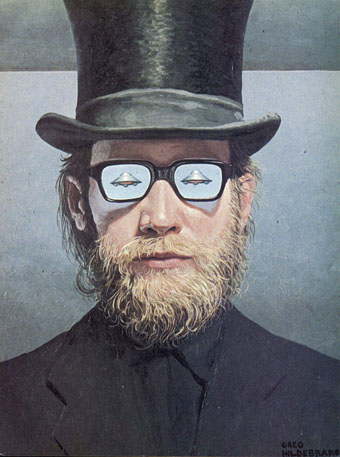
fl07-hildebrandt.jpg

Issue 7: The Brothers Hildebrandt.

fl08-hardy.jpg

Issue 8: David Hardy.

Continue reading “The artists of Future Life”

Future Life magazine

future1.jpg

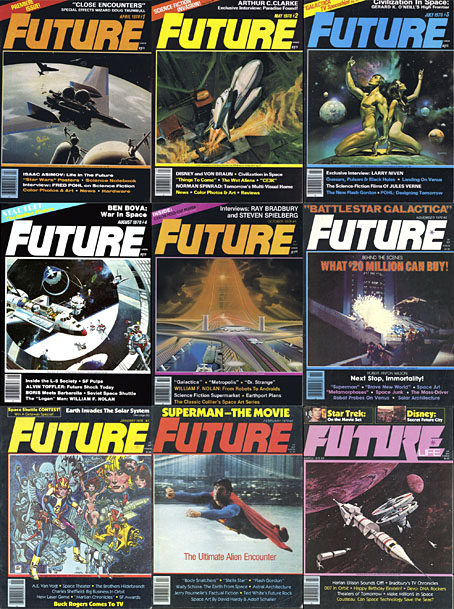
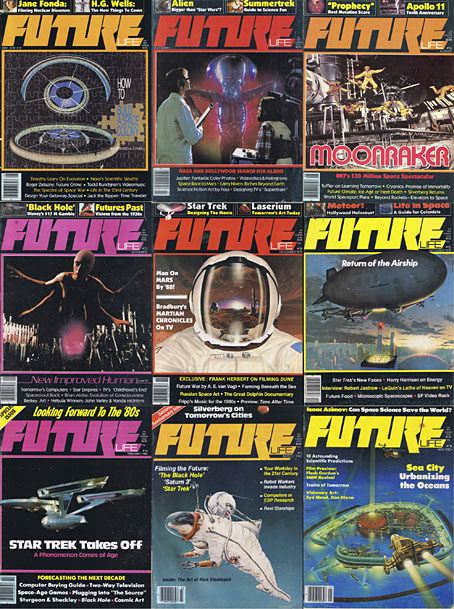
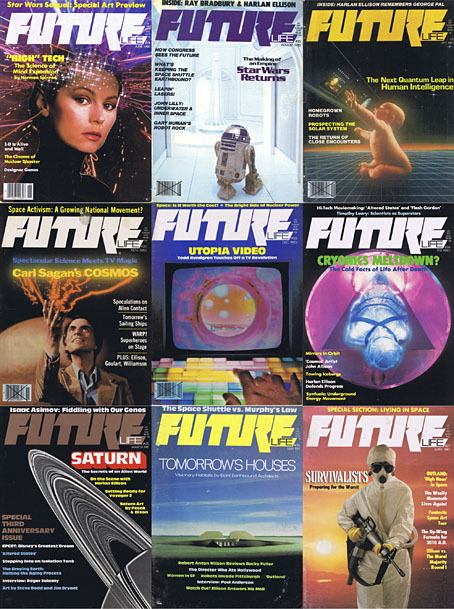
One thing I never expected about the future was that so many of my youthful enthusiasms would keep rising from the past, but here’s another, stumbling into the room reeking of cemetery earth and old newsprint. Future Life was a spinoff from Starlog magazine, and where the parent title concerned itself with science fiction and fantasy in film and television, the focus of Future Life was technology, popular science, scientific speculation, and written science fiction (all from an American perspective, of course); film and TV productions were there to attract general readers but never dominated the proceedings. Future Life ran for 31 issues from 1978 to 1981, and in many ways the magazine was a kind of OMNI-lite: not as lavish as its rival but not as expensive either. For a while this was a magazine I always looked out for (together with Heavy Metal, with whom it shared a music writer, Lou Stathis) but I missed the first nine issues, and many of the later ones before it vanished altogether, so it’s gratifying to find the complete run available as a job lot at the Internet Archive.

future2.jpg

It’s become commonplace today to regard Generation X as the first generation with no optimistic future to look forward to, but Future Life shows how much optimism there was at the beginning of the 1980s. The mood darkened just as the magazine expired, with genuine fears of a nuclear war persisting through much of the decade, and the Challenger disaster reminding everyone that leaving the planet was still a hazardous business. Future Life wasn’t blind to the problems posed by technology—there were features about the dangers posed by nuclear power and climate change—but it remained upbeat about the potentials, especially where space colonies were concerned. Most issues carried an art feature although these were generally about realistic space artists or spaceship painters, with none of the eye-popping weirdness favoured by OMNI. But this magazine was my first introduction to the work of Syd Mead, a few years before Blade Runner made him deservedly famous. On the writing side, many of the articles were by popular science fiction writers—Roger Zelazny on computer crime, Norman Spinrad on a pet theme, the future of drug-taking—which you can now read with the full benefit of hindsight. In later issues there was Harlan Ellison filing a succession of lengthy and inimitable film essays; several pieces by Robert Anton Wilson; and some good music articles with features on Larry Fast (issue 12) and Robert Fripp (issue 14), while Lou Stathis profiled and interviewed Bernie Krause (issue 18), The Residents (issue 19), Patrick Gleeson (issue 22), Jon Hassell (issue 24), Captain Beefheart (issue 25), and everyone’s favourite robots, Kraftwerk (issue 31).

future3.jpg

The Internet Archive currently has all the files stuck on a single page so most people will either have to download everything at once (I’d advise using the torrent file) or sample issues at random. Fortunately there’s a very thorough breakdown of the entire run of magazines here for those who prefer to pick through the detail. In the universe next door we’re reading these back issues while floating above the earth in our L5 space colonies.

Previously on { feuilleton }
Science Fiction Monthly

The man who wasn’t Tesla

tesla1.jpg

Searching through old emails last week reminded me that a couple of years ago I’d supplied some art for use in a steampunk-themed bar in Gran Canaria. I would have mentioned this before now but, as is often the way with freelance commissions, once the negotiations were over I dispatched the art then heard nothing more about the project.

tesla2.jpg

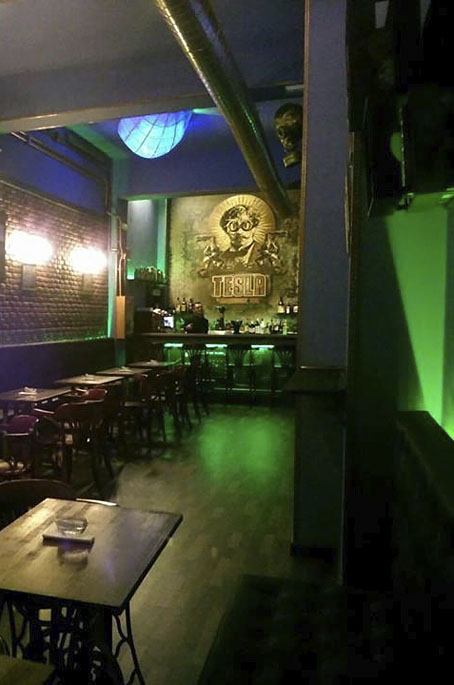
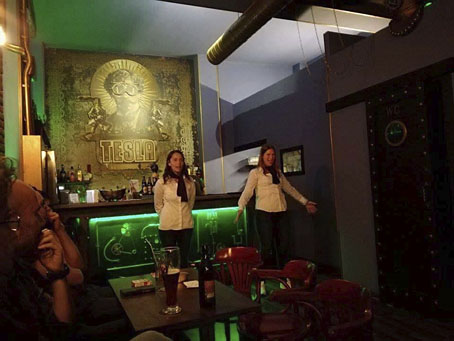
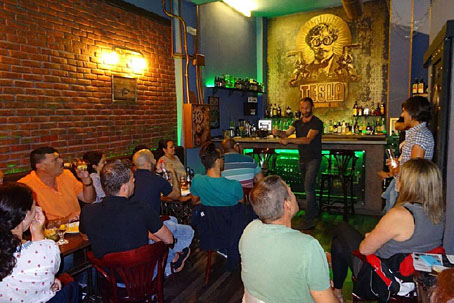
A search for the bar this week revealed a number of things: the place in question is the Tesla Steampunk Bar in Las Palmas de Gran Canaria; the artwork did indeed get used to prominent effect, with the main elements of my picture being positioned behind the bar itself; and it wasn’t immediately obvious whether the place was still open. Subsequent searching (and some Google translating of the bar’s Facebook page) further revealed that the bar has been closed but is in the process of relaunching itself.

tesla3.jpg

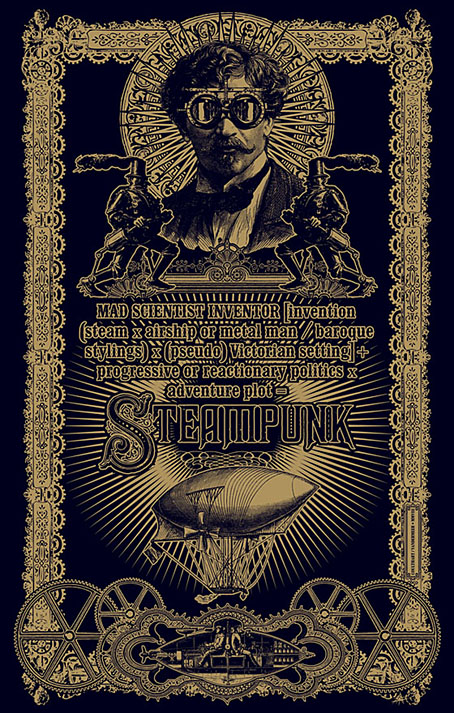
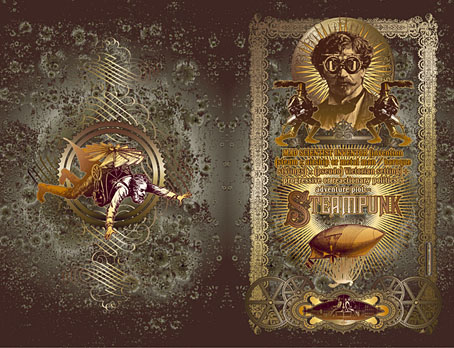
As to the artwork, this was adapted from the second version of a design I produced for Jeff VanderMeer in 2008 to illustrate a semi-serious steampunk slogan of Jeff’s devising. Ten years ago steampunk was still a very minor subgenre, and one with few visual signifiers. I quickly hacked together a piece using imagery taken from the Dover Pictorial Archive series, a collection of books which are useful but whose engraved illustrations have since been plundered endlessly for this type of work.

steampunk1.jpg

When I’m collaging things today I try and avoid using too much from the Dover books so I’ve been pained that this particular design, especially the goggle-wearing head, has proved so popular. Even when people haven’t asked to use the head itself I’ve been asked to do something similar, as was the case with the Aether Cola can I designed in 2012. The Tesla people used a stripped-down version of the colour design which I scaled to very large size. They also have a picture of the flying man on their wall but I’ve not found any good photos of him.

steampunk2.jpg

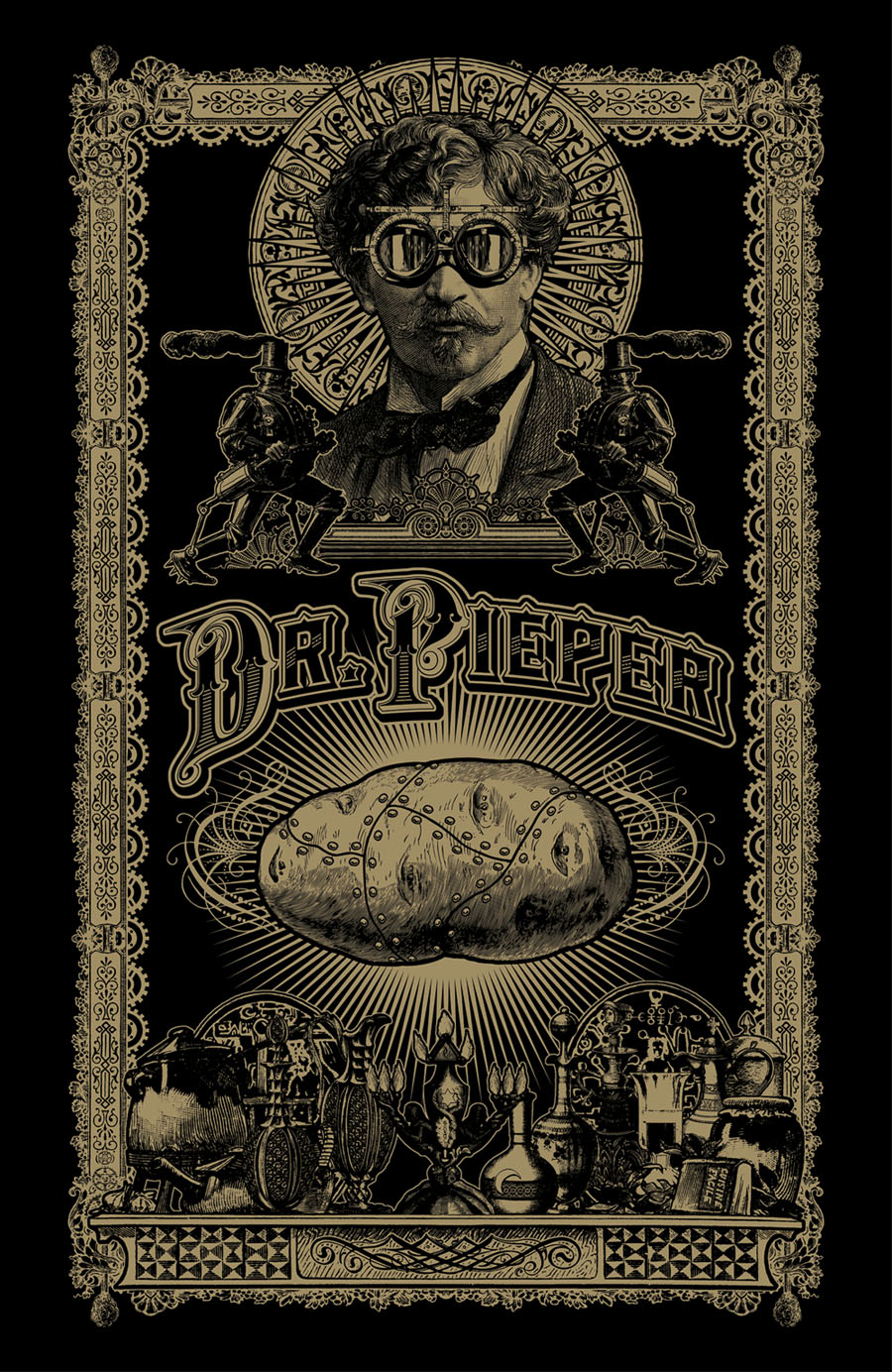
The original head, meanwhile, was used again last year in a new design for yet another business. Dr Pieper is a steampunk-themed chip shop (yes, really) in Amsterdam, a place with very nice antique decor by the looks of their Instagram page. My variant designs may be seen in the window and in their advertising graphics.

pieper.jpg

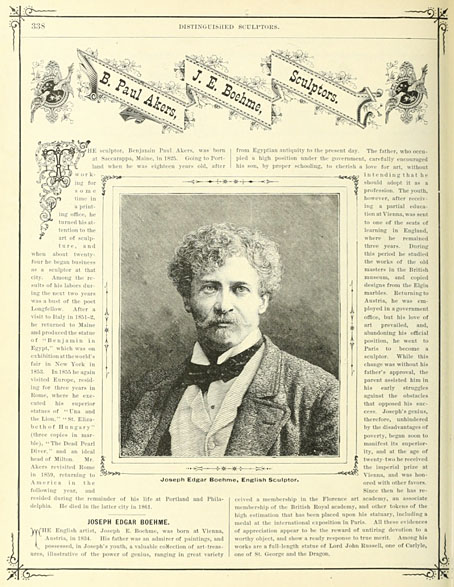
The head itself was found in Men, one of several collections of engraved illustrations edited for Dover Publications by Jim Harter. Some of Harter’s other books identify the pictures but not this one, so the identity of the portrait was unknown until, in my attempts to avoid the Dover books, I found a picture of Joseph Edgar Boehm in Hill’s Album of Biography and Art (1882). Boehm was a sculptor of a rather staid and respectable kind, being commissioned for royal portraiture among other things. I can’t imagine he’d be thrilled to find his posthumous image looking down on a drinking house and a chip shop, but sculptors often seem to be more easily forgotten than painters so he’s doing better than many of his contemporaries.

boehme.jpg

And while on the subject of steampunk, I ought to note that there’s a steampunk convention taking place in Morecambe at the beginning of June. I won’t be in attendance (they did ask) but I said I’d mention the event here.

Previously on { feuilleton }
The George Dower Trilogy by KW Jeter
Steampunk in the Tank
More vapour trails
Steampunk catalogued
Steampunk: The Art of Victorian Futurism
Steampunk Calendar
Words and pictures
Nathanial Krill at the Time Node
Fiendish Schemes
Ghosts in Gaslight, Monsters in Steam
Steampunk Revolution
The Bookman Histories
Aether Cola
Crafting steampunk illustrations
SteamPunk Magazine
Morlocks, airships and curious cabinets
The Steampunk Bible
Steampunk Reloaded
Steampunk overloaded!
More Steampunk and the Crawling Chaos
Steampunk Redux
Steampunk framed
Steampunk Horror Shortcuts

Weekend links 405

expo70.jpg

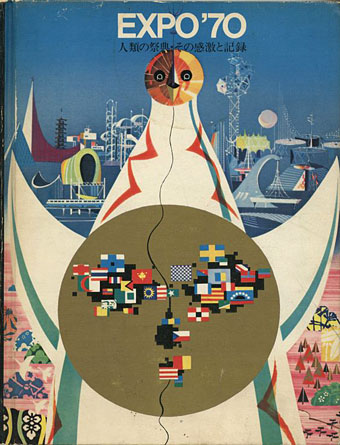
Taro Okamoto’s Tower of the Sun on the cover of an Expo ’70 guide.

• Last week I was watching the restored print of Howard Brookner’s excellent William Burroughs documentary, Burroughs. Among the later scenes are shots of the writer visiting Britain in the autumn of 1982 for the Final Academy events, a visit also recorded on Super-8 by Derek Jarman, and by the video cameras of the Haçienda nightclub at a reading I was fortunate to attend. Included in the Brookner film are brief snatches of an interview with Burroughs for BBC Radio 1 by John Peel’s producer, John Walters, something I missed when it was first broadcast.

• Taro Okamoto’s Tower of the Sun was built in Osaka for Expo ’70, and unlike many one-off expo buildings has managed to survive years of neglect and threats of demolition. Visitors to the Tower may now explore the restored “Tree of Life” interior, although places are limited so it’s necessary to book in advance. Related: Expo ’70 at ExpoMuseum, and Tower Of The Sun (1997) by Shonen Knife.

• Also at Dangerous Minds this week: a 1969 TV recording of Krzysztof Penderecki’s notorious The Devils of Loudon, an opera based on the same Aldous Huxley book as Ken Russell’s The Devils, and which includes (among other things) a singing nun enduring a forced enema.

• The new Cavern Of Anti-Matter album, Hormone Lemonade, is released this week. XLR8R has a preview. Related: an old/undated mix by Tim Gane for The Brain radio show here.

Milton Glaser on some of his favourite posters. Milton Glaser Posters, a book collecting 427 poster designs, is published this week by Abrams.

• The Ghosts of Empty Moments: Christopher Burke reviews M. John Harrison’s You Should Come with Me Now.

• Mixes of the week: FACT mix 644 by Susanna, and XLR8R Podcast 534 by Pär Grindvik.

Emily Temple found 25 of the most expensive books you can buy on the internet.

Towers Of Dub (1992) The Orb | Tower Of Our Tuning (2001) by Broadcast | Television Tower (2001) by Monolake

A Year In The Country: the book

ayitc.jpg

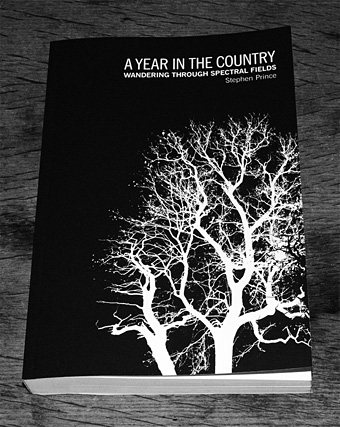
I kept intending to mention this before but the workload has been off the scale this year: all very stimulating but it’s been eating into my spare time. More about all of that later, for now there’s the new book from A Year In The Country’s Stephen Prince which was launched earlier this month in ebook form, and which will be available in print next month.

ayitc2.jpg

The book is a reworking of the Year In The Country website in printed form, hence the subtitle—”Journeys in Otherly Pastoralism, the Further Reaches of Folk and the Parallel Worlds of Hauntology”—and as such is very useful as a guide to the byways which the site has been exploring for the past few years. The folk-horror subgenre isn’t exactly unexplored today—the Folk Horror Revival book to which I contributed ran to 500 pages—but A Year In The Country has always had a broader reach, taking in related works in the music world, in science-fiction film and television, and in offshoots of science fact such as Cold War paranoia and nostalgia for the Space Race. I regard myself as being reasonably au fait with most of this material but there’s still a lot on the website (and now in the book) which I hadn’t come across before. There are no illustrations, unfortunately, but the website has recently been posting the missing pictorial content. A Year In The Country: Wandering Through Spectral Fields will be published on April 10th, and is available for pre-order here.

Previously on { feuilleton }
All The Merry Year Round
The Quietened Cosmologists
Undercurrents
From The Furthest Signals
The Restless Field
The Marks Upon The Land
The Forest / The Wald
The Quietened Bunker
Fractures
Folk Horror Revival: Field Studies