Picturing Vermilion Sands

knight2.jpg

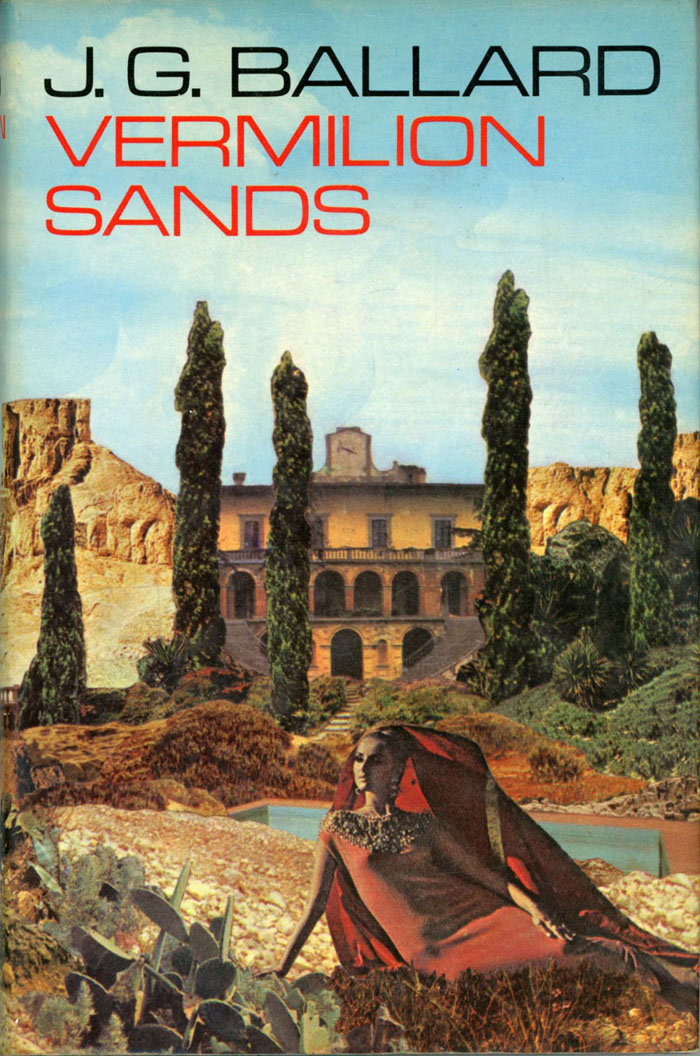
First UK edition, 1971. Art by Brian Knight.

Vermilion Sands (1971) is a story collection by JG Ballard which maintains a cult reputation despite being overshadowed by its author’s more popular novels. Most of the stories were written in the 1960s—a couple of them are among Ballard’s earliest works—but where many of his other short stories can read like the work of a writer with bills to pay, the tales of Vermilion Sands are much closer to Ballard’s core interests, filled with symbolic resonance and literary allusion.

Vermilion Sands, the place, is a near-future resort with a desert climate and an unspecified location; a region where the Côte d’Azur meets Southern California but the ocean is a sea of sand. While each story has a different artistic or cultural theme, all are populated by the idle midde-class types found in the rest of Ballard’s work. Ballard more receptive to visual art than many authors, especially the SF writers of his generation for whom art was less interesting than science and technology. There is science and technology in these stories—some of the latter is now inevitably dated—but it doesn’t dominate the proceedings. The stories derive less from scientific speculation than from Ballard’s desire to create a future he would have been happy to inhabit himself, an alternative to the grim dystopias which proliferate in science fiction. The background furnishings also reflect the author’s ideal, owing much to the Surrealist landscapes of Salvador Dalí and Max Ernst, a pair of artists whose works are often referenced in Ballard’s fiction. Given all of this you’d expect that cover artists might have risen to the challenge more than they have. What follows is a look at the most notable attempts to depict Vermilion Sands or its population, only a few of which are covers for the book itself.

Continue reading “Picturing Vermilion Sands”

Weekend links 479

hinge.jpg

Cover art by Mike Hinge.

• “[The Family] is an unforgettable fusion of journalism and poetic prose that still holds up precisely because it has no use for category, for genre, or for being anything other than its own unique, obsessive self.” Sarah Weinman on how Ed Sanders wrote the definitive account of the Manson murders.

• “The best-known detail of Sartre’s bad trip is Simone de Beauvoir’s anecdote of him being haunted for weeks after by lobster-like creatures scuttling just beyond his field of vision.” Mike Jay on Jean-Paul Sartre (and Walter Benjamin) under the influence of mescaline.

• The MGM film of The Wizard of Oz had its US premiere 80 years ago today. Of Oz the Wizard is a cut-up of the entire film by Matt Busy which rearranges every piece of dialogue (and all the credits) alphabetically.

• “The screenwriter Nagisa Oshima complained that Mishima’s suicide ‘failed to satisfy our Japanese aesthetic’ because it was ‘too elaborate.'” Anna Sherman on Yukio Mishima in Ichigaya.

• “Anarchists don’t like restrictive labels, including the word ‘anarchism’.” Terry Eagleton reviewing The Government of No One by Ruth Kinna.

• At Strange Flowers: Schloss Zwickledt, home of artist and author Alfred Kubin.

• More French music: Zeuhl collection, a list of recommended listening.

• Caro C on Janet Beat, a pioneer of British electronic music.

John Boardley on pomp, type and circumstance.

10 Goth cheeses and what to pair with them.

• At Dennis Cooper’s: Peter Sellers Day.

Longing, Love, Loss by Majeure.

The Lobster (1968) by Fairport Convention | Death Valley 69 (1985) by Sonic Youth | Return To Oz (2004) by Scissor Sisters

Weekend links 477

starling.jpg

Edge of Industry (2009) by Anne Starling.

• “In her darkroom with her silver salts and gelatine plates, she experimented with the mercurial effects of light, time and temperature.” Hailey Maxwell on the photographic art of Dora Maar.

• A Visionary Work Renew’d: A conversational review of Swan River Press edition of William Hope Hodgson’s The House on the Borderland by the late Sam Gafford & The joey Zone.

Brian Blomerth’s graphic novel Bicycle Day tells the story of the psychedelic ride made in 1943 by Swiss chemist Albert Hofmann while he was researching LSD.

• “The cinema is not the industrial cinema. The cinema is independent cinema.” Francis Ford Coppola on Apocalypse Now and related matters.

• More lunacy: “Fireworks, wild swans and super-cannons were propelling people mentally Moonwards long before 1969,” says David Seed.

• Mix of the week: Then Beautiful Swift Sparrows Led You Over the Black Earth by The Ephemeral Man.

Working (You Are), a new recording by Stephen Mallinder, his first solo work since Pow Wow in 1982.

Lost Proust stories of homosexual love finally published (but only in French for the moment).

Oren Ambarchi‘s favourite albums.

My White Bicycle (1967) by Tomorrow | Trip On An Orange Bicycle (1968) by The Orange Bicycle | Blue Bicycle (2008) by Hauschka

Echoes And Reverberations

echoes.jpg

Echoes And Reverberations, the latest themed collection of music presented by A Year In The Country, has a title that might refer to the Hauntological idiom in general. Not so much nostalgia, more the refashioning of memories, or imagined remembrances of the past, into something new.

Echoes And Reverberations is a field recording-based mapping of real and imaginary film and television locations.

It is in part an exploration of their fictional counterparts’ themes; from apocalyptic tales to never-were documentaries and phantasmagorical government-commissioned instructional films via stories of conflicting mystical forces of the past and present, scientific experiments gone wrong and unleashed on the world, the discovery of buried ancient objects and the reawakening of their malignant alien influence, progressive struggles in a world of hidebound rural tradition and the once optimism of post-war new town modernism.

Track list:
1) Grey Frequency—King Penda
2) Pulselovers—The Edge Of The Cloud
3) Dom Cooper—What Has Been Uncovered Is Evil
4) Listening Center—From Bull Island To Avondale
5) Howlround—Smashing
6) A Year In The Country—Not A Playground
7) Sproatly Smith—Gone Away
8) Field Lines Cartographer—Mr Scarecrow
9) Depatterning—The Ogham Stones
10) The Heartwood Institute—Ribble Head Viaduct

Using field recordings as a basis for music or sound art is as old as musique concrète, but the processes of Pierre Schaeffer and his followers were cumbersome and limited, and the results were invariably placed in the frame of Serious Music. The limitations of the approach can be seen in how quickly this avenue of exploration ran its course. It’s taken the flexibility and widespread use of digital sound tools to revitalise a moribund form to a degree that an acclaimed TV series like Chernobyl can use field recordings for a score (by Hildur Guðnadóttir) that matched the power of the on-screen drama.

The first piece in Echoes And Reverberations, King Penda, immediately caught my attention for the reference to David Rudkin’s Penda’s Fen, another TV drama with notable sound design by Paddy Kingsland of the Radiophonic Workshop. I thought the industrial thuds and clangs summoned by Grey Frequency might be taken from the scene where Stephen and his mother travel into Birmingham, but the release notes reveal that the sound source is the church where Stephen plays the organ, and in a later scene experiences a different kind of summoning. Whatever the source, the suggestion of menace suits a film whose transcendent message has to rise through an atmosphere of oppressive malevolence.

The Radiophonic Workshop is the ghost at this particular feast, unsurprisingly when the majority of the pieces are based on film and TV dramas from the Workshop’s golden decade, the 1970s: Flambards (The Edge Of The Cloud by Pulselovers, a beautiful piece of solo violin and piano with birdsong accompaniment); Survivors (Gone Away, a brittle instrumental by Sproatly Smith); and No Blade of Grass (Ribble Head Viaduct by The Heartwood Institute, a lumbering theme for one of the many angry and violent apocalypse films of the 70s). Of the other pieces Dom Cooper’s What Has Been Uncovered Is Evil takes the Hammer film of Quatermass and the Pit as its focus, creating a soundscape of sinister electronics in a nod to Tristram Carey’s Martian soundtrack, while the equally sinister electronics of Field Lines Cartographer’s Mr Scarecrow follows Stephen Gallagher’s gene-splicing thriller, Chimera, to the rain-drenched Lake District. The shadows of disaster lying over this release feel uncomfortably timely when the past week in Britain saw a heatwave like something from The Day the Earth Caught Fire, while this week we’ve had a village evacuated after torrential rains have threatened a dam with collapse, and an announcement from China about “hybrid chimeras“.

Echoes And Reverberations will be released on 16th August, and is available for pre-order now.

Previously on { feuilleton }
The Watchers
The Corn Mother
The Quietened Mechanisms
The Shildam Hall Tapes
Audio Albion
A Year In The Country: the book
All The Merry Year Round
The Quietened Cosmologists
Undercurrents
From The Furthest Signals
The Restless Field
The Marks Upon The Land
The Forest / The Wald
The Quietened Bunker
Fractures

Weekend links 475

brooks.jpg

Femme avec des fleurs (c. 1912) by Romaine Brooks.

• “Boring people tend not to exile themselves to rocky islands, but even among the intriguing personalities we encounter in Capri, some individuals prove more extravagantly memorable than others.” Steve Susoyev reviews Pagan Light: Dreams of Freedom and Beauty in Capri by Jamie James.

• “The Mad “idiots” subverted the comic form into a mainstream ideological weapon, aimed at icons of the left and the right—attacking both McCarthyism and the Beat Generation, Nixon and Kennedy, Hollywood and Madison Avenue.” Jordan Orlando on a world without Mad Magazine.

• RIP Sam Gafford, Paul Krassner and Rutger Hauer. Related to the latter: Hauer’s first role as Floris, the hero of a Dutch TV series directed by Paul Verhoeven.

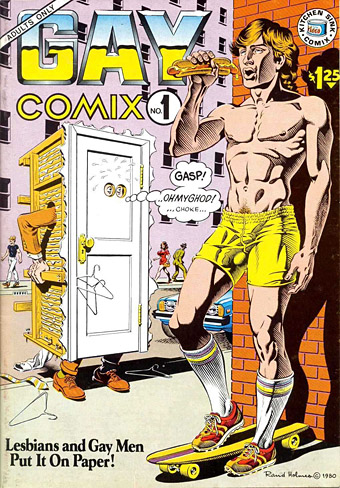
I cannot tell you what it does to me to hear pre-Stonewall. And even in our literature, even in the art, pre-Stonewall, post-Stonewall. I wrote three books pre-Stonewall and a dozen more post-Stonewall. There’s no demarcation. Gay history is centuries and centuries from the Romans to the Greeks to Oscar Wilde to all kinds of outrages. And those seem to be put back and pre-Stonewall is passive. Post-Stonewall is brave and dignified. I actually have heard things like that. I’ve talked, I’ve lectured and I’ve been invited all the way from Harvard to USC. And I talk about what it was like, what we had to survive.

Look, pre-Stonewall produced Allen Ginsberg, William Burroughs, Oscar Wilde, and I could go on. Post-Stonewall produced Bret Easton Ellis, who jumps out of the closet only now and then and then rushes back in, and Queer Eye for the Straight Guy, where we’re reduced to clowns for straight people. The husband of Mr. Buttigieg, he is so darling talking about the silver he’s going to be choosing for the White House. It embarrasses me, it embarrasses me very much because that’s what people expect a gay man to do, to be very precious, and that’s not what we are. A good solid queen I will protect forever, they are heroes.

A lot of people think that everything stopped, everything, all harassment stopped. Look, it’s still going on. It’s still going on, for god’s sake. The same tactics are often used in a different way.

John Rechy talking to Jason McGahan

• The genius of Barry Adamson: An exclusive interview by Paul Gallagher at Dangerous Minds.

Three hours of the Prophecy Theme from Dune (by Brian Eno with Daniel Lanois & Roger Eno).

Ed Sanders on why pop culture still can’t get enough of Charles Manson.

• Havelock Ellis takes a trip: Mike Jay on peyote among the Aesthetes.

Darren Anderson on why little works of architecture deserve respect.

• Mix of the week: Stephen O’Malley presents / Java / Apr 27 2017.

Phil Hine reviews Folk Horror Revival: Urban Wyrd 1 & 2.

John Waters revisits “The Golden Age of Monkey Art”.

I Must Be Mad (1966) by The Craig | The Day My Pad Went Mad (1982) by John Cooper Clarke | Yesterday, When I Was Mad (1993) by Pet Shop Boys