Weekend links 193

gauger.jpg

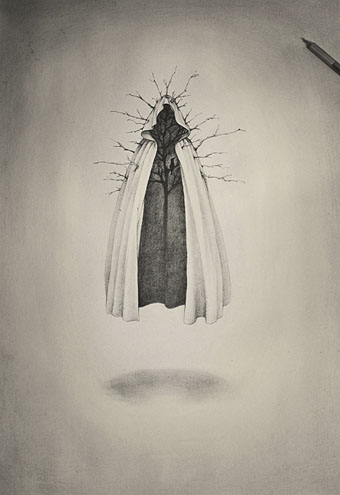
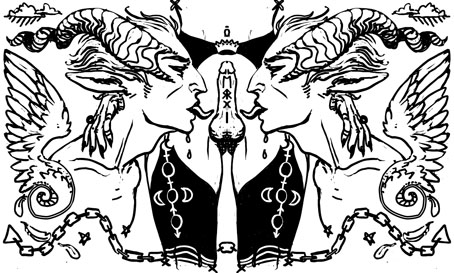
A Problem Glyph by Eliza Gauger. Problem Glyphs are “symbolic illustrations … drawn in response to problems sent in by tumblr users”.

Kosmische Night takes place at the Museum of Bath at Work, Bath, Somerset, on January 25th (Rescheduled to February 22nd).  “…a celebration of all things Teutonic for anyone who enjoys Neu!, Can, Tangerine Dream, Stockhausen and Kraftwerk,” say the organisers. Also on the bill, The Electric Pentacle, a Carnacki-esque collaboration between Narco Lounge Combo and The Levels.

• Shock Headed Peters’ Fear Engine II: Almost As If It Had Never Happened. Joe Banks on Karl Blake, “…one of the most fascinating and colourful characters to emerge from the fertile loam of the post-punk scene”.

• “The great question in the film and the tale is not the existence of the ghosts but the way the governess understands their no-longer-lived lives and desires.” Michael Wood on The Innocents.

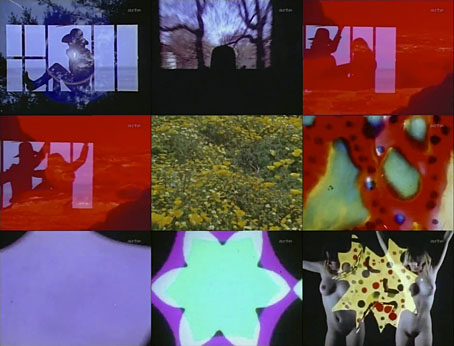
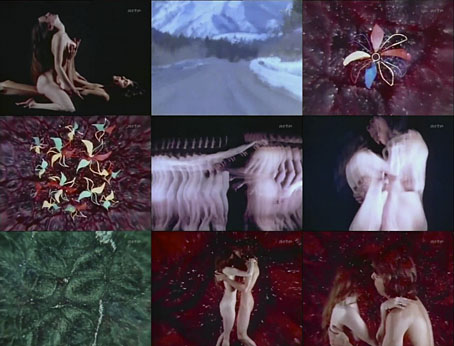
Nobody, however, is a greater authority on the intersection of porn and alternative spirituality than Annie Sprinkle. Beginning as a prostitute in the 1960s and 70s, she entered porn in the pre-AIDS era and made over two hundred films. She then jumped into a career as a sex-positive author and educator, which brought her into close conflict not only with feminists like Andrea Dworkin and Catharine MacKinnon, but also right-wing patriarch Jesse Helms, who denounced one of her sex magick performance pieces on the floor of the Senate. For Sprinkle, both sexuality and performance are explicitly spiritual and magical, part of her role as a cultural shaman.

In the Valley of the Porn Witches by Jason Louv.

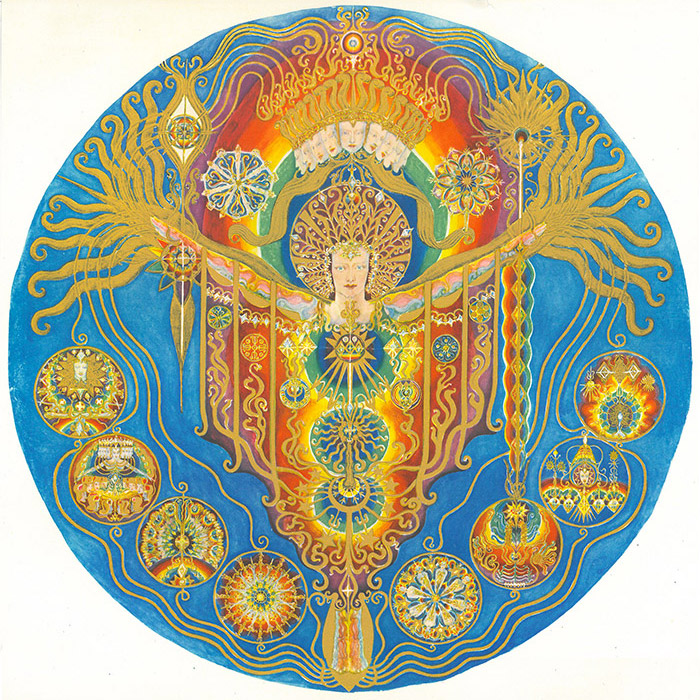
Stars of the Lid and Wordless Music Orchestra playing for two hours last month at the Basilica of Our Lady of Perpetual Help in Sunset Park, Brooklyn.

Rick Poynor on the late Martin Sharp’s contributions to People, Politics and Pop: Australians in the Sixties (1968) by Craig McGregor.

Maggie Greene on The Woman in Green: A Chinese Ghost Tale from Mao to Ming, 1981–1381.

• “TED actually stands for: middlebrow megachurch infotainment,” says Benjamin H Bratton.

Geoff Manaugh on how corpses helped shape the London Underground.

Tony White on Eduardo Paolozzi at New Worlds by David Brittain.

• Mix of the week: Secret Thirteen Mix 102 by Frank Bretschneider.

• At Dangerous Minds: film of Syd Barrett‘s first psychedelic trip.

NYPL Wire: a New York Public Library Tumblr.

Microbial art by Eshel Ben-Jacob and others.

Interstellar Rock: Kosmische Musik (1974) by The Cosmic Jokers | I, Bloodbrother Be (1984) by Shock Headed Peters | Obscene and Pornographic Art (1991) by Bongwater

The weekend artists, 2013

fournier.jpg

“Chloromgonfus detectis, a dragonfly that can detect volatile pollutants.” A speculative insect by artist Vincent Fournier.

The annual review of artists/designers/photographers featured in the weekend posts should have run at the end of December but MR James got in the way. Big thanks, and happy new year to Form is Void and Beautiful Century for pointing the way to many of these people.

strongowski.jpg

Two cover designs from Eliash Strongowski’s 30 Days—30 Covers project.

gebbie.jpg

Pink Boy by Melinda Gebbie.

lipton.jpg

Seam Stress (1987) by Laurie Lipton. The Drawings of Laurie Lipton is out now from Last Gasp.

blackwell.jpg

The Baron in the Trees (2011), a book-cut sculpture by Su Blackwell.

Continue reading “The weekend artists, 2013”

Weekend links 189

wilson.jpg

The Outsider (1956), 1963 edition; The Occult (1971), 1973 edition.

The cover of the 1973 UK paperback of Colin Wilson‘s mammoth overview of occultism can still be offered as a pinnacle of hyperbole. The book itself is a very serious and informative study but its success set Wilson on a path as a writer about the paranormal where he’d previously been concerned with literature, philosophy and psychology. For many critics this finished his already shaky reputation as a serious thinker. He continued to write about philosophy and literature in subsequent books but dubious speculations about Atlantis are always more commercially attractive than studies of Nietzsche, hence the proliferation of lost continents in the later part of a bibliography which the Wilson website lists at 114 titles. Wilson was a maverick intellectual whose curiosity ignored many of the boundaries that restrained his metropolitan contemporaries; he was also an autodidact of a type that seems to irritate the university-educated. Mentions of his name in British newspapers were frequently couched in sneering or dismissive terms. His current reputation can be measured by the lack of attention the news of his death has prompted in the UK at the time of writing. (That said, dying on the same day as Nelson Mandela was unfortunate timing.)

Savoy Books published an edition of Wilson’s crime novel, The Killer, in 2002. I designed that volume, rather badly, I think. In 2004 Robert Meadley wrote a book-length reaction to Wilson’s autobiography, Dreaming to Some Purpose, which can be downloaded for free from Savoy. In it Meadley mounts a robust defence of Wilson against the broadsheet termagants. Elsewhere: the only newspaper obituary so far is at The Times (subscription required); Colin Wilson on Desert Island Discs in 1978; Gary Lachman interviewing Wilson for Fortean Times in 2004; musician Anthony Reynolds discussing his collaboration with Wilson.

• “Art, music and a mind-blowing voyage of discovery”: Richard Neville on the late Martin Sharp. At Design Observer Rick Poynor looks back at Sharp’s book and magazine illustrations of the 1960s. Of particular note is Sharp’s contribution to the “Magic Theatre” issue of Oz magazine, a unique combination of collaged visuals and text which Alan Moore often refers to as a favourite work. (See issue 12 of Moore’s Promethea, “The Magic Theatre of the Mind“.)

• “The naked woman in art isn’t unusual, but we have trouble viewing the male body as a sexual, or artistic, object,” says James Polchin.

But how can anyone be bored when there’s always death to think about? Every day. Every hour. Don’t you? All the rest is just evading or glossing the real subject of our lives. Beckett, again, the maestro of death: Never but the one matter. The dead and gone. The dying and the going. From the word go. I too shall cease and be as when I was not yet, only all over instead of in store.

Jenny Diski on death and dying.

• A teaser trailer for The Dreamlands, a film by Huan Vu (Die Farbe) based on HP Lovecraft’s Dream Cycle.

• “On Watching Wages of Fear with my 11-Year-Old Daughter” by Debra Morris.

Abram Games’ “bat wings” BBC logo is 60 years old. See it in action here.

• At Strange Flowers: Romaine Brooks‘ portraits of her famous friends.

• At Front Free Endpaper: Mervyn Peake illustrates Treasure Island.

The Great God Pan (plus satyrs and fauns) at Pinterest.

Dan Wilson on “Electric Music” on the Victorian stage.

• Mix of the week: Fact Mix 414 by Julianna Barwick.

• The BFI chooses 10 great British rural horror films.

Dunwich – The search for Britain’s Atlantis.

The Grand Canyon filled with fog.

• The Bells of Dunwich (1975) by Stone Angel | O.O.B.E. (1992) by The Orb (feat. Colin Wilson) | Why We Make It Difficult On Ourselves (2010) by Anthony Reynolds & Colin Wilson

Martin Sharp, 1942–2013

sharp1.jpg

Oz magazine no. 15, October 1968.

The psychedelic art of Australian artist Martin Sharp has featured here on several occasions. Unlike his British and American contemporaries who maintained a single graphic style, Sharp was a versatile artist whose work could range from loose, often cartoony drawing and painting to very detailed collage designs; he was also as happy as any other artist of the period to plunder art history, as the cover for issue 15 of Oz demonstrates. The Mick Jagger figure from that cover was later reworked as a poster for “Turner’s Purple Orchestra”, one of a number of pieces of Sharp art which can be glimpsed throughout Donald Cammell & Nicolas Roeg’s Performance (1970).

sharp7.jpg

Performance (1970): Michele Breton and a Martin Sharp collage.

Sharp’s involvement with Oz magazine, and the creation of a handful of endlessly reproduced designs—the Bob Dylan Mr Tambourine Man poster, Jimi Hendrix in a Jackson Pollock explosion, the sleeve art for Cream’s Disraeli Gears—makes his art some of the most visible of the period. People may not necessarily know the name but they’ll recognise the work.

In 2009 Sharp’s Oz colleague Germaine Greer wrote a warm appraisal of the artist and his work. A few more examples follow. There’s a great selection of posters and other art and design here.

The GuardianMartin Sharp, Australian artist who came to symbolise the ’60s | Martin Sharp in pictures

sharp2.jpg

Mister Tambourine Man (1966).

Continue reading “Martin Sharp, 1942–2013”

Weekend links 179

tomaselli.jpg

Summer Swell (2007) by Fred Tomaselli. The artist is interviewed at AnOther.

• Mixes of the week for the season of mists and mellow fruitfulness: Forever Autumn Mixtape by The Outer Church, and celebrating what would have been Trish Keenan’s 45th birthday: Trish’s Toys & Techniques Birthday Tape (with cover art by Julian House).

Jirí Kolár: His Life, Work and Cultural Significance to the Czech Republic. Leah Cowan looks into the life and work of this influential Czech artist. Related: Jirí Kolár: poet and collage artist, and collages, rollages and prollages by Jirí Kolár.

• “Name any well-known poet from any age, any country. He or she wrote at least one poem about death, most likely several poems.” Russ Kick introduces his new book, Death Poems.

[M]any pictures in the splendid exhibition at the British Museum show men having sex with men. One of the earliest erotic handscrolls, from the 15th century, shows a Buddhist priest casting longing glances at his young acolyte. Indeed, among some samurai, male love was considered superior to the heterosexual kind. Women were necessary to produce children, but male love was purer, more refined.

The question is why were Japanese – compared not just with Europeans, but other Asians, too – so much more open to depicting sex? One reason might be found in the nature of Japanese religion. The oldest native ritual tradition, Shinto, was, like most ancient cults, a form of nature worship, to do with fertility, mother goddesses, and so forth. This sometimes took the form of worshipping genitals, male as well as female.

Ian Buruma on The joy of art: why Japan embraced sex with a passion. Shunga: Sex and Pleasure in Japanese Art is a forthcoming exhibition at the British Museum.

Harold Offeh on how the cosmic life and music of Sun Ra inspired the artwork decorating the Bethnal Green, Notting Hill Gate and Ladbroke Grove Tube stations in London.

• Fearful symmetry: Roger Penrose’s tiling by Philip Ball. Related: Penrose Tiles Visualizer, and lots more Penrose tiling links at The Geometry Junkyard.

Masculine / Masculine. The Nude Man in Art from 1800 to the Present Day, a new exhibition at the Musée d’Orsay.

• Into the Croation Zone: more derives from Christina Scholz here, here, and here.

Stephen Eskilson on Heteronormative Design Discourse.

Applied Ballardianism

The Zero of the Signified (1980) by Robert Fripp | The League of Gentlemen (Fripp/Lee/Andrews/Toobad, 1981): Minor Man (with Danielle Dax) | Heptaparaparshinokh