Weekend links 17

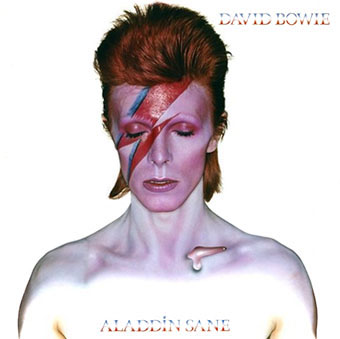
bowie.jpg

Aladdin Sane (1973). Cover photo by Brian Duffy who died this week.

• Among the obituaries this week: artist Louise Bourgeois; poet and partner of Allen Ginsberg, Peter Orlovsky; film director Joseph Strick, a man who dared to film James Joyce’s Ulysses; photographer Brian Duffy.

The dustbin of art history: “Why is so much contemporary art awful? We’re living through the death throes of the modernist project—and this isn’t the first time that greatness has collapsed into decadence.” Admirable sentiments but galleries and dealers have far too much invested in the corrupt edifice to let it collapse any time soon.

• Edinburgh film festival to screen ‘lost and forgotten’ British movies including the director’s cut of Jerry Cornelius film The Final Programme.

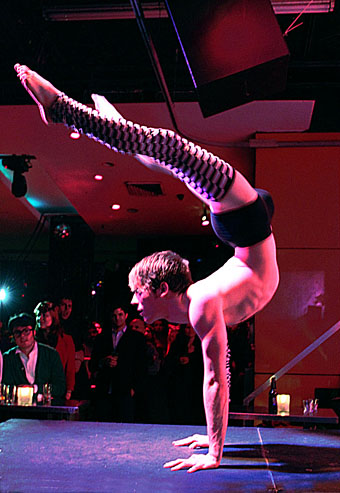
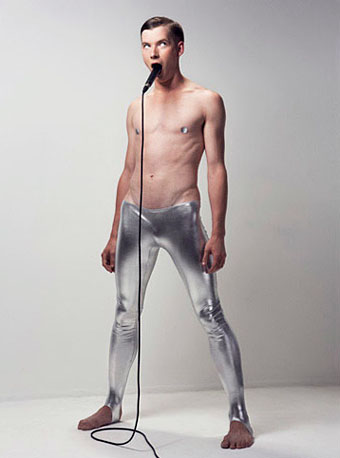
gogoharder.jpg

Delectable Bawdville burlesque boy Chris “Go-Go” Harder. Via EVB who have more pics.

Homobody by Rio Safari, “a scrappy diy zine about queerness”. Obliquely related: Lizzy the Lezzie, animations at the Sundance Channel.

• Richard Norris aka Time and Space Machine puts together a psychedelic mixtape for FACT. Fab stuff.

• Diamanda Galás has a message for critics: “Stick to reviewing plant life and leave the Witches alone.”

Brion Gysin: Dream Machine will be the first US survey of Gysin’s work in NYC next month.

• Geeta Dayal’s study of Another Green World by Brian Eno reviewed at Ballardian.

• For type-heads: font anatomy wallpaper by Sigurdur Armannsson.

If it was my home: visualising the BP oil disaster.

Antony Gormley’s Breathing Room III.

The Paris Review has a new blog.

• Bizarre juxtaposition of the week: John Martyn’s sublime Small Hours with, er… The Clangers.

Weekend links 15

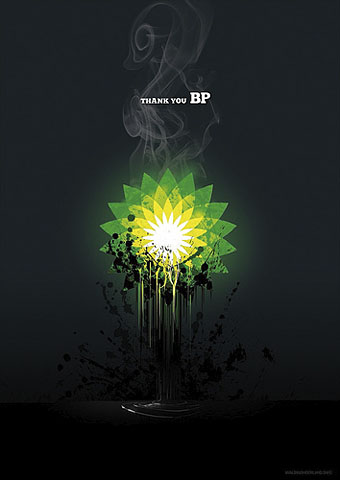
bp.jpg

One of the entries from the Greenpeace competition to rebrand BP.

What Kenneth Anger was doing inside the Pentagon, October 1967.

Ghosts Of The Future: Borrowing Architecture From The Zone Of Alienation. Jim Rossignol on Stalker: the film, the game and the reality.

Electric Eden: Unearthing Britain’s visionary music. A blog and a forthcoming book by Rob Young.

• Lesbian filmmaker Kiana Firouz isn’t wanted in the UK thanks to the iniquitous asylum laws of the previous administration; the Home Office intends to return her to Iran where gay people are flogged and executed. Coilhouse has details including recommendations of how people can help. Related: Britain’s immigration system is guilty of “institutional homophobia”, according to a new report.

Cameron Carpenter, a prodigiously talented (and sequinned) concert organist.

No Barcode: Javier Garcia’s graphic design blog.

Shapeways: 3D printing from your own designs.

Spintriae: brothel coins from Ancient Rome.

Winq magazine: “global queer culture”.

A steam-powered synthesiser.

Seven days with Brian Eno.

Among The Trees, Michael Chapman on the Whistle Test in 1975.

Weekend links 14

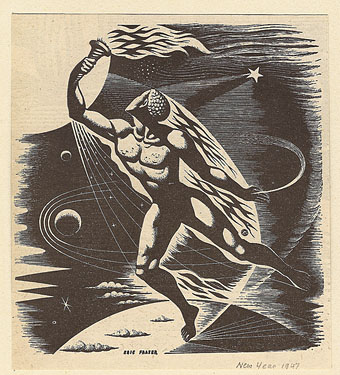
fraser.jpg

A drawing by Eric Fraser from the Radio Times, 1947. From this Flickr set.

• I helped put together the design for the Pursuit Grooves album recently. FACT magazine interviewed Vanese Smith about her work.

• One of the books whose interiors I designed last year for Tachyon was The Secret History of Science Fiction, a story collection edited by James Patrick Kelly and John Kessel. (And a book which I’ve yet to add to my web pages, I’m still behind with updates.) The LA Times has a piece about the anthology here, focusing on the Don DeLillo contribution, Human Moments in World War III.

• It’s been another week of Facebook hate; being a self-satisfied refusenik I can’t help but find this amusing. Too many good pieces to list but Gizmodo had more reasons why you should still quit Facebook, Jason Calacanis gathered lots of links to other stories on his blog while social media expert Danah Boyd got to the heart of the matter with a very cogent polemic.

• If you want an alternative to Facebook, Diaspora is “the privacy aware, personally controlled, do-it-all distributed open source social network”.

• David Toop has a new book out next month. “Sinister Resonance begins with the premise that sound is a haunting, a ghost, a presence whose location is ambiguous and whose existence is transitory. The intangibility of sound is uncanny – a phenomenal presence in the head, at its point of source and all around. The close listener is like a medium who draws out substance from that which is not entirely there.”

• Coilhouse looks at the late Decadent artist and designer Hans Henning Voigt (1887–1969), better known as Alastair.

mclark.jpg

come, been and gone.

• “After a sold out season at the Barbican in 2009 Michael Clark Company returns with the next instalment of his critically acclaimed production made primarily to the music of David Bowie. come, been and gone also embraces the work of Bowie’s key collaborators: Lou Reed , Iggy Pop , Brian Eno and touches on some of his influences; The Velvet Underground , Kraftwerk and Nina Simone……This production contains loud music and graphic images.” I should hope so.

• “Why should boys always be boys, and girls always be girls?” Brutal/Beautiful, photography by Austin Green.

• John Foxx, Iain Sinclair and others appear at Short Circuit 2010 next month.

Black, Brown, and Beige: Duke Ellington’s music and race in America.

Jane Siberry has made all her albums available as free downloads.

Ruth Bayer photographs people after they’ve inhaled poppers.

Swiss artist catalogues mutant insects around nuclear plants.

Pompeii’s X-rated art will titillate a new generation.

The Happy, Haunted Island of Poveglia, Venice.

The Art of American Book Covers, a blog.

Kanellos, the Greek protest dog.

• Song of the week: Twiggy Twiggy (1994) by Pizzicato Five.

Weekend links: the queer edition

queer.jpg

A T-shirt design by artist Daryl Vocat.

Tove Jansson: Out of the Closet. The unorthodox life and work of the woman who gave us the Moomins.

Submissions are now open for PANK’s October special online issue featuring Queer prose, poetry & art.

• More new magazines: Zeus and Made in Brazil Magazine, the latter being a spin-off from the justly-praised weblog of Brazilian hotness.

• An old magazine, called, er…Magazine: “Everything about Magazine was new, from the stark photoless cover design with its bold typeface to the way the men were photographed. The pictures weren’t overtly sexual, but proudly confronted the viewer in a different way: “To us, showing a face was the most important thing because back in 1980, gay people still had to hide their faces,” Lestrade says.” A few pictures from Magazine.

Revealed: The Tradition of Male Homoerotic Art, an exhibition at the Leslie-Lohman Gallery, NYC, from May 12th.

• The programme for the International Dublin Gay Theatre Festival which is running to May 16th.

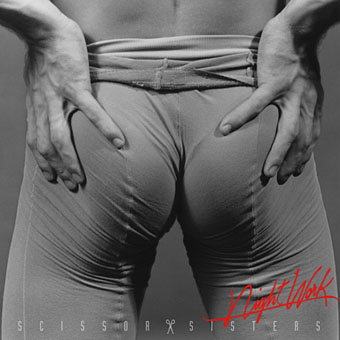
scissors.jpg

Scissor Sisters have a new album, Night Work, out next month. The cover picture is a photo of dancer Peter Reed by Robert Mapplethorpe. Antony and the Johnsons have announced a new album (and accompanying book) for October.

• Headline of the week: “Christian right leader George Rekers takes vacation with ‘rent boy’ ”. Rekers took issue with the story; his Rentboy.com escort took issue with Rekers’ issue-taking. Then things became unpleasant. And now another escort has come forward.

Henry & Glenn Forever, “a love story to end all love stories”. “Who knew Rollins was such a caring spouse? Who knew Hall and Oates were so infernally evil—yet so considerate?”

• This week’s Tumblr silliness: Lesbians Who Look Like Justin Bieber.

• I’m not on Facebook, nor will I ever be. If you are, however, here’s ten reasons why you should quit. The EFF has six things you need to know about Facebook Connections. Wired thinks that Facebook has gone rogue and an alternative is needed. What does Facebook publish about you and your friends? Finally, Gawker has ten reasons why you’ll be on Facebook forever.

The Prague Pneumatic Post.

How to serve absinthe.

Cthulhu is not cute.

• Song of the week: Gay Messiah by Rufus Wainwright.

Mark Twain

twaintesla.jpg

Nikola Tesla and Mark Twain, 1894.

Mark Twain died 100 years ago today, April 21st, 1910, and the anniversary is being marked in America by a variety of events throughout the year, some of which are listed on this dedicated site. I’ve always been grateful to Twain for cheering a portion of my dismal school days with The Adventures of Huckleberry Finn, one of two books we were forced to read that I actually enjoyed. (The other was Lord of the Flies; both stories, perhaps significantly, concern Wild Boys.) I’ve wanted to re-read Huckleberry Finn for years, perhaps now would be a good time to actually do so.

Unlike many writers of his generation, Twain’s work still seems vital today, and not only his fiction. His broadsides and polemics return continually to basic issues of tolerance and humanity and are often as relevant now as they were a century ago. Twain had little patience for the hypocrisies of his fellows when it came to matters of religion, warfare or the treatment of other human beings; like his contemporary, Oscar Wilde, he’s always been endlessly quotable. Consider these two extracts:

Citizenship? We have none! In place of it we teach patriotism which Samuel Johnson said a hundred and forty or a hundred and fifty years ago was the last refuge of the scoundrel—and I believe that he was right. I remember when I was a boy and I heard repeated time and time again the phrase, ‘My country, right or wrong, my country!’ How absolutely absurd is such an idea. How absolutely absurd to teach this idea to the youth of the country. True Citizenship at the Children’s Theater, 1907

But the truth is, that when a Library expels a book of mine and leaves an unexpurgated Bible lying around where unprotected youth and age can get hold of it, the deep unconscious irony of it delights me and doesn’t anger me. Letter to Mrs FG Whitmore, February 7, 1907

(more)

…then wonder what Twain would have to say about America’s current crop of blustering yahoos with their flags and crosses and misspelled signs.

A copy of the first edition of The Adventures of Huckleberry Finn, illustrated throughout by EW Kemble, can be downloaded at the Internet Archive. For Twain’s dim view of the Bible and its adherents, see his Letters from the Earth. The Tesla Memorial Society has another photograph of Twain in the great inventor’s laboratory.