Weekend links 89

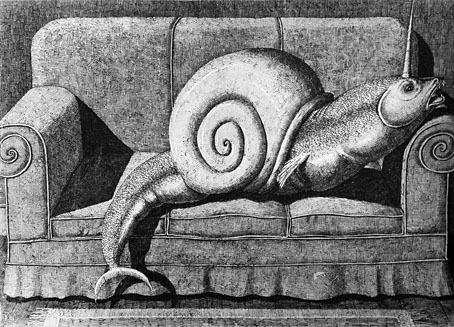
gnoli.jpg

A drawing from Bestiario Moderno by Domenico Gnoli (1933–1970).

RIP Russell Hoban. Nina Allan celebrates a favourite writer while David Mitchell, writing in 2005, pays tribute to Riddley Walker. For me the gulf between Hoban and many of his contemporaries could be measured by his entry in the Writer’s Rooms feature the Guardian Review was running for a couple of years: Hoban’s room was the only one that admitted to being cramped and chaotic.

A wristwatch could be “a tiny flowering hell, a wreath of roses, a dungeon of air” and still tell time. A short story could take the shape of an instruction manual for the most routine of tasks (crying, singing, winding said dungeon, killing ants in Rome), or a compendium of tales about fantastical but oddly familiar species. A novel didn’t have to progress from the first page to the last, hung on a rigid skeleton of plot: it could proceed in oblong leaps and great steps backward, like a game, say, of hopscotch. “Literature is a form of play,” said Cortázar. […] It is perhaps because he so stubbornly resists categorization, as much as for the ludic complexity of his work, that Cortázar is in these parts more admired than he is read. The Anglophone literary imagination (or perhaps just its material substrate: the market) appears to have room for only one Latin American giant per generation—Borges, García Márquez, the freshly beatified San Bolaño. Cortázar was too weird, too difficult, too joyously slippery to make the cut.

Eels Über Alles: Ben Ehrenreich on Julio Cortázar

• Alfred Jarry is another writer the Anglophone world has often found “too weird, too difficult”. Jarry has been dead for over a century but Alastair Brotchie’s recently-published full-length biography is the first such work in English. Mark Polizzotti reviews a life of “the poster boy for literary cult figures” at Bookforum.

• “A Beautiful Trip”: Frances Morgan interviews David Lynch about music and sound. And Robert Wyatt talks for 95 minutes to Tony Herrington about his favourite music.

• Twilight Science: Paul Schütze presents solo musical work and various collaborative projects in new digital editions.

occupy.jpg

Jonathan Barnbrook‘s logo design for Occupy London.

• Winter reads: Myths of the Norsemen by Roger Lancelyn Green. Related: What became of illustrations in fiction?

The White People and Other Weird Stories by Arthur Machen is a new Penguin Classic out in January.

• “This Christmas, why not give Viriconium, city of sex, syphillis & consubstantiation?”

• The Casual Optimist announces its Favourite Book Covers of 2011.

The Collect Call of Cthulhu

Living with Burroughs

Function (2011) by Emptyset | Aftertime (2011) by Roly Porter with Cynthia Miller on the Ondes Martenot.

Weekend links 88

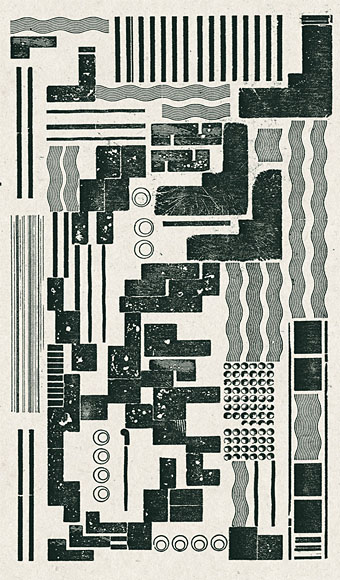
zarnowerowna.jpg

Typographic Composition (1924) by Teresa Zarnowerówna from a post about Polish graphic design at 50 Watts.

• “Direct action is a matter of acting as if you were already free… […] …the link between military and money systems remains the dirty secret of capitalism.” A lengthy and essential interview with “anarchist anthropologist” David Graeber, author of Debt: The First 5000 Years.

• “…it was after being told by an art director that he preferred her images of women to men that Toyin [Ibidapo] began to shoot boys in an attempt to prove him wrong. Something that Cult of Boys does perfectly.”

The pornographic imagination is deeply intertwined with the pain and horror of life. Some of that comes from our basic biological reality, which is unpleasant enough, and much of it comes from our social structures. Biological life has been completely degraded and continues to become more and more degraded in novel and more horrific ways, so it is inevitable that our horrible social structures – our schools, prisons, families, slaughterhouses and farms – become sites for the pornographic imagination.

Stephen Beachy discusses his novel, boneyard.

• “To my right is a wall bracket that, on closer inspection, turns out to be a human face made of porcelain fruits. The anteater rests on top of the television.” Jonathan Jones meets Jan Švankmajer.

Anselm Kiefer‘s new exhibtion at White Cube, London, takes its name and some inspiration from Fulcanelli’s alchemical exegesis, Le Mystère des Cathédrales (1926).

• Today (Sunday, 11th December) on Resonance FM at 8.00pm GMT, Alex Fitch talks to Alan Moore about HP Lovecraft and related matters.

Nick Hydra is putting all 112 issues of occult encyclopaedia Man, Myth & Magic online.

• Ira Cohen ‘s 1968 film The Invasion of Thunderbolt Pagoda is available again on DVD.

• Colleen Corradi Brannigan’s paintings of Italo Calvino’s Invisible Cities.

• “Margate’s a bloody toilet!” Can you handle The Reprisalizer?

• Bibliothèque Gay on Cocteau’s Le livre blanc (in French).

• Josie & the Pussycats in A Clockwork Orange.

Lovely Book Covers

Words With The Shaman (1985) by David Sylvian w/ Jon Hassell, Steve Jansen & Holger Czukay – I: Ancient Evening | II: Incantation | III: Awakening (Songs From The Treetops).

Weekend links 85

farmanfarmaian.jpg

Group I (Convertible Series, 2010) by Monir Farmanfarmaian.

The four albums recorded by Bruce Gilbert and Graham Lewis under the name Dome are being reissued by Editions Mego together with Gilbert & Lewis’s Yclept album. I always preferred Gilbert & Lewis in their Dome incarnation (and Colin Newman solo) to the punk and post-punk stylings of their former band, Wire. Dome were (among other things) eccentric, awkward, noisy, hypnotic and experimental. Their recordings seemed to go largely unnoticed in the early 1980s so it’s good to see them being reissued.

A Children’s Treasury of American Cops Brutally Attacking Citizens: “…it takes quite a lot of tax money to keep a bunch of vicious thugs overfed and dressed like junior Darth Vaders with their portable hard-ons, on the off-chance some college kids might one day peacefully sit outside to protest this nation’s revolting descent.”

• “Stevenson, as has been said, was disarmingly candid about the material he borrowed for Treasure Island. One name, however, is missing from the extensive catalogue of self-confessed ‘plagiarisms’.” John Sutherland at the TLS.

• “Messiaen’s advice was revelatory. ‘You have the good fortune of being an architect and having studied special mathematics’, he told Xenakis. ‘Take advantage of these things. Do them in your music.'”

• “They always said punk was an influence. Tracey Emin, Damien Hirst, what a load of old shit that was. It’s Thatcherite art care of Saatchi & Saatchi.” And don’t ask Jamie Reid about the Sex Pistols.

Dennis Cooper is interviewed at Lambda Literary. I was surprised last week to find my recent post about William Burroughs’ The Wild Boys linked on a feature about the novel at Cooper’s blog.

Cosmic Geometry: The art of Monir Farmanfarmaian at The Paris Review. Related: Monir Farmanfarmaian at the Haines Gallery, San Francisco.

• Paleolithic phallic art suggests that many early European men scarred, pierced and tattooed their penises.

FACT mix 301 is a selection of dub tracks, dubstep pieces and Middle Eastern songs compiled by Kahn.

Who left a tree, then a coffin in the library?

The Little Journal of Rejections (1896).

Clive finished another painting.

The Great Salt Desert of Iran.

Keep Drawing.

• Troisième (1980) by Colin Newman | And Then… (1980) by Dome | The Red Tent pts I & II (1980) by Dome) | Jasz (1981) by Dome.
Weekend links 84

enok.jpg

Regeneration (2011) by Toshiyuki Enoki. Via.

HIDE/SEEK: Difference and Desire in American Portraiture, the art exhibition that caused such a fuss last year at the Smithsonian Institution, opens at the Brooklyn Museum, NYC, on November 18th. Among the events associated with the show is a screening of James Bidgood’s lusciously erotic Pink Narcissus. David Wojnarowicz’s video piece, A Fire in My Belly, is still a part of the exhibition so the New York Daily News reached for the outrage stick to prod some reaction from people who’d never heard of the artist or his work before. Will history repeat itself? Does the Pope shit in the woods? Watch this space…

Magic is not simply a matter of the occult arts, but a whole way of thinking, of dreaming the impossible. As such it has tremendous force in opening the mind to new realms of achievement: imagination precedes the fact. It used to be associated with wisdom, understanding the powers of nature, and with technical ingenuity that could let men do things they had never dreamed of before. The supreme fiction of this magical thinking is The Arabian Nights, with its flying carpets, hidden treasure and sudden revelations…

Marina Warner, whose new book, Stranger Magic: Charmed States and the Arabian Nights, is reviewed here and here.

• Those Americans who adore big business but loathe the idea of gay marriage will be dizzy with cognitive dissonance at the news that 70 major US companies—including CBS, Google, Microsoft and Starbucks—have signed a statement saying the Defense of Marriage Act (DOMA) is bad for business. Mark Morford at SFGate says this now means that real homophobes don’t Google.

Divining with shadows and dreams, tears and blood: S. Elizabeth talks to JL Schnabel of BloodMilk about her “supernatural jewels for surrealist darlings“.

Earth: Inferno (2003), a short film by Mor Navón & Julián Moguillansky based on the book by Austin Osman Spare. Via form is void.

finlay.jpg

Illustration by Virgil Finlay for A. Merritt’s The Face in the Abyss. From a 1942 Finlay portfolio at Golden Age Comic Book Stories.

The Mute Synth as created by Dirty Electronics & designed by Adrian Shaughnessy.

Phil Baker reviews two new Aleister Crowley biographies at the TLS.

A Brief Rant on the Future of Interaction Design

The Most Amazing Room In Queens, NYC.

Brian Eno on composers as gardeners.

Alan Turing is Alan Garner’s hero.

• Paintings by Guy Denning.

Static (1998) by Redshift | The Owl Service (2000) by Pram | Lover’s Ghost (2010) by The Owl Service.

Weekend links 83

hackett.jpg

In Memory by Caitlin Hackett who describes her astonishing drawings as “contemporary mythology”.

• David Lynch’s solo album, Crazy Clown Time has just been released so The Guardian last Friday let the artist/director/musician edit their G2 supplement. Xan Brooks tried to get Lynch to open up about his inspirations while elsewhere Lynch had a chat with ZZ Top’s Billy Gibbons. Of more interest to me was news that some of the deleted sequences from Blue Velvet have been discovered. I’ve known about these for years from a feature in Video Watchdog magazine but never thought we might get to see them. Related: a mixtape by David Lynch & musical collaborator/engineer ‘Big’ Dean Hurley.

• “Book jackets these days, for reasons I won’t unpack, seem to revel, overtly, in wit, conceptual deviousness, unusual clever or droll juxtapositions – we, as a professional community, seem to have elevated the visual bon mot above all other virtues.” Peter Mendelsund in a great post about certain problems in book design, starting with the very problematic question of what to do with Nabokov’s Lolita. Related: Covering Lolita, a gallery of covers through the ages which run the gamut of bad decisions.

• “For his sins Pinocchio is not only hanged but robbed, kidnapped, stabbed, whipped, starved, jailed, punched in the head, and has his legs burned off.” Nathaniel Rich goes back to Carlo Collodi’s original Pinocchio. Disney it ain’t.

wolpe.jpg

Some of Berthold Wolpe’s Faber cover designs are now available as prints from wire-frame whose Pelham/Ballard prints were mentioned here recently. Related (and worth another visit): Faber 20th century classics at Flickr.

Technical Vocabularies – Games for May, a small collection of poems by Alan Moore & Steve Moore, is now online with authorial permission. Alan’s Beardsley pastiche on the cover is a bonus.

• Cabaret Voltaire’s Richard H. Kirk says the group’s Virgin albums will be reissued next year by Mute. A new edition of The Crackdown? Yes, please.

• “Homo Riot can only think of six or seven street artists in the world who regularly feature gay themes in their work, and he knows all of them.”

Rub Out The Words: Letters from William Burroughs and Philip K. Dick on the language virus theory of William Burroughs.

L’exilé de Capri: the connections between Jacques d’Adelswärd-Fersen and Roger Peyrefitte explored at Strange Flowers.

• Flying cars and monorails: Soviet Russia in the 1960s also had a Gerry Anderson view of the future.

Are You An Anarchist? The Answer May Surprise You.

Baby’s On Fire (1973) by Brian Eno | Baby’s On Fire (live, 1974) by Eno & The Winkies | Baby’s On Fire (live, 1976) by 801 | Baby’s On Fire (1998) by The Venus In Furs.