Weekend links 164

panikanova.jpg

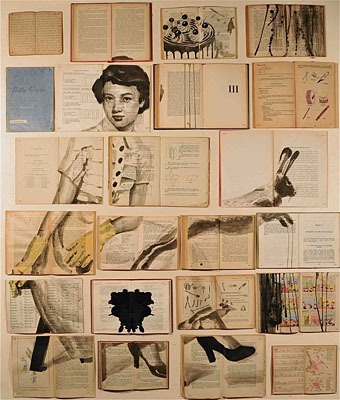
Ekaterina Panikanova paints on books.

Back in 2009 I bought a book of Art Nouveau illustration and design which contained an intriguing drawing by an Austrian artist, Franz Wacik (1883–1938). At the time there was little of Wacik’s other work online so I was delighted by the latest post at 50 Watts which showcases a selection of his illustrations. Wacik was a contemporary of British illustrator Sidney Sime, and both artists share a predilection for the comic and the grotesque.

• “The outlawing of drugs such as cannabis, MDMA and LSD amounts to the ‘the worst case of scientific censorship since the Catholic Church banned the works of Copernicus and Galileo’, the former Government drugs advisor Professor David Nutt has claimed.” Related: “At last, the edifice of drugs prohibition is starting to crumble,” says Amanda Feilding.

Alan Johnston on “A gay island community created by Italy’s Fascists”, and at Another Nickel In The Machine a report on The Gateways Club, one of the few meeting places for London’s lesbians in the 1960s. Alex Park wonders “Why Is Gay Porn So Popular In Pakistan?”

• If it’s June 16th then it must be Bloomsday: The Irish Times has a page of Joyce-related links to mark the anniversary. This year there’s a global reading of Ulysses taking place.

• “Now we can concentrate on album number nine,” says Kraftwerk’s Ralf Hutter. The rest of us will impatiently count the passing seconds.

• After a week in which George Orwell’s Nineteen Eighty-Four has seen an increase in sales, a look at its cover designs old and new.

Aleister Crowley: Wandering the Waste is a 144-page graphic biography of the Great Beast by Martin Hayes and RH Stewart.

Barnbrook Design‘s presentation of Taxidermy, a book by Alexis Turner, is rather splendid.

• FACT Mix 386 is a great collection of dubby grooves compiled by Young Echo.

• From 2001: Michael Wood in the LRB reviewing Apocalypse Now Redux.

• The first recording of Allen Ginsberg reading Howl.

Rejoyce (1967) by Jefferson Airplane | The Sensual World (1989) by Kate Bush | Molly Bloom (2013) by Alan Munde
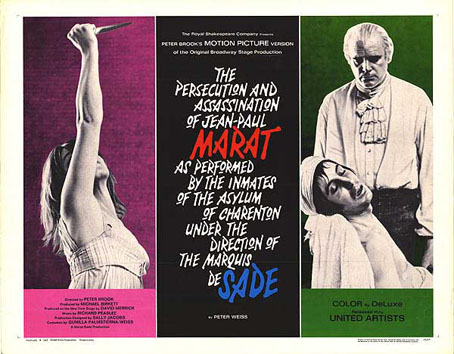
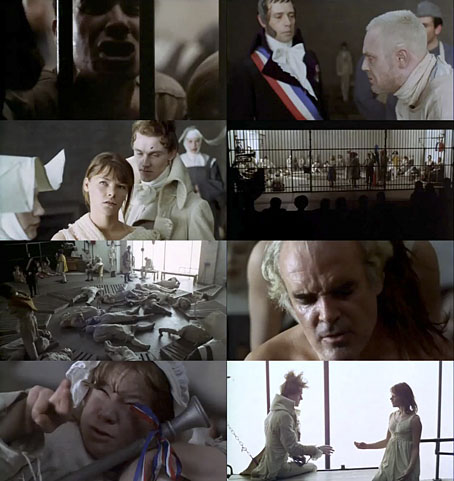
The Marat/Sade

maratsade1.jpg

The Marat/Sade (1967).

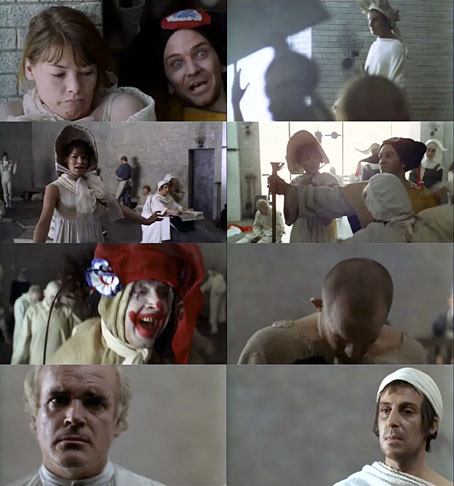
Good to find this Peter Brook film on YouTube (for the time being…) as I’d been watching Ian Richardson in a couple of things recently and wanted to remind myself of how he fares here. He’s excellent, of course, as the serious foil to Patrick Magee’s equally serious Marquis de Sade. Brook’s film is a recording of his stage presentation of Peter Weiss’s play, in which the two actors embody the poles of a dialogue about the perennially knotty problems of revolution, freedom, and the interests of the individual in the face of political abstractions. What fascinates most about this is the Brechtian nature of the drama: structured as a play-within-a-play (we’re watching the inmates of an asylum performing a fictional Sade drama), and with a proxy audience regarding the performance through iron bars, the staging is as far away from dry theorising as you can get. Brief moments of debate between Sade and the asylum inmate portraying Marat act as punctuations between scurrilous chorus songs and frequent scenes of outright chaos which erupt when the demands of performance become too much for the inmates. It’s loud, sardonic, cynical, and often riveting. One of the more miserable features of drama from the 1960s and 70s is the recurrence of ham-fisted political didacticism which, however well-intentioned, makes for a dismal viewing experience. Weiss’s play shows how well you can deliver political rhetoric when the staging doesn’t ignore the presence of a possibly sceptical audience who might also like to be entertained.

maratsade2.jpg

Peter Brook has had a peculiar career as a film director, most of his films being screen adaptations of his stage productions, or odd one-offs such as his documentary-like (and somewhat superfluous) film of Lord of the Flies, and the bizarre Meetings with Remarkable Men. (More about that later.) Brook’s Royal Shakespeare Company staging of the Weiss play was performed to great acclaim in 1965 so we’re fortunate that it’s captured so well here. The cast includes many first-rate actors, not only Richardson and Magee but Glenda Jackson as the inmate given the task of portraying Charlotte Corday, Michael Williams as the Herald, and (easy to miss among the clown-faced chorus) Freddie Jones. A low-grade YouTube copy does little for David Watkin’s superb photography which gives the film a very different look to other films of the 1960s. Studios films of the era tended to be horribly over-lit so it’s refreshing to find a film such as this using only the available light to illuminate the action. Searching around for DVDs reveals a single Spanish edition which I’m tempted to buy if I could be sure it was widescreen and with the English soundtrack intact. As for the play itself, the concerns may be typical of the period but many of the sentiments have lost none of their relevance. Highly recommended.

maratsade3.jpg

Weekend links 162

penrose.jpg

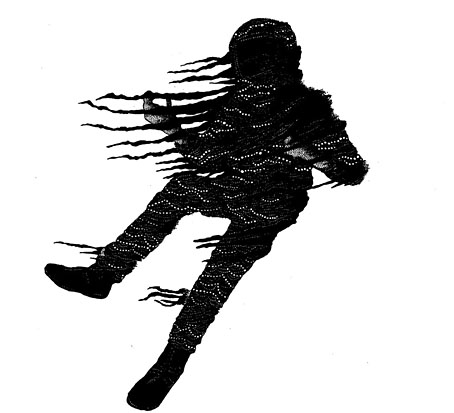
Untitled drawing by Sophie Penrose.

• “…many arts producers – much more so than the artists themselves – were over-fearful of the prospect of prosecution, when in nearly all incidents there were no reasonable grounds for bringing charges.” Julia Farrington of Index on Censorship on self-censorship by artists and art institutions in the UK.

• “Tons of tones – some dissolved in beats, some beatless treatments – in a continuous mix of current ambient and electronic goodies, pouring more than a score of ambi-valent shapes and etheric waves into an occluded reverb-trail echo-veil mood-stream.” Ambivalentine, a mix by Albient.

• “I was followed by a bee, a golden bee. For three years, every day, the golden bee followed us.” Forty years ago Penthouse magazine talked to Alejandro Jodorowsky. This month Dazed magazine asked the polymath twenty questions.

• “…investigators were stupefied to find the spymaster’s quarters full of pink leather whips, cosmetics, and pornographic photographs, framed in snakeskin.” Erik Sass on Colonel Redl and a gay spy scandal in the Vienna of 1913.

• “With no one to sponsor him, Marino Auriti’s dream museum became the stuff of legends.” Stefany Anne Golberg on Marino Auriti’s Enciclopedico Palazzo del Mondo.

• The Crime Epics of Louis Feuillade: YouTube links and more. Related: YouTube’s Vault of Horrors.

Werner Herzog: 50 years of potent, inspiring, disturbing films.

• The doors of perception: John Gray on Arthur Machen.

• Some Sort of Alchemy: Albert Mobilio on Sun Ra.

• British Pathé’s film of ghost hunters in 1953.

• “Escape your search engine Filter Bubble

• RIP Jack Vance

Bumble Bee Bolero (1957) by Harry Breuer | The L S Bumble Bee (1967) by Peter Cook & Dudley Moore | Ant Man Bee (1969) by Captain Beefheart and His Magic Band | Be A Bee (2009) by Air

Weekend links 160

floyd.jpg

Collage by Jeneleen Floyd.

• “…slowly, block-by-block, pedestrians are starting to take back the streets.” Wayne Curtis on the hazards of being a pedestrian in a world of cars.

• Michael Hann looks back at LA’s Paisley Underground, and also talks to some of its key members.

Meighan O’Toole interviews JL Schnabel about her Blood Milk jewellery designs.

My central thesis is that camp was always a kind of signifying practice invented out of necessity (both for survival and for sheer creative pleasure) by “queer” (in the classic sense) outsiders – fags, drag queens, transsexuals, deviants, sexual renegades – and that it was always by its very nature deeply political and committed: Some people dedicated their entire lives to it! Sontag’s interpretation always seemed a bit dismissive to me somehow.

The seldom unprovocative Bruce LaBruce talking to Mark Allen about camp in the 21st century.

• Studiocanal launches an appeal to find the lost materials of The Wicker Man.

• At Flickr: Tales from a Parallel Universe and London’s Lost Music Venues.

Michael Wood tells us what we learn when we read Italo Calvino’s letters.

• Fragments of a Portrait: Francis Bacon and David Sylvester in 1966.

• An extract of a live session from Adrian Sherwood and Pinch.

• In Baba Yaga’s Hut: Amelia Glaser on Russian folk tales.

Buckminster Fuller Book Covers from the 1970s.

A Century of Proust.

The Real World (1982) by The Bangles | With A Cantaloupe Girlfriend (1982) by The Three O’Clock | Medicine Show (1984) by The Dream Syndicate | No Easy Way Down (live in Tokyo, 1984) by The Rain Parade

Weekend links 158

soderberg.jpg

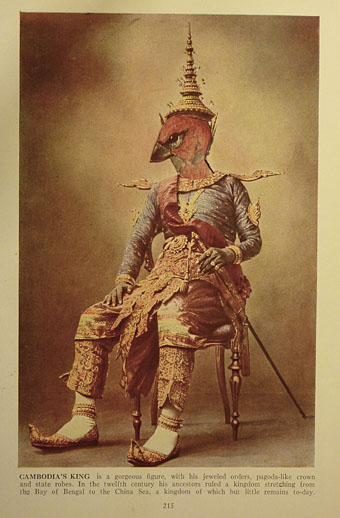
Pan II (2012) by Fredrik Söderberg.

• “Aubade was a surprise success, selling some 5000 copies and going into a second printing and an edition published in America.  Martin was immediately a minor celebrity, being interviewed for articles that couldn’t mention what his book was actually about.” Rediscovering the works of Kenneth Martin.

• “I can’t stand covers which imitate other covers, or which slavishly look like whatever their designated genre is supposed to look like.” Ace cover designer Peter Mendelsund is interviewed.

• At The Outer Church Isablood & Henry of Occult Hand are interviewed about their mixtape.

I’d decided to pay my respects in an unorthodox way, by time-travelling into the period of Thatcher’s pomp, when she occulted the light, alchemised the bad will of the populace and did her best to choke the living daylights out of the awkward, sprawling, socially coddled essence of metropolitan London. Hers was a tyranny of the suburbs operating from a position of privilege at the centre: she might have invested in a Dulwich retirement property, but she couldn’t sleep in it.

Iain Sinclair visits Tilbury on the day of the Thatcher funeral. Related: Iain Sinclair and Jonathan Meades in Conversation, Oxford Brookes University, March 2013.

Ormond Gigli’s best photograph: women in the windows in Manhattan. See it full size here.

Balzac and sex: How the French novelist used masturbation to fuel his writing process.

• At Dangerous Minds: Kenneth Williams and John Lahr discuss Joe Orton in 1978.

• Yet more Bowie: Sukhdev Sandhu reviews Ziggyology by Simon Goddard.

The Spectacular, Wild World of Tenjo Sajiki and its Posters.

• In 1967 Susan Sontag made lists of her likes and dislikes.

Stephen Sparks on fin de siècle author Marcel Schwob.

Day Jobs of the Poets by Grant Snider.

James Turrell’s Ganzfeld Experiment.

The Pan Piper (1960) by Miles Davis & Gil Evans | Panorphelia (1974) by Edgar Froese | Pandora (1984) by Cocteau Twins