The Quietened Mechanisms

mechanisms.jpg

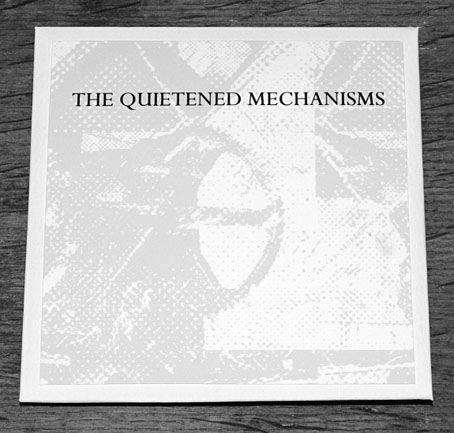
The latest themed collection from A Year In The Country is a surprise for being a dramatic departure from the previous installment, the very musical Shildam House Tapes. The Quietened Mechanisms follows similar the label’s other Quietened releases—Bunker, Cosmologists and Village—in seeking to represent in sound or music a sense of absence or ending. The theme of the new collection is the end of Britain’s industrial revolution, a period of social and geological turmoil whose ruins still litter the landscape, especially in the Midlands and North of England. Consequently, the entries this time are sparse to the point of abstraction, tending to the soundscape end of the musical spectrum.

The album is an exploration of abandoned and derelict industry, infrastructure, technology and equipment that once upon a time helped to create, connect and sustain society.

It wanders amongst deserted factories, discarded machinery, closed mines, mills and kilns and their echoes and remains; taking a moment or two to reflect on these once busy, functioning centres of activity and the sometimes sheer scale or amount of effort and human endeavour that was required to create and operate such structures and machines, many of which are now just left to fade away.

Track list:
1) The Heartwood Institute—Birkby and Allbright Mine
2) Quaker’s Stang—The Hoffman Kiln
3) Depatterning—Of Looms in the Housen
4) Embertides—Ash, Oak & Sulphur
5) Dom Cooper—Metallurgy
6) Field Lines Cartographer—The Mill in the Forest
7) Grey Frequency—Nottingham Canal
8) Howlround—A Closed Circuit
9) The Soulless Party—Rattler to the Tower
10) Keith Seatman—Rural Flight
11) Listening Center—Clarion of the Collapsed Complex
12) Spaceship—The Stones Speak of Short Lives
13) Sproatly Smith—Canary Babies
14) Pulselovers—Fuggles
15) Time Attendant—Hidden Parameters
16) Vic Mars—Watchtower and Engine
17) A Year In The Country—The Structure/Respite

This is post-industrial music in the multiple senses of the term although Dom Cooper’s Metallurgy harks back to the Industrial metal-bashing sub-genre of the 1980s. The pieces that seek to conjure pictures of abandoned places do so in ways that aren’t always so obvious: The Mill In The Forest by Field Lines Cartographer is closer to Gil Mellé’s Andromeda Strain soundtrack than Shirley Collins. Not all the contributions have immediately obvious titles so the accompanying notes are essential: Sproatly Smith’s solemn Canary Babies is a memorial to the women who worked in the Rother Ordnance Factory making bombs and shells, and whose skins were turned yellow by the chemicals they used. This isn’t industrial nostalgia, in other words, but an often poignant commemoration. Another impressive installment in this ongoing series. The Quietened Mechanisms will be released on 2nd October 2018, and is available for order here.

Previously on { feuilleton }
The Shildam Hall Tapes
Audio Albion
A Year In The Country: the book
All The Merry Year Round
The Quietened Cosmologists
Undercurrents
From The Furthest Signals
The Restless Field
The Marks Upon The Land
The Forest / The Wald
The Quietened Bunker
Fractures

Weekend links 430

fiochi.jpg

Il Mago from the IONA Tarot by Giona Fiochi.

• “Russia’s answer to James Bond: did he trigger Putin’s rise to power?” Andrew Male on Max Otto von Stierlitz and Seventeen Moments of Spring. The whole series is on YouTube (with subtitles).

Geeta Dayal reviews High Static, Dead Lines: Sonic Spectres and the Object Hereafter by Kristen Gallerneaux, a new book about the eeriness of sound technology.

• Published next month: Strange Frequencies: The Extraordinary Story of the Technological Quest for the Supernatural by Peter Bebergal.

Let me first introduce an aside: I hate the word “queer” and all its new iterations. “Gay” was awful enough. “‘Gays’ makes us sound like bliss ninnies,” Christopher Isherwood said once. “Queer” will always be for men of my generation a word of violence and hatred, and it separates generations. And while I’m digressing, let me commit blasphemy: the over-emphasis on the Stonewall riots depletes and distorts our history of resistance and the art produced, which is determinedly referred to as “pre-Stonewall.” Resistance occurred years before Stonewall (but there were lots of writers in New York at the time to write about those riots), in San Francisco, Los Angeles, other cities, powerful confrontations with the police, powerful demonstrations. “Pre-Stonewall” writers include William Burroughs, Allen Ginsberg, strong radical voices confronting the grave dangers of the time, violence, prison.

John Rechy talking to Eric Newman about his latest novel, Pablo!, written in 1948 but only now seeing publication

Tangerine Dream performing Identity Proven Matrix, one of the standout pieces from recent album Quantum Gate, live in the studio.

Beloved is the debut solo album by Randall Dunn, record producer and member of the masterful Master Musicians of Bukkake.

• “How will police solve murders on Mars?” Geoff Manaugh on the new frontier of interplanetary law enforcement.

Milly Burroughs on how Verner Panton changed the way the world sees furniture design.

Tim Martin on the new science of psychedelics.

Werner’s Nomenclature of Colours

Next Stop Mars (1966) by Sun Ra & His Arkestra | Mars, The Bringer Of War (1976) by Isao Tomita | Mars Garden (2013) by Juan Atkins & Moritz Von Oswald

Weekend links 429

holter.jpg

• Julia Holter’s next album, Aviary, will arrive next month with a cover design bearing astrological symbols (a cryptic message?) and what looks like a grimoire page in the background, although I may be reading too much into this. Whatever the esoterics signify, the album is a double, and going by the sound of new song I Shall Love 2 it’s going to be a good one. Aviary will be released on 26th October just in time for the witch season.

Donna Ferguson talks to Oscar Wilde’s grandson, Merlin Holland, about the manuscript for The Picture of Dorian Gray which includes more openly homoerotic sentences than were included in the printed versions. A facsimile of the manuscript is now available in a limited, numbered edition from SP Books.

• The final single in the excellent Other Voices series from the Ghost Box label is released later this month. Something Out Of Nothing is by Sharron Kraus and Belbury Poly.

…we’re still trying to operate this new, paranoid society on what amounts to a psychedelic substrate—with little or no awareness of how our sets and settings are determining our results. The set and setting of the advertiser yield addictive behavioral design and persuasive technologies. The set and setting of the investor lead to algorithmic trading and winner-takes-all, extractive businesses. The set and setting of the military lead to drone warfare. The set and setting of the politician lead to targeted propaganda and digital fascism.

America is unconsciously living in a psychedelic landscape and having a bad trip. We don’t realize that we are living in a media environment that offers us an unprecedented capacity over reality. The world may have always been a consensual hallucination to some extent, but never before have we built our world so completely.

The internet is acid, and America is having a bad trip, says Douglas Rushkoff

Photographia Erotica Historica is a tiny leatherbound collection of antique pornography from Goliath Books.

Why is the Federal Government threatening an indie book publisher with $100,000 in fines?

• Undead, undead: my illustrations for Dracula are featured at Dangerous Minds. Thanks!

• The Vinyl Factory meets Japanese composer and musician Midori Takada.

• Exploring HP Lovecraft’s Gothic roots by Dr Xavier Aldana Reyes.

• From 2013: Dario Argento discussing his films with Alan Jones.

• Aurora Mitchell on Electro pioneer Doris Norton.

• Mix of the week: XLR8R Podcast 558 by DJ T.

Aviator (1970) by Michael Chapman | Aviation (2000) by Fluxion | Aviation (2001) by Monolake

Weekend links 428

willink.jpg

Straat met standbeeld (1934) by Carel Willink.

• “[Edward] Gorey, who died in 2000 at 75, was the unequaled master of—of what? Gothic whimsy? The high-camp macabre? Existential black comedy in the Firbankian mode? Essentially unclassifiable, he was, at the end of the day (and it’s always twilight, in Gorey’s stories), simply, inimitably Edwardian.” Mark Dery’s Born to be Posthumous: The Eccentric Life and Mysterious Genius of Edward Gorey, the first full-length biography, will be published in November.

• “In an East Prussian manor house, a Bohemian library, a Bulgarian railway station; in a Venetian citadel, a Breton harbour, a city in the Caucasus, characters encounter not only the vicissitudes of history but also the subtle influences of the uncanny.” Inner Europe by John Howard and Mark Valentine.

• “To the good men I offer the hand of friendship, to the foes of our sex I offer resistance and annihilation!” The next title from Rixdorf Editions (due in November) will be We Women Have no Fatherland (1899), a novel by Ilse Frappan.

• At Dangerous Minds: “The career of Penny Slinger, intrepid surrealist artist of the 1970s, is ripe for rediscovery,” says Martin Schneider.

• Mixes of the week:  FACT mix 668 by Smerz, and XLR8R Podcast 557 by re:ni.

• Dreaming of Walter Benjamin on Walter Benjamin Platz by Roger Gathman.

Alison Kinney on Ludwig II’s obsession with the operas of Richard Wagner.

• A trailer for The Other Side of the Wind, the final film by Orson Welles.

• A happy tenth anniversary to The Quietus.

Wizards (1982) by JD Emmanuel.

The Wizard (1964) by Albert Ayler Trio | The Wizard (1970) by Black Sabbath | Dancin’ Wizard (1973) by Sopwith Camel

Weekend links 427

davis.jpg

Inside an O’Neill Cylinder, an orbital megastructure. Painting by Don Davis, 1975.

• RIP Lindsay Kemp: dancer, actor, choreographer and (if we have to drop names) mentor to David Bowie and Kate Bush. Kemp’s work has been featured here on a number of occasions, particularly his landmark productions of an all-male Salomé, and Flowers, A Pantomime for Jean Genet. There was also considerable overlap with Kemp’s troupe and the films of Derek Jarman via appearances by Kemp himself, David Haughton and the irrepressible Jack Birkett. The Genet production was filmed in 1982, and is now available on DVD. (There’s also a rougher copy with unmatched audio and video.) From 1970: Pierrot in Turquoise, or The Looking Glass Murders, a Commedia dell’arte performance for Scottish TV featuring David Bowie. And reversing roles, Mick Rock’s video for Bowie’s John, I’m Only Dancing featuring Kemp and company.

• At Expanding Mind: Erik Davis in conversation with activist and writer David Nickles about “the DMT Nexus, psychedelic militancy, extraction tek, the Statement on Open Science for Psychedelic Medicines, MAPS, and the trouble with for-profit psilocybin companies”.

• From the end of August to January 2019: Spellbound at the Ashmolean; “Spellbinding stories, fascinating objects…from crystal balls and magic mirrors to witch bottles and curse poppets”.

On Earth, as on the International Space Station, the collective misperception of a flat plane helps build community and culture. We are all equal in our geometric relationship to one another. The reality, of course, is that we do not stand parallel. Each of our bodies corresponds with a distinct radial vector on the surface of a sphere, pointing away from a common center that we can never perceive or occupy. Our vectors diverge by imperceptible angles.

In “inside-out” worlds like the Bernal Sphere and the concave Earth, the situation is reversed. Our feet all point outward, into an inaccessible, but technologically habitable void, while our heads point inward, some of us apparently “upside-down.” Standing, we rise toward a visible center, which can be reached simply by climbing a hill, strapping on wings, and jumping into the air, as low-tech as Icarus.

The Shape of Space by Fred Scharmen

Michael Moorcock again, interviewed this time by Bernard Braden in 1968. I think this one was for a Braden TV series which was never broadcast.

• “Stupid things are best”: Neil Fox on Conny Plank: The Potential of Noise, a documentary about the great music producer.

• Mixes of the week: XLR8R Podcast 556 by Helios, and An Ode to Eris with An Other Ode to Eris by The Ephemeral Man.

• A monstrous primer on the works of HP Lovecraft by Emma Stefansky. With illustrations by Michael Bukowski.

Silent Agents by Julius-Christian Schreiner: photographs of hostile architecture from around the world.

• Back to the Futuro: Mark Hodgkinson on the spaceship house that landed in Yorkshire.

• The Great Chinese Art Heist by Alex W. Palmer.

Rhizome: a new recording by Drew McDowall.

The Starman Tarot

Mad Pierrot (1978) by Yellow Magic Orchestra | Spellbound (1981) by Siouxsie And The Banshees | Sphere (2011) by Emptyset