Weekend links 369

popovic.jpg

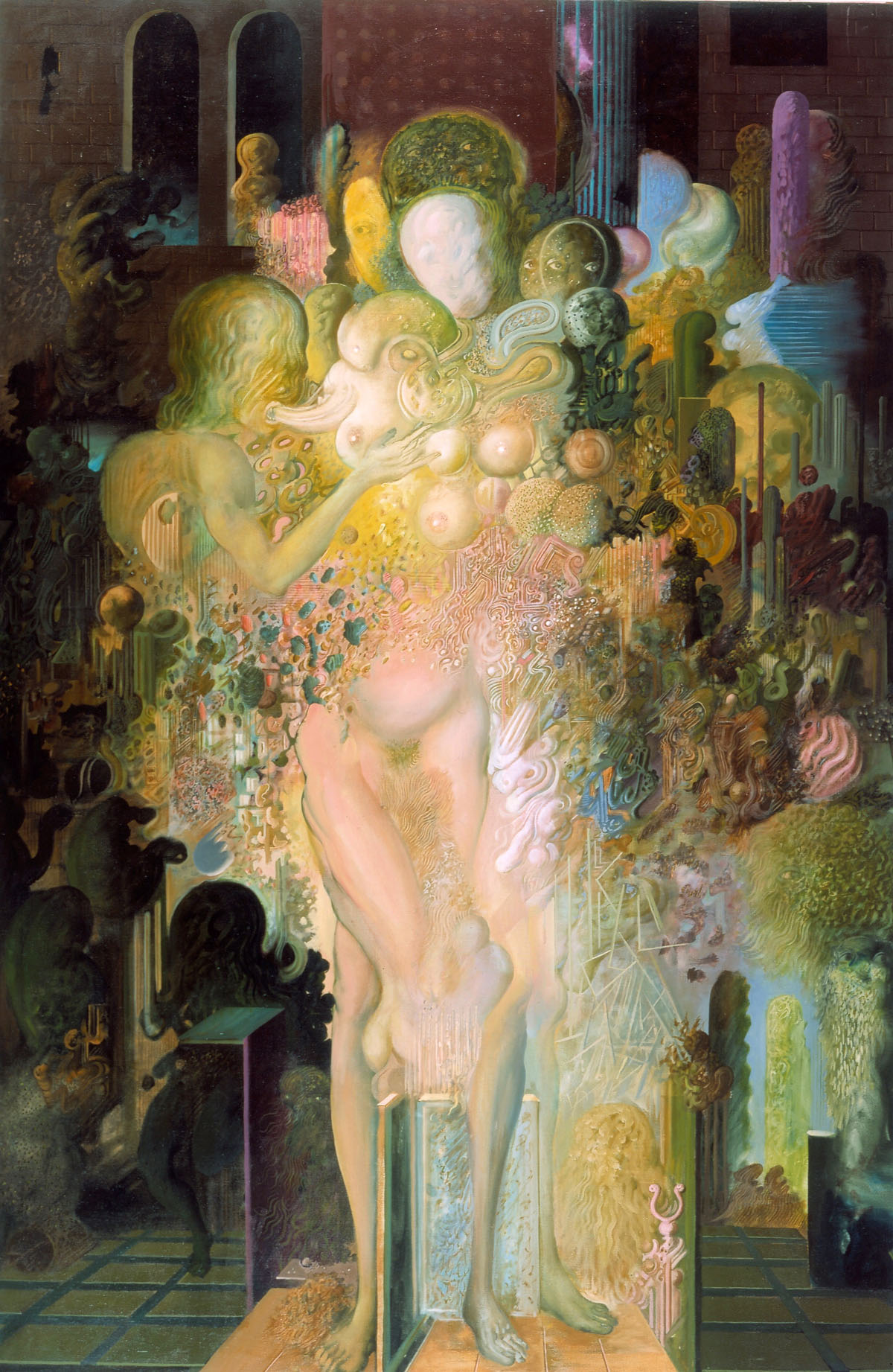
Untitled painting by Serbian Surrealist Ljuba Popovic (1934–2016). I missed the announcement of Popovic’s death last year.

Bryan Washington on the radical grace of Gengoroh Tagame: My Brother’s Husband and the tradition of gay manga. Where bara artists are concerned, I favour the work of Mentaiko Itto. Bruno Gmünder recently published a collection in English.

• At madrotter-treasure-hunt: Post punk from old tapes; “Some live recordings from concerts in Holland from Charles Hayward and from This Heat, Metabolist, Pere Ubu, Holger Hiller…”

Dennis Cooper‘s favourite fiction, poetry, non-fiction, film, music, art & internet of 2017 so far. (Thanks again for the nod to this blog!)

The Weird and the Eerie is an evocative and carefully-written short study in cultural aesthetics. Far from the familiar line-up of vampires, zombies, and demons, Fisher’s eclectic examples speak directly to one of the central themes of the horror genre: the limits of human knowledge, the metamorphic shapes of fear, and the blurriness of boundaries of all types. His simple conceptual distinction quickly gives way to reversals, permutations, and complications, ultimately refusing any notion of a monstrous or alien unhumanness “out there”; with Fisher, the unhuman is more likely to reside within the human itself (or as Lovecraft might write it, “the unhuman is discovered to reside within the human itself”).

Many books on the horror genre are concerned with providing answers, using varieties of taxonomy and psychology to provide a therapeutic application to “our” lives, helping us to cathartically purge collective anxieties and fears. For Fisher, the emphasis is more on questions, questions that target the vanity and presumptuousness of human culture, questions regarding human consciousness elevating itself above all else, questions concerning the presumed sovereignty of the species at whatever cost – perhaps questions it’s better not to pose, at the risk of undermining the entire endeavour to begin with.

Eugene Thacker reviewing The Weird and the Eerie by Mark Fisher. I’ve not read Fisher’s book yet (I’m intending to) but I was pleased to see one of my illustrations of R’lyeh accompanying the piece.

• At Dirge Magazine: Gwendolyn Nix on Twisted Labyrinths, Dark Mazes, and Ancient Methods of Reflection.

• Mixes of the week: XLR8R podcast 498 by Nicola Kazimir, and Secret Thirteen Mix 227 by Sculpture.

AO Scott reviews Endless Poetry, Alejandro Jodorowsky’s surreal self-portrait.

Maze Of Love (1968) by The Dave Clark Five | Audiomaze (2000) by Tabla Beat Science | Into The Maze (2012) by Pye Corner Audio

Weekend links 364

focusgroup.jpg

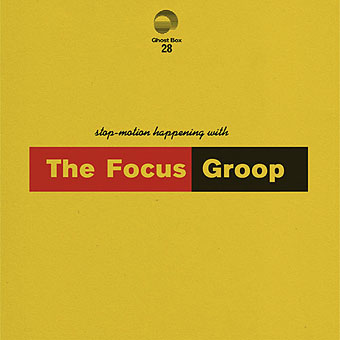
Stop-Motion Happening with The Focus Groop is a new album by The Focus Group (now a Groop, apparently, à la Stereolab), and the next release on the Ghost Box label. Design, as always, by Julian House.

• At Dennis Cooper’s: Sypha presents…Voyager en Soi-Même: a Tribute to JK Huysmans’ Là-Bas. Related: Henry Chapront’s illustrations for a 1912 edition of Huysmans’ novel.

• At the BFI: Graham Fuller on Penda’s Fen and the Romantic tradition in British film; Pamela Hutchinson and Alex Barrett choose 10 great German Expressionist films.

• The Provenance of Providence: Chris Mautner on the Lovecraftian comic series by Alan Moore and Jacen Burrows.

Luke Turner on Sunn O))): the ecstatic doom metallers turning rock concerts into “ritualist experiences”.

• At Dangerous Minds: The homoerotic “needleporn” art of Zachary Nutman.

Conor McGrady on the visual art of Nurse With Wound’s Steven Stapleton.

• Collage and Mechanism: Anita Siegel’s art for Doubleday Science Fiction.

• Mix of the week: My name is Legion: Chapter 1 by The Ephemeral Man.

ChrisMarker.org is asking for small donations to help keep it running.

• 1967 is the year pop came out, says Jon Savage.

Allen Ginsberg’s Howl goes online.

Groupmegroup (1981) by Liquid Liquid | If I Were A Groupie (1995) by Pizzicato Five | Group Four (1998) by Massive Attack

Weekend links 363

sommers.jpg

The Constant Drumbeat of Terrible News (no date) by Allison Sommers.

• Nadia Khomami on Gay UK: Love, Law and Liberty, an exhibition at the British Library. Related: Simon McCallum‘s potted history of LGB characters on British screens. Elsewhere: writer and philanthropist Chuck Forester on gay sex in the 1970s.

The Panic Fables: Mystic Teachings and Initiatory Tales by Alejandro Jodorowsky. Finally available in English, a collection of all the comic strips written and illustrated by Jodorowsky when he was living in Mexico in the 1960s.

• A trailer for the restored print of The Fabulous Baron Munchausen (1961) by Karel Zeman. Related: collage designs by Graphic Manipulator for a Japanese collection of Zeman’s films.

• “Whether divining ancient wisdoms or elevating the art of cold reading, Tarot is a form of therapy, much like psychoanalysis,” says James McConnachie.

James Reith on “the Icelandic publisher that only prints books during a full moon – then burns them”.

• Mixes of the week: Wire 400 Mix #6 by Emptyset, and Secret Thirteen Mix 223 by Constantine.

• Mud And Flame: Penda’s Fen re-examined by Matthew Harle and James Machin.

Tilda Swinton in a Leonora Carrington-inspired fashion shoot for i-D magazine.

• At Dennis Cooper’s: Spotlight on William Burroughs’ The Wild Boys.

Applied Ballardianism: A Theory of Nothing by Simon Sellars.

• At Dangerous Minds: The Dark Rift by Jim Jarmusch’s Sqürl.

French Underground Rock: 1967–1980; a Discogs list.

Suzanne Ciani‘s favourite albums.

Infinite artwork: Untitled, 2017

Rip, Rig And Panic (1965) by The Roland Kirk Quartet | Panic (1984) by Coil | Flash Of Panic (1994) by Axiom Ambient

The art of John Thompson

thompson01.jpg

Cosmic Trigger: Final Secret of the Illuminati (And/Or Press, 1977).

John Thompson’s detailed, mystical and erotic illustrations gained prominence in the San Francisco comic scene in the late 1960s–early 1970s, appearing in a handful of titles drawn in their entirety by Thompson or done as collaborations with local artists including Robert Crumb. But it’s as an illustrator of Robert Anton Wilson’s Cosmic Trigger that Thompson is probably best known, something I was reminded of recently with the opening of Daisy Campbell’s play based on Wilson’s book. Wilson had seen Thompson’s comics work, and approached him as illustrator of his (ostensibly) non-fiction sequel to the very popular Illuminatus! trilogy, an encounter that Thompson elaborates on in this interview.

thompson02.jpg

Here in the UK the comics published by Last Gasp et al weren’t always easy to find (imported comics were still being seized by UK customs into the 1990s), so Cosmic Trigger was my first introduction to Thompson’s art via a sighting of the US edition in a London shop in 1978. The UK paperback was a disappointment when it appeared a year or so later: Thompson’s cover art had been replaced with something more generic but they did at least retain the interior illustrations, albeit shrunk to fit the smaller book size. Many of the drawings in Cosmic Trigger had appeared already in Thompson’s comics which may seem surprising when they don’t resemble typical comic pages, but Thompson’s comics are unusual even compared to the undergrounds of the time. The undergrounds were most obviously radical in the wildness and excess of their content, especially where sex and drugs were concerned. But there’s a smaller subset of underground strips whose approach to narrative is so far removed from typical comic storytelling as to verge on the abstract. Victor Moscoso’s comics exemplify this style but even an ostensible traditionalist like Robert Crumb could experiment with the form (see his Cubist Bee Bop Comics in XYZ, 1972). Thompson’s comics are of this type at all times, blending motifs from a variety of myths and religions with Tantric yoga, astrology, alchemy and pop culture. When speech balloons appear they often contain allusive, esoteric phrases along with untranslated Greek or Hebrew text. It’s a beguiling mix which shows the ability of the comic book to do more than simply ape the stories of film or television. As with many other things from the late 1960s it’s a direction that hasn’t been pursued very much since.

thompson03.jpg

The interview with Thompson explains why he seemed to vanish after the work for Cosmic Trigger: he says he quit comics and illustration to become a therapist although he still creates private work. The examples here are from The Kingdom of Heaven is Within You (1969), Kukawy [sic] Comics 1 (1969; “Kukawy” is actually a Greek word meaning Cyclops), Tales from the Sphinx 2 (1972) and Eternal Comics (1973).

thompson04.jpg

Continue reading “The art of John Thompson”

Weekend links 359

azuma.jpg

An urban scene from Yotsuba&! by manga artist Kiyohiko Azuma.

• The resurgence of interest in Alice Coltrane’s music is very welcome even if she joins for the moment the list of those artists (usually women: see Leonora Carrington) tagged by editors as “lost”, “forgotten”, “unrecognised”, etc. Alice Coltrane was only ever lost if you weren’t paying attention, and was notable enough fifteen years ago to be given the cover of The Wire magazine. Articles appearing this week have been prompted by a compilation of the devotional music that Coltrane recorded for a series of self-released cassettes in the 1980s. Geeta Dayal writes about the creation of the ashram recordings, while Stewart Smith suggests starting points for new listeners.

• Mentioned here before, but there’s now a page for the book: a new edition of Hashish (1902) by Oscar Schmitz will be published by Wakefield Press in November. “A collection of decadent, interweaving tales of Satanism, eroticism, sadism, cannibalism, necrophilia, and death”, illustrated by Alfred Kubin.

• Mixes of the week: A Dark Entries mix for the 400th issue of The Wire, Procedure, LA, April 25, 2017 by Pinkcourtesyphone, and Secret Thirteen Mix 220, a 4-hour epic by Ricardo Gomez Y De Buck.

• More off-the-beaten-path film lists: Sarah Lyons for Dirge Magazine on three occult documentaries, and Terry Ratchett for Dennis Cooper on 18 needlessly obscured avant-garde films.

• An Island of Peace: James Conway on Amanda DeMarco’s new translation of Walking in Berlin: A Flâneur in the Capital by Franz Hessel.

Ryuichi Sakamoto talks to Aaron Coultate about overcoming cancer, The Revenant and his new album, async.

Ingrid D. Rowland on Caravaggio: The Virtuoso of Compassion.

• “I think I am weirdly politically correct,” says John Waters.

Mnemonic Generator

• Berliner Nächte Part 1 (1990) by Seigen Ono | Berlinerstrasse (1995) by Coco, Steel & Lovebomb | Berlin (1998) by Pole