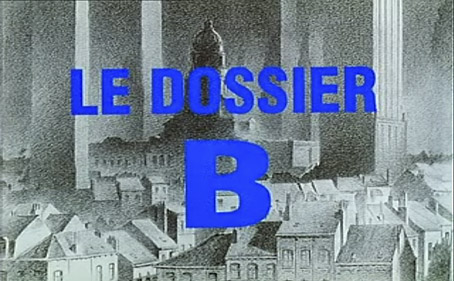
Le Dossier B by Schuiten and Peeters

db01.jpg

Almost ten years have elapsed since I devoted a week of blog posts to one of my favourite fantastic creations, the Obscure World/Obscure Cities of Belgian artist-and-writer team François Schuiten and Benoît Peeters. Schuiten and Peeters’ mythos is a multi-media project with a series of bande desinée albums as its core, a cycle of stories which introduce the reader to some of the cities in the Obscure World (a “counter-Earth” on the opposite side of our Sun), and which are connected by recurrent characters and motifs. Since the completion of the core series, Schuiten, with occasional help from Peeters, has expanded the mythos to encompass other books that flesh out some of the world’s invented history and its connections to our own world, together with other manifestations such as art exhibitions and music releases. Le Dossier B (1995) is a peripheral Obscure World production, a 54-minute TV documentary which entangles the genuine history of 20th-century Brussels with an invented secret society who believe in the existence of a twin city, Bruzel, that intersects with the Belgian capital.
db02.jpg

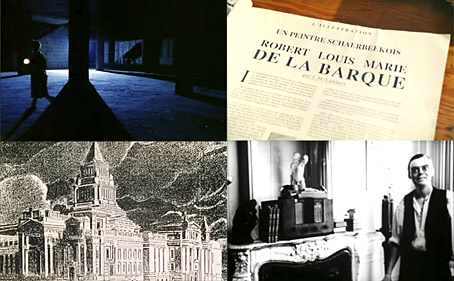
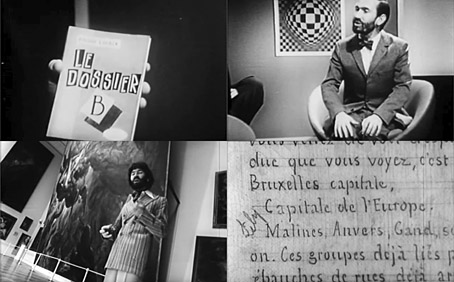
Le Dossier B was directed by Wilbur Leguebe from a script by Leguebe with Schuiten and Peeters. Valérie Lemaître plays the on-camera investigator, “Claire Devillers”, while artist and writer appear in roles that match their personalities. Schuiten is seen in silent footage as “Robert de la Barque”, an artist whose obsession with Brussels’ vast Palace of Justice provides clues to the Bruzel mystery via the eccentricities of its architect, Joseph Poelaert. Peeters appears later in the investigation as “Pierre Lidiaux” the author in 1960 of Le Dossier B (a book which has since vanished), his own study of the connections between Brussels and Bruzel. We first see Lidiaux being interviwed on a TV arts show, then later as the presenter of his own eccentric and unfinished film about Antoine Wiertz, the real-life Belgian painter of vast canvasses on morbid subjects whose museum Lidiaux explores. Aside from the well-realised historical fakery, one of the pleasures of Leguebe’s witty and imaginative documentary is the spotlight it throws on the history and culture of Brussels and Belgium. I hadn’t realised, for example, that the Wiertz Museum is so close to the European Parliament building which was still under construction when the film was being made. Elsewhere there are references to Magritte, Delvaux and Art Nouveau architect Victor Horta, and we catch a glimpse of work by another great Belgian painter, Jean Delville.
db03.jpg

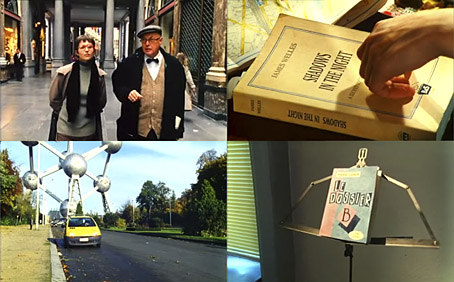
The last third of the film is based around the researches of one James Welles (Adrian Brine), a British historian whose book-length study, Shadows in the Night: A Secret Society in Belgium, explores the connections of yet more historical figures with the Bruzel mystery, including the aforementioned Horta and chemist Ernest Solvay. The historian’s surname may be taken as a deliberate choice: Orson Welles was the director of another documentary mixing fact and fiction, F for Fake, while Welles’ appearance as Falstaff in Chimes at Midnight provided Schuiten with the model for the central character in La Tour, one of the albums in Schuiten and Peeters’ Obscure Cities series.
db04.jpg

Some of this territory is explored in another of the Obscure Cities albums, Brüsel, especially the building of the Palace of Justice and the concept of “Brusselisation”, a pejorative French term for the rapid demolition of historical quarters of a city to make way for new construction. Where Brüsel has the freedom of the comics medium to refashion the capital in a fantastic manner, Le Dossier B uses the material of our world to suggest another city (possibly the one depicted in the album) whose existence we never see. Apart, that is, for the suggestion near the end of the film that the Bruzel of the secret society is the Brussels of today, a city which has overwritten the Brussels of a century ago, just as the invented encyclopedia in Borges’s Tlön, Uqbar, Orbis Tertius gradually changes the world at large to match its contents.

Le Dossier B is available on DVD but seems to be sold out for now. Alternatively, it may be watched at YouTube in an unsubtitled copy that’s been uploaded in the wrong aspect ratio. The really determined may wish to do what I did: download the video, grab some English subtitles, then watch it in VLC with the aspect ratio set to 16:10. A lot of messing around but it works.

(My thanks to Brussels resident Anne Billson for the YT link!)

Previously on { feuilleton }
Urbatecture
Echoes of the Cities
Further tales from the Obscure World
Brüsel by Schuiten & Peeters
La route d’Armilia by Schuiten & Peeters
La Tour by Schuiten & Peeters
La fièvre d’Urbicande by Schuiten & Peeters
Les Murailles de Samaris by Schuiten & Peeters
The art of François Schuiten
Taxandria, or Raoul Servais meets Paul Delvaux
Weekend links 467

td.jpg

Artwork by Kuldar Leement (maybe…I’ve yet to see a credit for this). No, it’s the work of Rupert Lloyd.

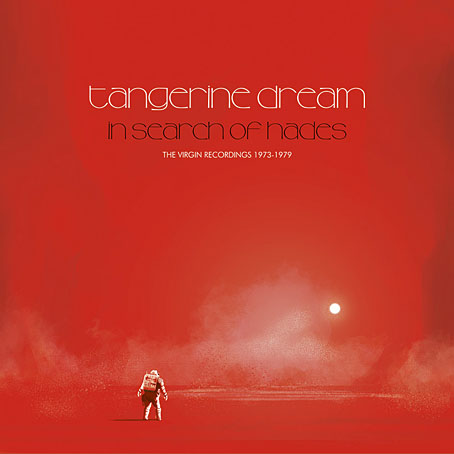
In Search Of Hades: The Virgin Recordings 1973–1979, is a retrospective box set comprising 16 CDs and 2 blu-ray discs devoted to the first phase of Tangerine Dream’s output on the Virgin label. For enthusiasts of the group’s Virgin recordings (myself among them) this is very welcome, especially for the albums being given the Steven Wilson remix treatment, and the wealth of rare and unreleased material. In addition to several live concerts the box will include the complete Oedipus Tyrannus theatre soundtrack, the overture of which appeared on a compilation in 1975 but has since been unavailable outside bootlegs. Baroque 2 is a taster of the unheard soundtrack. The box itself will be released on 14th June. Related: Edgar Froese interviewed on a US radio station in 1974. Among the topics of discussion are German music of the time, Tangerine Dream’s dissatisfaction with Ohr Records, and their happiness at moving to Virgin.

• “As the witch-burning begins, the image gradually dissolves into a stroboscopic onslaught of neon colours accompanied by rapid, high-pitched ringing and a thundering drone.” Don’t come to Gaspar Noé for social realism. Lux Aeterna is his new thing.

• An ode to the ultimate camp film: Nathalie Atkinson on Boom!, Joseph Losey’s adaptation of a Tennessee Williams play, and (unsurprisingly) one of John Waters’ favourites.

“Adhesive,” a term borrowed from phrenology, was Whitman’s synonym for homosexuality. According to gay studies pioneer William A. Percy, “the term became part of the special vocabulary of the emerging homosexual subculture of the nineteenth century,” which Whitman and his coterie would have understood. Despite Whitman’s private vows to resist temptation, and to be more aloof, he continued to court young men until he died. One of the final photos of Whitman, taken at the Camden docks in 1890, shows the poet with his handsome male nurse Warren Fritzinger. “I like to look at him—he is health to look at: young, strong, lithe,” Whitman told Traubel.

Jeremy Lybarger on Walt Whitman’s boys

Psychedelic Promos & Radio Spots: 8 volumes, over 500 tracks, all free downloads. Hear many of the most popular groups of the late 60s shilling for commercial radio stations.

Hildur Guðnadóttir used only sounds from a nuclear plant in her score for Chernobyl.

• US museums of the week: Poster House, NYC, and The Moogseum, Asheville, NC.

• “Yes, witches are real,” says Pam Grossman, “I know because I am one.”

• Photos by Chas Gerretsen from the set of Apocalypse Now.

• Geeta Dayal on the brainwave music of David Rosenboom.

• Mix of the week: Self-Titled NE285 Mix by Kevin Martin.

• RIP Roky Erickson

Boom Boom (1961) by John Lee Hooker | Boom Stix (1962) by Curley & The Jades | Boom! (1992) by The Grid

Weekend links 466

maar.jpg

The Simulator (1936) by Dora Maar.

• Surprise of the week for me was the discovery of a new album, Kshatrya – The Eye Of The Bird, by cult French composer Igor Wakhévitch. This had been out for a while but I’d managed to miss the announcements. The music was recorded in 1999 so isn’t exactly new but it’s the first new Wakhévitch release (as opposed to a reissue or compilation) since Let’s Start in 1979. Very good it is too, almost completely electronic but not as discordant as his synth-dominated Hathor album.

• “Popol Vuh is a Mass for the heart.” Gerhard Augustin talks to Florian Fricke about Popol Vuh’s music in a “rare” (lost? previously unseen?) interview. Undated but the City Raga album is referred to as a recent release so it’s probably around 1995.

Brian Dillon on the voraciousness and oddity of Dora Maar’s pictures. Related: Rick Poynor on The Simulator by Dora Maar.

The Secret Ceremonies: Critical Essays on Arthur Machen, edited by Mark Valentine and Timothy J. Jarvis.

Juliette Goodrich on the tale of the Buchla synthesizer, the repair engineer, and a dormant drop of LSD.

Scott Tobias on Midnight Cowboy at 50: why the X-rated best picture winner endures.

• A Hidden History of Women and Psychedelics by Mariavittoria Mangini.

• Previews of Chords, the new album by composer Ellen Arkbro.

• Mix of the week: Secret Thirteen Mix 290 by Mark Stewart.

• “Somehow I became respectable,” says John Waters.

• At Dennis Cooper’s: Walerian Borowczyk Day.

• The Bandcamp Guide to Earth.

Gén #1 by Ray Kunimoto.

Secret Ceremony (Theme From Brond) (1987) by Scala (Bill Nelson & Daryl Runswick) | Healing Ceremony (1990) by African Head Charge | Ceremony Behind Screens (1995) by David Toop

Weekend links 465

palladini.jpg

The Star (1970) from The Aquarian Tarot by David Palladini.

• Artist David Palladini died in March but I only heard the news this week. His poster for Werner Herzog’s Nosferatu has been a favourite of mine ever since the film’s release, while some of his other works have featured here in the past. Still popular among Tarot users is the Aquarian Tarot (1970), a deck published a few years after Palladini had helped with the production of the Linweave Tarot. From the same period as the Aquarian deck is a set of Zodiac posters, all of which exhibit Palladini’s distinctive blend of Art Nouveau and Deco stylings. In addition to posters, Palladini produced book covers and illustrations, and even a few record covers. A book collecting all of this work would be very welcome.

Erotikus: A History of the Gay Movies (1974? 75? 78?): Fred Halsted presents a 90-minute history of American gay porn, from the earliest beefcake films to the hardcore of the 1970s, some of which Halsted also helped create. Related: Centurians of Rome [sic]: Ashley West and April Hall on the bank robber who made the most expensive gay porno of all time.

Peter Bradshaw reviews Too Old to Die Young, a Nicolas Winding Refn TV series described as “a supernatural noir”. Sign me up.

Naomi Wolf’s Outrages establishes the context for [John Addington] Symonds’s desperate efforts to justify his own sexual feelings. Since he was born in 1840, he was 15 when the first edition of Walt Whitman’s Leaves of Grass appeared, the same year that legislation in Britain streamlined the laws against sodomy and ensured that men found guilty of it served long prison sentences. With intelligence and flair, Wolf uses the various responses to Whitman to show the levels of intense need in the decades after the publication of Leaves of Grass for images and books that would rescue homosexuality from increasing public disapproval.

Colm Tóibín reviews Outrages: Sex, Censorship and the Criminalisation of Love by Naomi Wolf

• Record label Dark Entries has discovered 40 more reels (!) of music by Patrick Cowley dating from 1974 to 1979.

• “Is Stockhausen’s Licht the most bonkers operatic spectacle ever?” asks Robert Barry.

• Sex, Spunk, Shoes and Sweet Satisfaction: A Q&A with artist Cary Kwok.

• Tripping his brains out: Eric Bulson on Michel Foucault and LSD.

• Paul O’Callaghan chooses 10 best Dennis Hopper performances.

• “More obscene than De Sade.” Luc Sante on the fotonovela.

• Karl Blossfeldt’s Urformen der Kunst (1928).

• The Strange World of…Gong

Neonlicht (1978) by Kraftwerk | Brüder Des Schattens, Söhne Des Lichtes (1978) by Popol Vuh | Lichtfest (2017) by ToiToiToi

Weekend links 464

picaud.jpg

13 Circles by Julien Picaud.

• The 50th anniversary of the Apollo Moon landing is only two months away so it’s no surprise that Brian Eno’s Apollo: Atmospheres And Soundtracks is being reissued. The latest release will include an additional disc of new music by Eno with his collaborators from the original sessions, Daniel Lanois and Roger Eno. Related: the Apollo 11 Command Module as an explorable (and printable) 3D model.

• From the real Moon to the presence of the satellite in myth and history, the next book from Strange Attractor will be Selene: The Moon Goddess & The Cave Oracle, a volume which is also the final work by the late Steve Moore. With a foreword by Bob Rickard, and an afterword by Alan Moore.

• Guitar-noise maestro Caspar Brötzmann released a handful of thrilling albums in the 1990s then disappeared from view. Spyros Stasis talked to Brötzmann about his hiatus and his recent resurfacing on the Southern Lord label.

• A year late, but I didn’t know Paul Schrader had written an updated introduction to his 1972 study of Ozu, Bresson and Dreyer, Transcendental Style in Film. I love the idea of “The Tarkovsky Ring” as a directorial event horizon.

• “Nothing written is utterly without value, as I proved to myself by reading two random works.” Theodore Dalrymple on the lasting worth of “worthless” books.

Cinemagician: Conversations with Kenneth Anger, a documentary by Carl Abrahamsson about the director/writer/magus.

• Mirror, Mirror: When Movie Characters Look Back at Themselves by Sheila O’Malley.

• From Susan Sontag to the Met Gala: Jon Savage on the evolution of camp.

• Mix of the week: Secret Thirteen Mix 289 by Mondkopf.

• Portrait of the Artist as a Consumer: Anne Billson.

• A video by IMPATV for Religion by Teleplasmiste.

Obscure Sound ~ Cosmic: a list.

Mira Calix‘s favourite records.

Transcendental Overdrive (1980) by Harald Grosskopf | Transcendental Moonshine (1991) by Steroid Maximus | The Transcendent (1999) by Jah Wobble