Weekend links 189

wilson.jpg

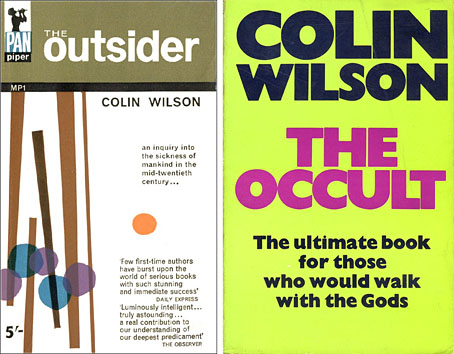
The Outsider (1956), 1963 edition; The Occult (1971), 1973 edition.

The cover of the 1973 UK paperback of Colin Wilson‘s mammoth overview of occultism can still be offered as a pinnacle of hyperbole. The book itself is a very serious and informative study but its success set Wilson on a path as a writer about the paranormal where he’d previously been concerned with literature, philosophy and psychology. For many critics this finished his already shaky reputation as a serious thinker. He continued to write about philosophy and literature in subsequent books but dubious speculations about Atlantis are always more commercially attractive than studies of Nietzsche, hence the proliferation of lost continents in the later part of a bibliography which the Wilson website lists at 114 titles. Wilson was a maverick intellectual whose curiosity ignored many of the boundaries that restrained his metropolitan contemporaries; he was also an autodidact of a type that seems to irritate the university-educated. Mentions of his name in British newspapers were frequently couched in sneering or dismissive terms. His current reputation can be measured by the lack of attention the news of his death has prompted in the UK at the time of writing. (That said, dying on the same day as Nelson Mandela was unfortunate timing.)

Savoy Books published an edition of Wilson’s crime novel, The Killer, in 2002. I designed that volume, rather badly, I think. In 2004 Robert Meadley wrote a book-length reaction to Wilson’s autobiography, Dreaming to Some Purpose, which can be downloaded for free from Savoy. In it Meadley mounts a robust defence of Wilson against the broadsheet termagants. Elsewhere: the only newspaper obituary so far is at The Times (subscription required); Colin Wilson on Desert Island Discs in 1978; Gary Lachman interviewing Wilson for Fortean Times in 2004; musician Anthony Reynolds discussing his collaboration with Wilson.

• “Art, music and a mind-blowing voyage of discovery”: Richard Neville on the late Martin Sharp. At Design Observer Rick Poynor looks back at Sharp’s book and magazine illustrations of the 1960s. Of particular note is Sharp’s contribution to the “Magic Theatre” issue of Oz magazine, a unique combination of collaged visuals and text which Alan Moore often refers to as a favourite work. (See issue 12 of Moore’s Promethea, “The Magic Theatre of the Mind“.)

• “The naked woman in art isn’t unusual, but we have trouble viewing the male body as a sexual, or artistic, object,” says James Polchin.

But how can anyone be bored when there’s always death to think about? Every day. Every hour. Don’t you? All the rest is just evading or glossing the real subject of our lives. Beckett, again, the maestro of death: Never but the one matter. The dead and gone. The dying and the going. From the word go. I too shall cease and be as when I was not yet, only all over instead of in store.

Jenny Diski on death and dying.

• A teaser trailer for The Dreamlands, a film by Huan Vu (Die Farbe) based on HP Lovecraft’s Dream Cycle.

• “On Watching Wages of Fear with my 11-Year-Old Daughter” by Debra Morris.

Abram Games’ “bat wings” BBC logo is 60 years old. See it in action here.

• At Strange Flowers: Romaine Brooks‘ portraits of her famous friends.

• At Front Free Endpaper: Mervyn Peake illustrates Treasure Island.

The Great God Pan (plus satyrs and fauns) at Pinterest.

Dan Wilson on “Electric Music” on the Victorian stage.

• Mix of the week: Fact Mix 414 by Julianna Barwick.

• The BFI chooses 10 great British rural horror films.

Dunwich – The search for Britain’s Atlantis.

The Grand Canyon filled with fog.

• The Bells of Dunwich (1975) by Stone Angel | O.O.B.E. (1992) by The Orb (feat. Colin Wilson) | Why We Make It Difficult On Ourselves (2010) by Anthony Reynolds & Colin Wilson
The Weird

weird.jpg

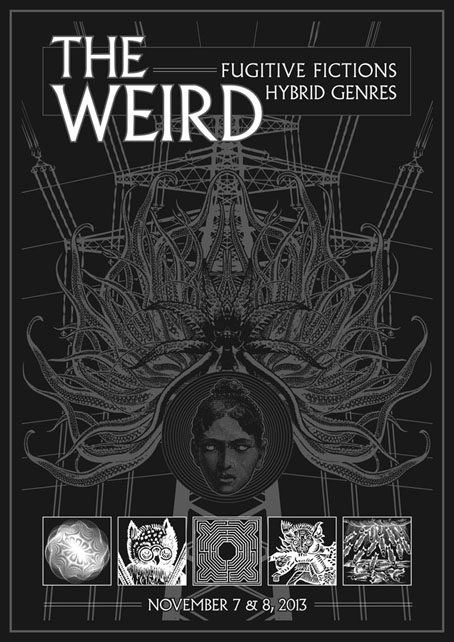
This is a piece of promotional art I’ve done for The Weird: Fugitive Fictions/Hybrid Genres, a two-day event taking place in London next month at the Horse Hospital and the Institute of English Studies, University of London. Organiser Tim Jarvis asked me to contribute an unspecified something; I suggested a poster but that idea proved to be too ambitious, somewhat fortuitously since I had an elaborate design in mind that the current workload would have compromised. This design is the distilled version. The five inset images are a result of having written this post at the beginning of the month. The bespectacled owl is an alchemical illustration from a book I’d found in a charity shop a couple of days earlier.

The event looks like a good one. In addition to the opportunity to see M. John Harrison and others reading on day one, there’s a host of talks on day two that push many of my cult buttons, including discussion of the works of Nigel Kneale and William Hope Hodgson. There’s also Dr Benjamin Noys on “Full Spectrum Offence: The Neo-Weird of Savoy” which I guess may touch on some of the work I’ve done for Savoy Books with David Britton. I’ve got a couple of deadlines looming at the moment so it’s unlikely I’ll be able to attend but I’ll certainly be there in spirit.

Weekend links 181

eye.jpg

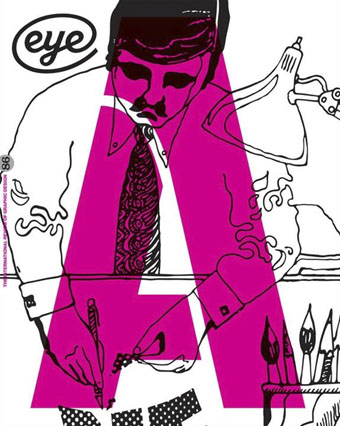
Cover of Eye no. 86 vol. 22, 2013, a type special. Detail from 1970s Letratone brochure, overprinted by character from the Marsh stencil alphabet.

The new edition of Eye magazine includes my essay on the evolution and aesthetics of steampunk. In the same issue Rick Poynor’s feature on the prints of Eduardo Paolozzi mentions a forthcoming book by David Brittain about the artist’s associations with New Worlds magazine in the 1960s. I designed the Paolozzi volume which will be published by Savoy Books in a few weeks’ time. More about that later.

Still on steampunk, KW Jeter notes its popularity among the younger crowd: “If some old fogey peering through his smudged bifocals can’t discern the cool and important stuff going on, such as the tsunami of anarchic multiculturalists using the steampunk scalpel to dissect the past and reassemble it like a two-dollar watch, that’s his loss; the readers are picking up on it.”

• Musicians interviewed: Rhys Chatham: “The reason I got into trumpet playing is because I wanted to play like [Black Sabbath guitarist] Tony Iommi.” | James Ginzburg: “One of the strongest feelings I had was that the act of sitting down and making dance music was like playing a video game…I felt disconnected from it…” | Julia Holter: “I love working with the voice, I love mystery, I love creating atmosphere.” | Roly Porter: “I sit at home and listen to folk and blues from before I was born. I listen to a lot of dub and reggae and classical music. These are all genres which to me seem really interlinked and influential.”

• At Kickstarter: From the director of Lovecraft: Fear of the Unknown, a short film entitled Do Not Disturb. “Two men are forced to share a motel room on a dark & stormy night. One man’s snoring starts to summon creatures into our world.”

The Notting Hill of the 1960s – with Moorcock’s marriage, children, celebrity, the editorship of New Worlds, the collaboration with JG Ballard, Brian Aldiss and the rest – became the proving ground for the shape-shifting Carnaby Street dandy Jerry Cornelius. But all the numerous Moorcock characters, those undying and born-again clones, have a part to play in his “multiverse”, a concept he developed alongside the earlier model suggested by John Cowper Powys. Moorcock’s astonishing catalogue of speculative fiction works to prove his key equation, which is based on meta-temporal parallel worlds drawn from HG Wells, Chaos Theory, String Theory, the Edgar Rice Burroughs of John Carter of Mars and the William Burroughs of Nova Express and the “Interzone”. Publishing all the strange rafts and pods of Moorcock’s prodigious science fiction and fantasy output, as Gollancz have done, is like assembling a ghost fleet, under the joint command of Dr John Dee and Admiral John Ford, with which to invade that uncertain continent we know as the past.

Iain Sinclair on the new series of Michael Moorcock editions from Gollancz.

• “What does science tell us about the relative dangers of drugs? Alcohol is by far the No. 1 most dangerous drug.” Some graphs from the American Enterprise Institute who no one would accuse of being a bunch of stoners.

• “I loved Eudora Welty, Flannery O’Connor, Katherine Ann Porter, Carson McCullers. There was a feeling that women could write about the freakish, the marginal.” Alice Munro at The Paris Review.

Elena Smith on Literary Parkour: @Horse_ebooks, Jonathan Franzen, and the Rise of Twitter Fiction. Related: Boris Kachka has a list of Everything Jonathan Franzen currently hates.

• Mixes of the week: Joseph Burnett compiles Adventures in Modern Jazz while Kier-La Janisse puts together a British Horror mix for Fangoria.

Explore the planet Mars, one giant image at a time.

• At BibliOdyssey: The Turner’s Manual.

A Crimson Grail (for 400 Electric Guitars) (2007) by Rhys Chatham | Arrakis (2011) by Roly Porter | City Appearing (2013) by Julia Holter | Debris (2013) by Faint Wild Light

Fenella Fielding reads Colette

fenella1.jpg

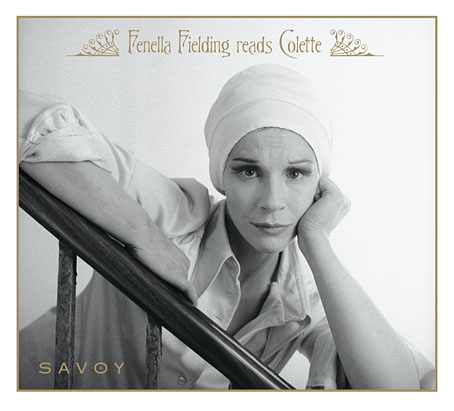
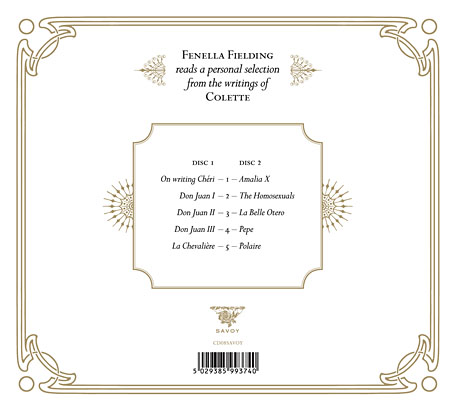
The latest post at Strange Flowers reminded me of some work of mine that appeared earlier this month which I can finally mention. Fenella Fielding reads Colette is another of those long-gestating recordings from Savoy’s audio division which has been released at last after a lengthy hiatus. This is a double-disc CD set of Fenella’s own selection from the writings of Colette, an author Fenella knows well having portrayed her in Colette, a play by Elinor Jones.

fenella2.jpg

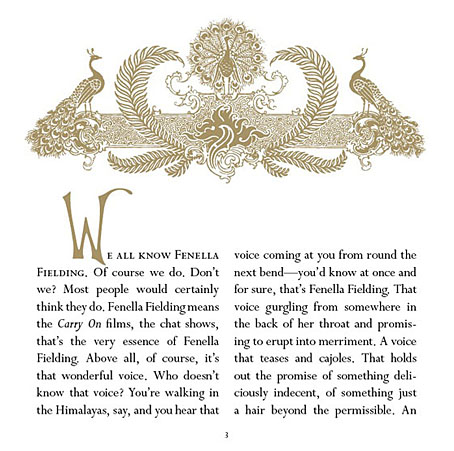
The CD set is a digipak which I designed using a variety of Art Nouveau motifs printed in metallic gold on white card. All the photos are either of Colette or Fenella herself, past and present; the lengthy booklet notes were by the late Monty Haltrecht, a novelist and friend of Fenella’s who followed her career for many years. Monty approved of my initial draft of the design so it’s a shame he wasn’t able to see the finished thing. For the moment the CDs are available only through Savoy but the readings should be on iTunes in due course.

fenella3.jpg

fenella4.jpg

Reverbstorm at Supervert

reverbstorm.jpg

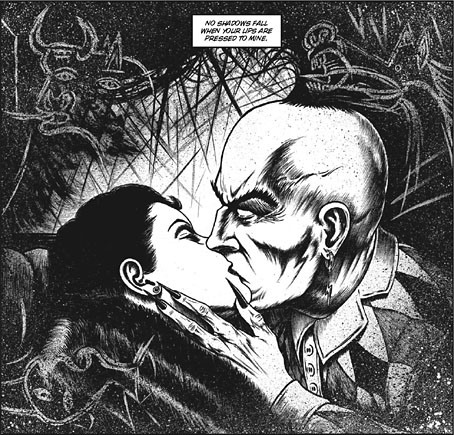
Keith Seward’s Horror Panegyric was a concise examination of David Britton’s multimedia Lord Horror project which Savoy Books published in 2007. I designed the book, the cover of which was my Arcimboldo pastiche of Lord Horror’s profile which appeared on the cover of issue 3 of Reverbstorm. The Supervert site which hosts an online copy of Horror Panegyric has this month posted my answers to some questions about Reverbstorm, the series having grown out of the first Lord Horror novel and the earlier comics:

The graphics in Reverbstorm sometimes seem more narrative than the words. How did you and David work out a scenario?

I don’t have objections per se to the usual story structures but in this series we both wanted to create something that wasn’t following familiar adventure narrative lines. The precedents for me were the European comic artists from Métal Hurlant who often favoured art over story; also Burne Hogarth whose work was a great influence on the style I used to draw Lord Horror. Hogarth’s Tarzan strips are adventure narratives but in his later books it’s the art that’s paramount. James Joyce is one of the characters in Reverbstorm, and you can also find a precedent in Ulysses where the story is overwhelmed by the surface detail.

Reverbstorm began with Paul Temple’s lyrics for the Reverbstorm song and a brief Lord Horror film treatment that Dave and Mike had put together for a production company. I don’t recall much about the treatment — I only looked at it once in the office — but it concerned Horror and Jessie Matthews in New York City, opening with a sequence where his Lordship kills some policemen in an alleyway. That vague outline can be seen in the first few pages of Reverbstorm with NYC changed to Torenbürgen. Other elements taken from the film treatment included the name Blue Blaze Laudanum — the actual robotic character came later — and the Souls which likewise became more substantially developed as the comic progressed.

Once we’d introduced all the characters things developed along thematic lines rather than strictly narrative ones. So the second part introduces the Ether Jumpers, the third part has the Apes, the fourth part the Ononoes, the fifth part Picasso and T.S. Eliot, and so on. Musical structure is an obvious parallel, and I consider some of the recurring background material to be visual leifmotifs which can indicate or imply one of the three main characters even if they aren’t present on the page. This musical analogy is an important one for appreciating the series as a whole. The entwined themes and references work in a manner that’s a lot closer to musical works than to the mechanics of an adventure narrative. (more)

Previously on { feuilleton }
Reverbstorm in print
Reverbstorm update
James Joyce in Reverbstorm
A Reverbstorm jukebox
Reverbstorm: Bauhaus Horror
Reverbstorm: an introduction and preview