Weekend links 296

invisiblecreature.jpg

Mars (variant design): one of three new posters for NASA by Invisible Creature.

• “If the point of Sade’s work was to marry sexual frustration and release to the practice of interpersonal violence, he could confidently gaze out on the landscape of our popular culture and declare it a fait accompli.” Hussein Ibish on The United Sades of America.

• Gravitational Waves Exist: The Inside Story of How Scientists Finally Found Them by Nicola Twilley. Sean Carroll explains the importance of the discovery.

• Another This Heat interview: Bruce Tantum interrogates Charles Bullen and Charles Hayward about being a group ahead of their time.

The English word comes ultimately from Greek magike (in which the original Persian word is spliced with tekhne, “art”), while the Persian magos “one of the members of the learned and priestly class” ultimately derives from magush, “to be able, to have power”, from which we may also derive the word “machine”. So my social hierarchy is your magic, and my magic might be your craft—or even your machinery. My religion is your magic. Your religion is my fairy lore. Or your religions might be a mass of fakery and trickery and foolery. Hence in making magic into an intellectual discipline, I theorize based on my observations, which might not be mine but those of others, heritable observations. But because what I do looks very like empiricism, as I examine materials for the tricks or fooleries, or for the real alterations, checking my results against descriptions of previous experiments, what I do feels like science, feels like the template for Baconian empiricism and its great instauration.

Diane Purkiss reviewing The Book of Magic: From Antiquity to the Enlightenment, edited by Brian Copenhaver

• The Strange World Of…The Residents: Sean Kitching talks to The Residents’ resident artist, Homer Flynn.

• At Strange Flowers: film of Natalie Barney in 1962 reminiscing about Oscar Wilde and Marcel Proust.

• From Battleship Potemkin to Baker Street: Ian Christie on Sergei Eisenstein’s trip to London.

• Mixes of the week: Krautrock Mix by Tarotplane, and Mix #15 (Transversales) by Jon Brooks.

• From Rock en Stock (France, 1973): Can and Agitation Free in live performance.

• Twenty classic British folk-horror stories: a selection by Kai Roberts.

Immemory: a Flash version of Chris Marker’s CD-ROM.

Cronenberg Valentines

Static Gravity (1980) by Chrome | Zero Gravity (2001) by Monolake | Gravity (2013) by Roly Porter
Weekend links 259

bennett.jpg

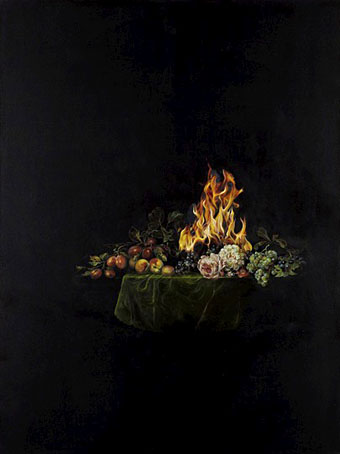
The Endlessness (2012) by Emma Bennett.

• “Clearly if you’re familiar with The Arcades Project by Walter Benjamin you’ve got a leg up on what Rivette and company are up to. […] Like all Rivette works, it’s obsessed with the interrelationship between theater and life—reality and fantasy.” David Ehrenstein makes Jacques Rivette’s Out 1 sound even more intriguing. The 729-minute film is being reissued later this year.

• “It’s all your artistic friends. They frighten me…they seem evil, somehow—somehow unhealthy. And when you’re with them, dear, you change…” Steven Cordova reviews To the Dark Tower (1946), the debut novel by gay writer Francis King.

• “Sex isn’t a subtext in The Bloody Chamber, but the text itself. (Carter would explain that she was only making explicit a ‘latent content’ that is ‘violently sexual.’)” Laura Miller on Angela Carter’s re-told fairy tales.

Yet, as a citizen, and especially as an artist, [Chimamanda Ngozi] Adichie refuses to censor herself. “There is already enough silencing in public discourse,” says Adichie, and this is certainly true when the topic is race, and especially when the conversation is in America. It is our addiction to comfort that demands our silence regarding certain truths. Too often in America, Adichie claimed, “the goal of public discourse is comfort, not truth.” Comfort, Adichie said, also demands “international digestibility,” a reduction of complicated stories to a simple narrative. In the lecture, Adichie also warned of the silencing that is sometimes a product of social media outrage.

Kay Iguh on Chimamanda Ngozi Adichie’s Arthur Miller Freedom to Write Lecture at the PEN World Voices Festival

• New books: The Strangers and Other Writings by Robert Aickman, and Murderous Passions: The Delirious Cinema of Jesús Franco by Stephen Thrower & Julian Grainger.

• The world is rediscovering Mad Max and George Miller’s prowess for action cinema so Anne Billson posted a transcript of her 1985 interview with the director.

• Mixes of the week: Dmytro Fedorenko presents artists from Ukrainian record label Kvitnu, and The Ivy-Strangled Path Vol. VII by David Colohan.

Assault on Precinct 13 goes disco: The End (John Anthony’s New Scratch Mix) (1983) by “John Carpenter” (The Splash Band).

John Coltrane talked to Frank Kofsky for an hour in November 1966.

• Sleazy Cinema: A guide to Peter Christopherson‘s music videos.

Six hours of women in electronic music.

The weird world of Alfred Kubin.

Giallo Magic Orchestra

Blood (1972) by Annette Peacock | Blood On The Moon (1981) by Chrome | Blood From The Air (1986) by Coil

Weekend links 218

white.jpg

The End of a Thousand Years (2014) by Hilary White. Via Phantasmaphile.

• It’s taken a while to shamble into the world but A Mountain Walked, an anthology of Cthulhu Mythos stories edited by leading Lovecraft scholar ST Joshi, will be published by Centipede Press next month. The publisher’s page for the book shows that my contribution will be facing Joshi’s introduction which is something I wasn’t aware of until this week. It also says the 692-page limited edition is sold out, although book dealers often buy collectible volumes such as this to sell on after adding their own markup. Be warned that it was listed on Amazon at $160 so if there are copies available anywhere they won’t be cheap.

• It’s not such a surprise to hear that magic mushrooms were an inspiration for Frank Herbert’s Dune. David Lynch’s film of Dune receives passing mention in this profile by Jeremy Kay of Lynch and the Twin Peaks film/TV series.

• “Whitechapel station is one of Giambattista Piranesi’s imaginary prisons, colonised by frantic electrical engineers and watched over by CCTV.” Will Wiles on the chaos and tangled energy of modern cities.

The word perfume comes from the French root “fume”—smoke—and where there’s smoke, there’s fire! I think most people are turned on sexually by scents and smells. Certain body odours can be very sexually stimulating. We purposefully chose certain ingredients for my Obscenity perfume that are associated with occult or religious rituals, including vetiver, labdanum, and oud, and others that are considered aphrodisiacal, including patchouli and sandalwood. The point of Obscenity is that there is no conflict between the religious and the sexual, and in fact they should be completely complimentary. The fragrance is meant to stimulate you sexually, but it also literally contains water from Lourdes, so it also has religious notes and perhaps even healing properties!

Bruce LaBruce talks to Kathy Grayson about his new fragrance, Obscenity

The Baffler, “a journal of iconoclastic wit and cultural analysis” relaunches with full access to its archives from 1988 to the present.

Pineal, the new album by Othon, is dark and “properly, brilliantly queer,” says David Peschek.

• At Core77: How to improve the audio quality of vinyl records with wood glue.

• P. Adams Sitney interviews Kenneth Anger on WNYC’s Arts Forum (1972).

• At BibliOdyssey: Le Bestiaire Fabuleux by Jean Lurçat.

• Mix of the week: Secret Thirteen mix 123 by Evol.

Meawbin the Creepy Cat

Perfumed Metal (1981) by Chrome | Fragrance (Ode To Perfume) (1982) by Holger Czukay | The Perfume (2006) by Johnny Klimek, Reinhold Heil, Tom Tykwer

Weekend links 215

calibair.jpg

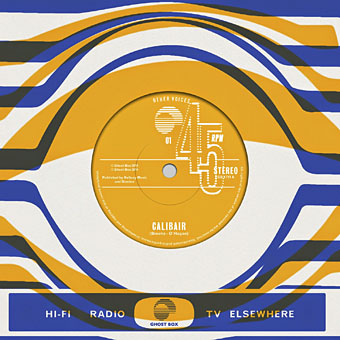
Julian House artwork for Other Voices, a new singles series on the Ghost Box label. Other Voices 01 is a collaboration between Sean O’Hagan of the High Llamas and Jon Brooks of The Advisory Circle.

Last week I linked to a copy Zadie Smith’s new introduction for Crash by JG Ballard. That piece could only be read in full by NYRB subscribers but this week the Guardian has the full text:

I was in college when the Daily Mail went to war with [David Cronenberg’s] movie, and found myself unpleasantly aligned with the censors, my own faux-feminism existing in a Venn diagram with their righteous indignation. We were both wrong: Crash is not about humiliating the disabled or debasing women, and in fact the Mail‘s campaign is a chilling lesson in how a superficial manipulation of liberal identity politics can be used to silence a genuinely protesting voice, one that is trying to speak for us all.

Related: Thomas Jones in 2008 reviewing Miracles of Life:

Despite all the bodily fluids spurted and smeared onto wrecked dashboards, the problem isn’t that it’s too pornographic but that it isn’t pornographic enough: the novel is too conscious of the deeper meaning of the sex and violence for the sex and violence to work as elements in themselves.

The fetishisation of Ballard’s novel (and Ballard’s fetishes) show no signs of abating: B-Movie (Ballardian Video Neuronica), is a short film by John Foxx, Karborn and Jonathan Barnbrook.

• Last Thursday I was watching a live performance by Pye Corner Audio and Not Waving, so it’s good to find this mix by the pair surfacing in the same week. Kudos to the latter for choosing something by Chrome. More mixes: FACT mix 468 by Throwing Snow, and Secret Thirteen mix 120 by Drøp.

• Ellen Datlow’s horror anthology, Lovecraft’s Monsters, continues to gather plaudits. Among recent reviews there’s Matt Barone at Complex who included the book in his Year’s Best Genre Fiction Books (So Far) list, and also praised my illustrations.

In recent years, many of the people on book covers have been women without faces. So prevalent is this visual cliché that the publishing industry has cycled through at least two well-documented iterations. The first, the Headless Woman, features some poor thing cut off above the neck, like the swimsuit-clad beachgoer on Alice Munro’s story collection “The View from Castle Rock.” The website Goodreads’s Headless Women page has 416 entries. Last year, the Headless Woman was supplanted by the Sexy Back, in which a woman is shown from behind, often gazing out over a vista.

Eugenia Williamson on the packaging of books for a female readership.

• The latest Taschen volume from Dian Hanson, editor of (among other titles) The Big Penis Book, is My Buddy. World War II Laid Bare, featuring photos from the archives of Michael Stokes. World of Wonder has pages from the interior.

I Have Walked This Body by Jenny Hval and Susanna is a track from a forthcoming album inspired by Maya Deren and Alexander Hammid’s Meshes of the Afternoon. It sounds fantastic so I’m looking forward to hearing more.

• If you have a spare half-million dollars, and don’t mind the possibility of possession by murderous supernatural entities, the Palmer house from Twin Peaks is for sale.

• Read an extract from Season of the Witch: How the Occult Saved Rock and Roll by Peter Bebergal.

The Stars and Their Courses: over six hours of the Nevada night sky in 4k definition.

Lee Siegel on the fraught friendship of TS Eliot and Groucho Marx.

Harmony Korine talked to Kenneth Anger for Interview Magazine.

New Scientist: How magic mushrooms induce a dream-like state.

• 3D-print your own Marcel Duchamp chess set.

Scott O)))

Crash (1980) by Tuxedomoon | Burning Car (1980) by John Foxx | A Crash At Every Speed (1994) by Disco Inferno | Burning Car (Dubterror Remix, 2008) by John Foxx

Subterranean Modern: The Residents, Chrome, MX-80 Sound and Tuxedomoon

submod0.jpg

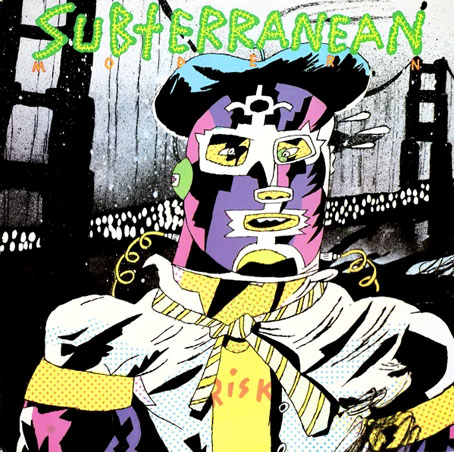
Subterranean Modern (1979). Sleeve art by Gary Panter.

As often happens, one post leads to another and the next thing you know there’s a themed week happening, so here’s something more about Tuxedomoon. Subterranean Modern was a compilation album released by The Residents on their Ralph Records label in 1979. The idea was to showcase The Residents along with three other groups from contemporary San Francisco, all of whom were underground acts, hence the “subterranean” title. (Just to confuse matters, Subterranean was also a San Francisco record label.) Three of those groups—Chrome, Tuxedomoon, The Residents themselves—have since developed cult followings; hard-rock outfit MX-80 Sound seem a little ordinary and out-of-place in this unique company but such is the nature of the compilation album. The Residents wanted each group to provide an interpretation of I Left My Heart In San Francisco but none of the others were very interested; Chrome’s offering, which lasts all of 27 seconds, is hilariously contemptuous of the idea, a squall of riff and vocals that fades in then quickly fades away. Cartoonist Gary Panter illustrated the cover which is also given the Rozz Tox seal of approval. For more about Rozz Tox, whose enigmatic presence can be found on other Ralph Records releases, see this.

I’d already heard Chrome and The Residents when I bought Subterranean Modern but this was first place I encountered Tuxedomoon’s music. Chrome, who appear on the back cover wearing their Clockwork Orange droog outfits, contribute two tracks that are as good as anything on their early records, Anti-Fade and the chugging Meet You In The Subway, for which they made a video filmed on the city’s BART platforms. I listened to those tracks, and the Tuxedomoon ones, much more than the rest of the album. With the exception of the pieces by MX-80 Sound, everything on the album has since been reissued on other compilations (Tuxedomoon’s tracks are on the Pinheads On The Move collection).

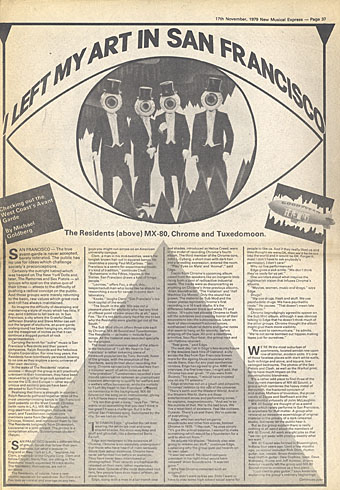
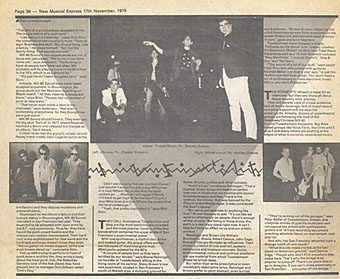
The following is a two-page feature from the NME for 17th November, 1979, profiling the album and the people who made the music. I don’t know whether this was Tuxedomoon’s first UK interview but it says it’s the first interview given by Chrome which gives it some vague contemporary relevance. Helios Creed recently re-formed Chrome, and played a show in London earlier this month. There’s also a new Chrome album, although for me Chrome proper requires Damon Edge, and he died in 1995. (Thanks to Gav for saving the pages!)

* * *

submod5.jpg

submod6.jpg

I LEFT MY ART IN SAN FRANCISCO

Checking out the West Coast’s Avant Garde by Michael Goldberg

ralph.jpgSAN FRANCISCO—The true avant-garde is never accepted, barely tolerated. The public has no use for ideas which challenge society’s preconceptions.

Certainly the outright hatred which was heaped on The New York Dolls and, later, The Ramones and Sex Pistols—all groups who spat on the status quo of their times—attests to the difficulty of pushing a radical concept on the public. And those groups were merely returning to the basic, raw values which great rock and roll has always maintained.

So imagine the difficulty of developing and maintaining a style of music which has little, if any, solid tradition to fall back on. In San Francisco, a city where the Grateful Dead, Jefferson Starship and Steve Miller can sell out the largest of stadiums, an avant-garde underground has been hanging on, etching out the meagrest of niches so that it can continue a dogged pursuit of rock experimentation.

Carrying the torch for “outre” music is San Francisco’s Residents and their parent companies, Ralph Records and the nebulous Cryptic Corporation. For nine long years, the Residents have relentlessly persisted, bowing to no one as they explore a sonic universe of their own devising.

In the wake of The Residents’ relative success—though the group is still practically unknown in their hometown, they have been received by a rather large cult spread out across the U.S. and Europe—other equally unique and esoteric groups have been attracted to San Francisco.

Realising that there is strength in numbers, Ralph Records gathered together three of the most uncompromising bands in San Francisco (and possibly on the West Coast): Chrome (with roots in L.A.), MX-80 Sound (who migrated from Bloomington, Indiana, last year), and Tuxedomoon (whose core members came from Denver, Colorado and Chicago, Illinois), and convinced them to join The Residents (originally from Shreveport, Louisiana) in a joint project. The project is a compilation album, Subterranean Modern (Ralph).

Continue reading “Subterranean Modern: The Residents, Chrome, MX-80 Sound and Tuxedomoon”