Into the Vortex

radiosoulwax1.jpg

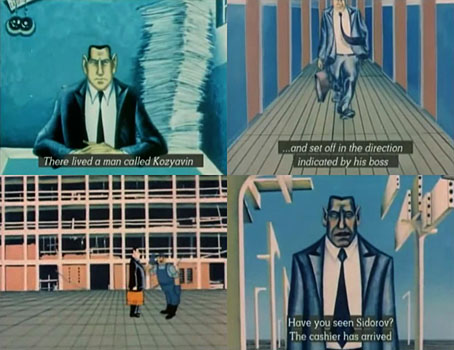
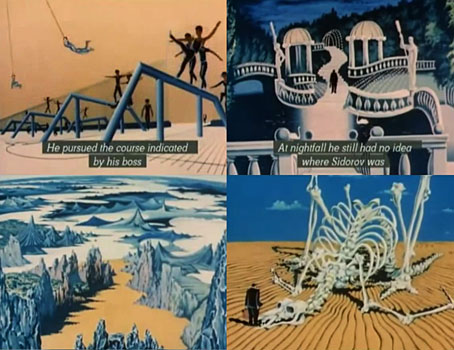
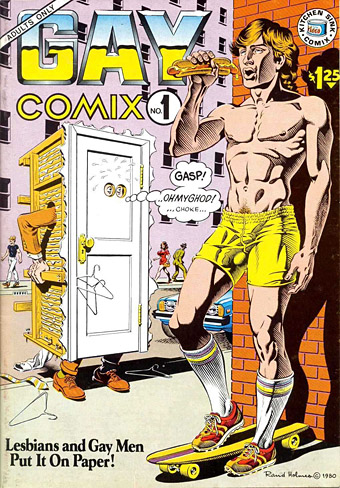
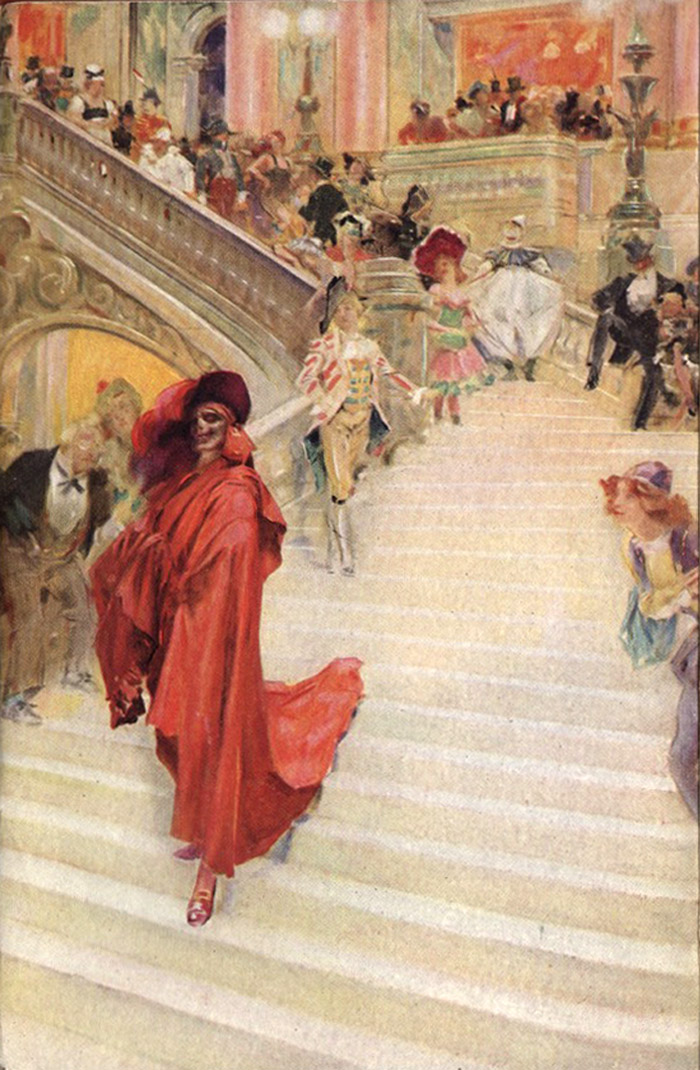
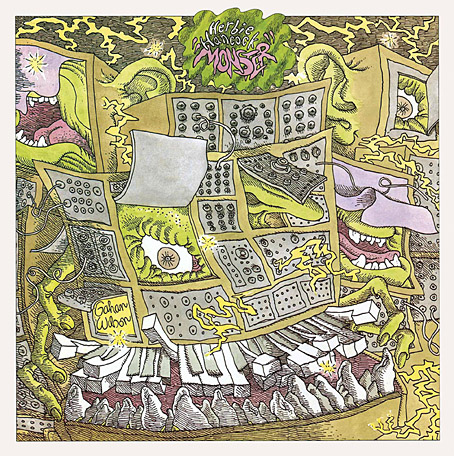
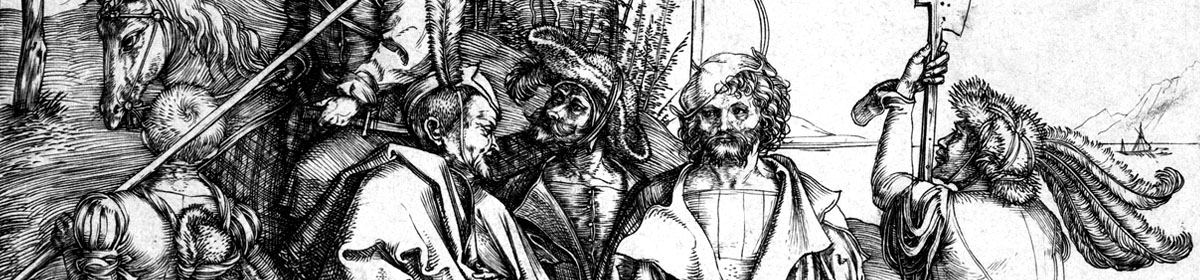
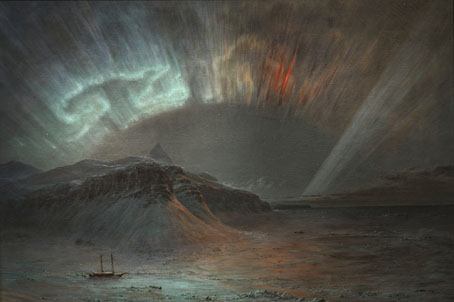
I’m surprised this has managed to evade my attention for the past eight years but better late than never. Into the Vortex is an hour-long music mix by Radio Soulwax whose visuals are one answer to the question of how best to illustrate a diverse playlist, if illustrate you must. The solution, directed by Wim Reygaert, is to recreate with sets, props and a cast of performers every single cover from every record in the mix, with each cover recreation lasting the duration of the piece. Many of the recreations are simple affairs using paint and cardboard but the time and effort involved still boggles the mind. No surprise that the Radio Soulwax motto is “Why do things the easy way?”

radiosoulwax2.jpg

The best part for this viewer and listener is that much of the music is drawn from very familiar albums: German electronica or Kosmische music, its French equivalents, and so on. It’s a lot more satisfying (and surprising) seeing the alien head from Interface by Heldon being recreated instead of yet another Beatles cover design. On the musical side, one of the users at Discogs very conveniently put together an almost complete listing of the mix, together with links to the records. Collect the set.

radiosoulwax3.jpg

Elsewhere on { feuilleton }
The album covers archive

Weekend links 465

palladini.jpg

The Star (1970) from The Aquarian Tarot by David Palladini.

• Artist David Palladini died in March but I only heard the news this week. His poster for Werner Herzog’s Nosferatu has been a favourite of mine ever since the film’s release, while some of his other works have featured here in the past. Still popular among Tarot users is the Aquarian Tarot (1970), a deck published a few years after Palladini had helped with the production of the Linweave Tarot. From the same period as the Aquarian deck is a set of Zodiac posters, all of which exhibit Palladini’s distinctive blend of Art Nouveau and Deco stylings. In addition to posters, Palladini produced book covers and illustrations, and even a few record covers. A book collecting all of this work would be very welcome.

Erotikus: A History of the Gay Movies (1974? 75? 78?): Fred Halsted presents a 90-minute history of American gay porn, from the earliest beefcake films to the hardcore of the 1970s, some of which Halsted also helped create. Related: Centurians of Rome [sic]: Ashley West and April Hall on the bank robber who made the most expensive gay porno of all time.

Peter Bradshaw reviews Too Old to Die Young, a Nicolas Winding Refn TV series described as “a supernatural noir”. Sign me up.

Naomi Wolf’s Outrages establishes the context for [John Addington] Symonds’s desperate efforts to justify his own sexual feelings. Since he was born in 1840, he was 15 when the first edition of Walt Whitman’s Leaves of Grass appeared, the same year that legislation in Britain streamlined the laws against sodomy and ensured that men found guilty of it served long prison sentences. With intelligence and flair, Wolf uses the various responses to Whitman to show the levels of intense need in the decades after the publication of Leaves of Grass for images and books that would rescue homosexuality from increasing public disapproval.

Colm Tóibín reviews Outrages: Sex, Censorship and the Criminalisation of Love by Naomi Wolf

• Record label Dark Entries has discovered 40 more reels (!) of music by Patrick Cowley dating from 1974 to 1979.

• “Is Stockhausen’s Licht the most bonkers operatic spectacle ever?” asks Robert Barry.

• Sex, Spunk, Shoes and Sweet Satisfaction: A Q&A with artist Cary Kwok.

• Tripping his brains out: Eric Bulson on Michel Foucault and LSD.

• Paul O’Callaghan chooses 10 best Dennis Hopper performances.

• “More obscene than De Sade.” Luc Sante on the fotonovela.

• Karl Blossfeldt’s Urformen der Kunst (1928).

• The Strange World of…Gong

Neonlicht (1978) by Kraftwerk | Brüder Des Schattens, Söhne Des Lichtes (1978) by Popol Vuh | Lichtfest (2017) by ToiToiToi

Weekend links 464

picaud.jpg

13 Circles by Julien Picaud.

• The 50th anniversary of the Apollo Moon landing is only two months away so it’s no surprise that Brian Eno’s Apollo: Atmospheres And Soundtracks is being reissued. The latest release will include an additional disc of new music by Eno with his collaborators from the original sessions, Daniel Lanois and Roger Eno. Related: the Apollo 11 Command Module as an explorable (and printable) 3D model.

• From the real Moon to the presence of the satellite in myth and history, the next book from Strange Attractor will be Selene: The Moon Goddess & The Cave Oracle, a volume which is also the final work by the late Steve Moore. With a foreword by Bob Rickard, and an afterword by Alan Moore.

• Guitar-noise maestro Caspar Brötzmann released a handful of thrilling albums in the 1990s then disappeared from view. Spyros Stasis talked to Brötzmann about his hiatus and his recent resurfacing on the Southern Lord label.

• A year late, but I didn’t know Paul Schrader had written an updated introduction to his 1972 study of Ozu, Bresson and Dreyer, Transcendental Style in Film. I love the idea of “The Tarkovsky Ring” as a directorial event horizon.

• “Nothing written is utterly without value, as I proved to myself by reading two random works.” Theodore Dalrymple on the lasting worth of “worthless” books.

Cinemagician: Conversations with Kenneth Anger, a documentary by Carl Abrahamsson about the director/writer/magus.

• Mirror, Mirror: When Movie Characters Look Back at Themselves by Sheila O’Malley.

• From Susan Sontag to the Met Gala: Jon Savage on the evolution of camp.

• Mix of the week: Secret Thirteen Mix 289 by Mondkopf.

• Portrait of the Artist as a Consumer: Anne Billson.

• A video by IMPATV for Religion by Teleplasmiste.

Obscure Sound ~ Cosmic: a list.

Mira Calix‘s favourite records.

Transcendental Overdrive (1980) by Harald Grosskopf | Transcendental Moonshine (1991) by Steroid Maximus | The Transcendent (1999) by Jah Wobble

Weekend links 463

eye.jpg

Eye 98: Beatrice Display Black, Sharp Type, 2018, and a detail from an original drawing for Lexicon by Bram de Does, 1989.

Issue 98 of Eye, the international design journal, is out this month. The new issue is a typography special but also features my review of Mark Dery’s Born to be Posthumous: The Eccentric Life and Mysterious Genius of Edward Gorey. This is the second time I’ve written about Dery’s book, with the new piece focusing more on Gorey’s work as a designer/book creator, and his place in the history of illustration.

Portal is a new release by Slovakian metal band Doomas, the artwork of which adapts one of my illustrations for Lovecraft’s Monsters. The band also have a suitably Lovecraftian video.

• Reading recommendations by M. John Harrison: the old (the excellent Rogue Moon by Algis Budrys) and the new (Underland et al).

I first started drawing in my Wake to count the number of rivers mentioned in an episode, one page alone counting 85. Gradually, I would be so moved by a line or a character I would colour them in, the most obvious being the 28 Rainbow girls to the more obscure nebulae, railroad tracks, hidden mythical islands and turn of the century lightships. Themes began to emerge which demanded documentation and always the sad, ecstatic relief of finishing a chapter merited some sort of coloured tribute. By the time I finished four years later, I simply drew a leaf to reflect Joyce’s metaphor on the last page: my leaves have drifted from me. All. But one clings still.

Susie Lopez on Finnegans Wake at 80

• Old ghosts at The Paris Review: a preview of The Spectacle of Illusion by Matthew L. Tompkins.

• At Dangerous Minds: Malcolm McDowell and the making of Lindsay Anderson’s O Lucky Man!

Herbie Hancock: “I felt like I stood on the shoulders of giants and now it’s my turn”.

• Mix of the week: XLR8R Podcast 590 by Christian Löffler.

• The discography of Diamanda Galás is now at Bandcamp.

• RIP Quentin Fiore, graphic designer and book creator.

• At Dennis Cooper’s: Haunted dolls.

Antique Doll (1967) by The Electric Prunes | The Doll’s House (1980) by Landscape | Voodoo Dolly (1981) by Siouxsie And The Banshees

Weekend links 462

chanctonbury.jpg

The next release on the Ghost Box label, Chanctonbury Rings is “a blend of folk, electronic music, poetry, prose and environmental sound” by Justin Hopper & Sharron Kraus with The Belbury Poly. The album will be available in June. Design, as always, is by Julian House.

• Clumsy and insensitive translations can ruin the enjoyment of a foreign-language film. Don’t blame us, say the subtitlers pressing film-makers for more appreciation of their art. Anne Billson on the difficulties of translating for a medium of moving images.

• At Expanding Mind: Hypermedia researcher and author Konrad Becker talks with Erik Davis about algorithms from hell, the madness of rationality, media seances, and the martial art of freedom.

The HP Lovecraft Cat Book: a limited collection of Lovecraft’s writings about cats edited by ST Joshi and illustrated by Jason C. Eckhardt.

Amacher was also inspired by a short story she found in the 1986 cyberpunk anthology Mirrorshades, edited by Bruce Sterling—a tale called Petra by Greg Bear, about a grand cathedral, possibly Notre Dame in Paris, in a ravaged, postapocalyptic landscape. Stone gargoyles and other statues mate with humans, creating new hybrids who wander the labyrinthine chambers of the battered house of worship.

Geeta Dayal on composer Maryanne Amacher

• The novel that wouldn’t leave Anthony Burgess alone: Alison Flood on the discovery of a non-fiction continuation of the themes in A Clockwork Orange.

Kristina Foster on photographs of Central Asia’s Striking Soviet Architecture.

Adrian Shaughnessy‘s ten favourite design and visual culture books.

William Joel on the process behind Helvetica’s 21st century facelift.

• The Stupid Classics Book Club by Elisa Gabbert.

The Haunted Generation by Bob Fischer.

Haunted Cocktails (1983) by Intro | Haunted Gate (1997) by David Toop | The Universe Is A Haunted House (2002) by Coil