Jaki Liebezeit times ten

jaki11.jpg

Jaki Liebezeit.

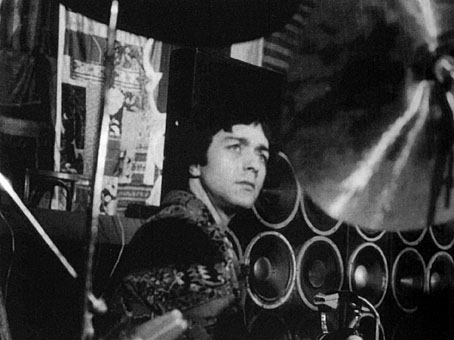
One thing to note about the late Jaki Liebezeit is that everyone liked Can in the 1970s, which means that everyone liked Jaki Liebezeit’s drumming. When the music wars were raging in 1976, Can were one of the few groups from the hippy side of the barricade given a pass by the punks. Prog-heads liked Can because of the rock grooves and complex improvisations; punks enjoyed the muscular insistence of songs like Father Cannot Yell and Halleluwah. David Bowie liked Can; Brian Eno liked Can enough to let Jaki Liebezeit guest on Before And After Science (Eno also made this tribute video for the Can DVD); John Lydon when he was still Johnny Rotten played Halleluwah on his Capital Radio show in 1977 together with other favourite records; a year later, Pete Shelley wrote a sleeve note for a Can compilation (and the first Can album I bought), Cannibalism; Mark E. Smith liked Can (of course); Siouxsie called Jaki Liebezeit “the best drummer in the world,” while Jah Wobble would go on to work with Liebezeit on numerous recordings under his own name and as a guest on other albums. Some of the Wobble recordings appear below. If there’s a minimum of Can music in the following list that’s mainly because Mute/Spoon keep the back catalogue away from British users of YouTube. I don’t mind that; the absence of the prime stuff means I can draw attention to some examples of Jaki Liebezeit’s post-Can work which might otherwise be overlooked.
jaki01.jpg

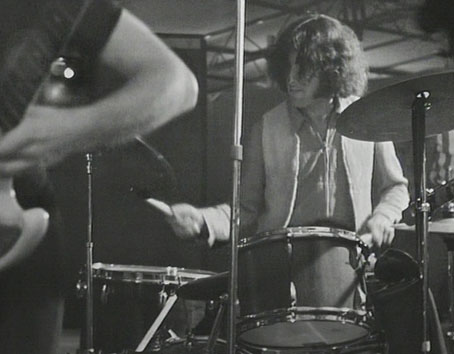
Mother Sky/Deadlock (1970) by Can.

Two numbers from the fantastic live set the group played on German TV for an audience of ecstatic/bored/stoned hippies.
jaki02.jpg

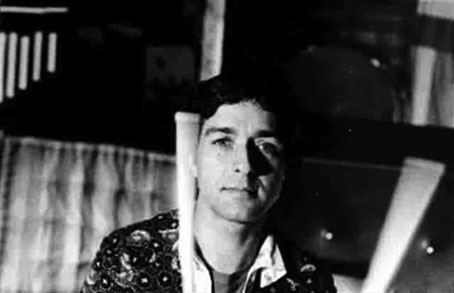
Jaki Liebezeit drum solo (1970).

In the Can Book Liebezeit says he never played drum solos but he was forgetting about this example from the group’s early days.
jaki03.jpg

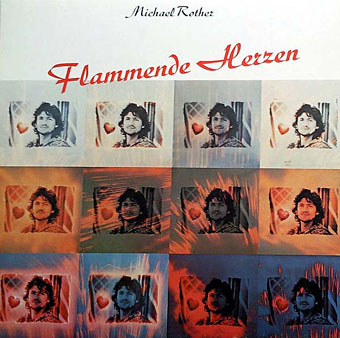
Flammende Herzen (1977) by Michael Rother.

Michael Rother’s first solo album was also his best after leaving Neu! The album is essentially a duet between Rother and Liebezeit, with Rother playing all instruments apart from the drums.
jaki04.jpg

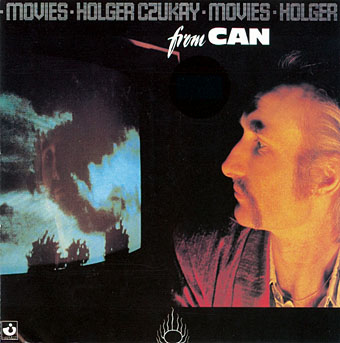
Oh Lord Give Us More Money (1979) by Holger Czukay.

In which Holger Czukay takes the Can song Hunters And Collectors, removes the vocals then extends and remixes the whole thing into a 13-minute collage blending the music with BBC sound effects and vocal samples taken from radio and TV. Samplers didn’t exist in 1979, this was all done with tape, and it’s incredible. I forget whether it was Jaki Liebezeit or Michael Karoli who said they didn’t recognise their playing afterwards (probably the latter) but Leibezeit’s drums sustain the entire piece. He also plays on the rest of the album. Movies is Czukay’s masterpiece, and more true to the questing, inventive spirit of Can than the albums the group made after Landed. Another track, Persian Love, samples Middle Eastern vocalists two years before My Life In The Bush Of Ghosts. Eno was paying attention.
Continue reading “Jaki Liebezeit times ten”

Weekend links 344

axiomdub.jpg

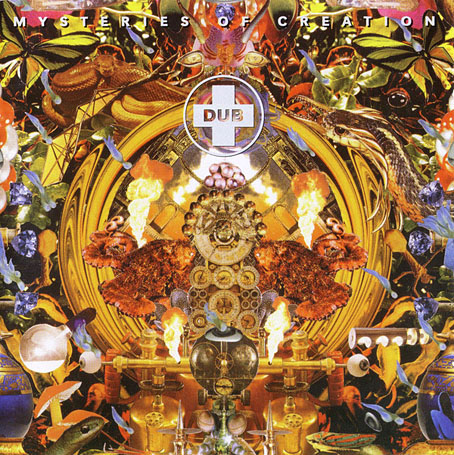
Axiom Dub – Mysteries Of Creation (1996), a Bill Laswell production. Art by James Koehnline.

• As noted earlier, the great Bill Laswell has made some of his sprawling back catalogue available at Bandcamp, news of which has prompted Vinyl Factory to put together a recommended listening guide. Judging by the comments I’m not the only Laswell-head deploring the absence of the masterpiece from Material, Hallucination Engine. Linked here before, and happily still being updated, the comprehensive Bill Laswell discography at Silent-Watcher. Related: An ESP-Disk Primer by Marc Masters.

Listen to the Voice of Fire, a symposium concerning alchemy in sound art, takes place at the National Library of Wales at the beginning of March. Phil Legard offers some thoughts on alchemy, music and John Dee.

• The guilty cinematic pleasures of John Carpenter. Related: Director and actor Alice Lowe chooses seven favourite horror films.

The Broomway, Essex, a tidal path known as “The Doomway” for its reputation as the most dangerous walk in Britain.

• Mixes of the week: K-Punk presents Return to the Fourth World, and FACT Mix 584 by Lawrence English.

• “There was more to the late John Berger than that TV series and art book”, says Richard Turney.

• “Music’s cassette-tape revival is paying off,” says John Paul Titlow.

Diamanda Galás announces two new albums.

Bob Dylan paints a Blackpool pier.

• Pixel art by Uno Moralez

One Letter Words

Reduction (1980) by Material | Ghost Light/Dread Recall (1996) by Material | No Guts No Galaxy (1999) by Material (feat. Ramm Ell Zee & phonosycographDISK)

Weekend links 343

carrington.jpg

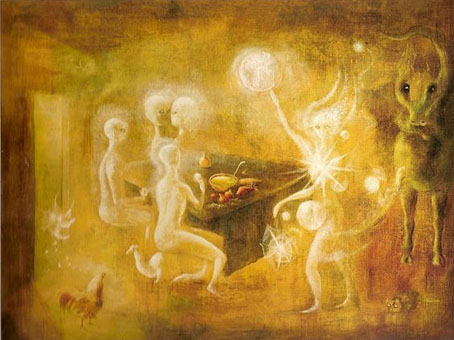
Sidhe, the white people of the Tuatha Dé Danann (1954) by Leonora Carrington.

• January brings a wealth of recommended-reading lists for the new year, together with the feeling that many of those lists are merely clones of each other. Not so the recommendations at Strange Flowers which also includes links to forthcoming events such as this exhibition of Symbolist art at the Guggenheim, New York.

Some Ceremonies are Better than Others, an exhibition of sound objects and drawings by Matthias König & Ibrahim R. Ineke inspired by Arthur Machen’s The White People, at The Bries Space, Borgerhout, Belgium, from 21st January. Previously: Ineke’s comic-strip adaptation of the Machen story.

• “These must-reads explore Dada, Futurism, Surrealism, and the art of opposition,” says Carol Cooper. One of the titles under discussion is the Bruce Sterling book I designed and illustrated last year, Pirate Utopia. Sterling talked to Wired about the book and its relation to the present moment.

RIP Mark Fisher, a cultural theorist whose death was announced just as extracts from his latest book, The Weird and the Eerie, were beginning to appear. One of those extracts is at The Quietus. Related: Fisher’s k-punk blog and its earlier incarnation.

James Cargill (ex of Broadcast) announces a debut release by his new group, Children of Alice. Related: Jonathan Miller’s 1966 TV film of Alice in Wonderland rescored with Broadcast songs.

We are the Martians: the Legacy of Nigel Kneale, a collection of Kneale-related essays and appreciations edited by Neil Snowdon, is finally appearing in print from PS Publishing.

• Pursuing paths hauntological, The Electric Pentacle offers “an unholy stew of library music, Kosmische, arcane ritual electronica, modular synthesisers and shortwave radio”.

• Mixes of the week: The Ivy-Strangled Path Vol. XVI by David Colohan, and Low Visibility Across Sunken Village by The Geography Trip.

• “With Reflection, [Brian Eno] offers generative music for a turbulent time,” says Geeta Dayal.

Anna Biller, director of The Love Witch, talks to New Jack Witch about her film.

• The story behind Gay Bob, the world’s first out-and-proud doll.

Alice (1969) by Jon Plum | Alice (1982) by The Sisters of Mercy | Alice (2009) by Sunn O)))

Weekend links 342

zarraga.jpg

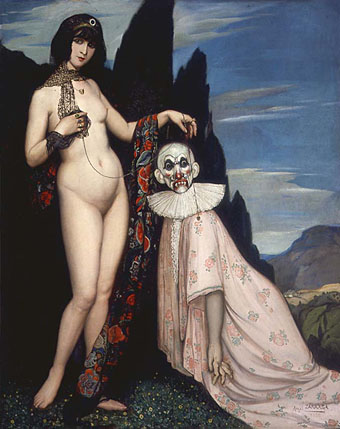
La femme et le pantin (1909) by Ángel Zárraga.

• RIP John Berger. Berger’s essential TV series on art, Ways of Seeing (1972), is at YouTube and Ubuweb; “Such freedom is unthinkable today,” says series director Mike Dibb; the book of the series was designed by Berger and Richard Hollis; ways of seeing Ways of Seeing; Geoff Dyer, Olivia Laing & Ali Smith on Berger; M. John Harrison on Berger.

• The beginning of January means the LRB posting Alan Bennett‘s diary for the previous year. In related news, Network DVD will be releasing Six Plays by Alan Bennett next month, a collection that includes a favourite of mine, Me! I’m Afraid of Virginia Woolf (1978).

• At Dennis Cooper’s: Acid Westerns Day (Restated). Related: Jodorowsky’s El Topo and The Holy Mountain are being released on Blu-ray (Region B) by Gryphon Entertainment.

The acre of suburban lawn surrounding our house became like the Paramount lot for my feverish theatrics. I graduated to building “spook houses” in the family garage out back. Inspired by the ride-through Trimper’s Haunted House in Ocean City, Maryland, designed by Bill Tracy (and it’s still there in operation), I remembered excitedly wheeling through this attraction in these rickety little coffin-shaped cars and dreaming of befriending the crudely built, motorized corpses, cannibals, and skeletons who lived inside. I fantasized the cars breaking down, the panicked, chickenshit children screaming, bolting from their seats, tripping over live wires, and electrocuting themselves. I wanted to take this imagined fear, this frightened happiness, back to my own house where I knew I could preserve, protect, and stylize it on my own adolescent terms.

John Waters on his childhood home

Strange Flowers‘ latest reading recommendations include books on lesbian decadence, occult Paris, flâneurie and the queerness of the Benson family.

Where Evil Dwells (1985), a 28-minute preview of a longer piece of weird cinema (now destroyed) by Tommy Turner and David Wojnarowicz.

Francis Ford Coppola and Brian De Palma having a conversation about Coppola’s The Conversation.

The Edge Question for 2017: “What scientific term or concept ought to be more widely known?”

• Mixes of the week: Drone Theory with Roly Porter, and Secret Thirteen Mix 205 by Stavaris.

Simran Hans suggests where to begin with the films of Todd Haynes.

• More decadence, this time among the Mexican Modernists.

Moon Wiring Club at Bandcamp.

No Name, No Slogan (1989) by Acid Horse | Those Tapes Are Dangerous (1997) by The Bug | Spooky Action At A Distance (2014) by Sqürl

Weekend links 341

fountaingod.jpg

Fountain (1917) by R. Mutt (Marcel Duchamp), and God (1917) by Elsa von Freytag-Loringhoven.

• “What is there left to know about David Bowie? What is there left to unearth?” asks Ian Penman whose lengthy review of recent Bowie books is better by far than a shelf full of cash-in doorstops.

Strázci z hlubin casu is a collection of stories by HP Lovecraft and August Derleth from Czech publisher Volvox Globator. The book reprints artwork of mine on the cover and inside.

• Mixes of the week: Through December by David Colohan, At Alien Altars: A Conjurer’s Hexmas by Seraphic Manta, and Secret Thirteen Mix 204 by James Welburn.

• “Something vindictive resides in soot.” Timothy Jarvis on the weird fiction of Stefan Grabiński. From 2003: China Miéville on Grabiński.

• Paintings by Jakub Rozalski of eastern European peasants with mechas and werewolves.

Colm Tóibín on James Joyce’s A Portrait of the Artist as a Young Man, 100 years on.

Jesse Singal on why straight rural men (in the USA) have “bud-sex” with each other.

Mark Valentine recommends books on tasseography, or divination by tea leaves.

• “Northampton Calling: A Conversation with Alan Moore,” by Rob Vollmar.

Bill Schutt at Scientific American asks what human flesh tastes like.

Gwendolyn Nix on the Tritone, aka The Devil’s Musical Interval.

• At Dennis Cooper’s: _Black_Acrylic presents…Penda’s Fen Day.

• The latest Buddha Machine from FM3 is Philip Glass-themed.

Listen to The Wire’s top 50 releases of 2016

Tritone (Musica Diablo) (1980) by Tuxedomoon | Diabolus In Musica (1987) by The Foetus All Nude Review | Tritone (Musica Diablo) (2016) by Aksak Maboul