Weekend links 370

lai.jpg

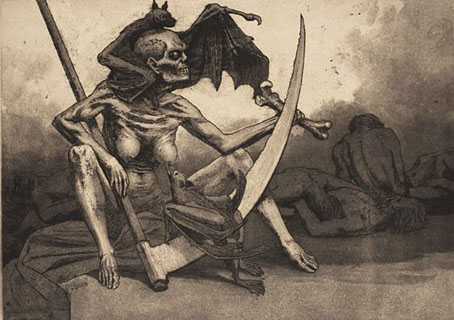
The Conjure (2016) by Jolene Lai. Via Dangerous Minds.

• RIP George Romero, a proudly independent filmmaker who succeeded on his own terms. Kim Newman remembers the man who remade horror cinema. Romero always referred to Powell & Pressburger’s Tales of Hoffmann (1951) as a key cinematic influence, something he discussed with Marc Lee in 2005.

Man Alive (BBC TV, 1967): Consenting Adults: 1. The Men | Consenting Adults: 2. The Women. Two documentaries about the British homosexual experience screened shortly before the House of Commons vote that decriminalised sex between men in England and Wales.

Dolente…Dolore: The Inferno of Malcolm Lowry is the latest musical release from Larkfall: “a trembling, drunken dream with flashes of heaven and hell…”

Tom Harper on The Klenke Atlas (1660), one of the largest atlases in the world which is now available for viewing at the British Library.

Martin Jenkins of Pye Corner Audio, The House In The Woods et al talks to Bandcamp about his own brand of sinister electronica.

• RIP Peter Principle, a musician whose up-front bass playing was always a key feature of the Tuxedomoon sound.

• And RIP actor John Heard talking to Will Harris in 2015 about some of his many roles in film and TV.

• 355 free copies of Galaxy Magazine at the Internet Archive.

• Google Maps goes inside the International Space Station.

• Good with a knife: The papercut art of Ivonne Carley.

• Mix of the week: FACT Mix 610 by Karen Gwyer.

• At Dennis Cooper’s: Yasujiro Ozu Day.

• L’alba Dei Morti Viventi (1978) by Goblin | East/Jinx/•••/Music #1 (1981) by Tuxedomoon | Martin (1983) by Soft Cell

From The Furthest Signals

signals.jpg

It’s been a busy year so far for A Year In The Country with two themed compilation albums being followed this month by a third, From The Furthest Signals. The latest theme is an intriguing one, taking as its starting point the erasing of broadcast tapes by British TV companies in the 1960s and early 1970s which destroyed hundreds of hours of dramas, concerts and other programmes. This was done as a money-saving measure (tape being expensive and reusable) at a time when the output of the BBC and the independent stations was regarded as mostly ephemeral and of little value. There was also a patronising class aspect to the practice: John Peel used to bitterly remind people that the BBC had saved its tapes of gardening shows while wiping concerts by the likes of Captain Beefheart.

Track list:
1) Circle/Temple – The Séance/Search for Muspel-Light
2) David Colohan – Brass Rubbings Club (Opening Titles)
3) A Year In The Country – A Multitude Of Tumblings
4) Sharron Kraus – Asterope
5) Time Attendant – The Dreaming Green
6) Depatterning – Aurora In Andromeda
7) Sproatly Smith – The Thistle Doll
8) Field Lines Cartographer – The Radio Window
9) Grey Frequency – Ident (IV)
10) Keith Seatman – Curious Noises & Distant Voices
11) Polypores – Signals Caught Off The Coast
12) The Hare And The Moon – Man Of Double Deed
13) Pulselovers – Endless Repeats/Eternal Return
14) Listening Center – Only The Credits Remain

All those wiped broadcasts may be lost down on Earth but they still exist somewhere in the halo of television and radio signals which is expanding into space. From The Furthest Signals is a speculation about the content of these remote signals, a tuning in to decayed transmissions and imagined broadcasts (that word—”broadcast”—being examined here in its widest possible sense). Some of the entries nod to fictional analogues: The Séance/Search For The Muspel Light by Circle/Temple is a reference to A Voyage to Arcturus, David Lindsay’s unique and remarkable science-fiction novel. Other entries like Brass Rubbings Club (Opening Titles) by David Colohan are suggestions for imaginary theme tunes. This is an excellent collection, one of the best to date from A Year In The Country with pieces ranging from the folk-oriented balladry of Sproatly Smith to the deteriorating electronics of Grey Frequency. The album ends with a number by Listening Center, Only The Credits Remain, whose weightless harmonies wouldn’t be out of place on Apollo by Brian Eno & Daniel Lanois.

From The Furthest Signals is out now in the familiar range of hand-crafted monochrome formats.

Previously on { feuilleton }
The Restless Field
The Marks Upon The Land
The Forest / The Wald
The Quietened Bunker
Fractures

Weekend links 364

focusgroup.jpg

Stop-Motion Happening with The Focus Groop is a new album by The Focus Group (now a Groop, apparently, à la Stereolab), and the next release on the Ghost Box label. Design, as always, by Julian House.

• At Dennis Cooper’s: Sypha presents…Voyager en Soi-Même: a Tribute to JK Huysmans’ Là-Bas. Related: Henry Chapront’s illustrations for a 1912 edition of Huysmans’ novel.

• At the BFI: Graham Fuller on Penda’s Fen and the Romantic tradition in British film; Pamela Hutchinson and Alex Barrett choose 10 great German Expressionist films.

• The Provenance of Providence: Chris Mautner on the Lovecraftian comic series by Alan Moore and Jacen Burrows.

Luke Turner on Sunn O))): the ecstatic doom metallers turning rock concerts into “ritualist experiences”.

• At Dangerous Minds: The homoerotic “needleporn” art of Zachary Nutman.

Conor McGrady on the visual art of Nurse With Wound’s Steven Stapleton.

• Collage and Mechanism: Anita Siegel’s art for Doubleday Science Fiction.

• Mix of the week: My name is Legion: Chapter 1 by The Ephemeral Man.

ChrisMarker.org is asking for small donations to help keep it running.

• 1967 is the year pop came out, says Jon Savage.

Allen Ginsberg’s Howl goes online.

Groupmegroup (1981) by Liquid Liquid | If I Were A Groupie (1995) by Pizzicato Five | Group Four (1998) by Massive Attack

Weekend links 363

sommers.jpg

The Constant Drumbeat of Terrible News (no date) by Allison Sommers.

• Nadia Khomami on Gay UK: Love, Law and Liberty, an exhibition at the British Library. Related: Simon McCallum‘s potted history of LGB characters on British screens. Elsewhere: writer and philanthropist Chuck Forester on gay sex in the 1970s.

The Panic Fables: Mystic Teachings and Initiatory Tales by Alejandro Jodorowsky. Finally available in English, a collection of all the comic strips written and illustrated by Jodorowsky when he was living in Mexico in the 1960s.

• A trailer for the restored print of The Fabulous Baron Munchausen (1961) by Karel Zeman. Related: collage designs by Graphic Manipulator for a Japanese collection of Zeman’s films.

• “Whether divining ancient wisdoms or elevating the art of cold reading, Tarot is a form of therapy, much like psychoanalysis,” says James McConnachie.

James Reith on “the Icelandic publisher that only prints books during a full moon – then burns them”.

• Mixes of the week: Wire 400 Mix #6 by Emptyset, and Secret Thirteen Mix 223 by Constantine.

• Mud And Flame: Penda’s Fen re-examined by Matthew Harle and James Machin.

Tilda Swinton in a Leonora Carrington-inspired fashion shoot for i-D magazine.

• At Dennis Cooper’s: Spotlight on William Burroughs’ The Wild Boys.

Applied Ballardianism: A Theory of Nothing by Simon Sellars.

• At Dangerous Minds: The Dark Rift by Jim Jarmusch’s Sqürl.

French Underground Rock: 1967–1980; a Discogs list.

Suzanne Ciani‘s favourite albums.

Infinite artwork: Untitled, 2017

Rip, Rig And Panic (1965) by The Roland Kirk Quartet | Panic (1984) by Coil | Flash Of Panic (1994) by Axiom Ambient

The South Bank Show: The Making of Sgt Pepper

sbs1.jpg

Here come the anniversaries again, driven by nostalgia and the imperatives of corporations to flog you another version of that thing you already own. Anniversaryism grew out of the CD reissue boom, with one of the first significant incidents being the debut release on CD of The Beatles’ Sgt Pepper album in 1987. This week you can walk into a shop and buy the album yet again in a variety of formats, the 50th anniversary now coinciding happily for legions of accountants with the current boom in overpriced vinyl.

sbs2.jpg

This post is complicit, of course, just as Frank Zappa and The Mothers Of Invention were complicit in reinforcing Sgt Pepper‘s status as a cultural monument even while carping at it; satirists always end up attached to what they attack. The latest round of retrospective attention had me wondering whether Alan Benson’s excellent South Bank Show documentary about the making of the album was on YouTube. It isn’t (but it is available elsewhere), probably because there’s a documentary in the new Sgt Pepper box set that seems to be the same film. The South Bank Show documentary was broadcast in the UK in 1992 for another anniversary, the year being the 25th since the album’s release. This is one of those television productions crafted to deliver maximum content with a minimum of fuss, so there’s no hyperactive editing, and no pointless Reactions To The Great Work from minor pop celebrities. Paul McCartney, George Harrison and Ringo Starr are all present to discuss the creation of the music, from the first song of the sessions, Strawberry Fields Forever, through to A Day In The Life. In the film’s real coup, George Martin sits at a mixing desk in the Abbey Road studio pulling faders up and down to show how the songs were pieced together; he also explains how some of the album’s more unusual effects were produced. The film runs just under 50 minutes, and it’s notable that nearly all the songs being discussed are by John Lennon even though this is an album dominated by Paul McCartney’s voice, and the initial concept was McCartney’s. Watch it here.

Previously on { feuilleton }
Lyrical Substance Deliberated
The Fool album covers
The Sea of Monsters
Tomorrow Never Knows
Yellow Submarine comic books
A splendid time is guaranteed for all
Heinz Edelmann
Please Mr. Postman
All you need is…