Weekend links 390

possession.jpg

French poster by Basha (Barbara Baranowska) for Andrzej Żuławski’s extraordinary Possession (1981).

• “Alive from Off Center, renamed Alive TV in 1992, was an American arts anthology television series aired by PBS between 1984 and 1996. Each week, the series featured experimental short films by a mixture of up-and-coming and established directors. Notable episodes included As Seen on TV, starring comic actor Bill Irwin as an auditioning dancer who becomes trapped in a television, wandering among daytime dramas, MTV, and PBS’s own Sesame Street and the atmospheric puppet melodrama Street of Crocodiles, adapted by the Brothers Quay from the Bruno Schultz story. […] Arguably the series’ best-known episode was What You Mean We? a short film written by, directed by, and starring Laurie Anderson, which aired in 1986.” Alive from Off Center, 11 episodes at Ubuweb.

• “[Count] Stenbock was a homosexual convert to Roman Catholicism and owner of a serpent, a toad, and a dachshund called Trixie. It was said that toward the end of his life he was accompanied everywhere by a life-size wooden doll that he believed to be his son. His poems and stories are replete with queer, supernatural, mystical, and Satanic themes; original editions of his books are highly sought by collectors of recherché literature.” Of Kings and Things: Strange Tales and Decadent Poems by Count Eric Stanislaus Stenbock will be published by Strange Attractor in March, 2018.

• Music news of the week (in this house, anyway) is a new song, The Mysterious Vanishing of Electra, by Anna von Hausswolff. A new album, Dead Magic, is due in March, and I’m doubly-thrilled to read that Randall Dunn of Master Musicians of Bukkake (and producer/engineer for Earth, Sunn O))), etc.) is involved.

• “Why do Texas prisons ban Freakonomics but not Adolf Hitler’s Mein Kampf?” asks Lauren McGaughy. On the banned list is the three-volume The Graphic Canon, edited by Russ Kick, which includes my adaptation of The Picture of Dorian Gray.

• “To understand how other planets are made, exogeologists are synthesizing those planets in miniature in the earthbound equipment in their labs.” BLDGBLOG on speculative mineralogy.

• “What does the Bardo sound like?” Lauria Galbraith on Éliane Radigue‘s Trilogie de la Mort, three hour-long electronic compositions based on The Tibetan Book of the Dead.

• And speaking of Earth, Joseph Stannard talked to Dylan Carlson (Earth) and Kevin Martin (The Bug) about their recent collaboration.

• Mixes of the week: FACT mix 630 by Hanz, XLR8R Podcast 519 by Setaoc Mass, and Secret Thirteen Mix 239 by Blush Response.

• The League’s seven deadly sins: Reese Shearsmith on the cinematic influences behind The League of Gentlemen’s TV series.

Donnie & Laurie, a jam from the late 1970s with Laurie Spiegel on Electrocomp 101 synthesizer, and Don Christensen on drums.

• Guests and dates for the Dublin Ghost Story Festival have been announced.

David Bowie sang for Devo, and Mark Mothersbaugh might have the tapes.

• The albums of the year according to The Quietus.

• At Dennis Cooper’s: Isabelle Adjani Day.

Possessed (1979) by MX-80 Sound | Possession (1988) by Danzig | Possessed (1992) by Balanescu Quartet

Weekend links 380

hasaka.jpg

Night Out, Shibuya, a photograph by Yoshito Hasaka. One of a remarkable series.

• Rixdorf Editions is a new publishing venture from Strange Flowers’ James Conway which “…aims to cast light on an era which is misunderstood to the extent that it is thought of at all. I speak of the German Empire, specifically the Wilhelmine period from 1890 to 1918.” The first two titles, both translated by Conway himself, are Berlin’s Third Sex (1904), a study of the city’s queer demi monde by the pioneering Magnus Hirschfeld; and The Guesthouse at the Sign of the Teetering Globe (1917), a collection of strange stories by Franziska zu Reventlow.

• Patrick McGoohan’s enigmatic TV series, The Prisoner, premiered 50 years ago this week. Among the series’ many stylistic hallmarks was the use of Berthold Wolpe’s Albertus typeface, as detailed at We Made This.

• Three of Bill Nelson’s home-produced instrumental albums from the 1980s—Sounding The Ritual Echo, Das Kabinet, and La Belle Et La Bête—are reissued in November.

Photos by Heinrich Klaffs of German group Faust performing live (for the first time?) in 1971. Klaffs’ other photos are worth looking at as well.

• Mixes of the week: XLR8R Podcast 509 by Laylla Dane, and Secret Thirteen Mix 231 by New Hip Tiki Scene.

• At Spoon & Tamago: Altered landscapes meticulously rendered in pencil by Shinji Ogawa.

• “Why are UK and US book jackets often so different?”asks Danuta Kean.

Samantha Manzella on eight of the world’s remaining gay bookstores.

• At greydogtales: F. Marion Crawford & the Screaming Skull.

Tunnel View, a previously unheard demo by Broadcast.

Zealandia: Earth’s Hidden Continent

Seeland (1975) by Neu! | Neu Seeland (1992) by Terminal Cheesecake | Osprey’s Odyssey (2010) by Seeland

Weekend links 373

YDKMorimoe.jpg

Untitled (2011) by YDK Morimoe. Via Jim Post at Dennis Cooper’s.

For The Climax Of The Night by Total Leatherette is almost certainly the only album you’ll see this year with autofellatio cover art. Faux Fox gives a taste of the new album, while an earlier piece, Squeeze Hunk, features a Tom of Finland-style video. And speaking of which, Dome Karukoski’s feature film, Tom of Finland, is released in the UK this week. Related: Tom of Finland coffee.

• The death of playwright Joe Orton in 1967 prompted yet more 50th anniversary articles this week. Mentioned here before, and better value than all the textual appraisal, is the BBC’s 70-minute TV documentary from 1982, A Genius Like Us: A Portrait of Joe Orton, which includes interviews with family, friends, colleagues and Orton’s biographer, John Lahr.

• Two skulls, 50,000 postcards and a book that took 50 years to finish: Stuart Jeffries visits artist Tom Phillips.

• New at the Internet Archive: 25,000 78RPM records. You can never go wrong with Duke Ellington.

Lock Your Door and The Reformation of St. Jules: Algernon Blackwood filmed in 1949.

Redemption, an exhibition of art by Fay Pomerance (1912–2001) at Ushaw College, Durham.

• At Dirge Magazine: Daniel Pietersen on the myth of the sunken city.

• Mix of the week: FACT Mix 613 by Aaron Dilloway.

Laetitia Sadier’s favourite albums.

• RIP Hywel Bennett

Sunken City (1961) by Les Baxter | Ys (1971) by Alan Stivell | Atlantis (1971) by Deuter

Weekend links 370

lai.jpg

The Conjure (2016) by Jolene Lai. Via Dangerous Minds.

• RIP George Romero, a proudly independent filmmaker who succeeded on his own terms. Kim Newman remembers the man who remade horror cinema. Romero always referred to Powell & Pressburger’s Tales of Hoffmann (1951) as a key cinematic influence, something he discussed with Marc Lee in 2005.

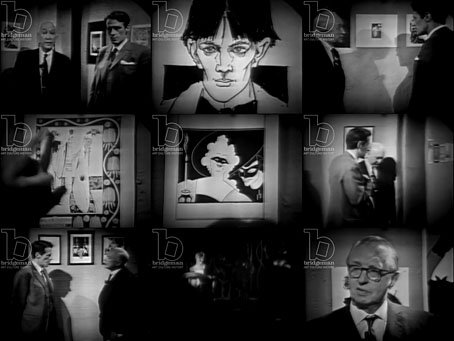
Man Alive (BBC TV, 1967): Consenting Adults: 1. The Men | Consenting Adults: 2. The Women. Two documentaries about the British homosexual experience screened shortly before the House of Commons vote that decriminalised sex between men in England and Wales.

Dolente…Dolore: The Inferno of Malcolm Lowry is the latest musical release from Larkfall: “a trembling, drunken dream with flashes of heaven and hell…”

Tom Harper on The Klenke Atlas (1660), one of the largest atlases in the world which is now available for viewing at the British Library.

Martin Jenkins of Pye Corner Audio, The House In The Woods et al talks to Bandcamp about his own brand of sinister electronica.

• RIP Peter Principle, a musician whose up-front bass playing was always a key feature of the Tuxedomoon sound.

• And RIP actor John Heard talking to Will Harris in 2015 about some of his many roles in film and TV.

• 355 free copies of Galaxy Magazine at the Internet Archive.

• Google Maps goes inside the International Space Station.

• Good with a knife: The papercut art of Ivonne Carley.

• Mix of the week: FACT Mix 610 by Karen Gwyer.

• At Dennis Cooper’s: Yasujiro Ozu Day.

• L’alba Dei Morti Viventi (1978) by Goblin | East/Jinx/•••/Music #1 (1981) by Tuxedomoon | Martin (1983) by Soft Cell

From The Furthest Signals

signals.jpg

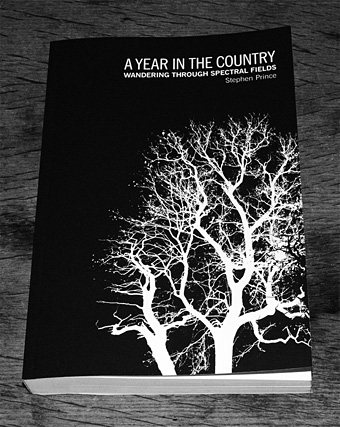
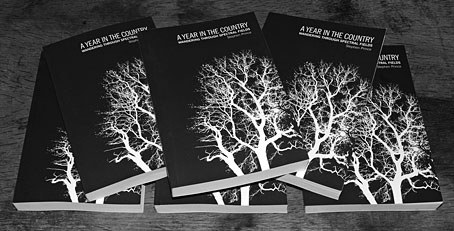
It’s been a busy year so far for A Year In The Country with two themed compilation albums being followed this month by a third, From The Furthest Signals. The latest theme is an intriguing one, taking as its starting point the erasing of broadcast tapes by British TV companies in the 1960s and early 1970s which destroyed hundreds of hours of dramas, concerts and other programmes. This was done as a money-saving measure (tape being expensive and reusable) at a time when the output of the BBC and the independent stations was regarded as mostly ephemeral and of little value. There was also a patronising class aspect to the practice: John Peel used to bitterly remind people that the BBC had saved its tapes of gardening shows while wiping concerts by the likes of Captain Beefheart.

Track list:
1) Circle/Temple – The Séance/Search for Muspel-Light
2) David Colohan – Brass Rubbings Club (Opening Titles)
3) A Year In The Country – A Multitude Of Tumblings
4) Sharron Kraus – Asterope
5) Time Attendant – The Dreaming Green
6) Depatterning – Aurora In Andromeda
7) Sproatly Smith – The Thistle Doll
8) Field Lines Cartographer – The Radio Window
9) Grey Frequency – Ident (IV)
10) Keith Seatman – Curious Noises & Distant Voices
11) Polypores – Signals Caught Off The Coast
12) The Hare And The Moon – Man Of Double Deed
13) Pulselovers – Endless Repeats/Eternal Return
14) Listening Center – Only The Credits Remain

All those wiped broadcasts may be lost down on Earth but they still exist somewhere in the halo of television and radio signals which is expanding into space. From The Furthest Signals is a speculation about the content of these remote signals, a tuning in to decayed transmissions and imagined broadcasts (that word—”broadcast”—being examined here in its widest possible sense). Some of the entries nod to fictional analogues: The Séance/Search For The Muspel Light by Circle/Temple is a reference to A Voyage to Arcturus, David Lindsay’s unique and remarkable science-fiction novel. Other entries like Brass Rubbings Club (Opening Titles) by David Colohan are suggestions for imaginary theme tunes. This is an excellent collection, one of the best to date from A Year In The Country with pieces ranging from the folk-oriented balladry of Sproatly Smith to the deteriorating electronics of Grey Frequency. The album ends with a number by Listening Center, Only The Credits Remain, whose weightless harmonies wouldn’t be out of place on Apollo by Brian Eno & Daniel Lanois.

From The Furthest Signals is out now in the familiar range of hand-crafted monochrome formats.

Previously on { feuilleton }
The Restless Field
The Marks Upon The Land
The Forest / The Wald
The Quietened Bunker
Fractures