Weekend links 138

durette.jpg

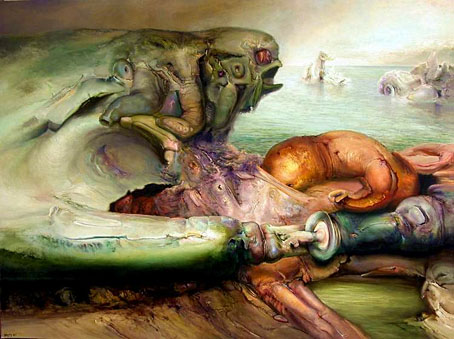
Heartsick (2011) by Kelly Durette.

• Now that Scott Walker’s Bish Bosch album is out and causing the usual consternation, the spotlight-shy singer/composer has been doing a surprising amount of promotional interviews. Simon Hattenstone talked to him for the Guardian at the end of last month; this week it was John Doran’s turn at The Quietus. One quote from the latter piece stood out in the light of this week’s posts: “…the music we’re making is meant to be an aural version of the HR Giger drawings for Alien. It always sounds to me like those look.”

Satanica is a limited-edition publication curated by Gio Black Peter & Christopher Stoddard “for anyone who rejects societal norms, for those dedicated to a life of pleasure, excess and self-reflection”.

• Sci-Fi-O-Rama has put five years’ worth of blog pictures onto Pinterest. I don’t really need to do that, there’s already a diverse crowd of Pinterest users compiling their own selection of things posted here.

As Susan Sontag once observed, pornography is practical. It was designed as a marital aid, and its vocabulary should follow natural biological rhythms and stick with hot-button words in order to produce a predictable climax. It is not about sex but is sex. Whereas the great sex writers (Harold Brodkey, DH Lawrence, Robert Gluck, David Plante, the Australian Frank Moorhouse) have a quirky, phenomenological, realistic approach to sex. They are doing what the Russian formalists said was the secret of all good fiction – making the familiar strange, writing from the Martian’s point of view.

Edmund White on writing about sex in fiction

• When pirate DVDs of films by Cocteau, Bresson and Pasolini are on sale in a Mexican market, life in the 21st century increasingly resembles a William Gibson novel. Joanne McNeil investigates.

• Copies of City Fun, Manchester’s premier music fanzine/alt culture mag (founded 1978), can now be read online at the Manchester District Music Archive.

• Linked everywhere during the past few days, the astonishing map of bomb hits on London during the Blitz (October 1940 to June 1941).

• At 50 Watts: 30 Vintage Magazine Covers from Japan and Alfred Kubin’s illustrations for Lesabéndio: An Asteroid Novel (1913) by Paul Scheerbart.

• Earlier this year for Frieze Magazine Geeta Dayal talked to musical collaborators of the great German producer Conny Plank.

Invisible Ink by Christopher Fowler, “the extraordinary stories of over one hundred forgotten authors”.

Cynthia Carr talks about Fire in the Belly, her biography of American artist David Wojnarowicz.

• “Blasphemy, Filth, And Nonsense” More Aleister Crowley ephemera at Front Free Endpaper.

• At Strange Flowers: Surrealist art by Jindrich Heisler (1914–1953).

Vladimir Nabokov wrote to Alfred Hitchcock in 1964.

• Scott Walker’s four tracks from the Nite Flights album (1978): Shutout | Fat Mama Kick | Nite Flights | The Electrician.

Giger’s Necronomicon

giger1.jpg

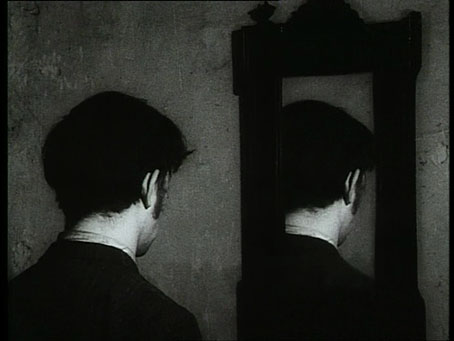
Another artist documentary only this time the artist concerned is a full participant and co-creator. Giger’s Necronomicon was filmed from 1972 to 1976 and functions as a taster for the first book collection of the artist’s work, also called Giger’s Necronomicon, which was published a year later. JJ Wittmer was the co-director. The paintings are very familiar now so it’s worth being reminded how shocking and outré Giger’s work seemed in the 1970s. In addition to interviews with the artist’s parents and some of the painting’s owners there are shots of a very modish gallery event, and we get to see inside Giger’s studio and witness one of the paintings being produced. The sound quality is somewhat erratic since the video appears to come from a Japanese tape but the voiceover is in English. The most notable thing about Giger’s Necronomicon is that all the mobile camera shots are from the artist’s point of view, we only see him when he looks in a mirror.

Giger’s Necronomicon: part 1 | part 2 | part 3 | part 4

giger2.jpg

There’s some additional interest here for Krautrock aficionados. Giger’s books mention his associations with a couple of peripheral figures from the Swiss end of Cosmic Courier/Cosmic Jokers scene: Sergius Golowin and Walter Wegmüller. Golowin is credited with one of the spacier albums on the Cosmic Courier label but he was better known in Switzerland as a writer, and he appears briefly in Giger’s Necronomicon offering some thoughts about the artist’s paintings. The music for the film sounds like the ambient jazz doodlings of Stomu Yamash’ta but is the work of Joël Vandroogenbroeck and Carole Muriel. Vandroogenbroeck recorded a lot of library music, including one release entitled Biomechanoid (1980) which has a Giger cover painting. Prior to this he was a member of German group Brainticket and plays on Cottonwoodhill (1970), an album with a (deserved) reputation as the most demented Krautrock release.

giger3.jpg

Also at YouTube is another Giger film from the same period, Giger’s Second Celebration of the Four (1977), a four-minute piece directed by JJ Wittmer showing a ritualistic club event. The combination of robes, torches and some of Giger’s more Satanic imagery resembles a black metal music video, albeit with a jazzy soundtrack.

Elsewhere on { feuilleton }
The fantastic art archive

Previously on { feuilleton }
Dan O’Bannon, 1946–2009
Alejandro Jodorowsky’s Dune
The monstrous tome

Joseph Cornell: Worlds in a Box

cornell1.jpg

Susan Sontag, Tony Curtis and Stan Brakhage all shared an appreciation for the work of American artist Joseph Cornell (1903–1972), and all appear in a 51-minute documentary Joseph Cornell: Worlds in a Box directed by Mark Stokes for the BBC in 1991. Susan Sontag was also the subject of one of Cornell’s collages, something she discusses here. Tony Curtis collected many of Cornell’s boxes and used to visit the artist when he was in New York; in Stokes’s film he discusses their relationship and reads from Cornell’s writings.

cornell2.jpg

I’ve had a tape of this for years courtesy of Kerri Sharp who worked on the film (hi Kerri!) but it’s taken a while to turn up on YouTube. The value of films such as this isn’t so much the view they give of the works themselves—all of which are better judged in books or museums—but the way they function as mini-biographies which give a sense of the environment from which the art emerged. You can read in detail about Cornell’s life in Deborah Solomon’s Utopia Parkway: The Life and Work of Joseph Cornell (1997) but a text description of his home lacks the immediacy of the views Stokes gives us of the Cornell house, and the room where he created so much of his work. The film also follows Cornell’s train journeys into New York City, and visits the locations of his short films. Extracts of the latter appear throughout the documentary but you can see them in full at Ubuweb.

If you’re looking for an arty (and costly) Christmas present this year, Thames & Hudson have just published Joseph Cornell’s Manual of Marvels: How Joseph Cornell reinvented a French Agricultural Manual to create an American Masterpiece; two books in a box with a CD, edited by Analisa Leppanen-Guerra and Dickran Tashjian. The NYT reviews it here.

Previously on { feuilleton }
Joseph Cornell, 1967
Rose Hobart by Joseph Cornell
View: The Modern Magazine

The art of Thomas Cole, 1801–1848

cole1.jpg

The Titan’s Goblet (1833).

Thomas Cole’s Titan’s Goblet isn’t featured at the Google Art Project, unfortunately, but the following paintings are, and all benefit from being able to explore their details. Cole’s colossal vessel predates Surrealism by a century, and is one of many paintings which always has me mentally labelling him as the American John Martin (1789–1854). Having thought of him for years as an American artist–not least because he founded the Hudson River School–it’s a surprise to learn he was born in Bolton, a town not far from Manchester, with his parents emigrating to the US when he was 17. John Martin also grew up in the north of England so there’s another similarity, although the more important comparison concerns their use of painting to convey the spectacularly vast and unreal scenes common to the imaginative side of Romantic art. The Titan’s Goblet is unusual in not having any particular symbolic or moral significance, unlike the pictures below, it’s Magritte-like in its careful depiction of the impossible. The Subsiding of the Waters of the Deluge, on the other hand, could be exhibited beside Francis Danby’s The Deluge (1840) for a “before and after” effect. Like Martin, Cole enjoyed painting architecture of an exaggerated scale. The Architect’s Dream features an Egyptian temple of stupendous size, while the pyramid looming in the background is closer to William Hope Hodgson’s seven-mile-high Last Redoubt than any structure on the Nile plain.

Of equal interest are Cole’s two well-known series: The Course of Empire (1833–36) and The Voyage of Life (1842), both of which I’d love to see at Art Project size.

cole2.jpg

Expulsion from the Garden of Eden (1828).

cole3.jpg

The Subsiding of the Waters of the Deluge (1829).

cole4.jpg

The Architect’s Dream (1840).

Elsewhere on { feuilleton }
The fantastic art archive

Previously on { feuilleton }
John Martin’s musical afterlife
Albert Bierstadt in Yosemite
Danby’s Deluge
John Martin: Heaven & Hell
Darkness visible
Two American paintings
The apocalyptic art of Francis Danby

Weekend links 135

kuhlman.jpg

Two Grove Press covers by Roy Kuhlman. From Arden Kuhlman Riordan’s Pinterest page collecting her father’s cover designs.

• “When people asked me what boylesque was, I’d say I’m doing burlesque and I have a penis,” said Mr. Ferguson.

Sequence5: 42 tracks of new, atmospheric/ambient music. A free download in a variety of formats.

The trailer for Jimmy’s End, the forthcoming film by Alan Moore and Mitch Jenkins.

As a porn performer, I can say from experience and with confidence that I’ve never been objectified by other performers. Nor have I been objectified by viewers. At least not in a way that seemed to confuse them into thinking I was an object. What happens instead is that I shift in and out of object-hood. Athletes do this too—they engage with their bodies for a specific task. At the end of the game or the shoot, the context changes.

Conner Habib on The Virtues of Being an Object

Secret Weapons (1972), David Cronenberg’s lost TV movie resurfaces.

Joseph Burnett reviews Nude, the new album by The Irrepressibles.

Over a third of e-readers are used just once before being set aside.

The guarded, the cautious, the small-scale, the modest, the well-crafted—such books may be rewarded (in our own time, at the national level), but they are rarely preserved. They are not preserved because guardedness, caution, smallness, modesty, and craft can be replaced in any given generation. What is irreplaceable is excess: Of verbal kinesis, religious intensity, intellectual voracity.

Amit Majmudar on Entertainment and Excess: The Great Literary Audiences

Miniature Book Interviews with Louis Wain Bound by Hand.

A Tour Inside Salvador Dalí’s Labyrinthine Spanish Home.

• Horror fiction should be deep, not cheap, says Nina Allan.

• RIP Peter Kuhlmann aka Pete Namlook

More is More by Alex Trochut

The Useless Web

Lost In The Sea (1992) by Sequential (Pete Namlook & DJ Criss) | Angel Tech (1994) by Bill Laswell & Pete Namlook | Yenlik (Part II) (1996) by Burhan Öçal & Pete Namlook