Steampunk Calendar

00steampunkcalendar.jpg

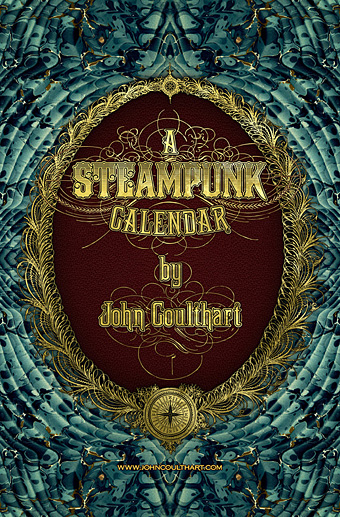
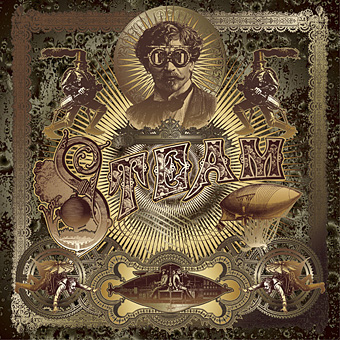
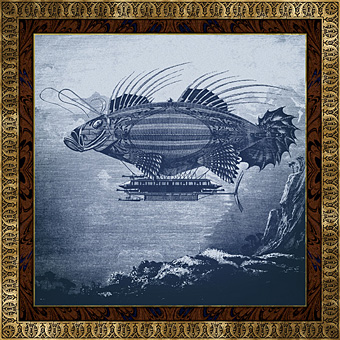
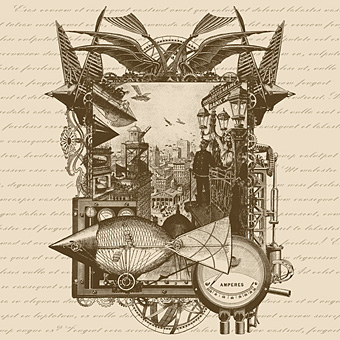
This one arrives two months late, the months of October and November being overly preoccupied with other work. I chose a steampunk theme for this year since this has been a productive area recently. The idea was one of those simple notions—rework some book covers into calendar pages—that in practice ended up taking much longer than anticipated. Larger copies of the pages may be seen here while the CafePress purchase page is here. My thanks to everyone who’s been buying things recently.

For those who dislike over-decorated 19th-century science fiction but may still want a Coulthart calendar there’s the Cthulhu Calendar (still a popular item), the Psychedelic Wonderland calendar, and the Through the Psychedelic Looking-Glass calendar. Note: Calendars at CafePress can now be purchased throughout the year so make sure that you select January as the starting month if you want the months to run for a single year only.

01steampunkcalendar.jpg

02steampunkcalendar.jpg

03steampunkcalendar.jpg

Continue reading “Steampunk Calendar”

Lovecraft’s Monsters

Lovecraft's Monsters

Graphic for the title page and ends of chapters.

I don’t usually post things so far away from publication, but editor Ellen Datlow put these pictures on her Facebook page a few hours ago so I may as well do the same here.

Back in February I bought a Wacom Intuos drawing tablet, something I’ve been using with regularity for the past few months. The Alas Vegas Tarot cards I designed in the summer were the first major attempt at getting used to working with it; Lovecraft’s Monsters, a forthcoming fiction anthology for Tachyon is the second, and I now feel very comfortable working with it. More than that, I’m increasingly pleased with the way it’s possible to combine the drawing techniques I’ve been using for years with the additional possibilities provided by working in Photoshop. As always, it’s the end result that counts but arriving at an end result can be easy or difficult. Some of these illustrations look no different than they would have done had I used ink on paper but they took half the time to create, a considerable benefit when a deadline is looming.

The stories Ellen Datlow has chosen for this collection all present different aspects of monstrosity seen through the lens of Lovecraft’s fiction and his cosmic menagerie. Some are full-on extensions of the Mythos, others are more allusive; all the pieces bar one have been published before but I’d not read any of them so for me this was fresh material. Having spent the past few years saying I was finished with Lovecraft’s fiction I was excited to be working on this book. The stories are good, and I welcomed the challenge of having to illustrate such a variety of material.

Larger copies of all the pictures can be seen here.

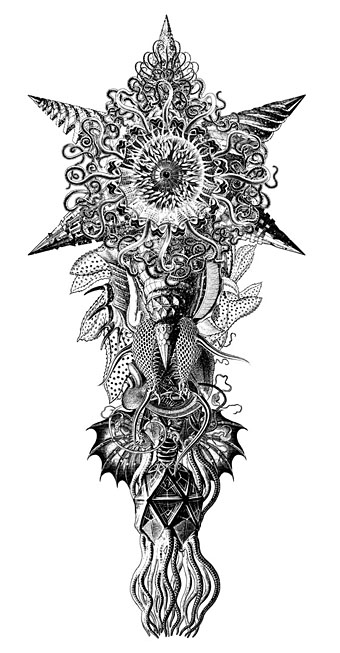
The star-headed thing at the top of this page is another amalgam of elements plundered from Haeckel’s Kunstformen der Natur and other sources. I’ve leaned rather heavily on Haeckel in the past, something I wanted to avoid here; this serves as a kind of visual punctuation separating the stories.
Lovecraft's Monsters

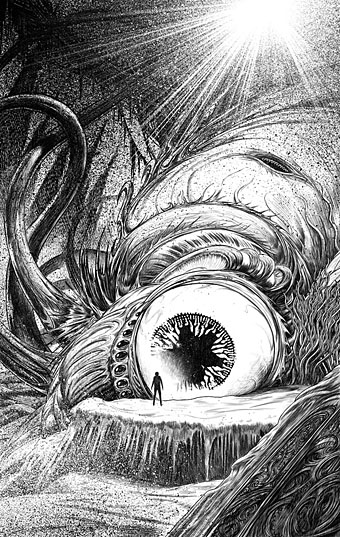
Cthulhu.

The drawing I’ve called Cthulhu is a piece for the introductory pages. Having already produced a lot of Cthulhoid art I didn’t want to repeat myself. The initial idea was of a tiny human figure faced with something enormous and nightmarish; that could be a vast eyeball or it could be a mouth or some other organ/aperture, the vagueness was intentional. Lovecraft continually impresses upon his readers how difficult things are to describe or apprehend but you seldom find this quality in art based upon his stories. Cthulhu especially has devolved into little more than an outsize man-in-a-rubber-suit à la the Creature from the Black Lagoon. In The Call of Cthulhu the figure on the mysterious statuette is described as having a humanoid shape but Lovecraft doesn’t describe the appalling reality in any detail at all. When Cthulhu is struck by a ship at the end of the story it breaks apart and is then seen recombining, the implication being that the creature is corporeally amorphous.
Lovecraft's Monsters

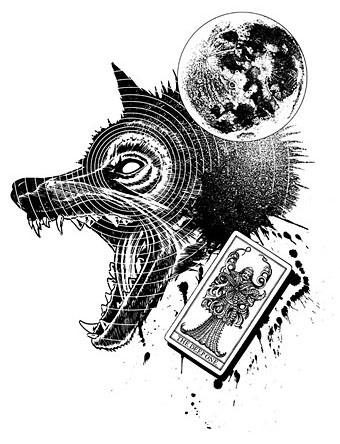
Only the End of the World Again by Neil Gaiman.

Neil Gaiman’s entry concerns a werewolf private detective in Innsmouth. Lovecraft’s decaying fishing village and its inhabitants turn up in several of the stories so care was taken to avoid repetition.
Lovecraft's Monsters

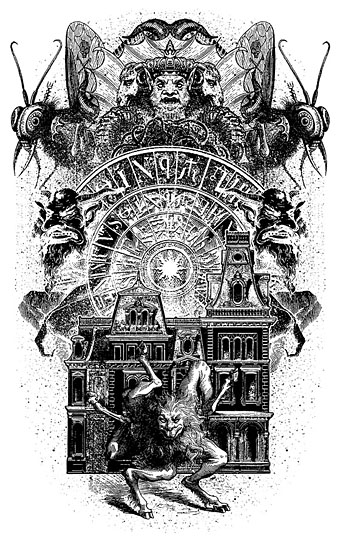
Bulldozer by Laird Barron.

A great story about another detective, a Pinkerton agent this time, hunting his quarry through the Old West. Collin de Plancy’s Dictionnaire Infernal is mentioned so I used some of Louis Breton’s illustrations from the third edition.

Continue reading “Lovecraft’s Monsters”

Weekend links 187

delia.jpg

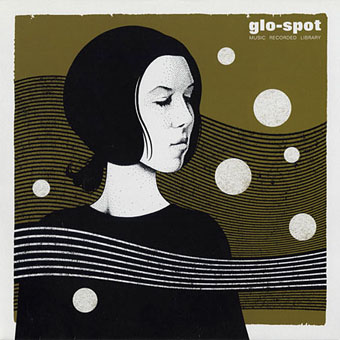
Delia Derbyshire (2007) by Iker Spozio.

Whatever you think of Doctor Who, Delia Derbyshire’s recording of Ron Grainer’s theme tune is a landmark piece of electronic music. Those glassy electronic tones still sound unique today, not least for their having been created using rudimentary oscillators and much laborious tape editing. In Radiophonic Workshop: the shadowy pioneers of electronic sound, Joe Muggs looks at the history of the BBC’s electronic composers. If you’re a Radiophonic-head then the Alchemists of Sound TV documentary from 2003 is essential viewing.

There’s more (there’s always more): Delia Derbyshire – Sculptress of Sound: part one of a seven-part radio documentary about the great electronic music composer, and Blue Veils and Golden Sands, Martyn Wade’s radio play about Delia. Related: Delia-Derbyshire.org, Delia Derbyshire: An audiological chronology and A History of the Doctor Who theme. And don’t miss: Silence Is Requested In The Ultimate Abyss (1969) by Welfare State and White Noise, an incredible slice of electro-psychedelia from the John Peel Presents Top Gear album.

• “Why don’t books for grown-ups have illustrations any more?” asks Christopher Howse. Some of them do, this past week I’ve been finishing a new series of illustrations for a story anthology.

• From 2006: Ian Penman on cigarettes, espionage, and the masterful (and superior) television adaptation of Tinker, Tailor, Soldier, Spy.

It was Malcolm [McLaren] who suggested that the main characters be a boy who looks like a girl who looks like a boy and vice versa. What was strange was that, actually, in 1985 this was nobody’s vision of the fashion industry. Since then, fashion and fascism have crept closer: you’ve got John Galliano doing his promotional bits for the Third Reich, you’ve got Alexander McQueen killing himself, you’ve got Versace and that horrible, violent stalker coming for him. Since it was written, almost all of it has come true apart from the nuclear winter, but I think we’re working on that. The actual society that the story happens in is much more like the society we have now than culture was in 1985.

Alan Moore on Fashion Beast, Situationism, and why he hates superheroes.

• KW Jeter talks about his latest novel, Fiendish Schemes, and the “cultural juggernaut” that is steampunk.

• Grit and Social Dynamics in Smoke Ghost: Elwin Cotman on the weird fiction of Fritz Leiber.

The Secret Lives of the Vatican’s Gay Cardinals, Monks, and Other Clergy Members.

Don Cherry & Organic Music Theatre, live in the RAI TV studios, 1976.

• Otherworldly Art and Photography: Mlle Ghoul finds the best things.

• From 1998: Rahma Khazam on composer Bernard Parmegiani.

• Mix of the week: Marshland: The Mix by Hackneymarshman.

• “Let’s colonize the clouds of Venus,” says Ian Steadman.

J. Hoberman on David Cronenberg’s Visual Shock.

The Delian Mode (1968) by Delia Derbyshire | Tom Baker (1981) by The Human League | Doctor Who? (1984) by Doctor Pablo & The Dub Syndicate

Weekend links 186

mutu.jpg

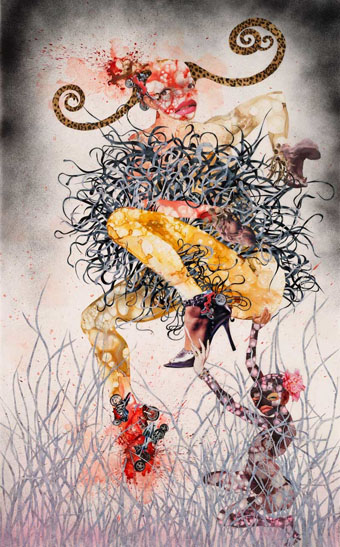
One Hundred Lavish Months of Bushwhack (2004) by Wangechi Mutu.

I wouldn’t be so bold as to call Benjamin Noys’ contribution to the recent The Weird conference at the University of London a highlight, but it was a surprise to find Lord Horror in general and the Reverbstorm book in particular being discussed alongside so many noteworthy offerings. Noys’ piece, Full Spectrum Offence: Savoy’s Neo-Weird, is now available to read online, a very perceptive examination of the tensions between the Old Weird and the New.

• Le Transperceneige is a multi-volume bande dessinée of post-apocalypse science fiction by Jacques Lob & Jean-Marc Rochette. Snowpiercer is a film adaptation by Korean director Bong Joon-ho featuring John Hurt, Jamie Bell, Chris Evans and Tilda Swinton. Anne Billson calls the director’s cut an “eccentric masterpiece” so it’s dismaying to learn that the film is in danger of being hacked about by the usual rabble of unsympathetic Hollywood distributors.

• This month marks the 100th anniversary of the publication of Proust’s À la recherche du temps perdu. Public Domain Review posted some of the paintings mentioned in Swann’s Way (or The Way by Swann’s as the latest translation so inelegantly has it).

How the Paris World’s Fair brought Art Nouveau to the Masses in 1900: a huge picture post about my favourite exposition.

• Mix of the week: “Sport of Kings” Mix by Ricardo Donoso. Related: Paul Purgas on five favourite records.

Ernst Reichl: the man who designed Ulysses. Related: Hear all of Finnegans Wake read aloud over 35 hours.

• “Why does Alain de Botton want us to kill our young?” A splendid rant by Sam Kriss.

• Love’s Secret Ascension: Peter Bebergal on Coil, Coltrane & the 70th birthday of LSD.

• Malicious Damage: Ilsa Colsell on the secret art of Joe Orton & Kenneth Halliwell.

• Just Say No to the Bad Sex Award, or the BS Award as Tom Pollock calls it.

• Lauren O’Neal’s ongoing PJ Harvey Tuesdays: One, Two, Three and Four.

Neville Brody on the changing face of graphic design.

A Brief History of the London Necropolis Railway.

Des Hommes et des Chatons: a Tumblr.

• At Pinterest: Androgyny

• Virgin Prunes: Pagan Lovesong (vibeakimbo) (1982) | Caucasian Walk (1982) | Walls Of Jericho (live at The Haçienda, Manchester, 1983; I’m in that audience somewhere)

Weekend links 182

iwami.jpg

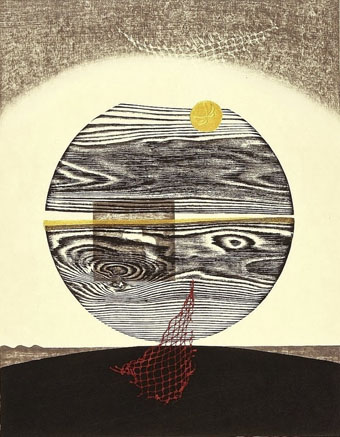
Mirror of Water (1981) by Reika Iwami.

• The week in comics: Paul Gravett interviews Enki Bilal. | Paul Kirchner’s wordless and inventively surreal strip, The Bus, was republished in France last year but it’s been out-of-print for years everywhere else. Read it online here. | Bill Watterson has made the entire run of Calvin and Hobbes available for free.

• “…seek and learn to recognize who and what, in the midst of the inferno, are not inferno, then make them endure, give them space.” Leland de la Durantaye reviews Italo Calvino: Letters 1941–1985.

• Artist Charles Ross says “My interest in science is related to how mysterious it is.” Ross Andersen visited Ross’s Star Axis, “a masterpiece forty years in the making”.

There is a satirical intent at work here, as well as mordant humour, a potent mix that reminds one more of the absurdist fictions of the French jazz musician Boris Vian than of anything in the SF canon. Science fiction is not central in Harrison’s work – not even as a target of his sharp wit – and it is a mistake to regard him as being chiefly interested in demolishing a genre that is only one of several he has mastered.

John Gray on M. John Harrison’s Kefahuchi Tract trilogy. This week Harrison posted a new piece of fiction on his blog.

• Mixes of the week: Secret Thirteen Mix 091 by Sugai Ken, and Bride of the Abominable Marshman, an early Halloween mix by Hackneymarshman.

• Clive Hicks-Jenkins on Schandmasken (masks of shame), and the clay visage of Paul Wegener’s Golem.

• A version of Kraftwerk’s Trans Europe Express by Chicago band Disappears.

Postcards to the Curious: MR James-themed artwork by Alisdair Wood.

Clive Barker: Why I Once Gave Up Horror Movies Entirely.

• Artist Melinda Gebbie at Phantasmaphile.

Fragment, a new video from Emptyset.

38 photos of airships through the ages.

• This Much I Know: Kenneth Anger.

• Trans Europe Express (2000) by Señor Coconut Y Su Conjunto | Trans Europe Express (2007) by Receptors | Trans Europe Express (2012) by Daniel Mantey