The Last Angel of History: Afrofuturism, science fiction and electronic music

lastangel1.jpg

There’s been a resurgence of interest recently in Afrofuturism (see this recent newspaper article, and this site), not before time when the term has been around since 1993. The concept itself goes back a long way, at least as far as the remarkable body of work produced by Sun Ra (1914–1993) whose vast discography dates from 1956, and has to be considered the first concerted attempt to craft an expansive cosmic/futuristic mythos in music.

lastangel2.jpg

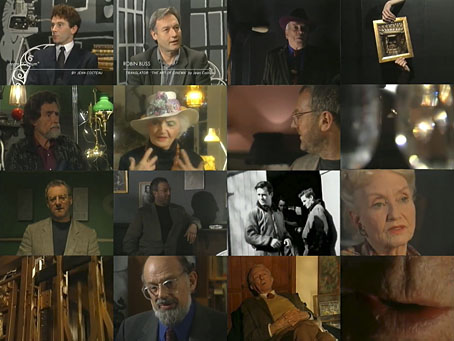
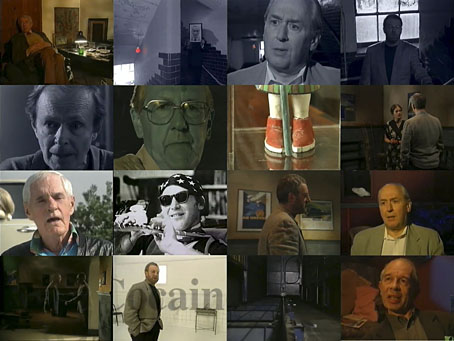
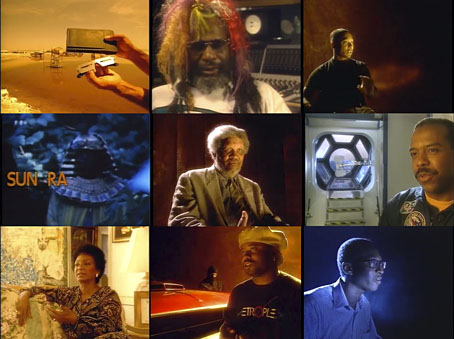
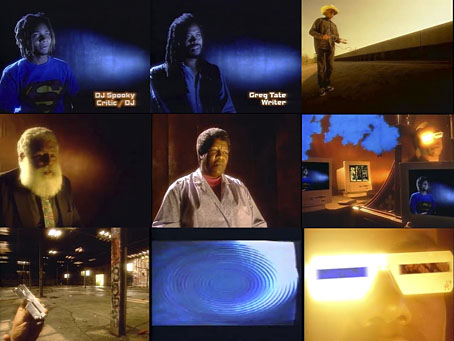
Sun Ra and his Arkestra make fleeting appearances in The Last Angel of History (1997), a 45-minute documentary by John Akomfrah which looks at Afrofuturism via its manifestations in fiction, contemporary music, and in space travel. The connecting tissue is a somewhat dated bit of cyperpunk fluff but it’s worth sticking around for the cast of interviewees. On the musical side there’s George Clinton, Derrick May, Juan Atkins, Carl Craig, DJ Spooky, Goldie, and A Guy Called Gerald; on the writing side there’s Ishmael Reed (whose early novels would have been published by my colleagues at Savoy Books if the company hadn’t gone bust in the early 80s), Samuel R. Delany (Savoy did publish one of his novels), Octavia Butler, Kodwo Eshun and Greg Tate; Nichelle Nichols has a chance to talk about something other than Star Trek for once, since she helped with NASA’s recruitment programme. There’s also Bernard A. Harris Jr, one of the first African-Americans in space. The techno-fetishism seems overheated now that we’ve all calmed down about computers and the internet, but that doesn’t negate the important points: SF as a reflection of the present moment and a means to imagine a different situation or way of life. With 2014 being Sun Ra’s centenary year I’m anticipating a lot more of this.

The Last Angel of History: part 1 | part 2 | part 3

Previously on { feuilleton }
Rammellzee RIP

The Angel of the Revolution

aotr01.jpg

The British Library’s recent uploading of a million copyright-free images to Flickr has been a mixed blessing. On the one hand it’s an exemplary gesture on the Library’s part, on the other I wish they’d archived their images somewhere other than Flickr where the recent interface changes have made using the site for any length of time a very frustrating business.

Complaints aside, the unsorted BL haul is being slowly sifted by those who aren’t dissuaded by Yahoo’s iniquities. A recent set labelled Science Fiction is comprised as much of science fact as fiction but it does include these illustrations from The Angel of the Revolution: A Tale of the Coming Terror (1893), a novel of aerial warfare and anarchist revolt by British author George Griffith. This is one of several works from the late Victorian era which show how lazy it is to characterise the period as a time of unthinking imperialism:

First published in 1893, The Angel of the Revolution is a fantastical tale of air warfare in which an intrepid group of Socialists, Anarchists and Nihilists defeat Capitalism with their superior knowledge of dirigibles. Led by a crippled, brilliant Russian Jew and his daughter, Natasha, The Brotherhood of Freedom establishes a ‘pax aeronautica’ over the world, thanks to the expertise of Richard Arnold, a young scientist. Arnold falls in love with Natasha (the eponymous Angel), and Griffith builds a utopian vision of Socialism and romance.

As well as writing a cracking good story, Griffith is also remarkably prescient in predicting future technology, including air travel, tidal power, and solar energy. He also engages with timeless debates over social responsibility. Griffith imagines a world in which the wealth of the obscenely rich is sequestered, their property seized for the public good, and their businesses nationalised. Those with unearned incomes are forced to either pay punitive tax, or to undertake equivalent labour in the community. Griffith’s message lacks subtlety, but it couldn’t be more pertinent in the twenty-first century. (Précis swiped from here.)

aotr02.jpg

Griffith’s novel is essentially Jules Verne’s Robur the Conqueror (1886) with a helping of revolutionary politics; even the aircraft are similar, with Griffith’s illustrator, Fred T. Jane, depicting an armed sky-boat held aloft by the same vertical propellers as those used by Robur’s machine. Jane (not “Janes” as they name him on the Flickr pages) later founded the Jane’s series of warship and aircraft catalogues so it’s fitting that his illustrations combine both those craft in a single design.

aotr03.jpg

Continue reading “The Angel of the Revolution”

Weekend links 192

fournier.jpg

“Chloromgonfus detectis, a dragonfly that can detect volatile pollutants.” A speculative insect by artist Vincent Fournier.

• “…a modern taxonomist straddling a Wellsian time machine with the purpose of exploring the Cenozoic era…” Butterflies tied together Vladimir Nabokov’s home, science, and writing, says Mary Ellen Hannibal.

• More ghosts: Kira Cochrane on the Victorian tradition of the Christmas ghost story, and Michael Newton on why Jack Clayton’s The Innocents (1961) remains one of the very best ghost films. No argument there.

• Should you require further persuasion, Daniel Barrow reviews I Am The Center: Private Issue New Age Music In America 1950-1990, an album still receiving heavy rotation in these quarters.

Swords, daggers—weapons with a blade—retained a mysterious, talismanic significance for Borges, imbued with predetermined codes of conduct and honor. The short dagger had particular power, because it required the fighters to draw death close, in a final embrace. As a young man, in the 1920s, Borges prowled the obscure barrios of Buenos Aires, seeking the company of cuchilleros, knife fighters, who represented to him a form of authentic criollo nativism that he wished to know and absorb.

The Daggers of Jorge Luis Borges by Michael Greenberg

The Junky’s Christmas (1993): a seasonal tale from William Burroughs turned into a short animated film by Nick Donkin and Melodie McDaniel.

• Mixes of the week: Secret Thirteen Mix 101 by Jan Jelinek, and The Conjuror’s Hexmas by Seraphic Manta.

• Meet the 92-year-old Egyptian [Halim El-Dabh] who invented electronic music.

The Mysterious Lawn Home of Frohnleiten, Austria.

The Peacock Room at Sammezzano Castle in Italy.

The Quay Brothers’ Universum.

Alan Bennett‘s diary for 2013.

Butterfly (1968) by Can | Butterfly (1974) by Herbie Hancock | Butterfly (1998) by Talvin Singh

Doctor Moreau book covers

moreau22.jpg

William Heinemann (first edition, 1896).

The inevitable book cover post. The examples here are among the better ones, Wells’ novel having been blighted over the years by monstrosities as hideous as those that fall from Moreau’s vivisection table. That said, some early covers might be bad but they look like masterpieces next to some of the fatuous offerings from the current ebook bonanza. The novel has great illustration potential but few of the covers below seem to have given the matter much consideration. Bantam’s Rousseau painting would suit many other novels but doesn’t belong with this particular book. Even Penguin seem to have been confounded of late; their illustration of feline eyes peering through undergrowth could again be used on many other novels, while their most recent edition sports a maze design which doesn’t communicate anything of the book’s content to a curious reader.

The one I like best of this selection is Cuchi White’s illustration for the 2001 Gallimard edition, a picture that does much to convey the novel’s disturbing blend of speculative fiction and outright horror.

moreau16.jpg

Ace (1958).

moreau06.jpg

Ballantine Books (1963).

moreau12.jpg

Magnum Books (1968); illustration: Douglas Rosa.

Continue reading “Doctor Moreau book covers”

The Island of Doctor Moreau

moreau2.jpg

Painting by Paul Lehr for the Berkley Highland paperback (1970).

The Island of Doctor Moreau is one of those Victorian novels everyone thinks they know well enough from various film or television adaptations, even when those adaptations have accreted a layer of misconception around the story. In the case of HG Wells’ novel we have The Island of Lost Souls (1932), which the author loathed for its vulgarisations, and which he helped get banned in Britain for many years; the 1977 film directed by Don Taylor which nobody seems to have a good word for; and Richard Stanley’s 1996 adaptation which might have been worthwhile if he hadn’t been kicked off his own film shortly after shooting began. These films may not distort Wells’ novel as much as the numerous adaptations of Dracula, and Dr Jekyll and Mr Hyde, but they still present a skewed impression of a book which is stranger and more disturbing than any screen version.

Wells’ story purports to be the written account of one Edward Prendick who finds himself on Moreau’s remote island after a shipwreck. The bare bones of the story are familiar: Prendick is rescued by Moreau’s alcoholic assistant, Montgomery, and ends up on the island against the doctor’s wishes. The story deviates from the films very quickly by introducing a setting that’s commonplace in Victorian literature but which Hollywood abhors: the all-male enclave. The Island of Lost Souls put “Edward Parker” on the island with his fiancée but went further (to the outrage of Wells and the British censors) by adding a sexy Panther Woman to the menagerie with whom Moreau encourages Parker to mate. There are women among the “Beast People” in Wells’ novel but we’re assured that they’re as grotesque as their male counterparts.

moreau3.jpg

Illustration by Lawrence Sterne Stevens (aka Lawrence) for Famous Fantastic Mysteries, October 1946.

And here we have the second major difference between novel and films: given the limitations of makeup effects—not to say the limitations of the human body—it’s no surprise that the Beast People in the films tend to be like Star Trek aliens, mostly humanoid with a variety of different facial features. Stan Winston’s effects in the 1996 film were the most successful, and were aided considerably by casting a range of actors of different sizes and shapes. All the films tend to present single types, however: wolf-man, cat-woman, bear-man, etc. Wells was writing in 1896 yet his imagination had already brought him this far:

The two most formidable Animal Men were my Leopard-man and a creature made of hyena and swine. Larger than these were the three bull-creatures who pulled in the boat. Then came the silvery-hairy-man, who was also the Sayer of the Law, M’ling, and a satyr-like creature of ape and goat. There were three Swine-men and a Swine-woman, a mare-rhinoceros-creature, and several other females whose sources I did not ascertain. There were several wolf-creatures, a bear-bull, and a Saint-Bernard-man. I have already described the Ape-man, and there was a particularly hateful (and evil-smelling) old woman made of vixen and bear, whom I hated from the beginning. She was said to be a passionate votary of the Law. Smaller creatures were certain dappled youths and my little sloth-creature. But enough of this catalogue.

Later on Moreau has this to say:

“The fact is, after I had made a number of human creatures I made a Thing—” He hesitated.

“Yes?” said I.

“It was killed.”

“I don’t understand,” said I; “do you mean to say—”

“It killed the Kanaka—yes. It killed several other things that it caught. We chased it for a couple of days. It only got loose by accident—I never meant it to get away. It wasn’t finished. It was purely an experiment. It was a limbless thing, with a horrible face, that writhed along the ground in a serpentine fashion. It was immensely strong, and in infuriating pain. It lurked in the woods for some days, until we hunted it; and then it wriggled into the northern part of the island, and we divided the party to close in upon it. Montgomery insisted upon coming with me. The man had a rifle; and when his body was found, one of the barrels was curved into the shape of an S and very nearly bitten through. Montgomery shot the thing. After that I stuck to the ideal of humanity—except for little things.”

Continue reading “The Island of Doctor Moreau”