Weekend links 205

lin.jpg

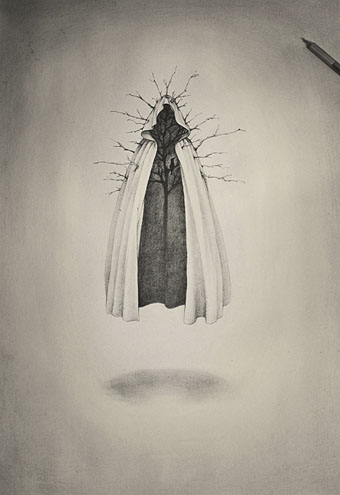
King’s Cloak (2012) by Alice Lin.

• The week in Finnegans Wake: illustrations by John Vernon Lord for a new Folio Society edition; The Guardian‘s review from 1939; Christina Scholz explores Joyce’s use of the Ant and the Grasshopper fable; Sheng Yun wonders when Dai Congrong will compete the first Chinese translation of the book; Stephanie Boland on riverrun, the latest theatrical adaptation.

• It’s Robert Aickman‘s centenary year so Faber are reissuing several volumes of his peerless “strange stories”. And it’s good to see the great Clark Ashton Smith finally receive the blessing of Penguin Classics.

• The Teenage Boyfriend of the Beat Generation: Marcus Ewart slept with Allen Ginsberg (who showed him how to give a proper blowjob), and had an eight-year relationship with William Burroughs.

Yet another advocate of shorter work time was JS Mill. He dismissed the ‘gospel of work’ proposed by Thomas Carlyle in part because it drew a veil over the real costs of work, including slave work that Carlyle sought to defend. Instead, Mill advocated a ‘gospel of leisure’, arguing that technology should be used to curtail work time as far as possible. This stress on technology as a means to shorten work time was later to feature in Bert­rand Russell’s 1932 essay, ‘In Praise of Idleness’.

David Spencer on The Case for Working Less

• More Steve Moore memorials: Mitch Jenkins put the pages from Unearthing online, while Pádraig Ó Méalóid posted a personal appreciation at The Beat.

Linda Marsa on how psychedelics are helping cancer patients deal with their illness.

• The Weird Album: art by Enrique Alcatena (including some Lovecraftian pieces).

• Didgeridoom: Director Ted Kotcheff talks to Robert Barry about Wake in Fright.

The Jealous God (1985), a comic strip by Alejandro Jodorowsky & Silvio Cadelo.

• The Dune in Your Head: Ethan Gilsdorf on the greatest SF film never made.

50 minutes of Kraftwerk on Rockpalast in 1970. Astonishing.

• At 50 Watts: Sheet-music covers from Sweden in the 1920s.

Harvard discovers old library books bound in human skin.

Same-sex marriage is now legal in England and Wales.

Wyrd Daze has reached issue 5.

Kaleidoscopes at Pinterest.

Flight From Ashiya (live on TV! 1967?) by Kaleidoscope (UK) | Lie To Me (1969) by Kaleidoscope (US) | Kaleidoscope (1984) by The Rain Parade
Weekend links 203

budich.jpg

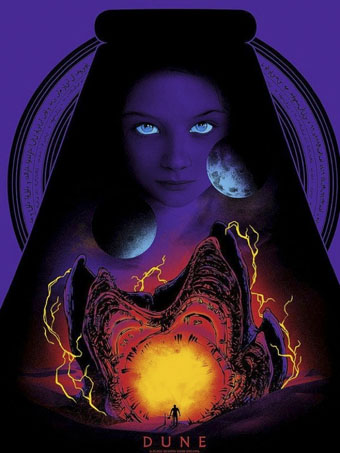
A Dune-inspired piece by Joshua Budich for In Dreams: an art show tribute to David Lynch at Spoke Art.

• “[Montague] Summers was a friend of Aleister Crowley and, like [Jacques d’Adelswärd] Fersen, conducted homoerotic black masses; whatever eldritch divinity received their entreaties was evidently propitiated by nude youths.” Strange Flowers goes in search of the Reverend Summers.

• More Jarmania: Veronica Horwell on the theatrical life of Derek Jarman, Paul Gallagher on When Derek Jarman met William Burroughs, and Scott Treleaven on Derek Jarman’s Advice to a Young Queer Artist.

Robert Henke of Monolake talks to Secret Thirteen about his electronic music. More electronica: analogue-synth group Node have recorded a new album, their first since their debut in 1995.

This hypertrophied response to decay and dilapidation is what drives the “ruin gaze”, a kind of steroidal sublime that enables us to enlarge the past because we cannot enlarge the present. When ruin-meister Giovanni Piranesi introduced human figures into his “Views of Rome”, they were always disproportionately small in relation to his colossal (and colossally inaccurate) wrecks of empire. It’s not that Piranesi, an architect, couldn’t do the maths: he wasn’t trying to document the remains so much as translate them into a grand melancholic view. As Marguerite Yourcenar put it, Piranesi was not only the interpreter but “virtually the inventor of Rome’s tragic beauty”. His “sublime dreams”, Horace Walpole said, had conjured “visions of Rome beyond what it boasted even in the meridian of its splendour”.

Frances Stonor Saunders on How ruins reveal our deepest fears and desires.

Gustave Doré. L’imaginaire au pouvoir: Four short films from the Musée d’Orsay to accompany their current exhibition, Gustave Doré (1832–1883): Master of Imagination.

• At Dangerous Minds: Remembering Cathy Berberian, the hippest—and funniest—lady of avant-garde classical music.

• “Merely a Man of Letters”: Jorge Luis Borges interviewed in 1977 by Denis Dutton & Michael Palencia-Roth.

Luke Epplin on Big as Life (1966), a science-fiction novel by EL Doctorow which the author has since disowned.

The Psychomagical Realism of Alejandro Jodorowsky: Eric Benson talks to the tireless polymath.

• A video essay by Matt Zoller Seitz for the 10th anniversary of David Milch’s Deadwood.

Eugene Brennan on Scott Walker’s The Climate of Hunter (1984).

Dune at Pinterest.

• Prophecy Theme from Dune (1984) by Brian Eno | Olivine (1995) by Node | Gobi 110 35′ south 45 58′ (1999) by Monolake

Title pages

title1.jpg

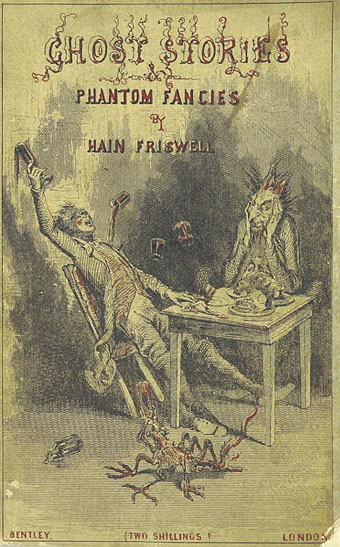
Ghost Stories and Phantom Fancies (1858) by James Hain Friswell.

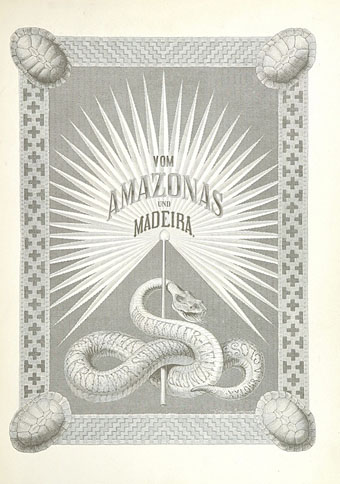
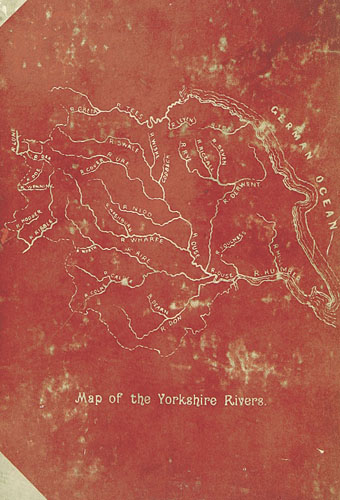
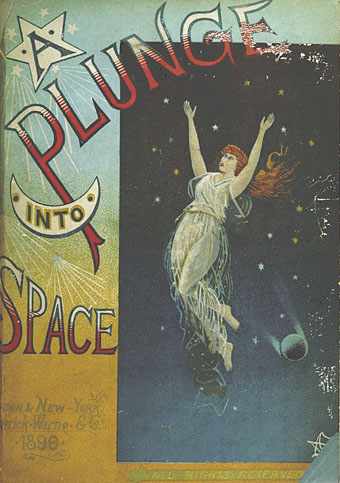
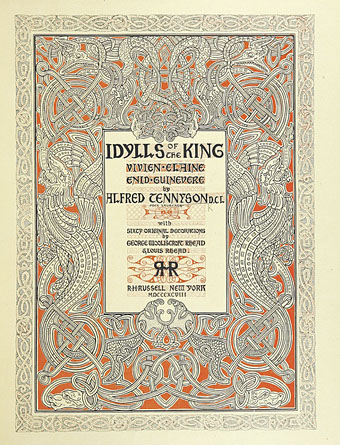
The vast repository of copyright-free images from the British Library is still being sifted into Flickr sets. These are a few examples from a set of 786 title pages which range from elegant book plates to Dime Westerns and Penny Dreadfuls. A Plunge into Space is a science-fiction novel about a journey to the planet Mars in a spaceship called The Steel Globe. Robert Cromie was also the author of A New Messiah (1901), and The Crack of Doom (1895). The latter—which has some great chapter titles: The Universe A Mistake!, The Murder Club, A Telepathic Telegram—may be read here.

title5.jpg

Vom Amazonas und Madeira (1874) by Franz Keller-Leuzinger.

title2.jpg

Yorkshire Rivers. Reproduced from The Yorkshire Weekly Post (1890) by Tom Bradley.

title3.jpg

A Plunge into Space (1890) by Robert Cromie.

title4.jpg

Idylls of the King (1898) by Alfred Tennyson. Illustrated by George and Louis Rhead.

Previously on { feuilleton }
A Trip to Mars

Steampunk: The Art of Victorian Futurism

steampunk.jpg

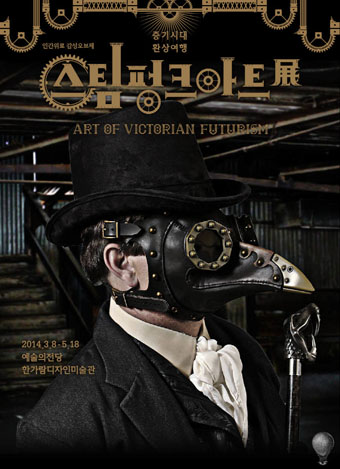
Those who were wishing a few years ago that steampunk would crawl into a hole and quietly die must be gnashing their teeth at the way the sub-genre continues to flourish. (See Pinterest for examples from the increasingly wild world of steampunk fashion.) If anyone reading this is visiting Seoul in the next couple of months—or even living there—then they’ll find some of my book covers on display at Artcenter IDA. Steampunk: The Art of Victorian Futurism is a look at the wide range of steampunk aesthetics, from graphic works to three-dimensional constructions, clothing, and so on. I’d like to credit the promotional design above but I’m not sure who’s responsible. Good type design whoever it was.

jeter.jpg

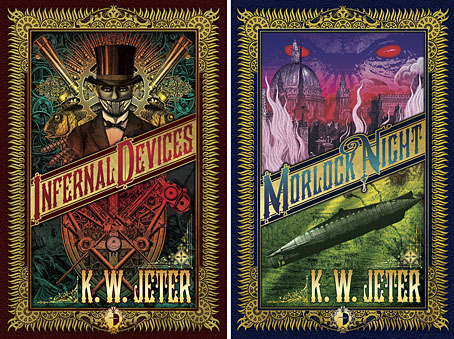
Five of my covers are on display, including the three I’ve done for KW Jeter’s novels. Mr Jeter, as mentioned before, is the man who first coined the term “steampunk” in the 1980s. This isn’t the first time my artwork has appeared in South Korea—when I was painting cards for Magic: The Gathering in the 1990s there were Korean editions printed—but it is the first time anything of mine has been exhibited there. The exhibition runs to mid-May.

Previously on { feuilleton }
Steampunk Calendar
Words and pictures
Nathanial Krill at the Time Node
Fiendish Schemes
Ghosts in Gaslight, Monsters in Steam
Steampunk Revolution
The Bookman Histories
Aether Cola
Crafting steampunk illustrations
SteamPunk Magazine
Morlocks, airships and curious cabinets
The Steampunk Bible
Steampunk Reloaded
Steampunk overloaded!
More Steampunk and the Crawling Chaos
Steampunk Redux
Steampunk framed
Steampunk Horror Shortcuts

Marienbad hauntings

marienbad1.jpg

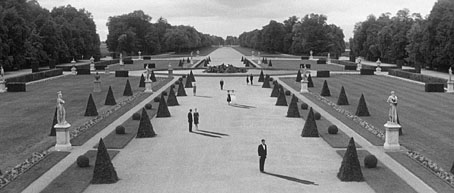
Last Year in Marienbad (1961). Via.

In our age of cultural plenitude it can be salutary to remember the time when many things were easy to discover but often impossible to experience; albums, books, and especially non-American films could all too frequently exist as rumours, referenced but always out of reach. Two films in particular dogged me for years in this remote manner: The Saragossa Manuscript (1965) by Wojciech Has, and Last Year at Marienbad (1961), the film that Alain Resnais made from a very novelistic screenplay by Alain Robbe-Grillet. Philip Strick alerted me to this pair of films with tantalising descriptions in a time-travel chapter of his book-length study, Science Fiction Movies (1976). Marienbad isn’t a time-travel film as such (a later Resnais film, Je t’aime, je t’aime [1968] does deal with the subject, however, and even features an actual time machine), but it is sufficiently open-ended to allow a science-fictional rationale into its enigmatic spaces. Strick’s book covered all the familiar SF territory as well as looking beyond the clichés of Hollywood and the SF genre, hence the inclusion not only of Marienbad and Saragossa, but also Je t’aime, je t’aime, Chris Marker’s La Jetée (1962), Bergman’s The Hour of the Wolf (1968), Pasolini’s Teorema (1968), and Buñuel’s Discreet Charm of the Bourgeoisie (1972). Most of these films, which were seldom shown on TV, I had to wait years to see.

marienbad2.jpg

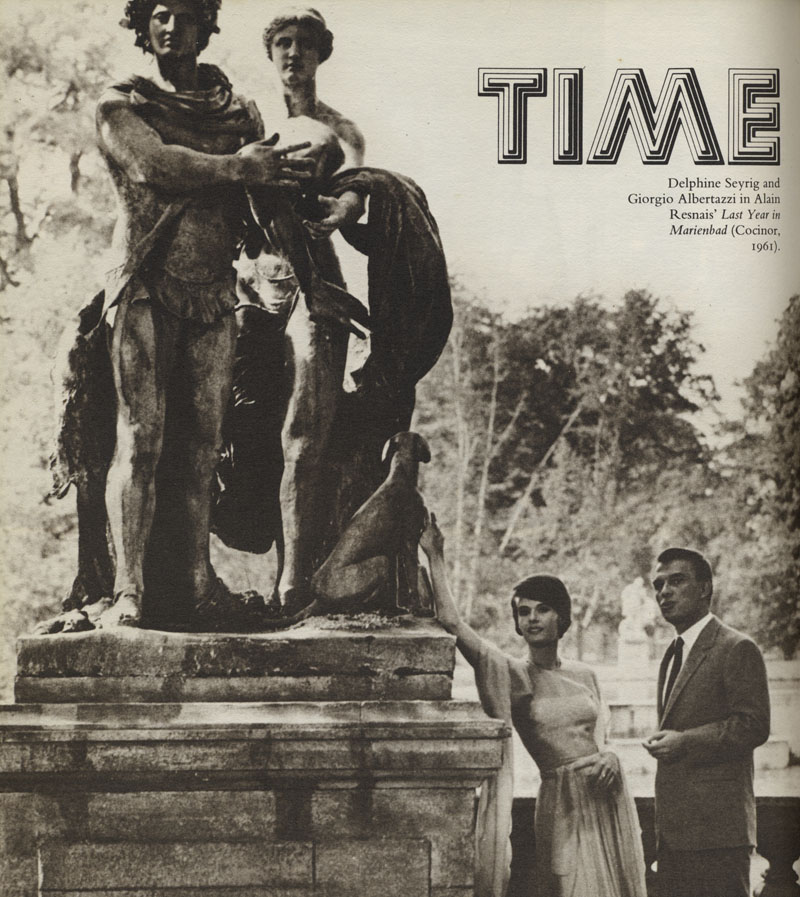
Marienbad page from Strick’s Science Fiction Movies.

I was reading Strick’s book in 1979, and since I was bored with generic clichés, and also reading a lot of reprinted stories from New Worlds magazine, I became a little obsessed with these inaccessible films, Marienbad especially. It’s difficult to say what was so fascinating about a few words of description, and a single photograph, but the picture seemed an unlikely inclusion amid so many pages filled with robots and spaceships. It promised a film that approached the themes of science fiction at the same oblique angle as many of the stories in New Worlds. A couple of years later I found a copy of the Robbe-Grillet screenplay whose pages of dogged description read like the kind of forbidding and formal exercise that Brian Aldiss had attempted in Report on Probability A (1967), a novel that first appeared in New Worlds. Among other similarities, both works share a dismissive attitude to character, presenting a trio of ciphers indicated by no more than their gender, and some initial letters. This confluence of influences, Marienbad included, fed into the chunks of New Worlds-derived prose I was writing at the time, trying to fix inchoate impressions on the page. I always failed each time I returned to that photo from Marienbad, the real charge—as I didn’t see at the time—being a result of the gap between the promise of the image and the inaccessible film itself. Finally seeing Marienbad in the late 1980s was a curious thing, like meeting somebody face-to-face after years of remote correspondence; the same readjustments needed to be made to accept that this was the reality of the work of art, not Robbe-Grillet’s embryonic version, or my own baroque imaginings.

marienbad3.jpg

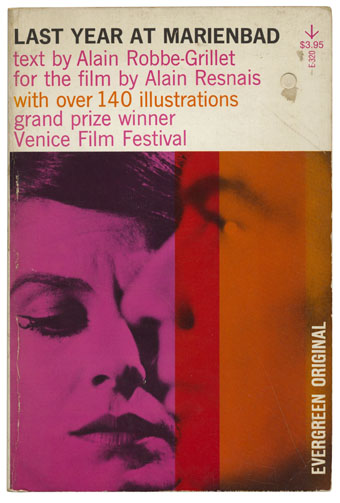
Screenplay book, 1962. Cover design by Roy Kuhlman.

If the above seems to strain for association by hauling a celebrated work of the Nouvelle Vague into a disreputable area then this essay by Thomas Beltzer is worth a read. Beltzer’s “Intertextual Meditation” compares Marienbad to The Invention of Morel (1940), a science-fiction novel by Adolfo Bioy Casares which Jorge Luis Borges described as “perfect” (and which I really ought to read). If I’ve not written much about Marienbad itself that’s because it really needs to be experienced rather than described or explained. It’s a film that’s easier to admire than actually enjoy—I need to be in the right mood to accept its formalities—and given the choice I’d often sooner watch Providence (1977). But where Providence and other Resnais films have inevitably dated, Last Year in Marienbad remains out of time, a 20th-century dream held captive in 18th-century architecture where the airless rococo chambers might easily share a labyrinth with the hotel waiting-room at the end of 2001: A Space Odyssey.

• Alain Resnais obituaries: The Guardian | The Telegraph
Last Year in Marienbad at film|captures
Marienbad (2012) by Julia Holter