Weekend links 361

f1x-2.jpg

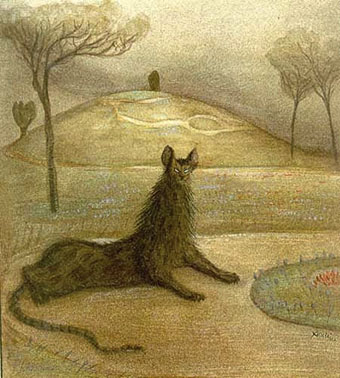
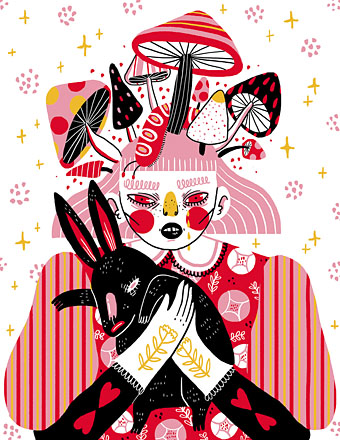
The Future Vol.2 (2016) by f1x-2.

• One of the notable things about the reaction to the original series of Twin Peaks was the way in which Americans were astonished that something so outré could be allowed on television. Here in the UK the response was a little more subdued; we had, after all been spoiled for years by The Prisoner, Sapphire and Steel, and numerous odd and challenging dramas by Dennis Potter and others. Pre-dating all of these was The Strange World of Gurney Slade (1960), a six-part series starring Anthony Newley that was unprecedented in its Surrealism. Andy Murray looks back at the series, and at the rest of Newley’s career.

Andrew Dickson on Peter Ackroyd whose latest book, Queer City: Gay London from the Romans to the Present Day, is published later this month.

Alyona Sokolnikova on a Soviet vision of the future: the legacy and influence of Tekhikia – Molodezhi (Technology for the Youth) magazine.

You know who weren’t cops? All the radicals and queers and artists and dreamers that were there while I grew up, my mom and dad’s old friends from New York and the wider bohemian world, the actors and the drag queens and the dilettantes and the ex junkies and the current junkies, the kind of queer people who wouldn’t get caught dead getting married, the people who actually made the “old New York” of the myth into what it was. They were smart and they were funny and they were tougher than I can imagine and they were possessed of an existential commitment to the idea that life is complicated and so we shouldn’t be quick to judge. They were tolerant, in the true sense, even while they were tireless advocates for actual justice. […] Now we’re Rudy Giuliani, trying to get offensive art pulled off the walls. Now we’re the book burners. Now we’re the censors. Now we attack the ACLU for defending free speech. Now we screech about community morals. Now we’re the prison camp screws. That’s us. Me, I could never be one of the good ones. Never. I can never live up to that ideal. I know I’m not good enough. I know when the judgment day comes, I go down. And so I decline. You can decline, too.

Planet of Cops by Freddie deBoer, or how inflexible morality makes everyone a cop

• Mixes of the week: FACT Mix 601 by Dark Entries, Secret Thirteen Mix 221 by Eli Keszler, and XLR8R Podcast 490 by Ben Lukas Boysen.

• At Dangerous Minds: Punk, Patti Smith, William Burroughs & capitalism: A “conceptual conversation” with RE/Search’s Vale.

Emily Wells on the strange, irreverent worlds of Down Below and The Complete Stories of Leonora Carrington.

Rick Poynor on Mike Halliwell’s montages based on JG Ballard’s The Atrocity Exhibition.

• “Why are the British so scared of cannabis?” asks Professor David Nutt.

Witchcraft and the Gay Counterculture (1978) by Arthur Evans.

• At Dennis Cooper’s: Jacques Rivette Day.

Designing Penguin Modern Classics

Future Dub (1994) by Mouse On Mars | Future Proof (2003) by Massive Attack | Future (2004) by Alva Noto
The Restless Field

restless.jpg

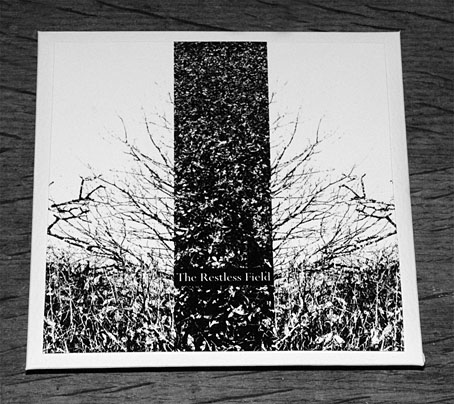
The advent of Spring brings a new CD release from A Year In The Country. The Restless Field is another themed compilation, and one of their best to date, the theme this time being the British landscape as a site for political resistance:

The Restless Field is a study of the land as a place of conflict and protest as well as beauty and escape; an exploration and acknowledgment of the history and possibility of protest, resistance and struggle in the landscape/rural areas, in contrast with sometimes more often referred to urban events. It takes inspiration from flashpoints in history while also interweaving personal and societal myth, memory, the lost and hidden tales of the land.

References and starting points include: The British Miners Strike of 1984 and the Battle Of Orgreave. Gerrard Winstanley & the Diggers/True Levellers in the 17th century. The first battle of the English Civil War in 1642. The burying of The Rotherwas Ribbon. The Mass Trespass of Kinder Scout in 1932. Graveney Marsh/the last battle fought on English soil. The Congested Districts Board/the 19th century land war in Ireland. The Battle Of The Beanfield in 1985.

Track list:
1) Ghosts Of Blood & Iron — Field Lines Cartographer
2) Mortimer’s Cross — Vic Mars
3) [ fears ] avaunt! upon “the” hill — Bare Bones
4) 3am M5 Field Raid — Assembled Minds
5) Agrarian Lament — Grey Frequency
6) Beneath The Cherry Trees — Endurance
7) Congested District — Listening Center
8) Badby 80 — Pulselovers
9) Ribbons — Sproatly Smith
10) Graveney Marsh — Polypores
11) Last Best West (circ. 1896) — Depatterning
12) Black Slab — Time Attendant
13) A Mutable History Under A Bright June Sky — A Year In The Country
14) Beyond Jack’s Gate — David Colohan

All of the compositions this time are instrumentals so the degree to which the music relates to the theme depends upon the interpretation of the listener; some pieces, such as 3am M5 Field Raid, offer an overt clue in the title. The success of the collection as a whole is also open to question; it may be that the artists are becoming more confident—many of the people here have appeared on previous AYITC releases—or that the theme this time was more stimulating than others have been.

For the past week or so I’ve been listening to Coil almost exclusively so I hear a lot of Coil echoes in these pieces. I doubt that these are intentional—although given shared concerns, some of them may be—but by 2000 Coil’s music had moved away from the urban orientation of the 1980s to a pastoral mysticism that also had a political impetus: “The forest is a college / Each tree a university”. Late Coil also involved the construction of fields of sound, the products of fields of another kind: electrical and (possibly) psychical. I can’t speak for the latter quality but there’s plenty of the former in this collection of restless fields.

The album will be released on 2nd May, and is available for pre-order now.

Previously on { feuilleton }
The Marks Upon The Land
The Forest / The Wald
The Quietened Bunker
Fractures

Weekend links 348

wright.jpg

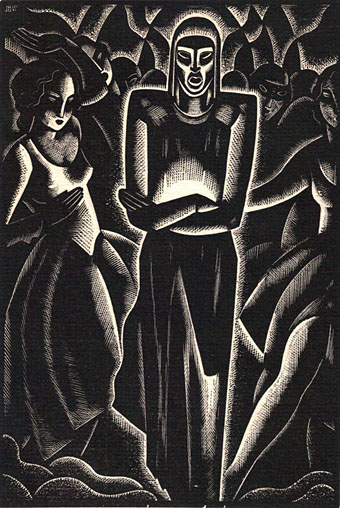
The Masque of the Red Death (1932) by John Buckland Wright.

• Thanks to MeadesShrine I’ve been working my way through Jonathan Meades’ television essays so this is timely: The Plagiarist in the Kitchen, an “anti-cookbook” by the man with forthright opinions.

• “‘Decopunk’ deserves to be bigger than Steampunk,” says Sam Reader. I consider my work on Bruce Sterling’s Pirate Utopia to be more Futurist than Deco but the period is right.

• “Celebrating the cinematically surreal, bizarre, cult, oddball, fantastique, strange, psychedelic, and the just plain WEIRD!”: 366 Weird Movies

But Fascism is also a political and economic system. Why, then, cannot we have a clear and generally accepted definition of it? Alas! we shall not get one—not yet, anyway. To say why would take too long, but basically it is because it is impossible to define Fascism satisfactorily without making admissions which neither the Fascists themselves, nor the Conservatives, nor Socialists of any colour, are willing to make. All one can do for the moment is to use the word with a certain amount of circumspection and not, as is usually done, degrade it to the level of a swearword.

George Orwell discussing the imprecise application of the “F” word

• At The Psychedelic Museum, a report on this month’s art show, Alice’s Adventures in Underground Culture.

M. John Harrison announces a new story collection which will be published later this year by Comma Press.

• Mixes of the week: Iceland: Foreboding Joy by Abigail Ward, and Secret Thirteen Mix 211 by Fluxion.

Daisy Woodward on how LSD adventures inspired John Waters’ Multiple Maniacs.

• More Moomins: Graeme Miller talks to Patrick Clarke about his soundtrack music.

• Some recent cultural highlights as chosen by Timothy J. Jarvis.

Benge presents a list of his favourite electronic albums.

Is this the underground Everest?

Strange Things Are Happening (1968) by Rings & Things | Strange Magic (1975) by Electric Light Orchestra | Strange (1977) by Wire |

Weekend links 347

kubin.jpg

Dream Animal (1903) by Alfred Kubin.

• The week in Finland: A set of Finnish emojis includes icons for notable cultural exports such as Tom of Finland and Moominmamma. Tove Jansson’s creations have received fresh attention this month with the debut release of the electronic soundtrack music for The Moomins, an animated TV series made in Poland in 1977, and first broadcast in the UK in 1983. Andrew Male talked to Graeme Miller and Steve Shill about creating Moomins music with rudimentary instrumentation.

• Russian company Mosfilm has made a new copy of Andrei Tarkovsky’s science-fiction masterpiece, Stalker (1979), available on their YouTube channel. Tarkovsky’s films have been blighted by inexplicable flaws in their home releases, as Stalker was when reissued on a Region B Blu-ray last year. The new Mosfilm upload looks better than my old DVD so for the moment this is the one I’ll be watching.

• Before straight and gay: the discreet, disorienting passions of the Victorian era. Deborah Cohen reviews A Very Queer Family Indeed by Simon Goldhill. Related: Kevin Killian reviews Murder in the Closet: Essays in Queer Clues in Crime Fiction Before Stonewall, edited by Curtis Evans.

• “How many graphic designers owe their introduction to typography to a teenage encounter with the typefaces and lettering found on album covers?” asks Adrian Shaughnessy.

• Mixes of the week: Secret Thirteen Mix 210 by Ascion, FACT Mix 587 by Seekersinternational, and The Séance, 4th February 2017.

Pankaj Mishra on Václav Havel’s lessons on how to create a “parallel polis”. Related: The Power of the Powerless by Václav Havel.

Hans Corneel de Roos on Dracula‘s lost Icelandic sister text: How a supposed translation proved to be much more.

• “I live outside the world in a universe I myself have created, like a madman or a holy visionary.” — Michel de Ghelderode.

• The Metropolitan Museum of Art makes 375,000 images of public art freely available under Creative Commons Zero.

Richard H. Kirk on Thatcherite pop and why Cabaret Voltaire were like The Velvet Underground.

Emily Gosling on what David Lynch’s use of typography reveals (or doesn’t).

White Noise Sounds of Frozen Arctic Ocean with Polar Icebreaker Idling.

John Gray on what cats can teach us about how to live.

• At Dennis Cooper’s: Day of the Mellotron (Restored).

The Warburg Institute Iconographic Database.

Sastanàqqàm by Tinariwen.

Tanz Der Vampire (1969) by The Vampires of Dartmoore | Dracula (1983) by Dilemma | Vampires At Large (2012) by John Zorn

Weekend links 345

lazo.jpg

Wasted Alice (2017) by Sonia Lazo.

Brian Eno: “We’ve been in decline for 40 years—Trump is a chance to rethink.” An equivocal headline, and the usual misinterpretation from the hard-of-thinking, prompted Eno to issue a clarification. More Trumpery: Jonathan Meades wonders what kind of wall “The Lout” might want to build. Related: almost all of Meades’ smart and witty television essays may be viewed at MeadesShrine (click through to Vimeo for download links).

• “Once you’ve turned entire buildings into instruments as on Medium, and then you’ve made the ionosphere itself an instrument as on Signal, where do you go next?” Emptyset discuss their forthcoming album, Borders, and a change in their working methods.

Christopher Burke & David Davis at Weird Fiction Review talk to Valancourt Books about reprinting neglected works of horror and gay fiction.

• At the BFI this week: All about Jim Jarmusch’s leading men, from Tom Waits to Bill Murray, and John Hurt (RIP): 10 essential films.

• “Claude Arnaud’s biography of Jean Cocteau shows how the artist lived a life nourished by infinity,” says Ricky D’Ambrose

Sukhdev Sandhu on John Berger: “a pathfinder who was alive to the present”.

Theodore Carter on Doll Part Art: Visual Feasts Made of Plastic Bodies.

• Count Backwards from Ten: Peter Bebergal‘s Top 10 Occult in Media.

• Books from Strange Attractor will now be distributed by MIT Press.

Eero Saarinen, the architect who saw the future.

• Mix of the week: FACT Mix 585 by Niagara.

• RIP Maggie Roche.

Hammond Song (1979) by The Roches | Losing True (1982) by The Roches | Keep On Doing What You Do / Jerks On The Loose (live, 1990) by The Roches