Weekend links 162

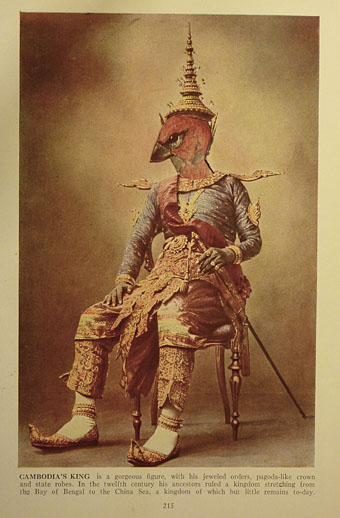
penrose.jpg

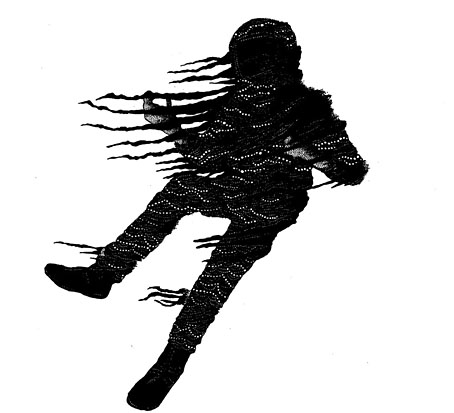
Untitled drawing by Sophie Penrose.

• “…many arts producers – much more so than the artists themselves – were over-fearful of the prospect of prosecution, when in nearly all incidents there were no reasonable grounds for bringing charges.” Julia Farrington of Index on Censorship on self-censorship by artists and art institutions in the UK.

• “Tons of tones – some dissolved in beats, some beatless treatments – in a continuous mix of current ambient and electronic goodies, pouring more than a score of ambi-valent shapes and etheric waves into an occluded reverb-trail echo-veil mood-stream.” Ambivalentine, a mix by Albient.

• “I was followed by a bee, a golden bee. For three years, every day, the golden bee followed us.” Forty years ago Penthouse magazine talked to Alejandro Jodorowsky. This month Dazed magazine asked the polymath twenty questions.

• “…investigators were stupefied to find the spymaster’s quarters full of pink leather whips, cosmetics, and pornographic photographs, framed in snakeskin.” Erik Sass on Colonel Redl and a gay spy scandal in the Vienna of 1913.

• “With no one to sponsor him, Marino Auriti’s dream museum became the stuff of legends.” Stefany Anne Golberg on Marino Auriti’s Enciclopedico Palazzo del Mondo.

• The Crime Epics of Louis Feuillade: YouTube links and more. Related: YouTube’s Vault of Horrors.

Werner Herzog: 50 years of potent, inspiring, disturbing films.

• The doors of perception: John Gray on Arthur Machen.

• Some Sort of Alchemy: Albert Mobilio on Sun Ra.

• British Pathé’s film of ghost hunters in 1953.

• “Escape your search engine Filter Bubble

• RIP Jack Vance

Bumble Bee Bolero (1957) by Harry Breuer | The L S Bumble Bee (1967) by Peter Cook & Dudley Moore | Ant Man Bee (1969) by Captain Beefheart and His Magic Band | Be A Bee (2009) by Air

The Rite of Spring and The Red Shoes

redshoes1.jpg

The Red Shoes: Moira Shearer and Léonide Massine.

Emeric is often too easily accused of basing the principal male character of The Red Shoes on Serge Diaghilev, to which he replies: “There is something of Diaghilev, something of Alex Korda, something of Michael, and quite a little bit of me.”

Michael Powell, A Life in Movies (1986)

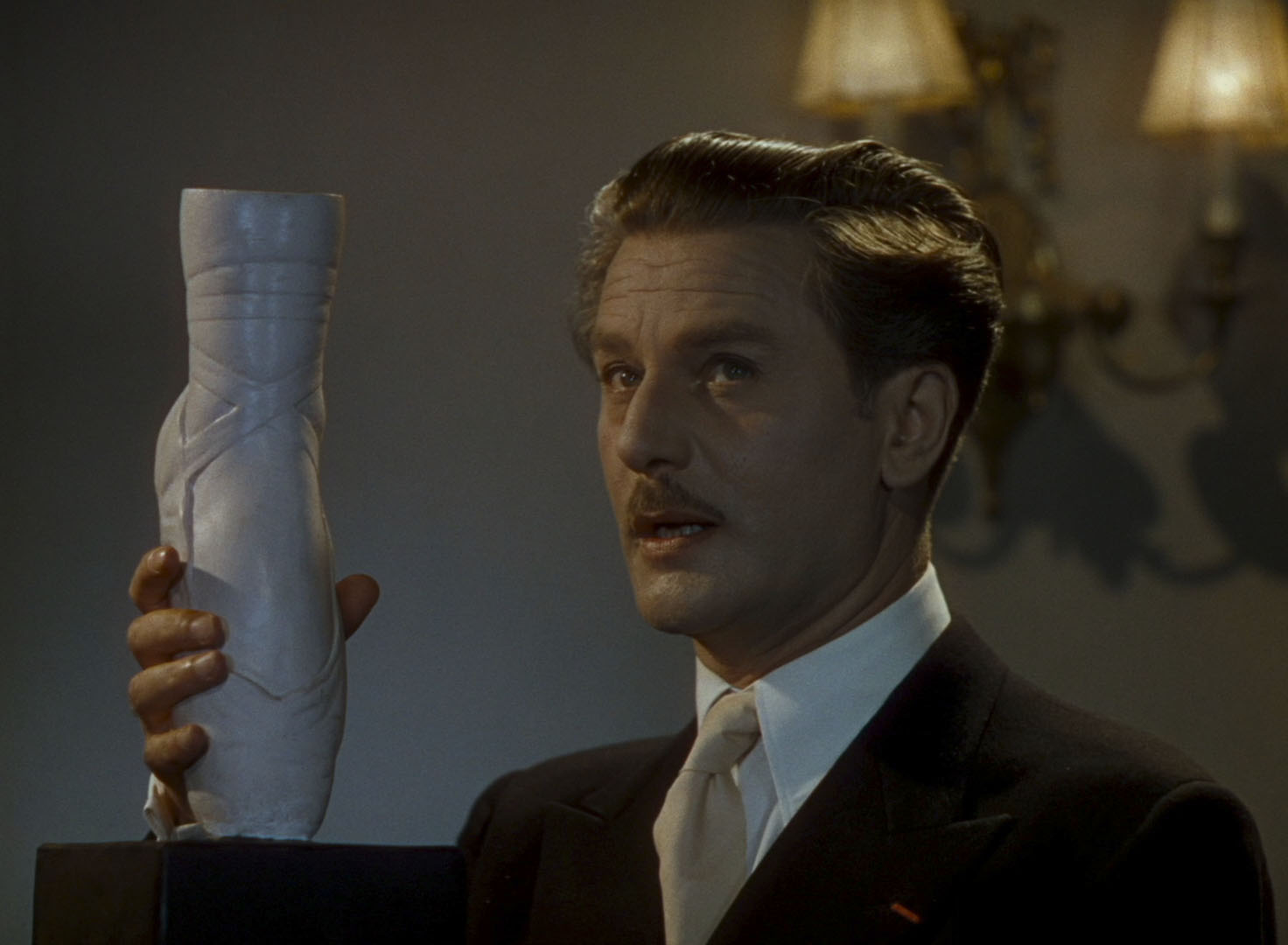
Despite Emeric Pressburger’s qualificatory comments, there’s a lot more of the Ballets Russes in Powell and Pressburger’s film of The Red Shoes (1948) than first meets the eye. Or so I discovered, since I’d known about the film via my ballet-obsessed mother for years before I’d even heard of Diaghilev or Stravinsky. The most obvious connection is the presence of Léonide Massine who took the leading male roles in Diaghilev’s company following the departure of Nijinsky. He also choreographed Parade, the ballet which featured an Erik Satie score and designs by Picasso. The fraught relationship between Diaghilev and Nijinsky forms the heart of The Red Shoes: Anton Walbrook’s impresario, Boris Lermontov, is the Diaghilev figure while the brilliant dancer who obsesses him, and for whom he creates the ballet of The Red Shoes, is Moira Shearer as Victoria Page. That the dancer happens to be a woman is a detail which makes the film “secretly gay”, as Tony Rayns once put it. Diaghilev and Nijinsky were lovers, and fell out when Nijinsky married; in The Red Shoes Lermontov demands that Vicky choose between a life of art or a life of marriage to composer Julian Craster (Marius Goring). She chooses love but ends up drawn back to art, with tragic consequences that mirror the Hans Christian Andersen story. That story, of course, ends with a young woman dancing herself to death after donning the fatal shoes, a dénouement that’s unavoidably reminiscent of The Rite of Spring.

redshoes2.jpg

Anton Walbrook as Lermontov.

Lermontov: Why do you want to dance?

Vicky: Why do you want to live?

Other parallels may be found if you look for them, notably the figure of Julian Craster who comes to Lermontov as a young and unknown composer just as Stravinsky did with Diaghilev. Craster’s music isn’t as radical as Stravinsky but The Red Shoes was already giving the audience of 1948 enough unapologetic Art with a capital “A” without dosing them with twelve-tone serialism. The film aims for the same combination of the arts as that achieved by Diaghilev, especially in the long and increasingly fantastic ballet sequence. This was another of Powell’s shots at what he called “a composed film” in which dramaturgy and music work to create something unique. The Red Shoes is a film that’s deadly serious about the importance of art, a rare thing in a medium which is so often at the mercy of Philistines. In the past I’ve tended to favour other Powell and Pressburger films, probably because I’ve taken The Red Shoes for granted for so long. But the more I watch The Red Shoes the more it seems their greatest film, even without this wonderful train of associations. The recent restoration is out now on Blu-ray, and it looks astonishing for a film that’s over sixty years old.

Seeing as this week has been all about The Rite of Spring, here’s a few more centenary links:

Stravinsky’s The Rite of Spring, Visualized in a Computer Animation for its 100th Anniversary
• George Benjamin on How Stravinsky’s Rite of Spring has shaped 100 years of music
Strange Flowers visits the Théâtre des Champs-Elysées

Previously on { feuilleton }
The Rite of Spring, 2001
The Rite of Spring, 1970
The Rite of Spring reconstructed

Weekend links 160

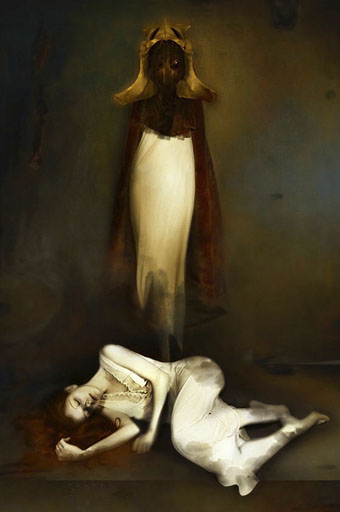
floyd.jpg

Collage by Jeneleen Floyd.

• “…slowly, block-by-block, pedestrians are starting to take back the streets.” Wayne Curtis on the hazards of being a pedestrian in a world of cars.

• Michael Hann looks back at LA’s Paisley Underground, and also talks to some of its key members.

Meighan O’Toole interviews JL Schnabel about her Blood Milk jewellery designs.

My central thesis is that camp was always a kind of signifying practice invented out of necessity (both for survival and for sheer creative pleasure) by “queer” (in the classic sense) outsiders – fags, drag queens, transsexuals, deviants, sexual renegades – and that it was always by its very nature deeply political and committed: Some people dedicated their entire lives to it! Sontag’s interpretation always seemed a bit dismissive to me somehow.

The seldom unprovocative Bruce LaBruce talking to Mark Allen about camp in the 21st century.

• Studiocanal launches an appeal to find the lost materials of The Wicker Man.

• At Flickr: Tales from a Parallel Universe and London’s Lost Music Venues.

Michael Wood tells us what we learn when we read Italo Calvino’s letters.

• Fragments of a Portrait: Francis Bacon and David Sylvester in 1966.

• An extract of a live session from Adrian Sherwood and Pinch.

• In Baba Yaga’s Hut: Amelia Glaser on Russian folk tales.

Buckminster Fuller Book Covers from the 1970s.

A Century of Proust.

The Real World (1982) by The Bangles | With A Cantaloupe Girlfriend (1982) by The Three O’Clock | Medicine Show (1984) by The Dream Syndicate | No Easy Way Down (live in Tokyo, 1984) by The Rain Parade

William E. Jones on Fred Halsted

halsted1.jpg

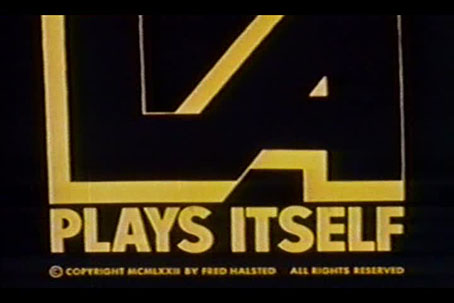
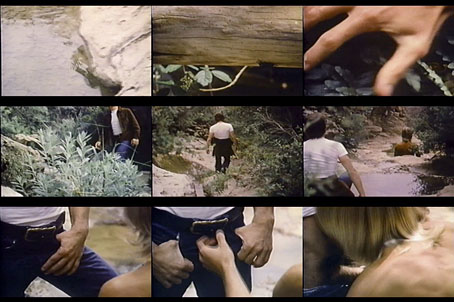
Presenting an interview by John Wisniewski with William E. Jones, author of Halsted Plays Himself (2011). The subject is gay filmmaker and performer Fred Halsted (1941–1989) whose 1972 film LA Plays Itself was a pioneering piece of low-budget cinema which combined a fragmented view of Los Angeles with explicit liaisons between several men, one of them portrayed by Halsted himself. Halsted took advantage of the period between 1970 and 1975 when porn in the US was no longer illegal but hadn’t yet been industrialised. As with Genet’s Un Chant d’Amour, what you get on the screen isn’t a product, it’s the representation of an obsession. It’s this that makes LA Plays Itself a still surprising and provocative piece of work.

I arrived at this film and Halsted somewhat belatedly, in fact I don’t think I’d read anything about him at all until William E. Jones was interviewed when his book was published. (Matters haven’t been helped in this country by the way hardcore porn of any kind was still illegal into the 1990s.) LA Plays Itself fascinates for the view it gives of the LA cruising scene which John Rechy described in considerable detail in The Sexual Outlaw. It’s a curiously hybrid film, neither straightforward porn—many of the sex scenes are fragmented—nor is it narrative fiction or outright documentary. Together with the recently reissued films of Peter de Rome, it’s the kind of thing that few people would be likely to make today, despite the easier access to film technology and the relaxing of censorship. And like all porn films of this era, it now has a unique look simply because it’s been shot on film.

halsted2.jpg

None of Halsted’s films appear to be on DVD at the moment, and as William Jones notes below, Sextool (1975), the film Halsted regarded as his major work, may only exist as a single fading print.

Here’s John and William.

* * *

John Wisniewski: Why did you choose to write your book on filmmaker Fred Halsted?

William E. Jones: For several years I made money in the adult video industry, producing budget DVD compilations (4 hours for $10) sold in adult video stores. Before technological innovation rendered my job redundant, I watched over 700 hours of gay adult film and video produced between 1969 and 1999. In such vast quantities, the material, especially from the second half of the period, began to seem nightmarish in its ugliness. I would relish the opportunity to see any earlier title, produced before 1985, directed more or less like a movie, shot on location, and sometimes even acted fairly well. I can say without hesitation that Fred Halsted’s films were my favorites of all the videos I saw during those years in the porn industry.

Fred Halsted’s films have many fans but few advocates, and I thought my book could intervene in a decisive way before his legacy – the films and the memories of those who knew him personally – disappears completely. I also chose him as my subject because of his connection to Los Angeles. He lived and worked in neighborhoods I pass through nearly every day. But there was something else that drew me to his films, the uncanny power of work by a novice, and a self-taught one at that. His films are crude, idiosyncratic, and at their best have the force of a revelation.

Continue reading “William E. Jones on Fred Halsted”

Weekend links 159

francov2.jpg

El Banquete Magnético (2011) by Cristina Francov.

Did Vertigo Introduce Computer Graphics to Cinema? asks Tom McCormack. He means Saul Bass’s title sequence which mostly uses still harmonographs but also features some animated moments by John Whitney.

•  Temple of the Vanities by Thomas Jorion. “Pictured here are political monuments and munitions depots, hulking concrete forms that marked the edges of empires.” Related: Paintings by Minoru Nomata.

• Musical reminiscences: Matt Domino on the Small Faces’ psychedelic magnum opus Ogden’s Nut Gone Flake, and Richard Metzger on the sombre splendours of Tuxedomoon.

Harrison is best known as one of the restless fathers of modern SF, but to my mind he is among the most brilliant novelists writing today, with regard to whom the question of genre is an irrelevance. To read his work is to encounter fiction doing what fiction must: carrying out the kinds of thinking and expression that would be possible in no other form. I pass through his novels feeling a mixture of wonder, calmness and disturbance; I end them brain-jarred and unsettled. Metaphysical echoes persist for days afterwards. It feels as if I have had a strabismus induced, causing illusions that slowly resolve into insights.

Robert Macfarlane on M. John Harrison and the reissue of Climbers.

• Divine Machinery: An Interview with Paul Jebanasam. Arvo Pärt, Cormac McCarthy and Algernon Blackwood are folded into his new album, Rites.

Autostraddle shows the evolution of twelve queer book cover designs. As is often the case in cover design, latest isn’t always best.

• “My Definition Of Hell? It’s Other People, At The Cinema!” Anne Billson on the very thing that finished me as a cinema-goer.

• “London in the 1830s was a truly weird and terrifying place.” Spring-Heeled Jack, The Terror of London.

• At Scientific American: The Reading Brain in the Digital Age: The Science of Paper versus Screens.

Van Dyke Parks: “I was victimised by Brian Wilson’s buffoonery.”

Colour film of London in 1927.

Abandonedography

Social Dead Zone

• Tuxedomoon: Tritone (Musica Diablo) (1980) | Desire (1981) | Incubus (Blue Suit) (1981)