The art of Mario Laboccetta

laboccetta01.jpg

Tales of Hoffmann (1932).

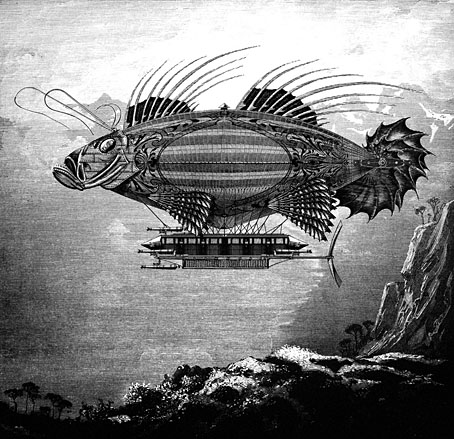
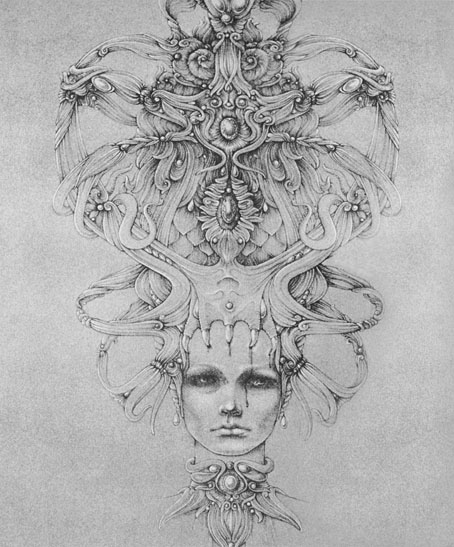
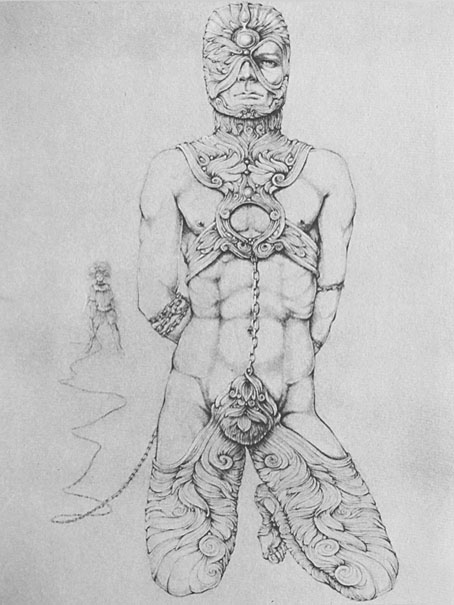
Another great illustrator about whom information is scant; I need better reference books, the web is often no use at all. Monsieur Thombeau posted the cover to Laboccetta’s edition of Les Fleurs du Mal (below) which had me looking around for other work by the artist. VTS has pages from a 1932 edition of Tales of Hoffmann while more of the Baudelaire pictures can be found on various bookdealers’ sites. As to the artist, we’re told he was an Italian living in Paris, and this French site has a small list of his illustrated editions. It’s frustrating to see that Les Paradis Artificiels is among these; what did he make of Baudelaire’s opium visions?

laboccetta02.jpg

Tales of Hoffmann (1932).

laboccetta03.jpg

Tales of Hoffmann (1932).

Continue reading “The art of Mario Laboccetta”

Weekend links 49

ceranic1.jpg

Star City by Tomislav Ceranic.

• Noted in the blogosphere this week: A Journey Round My Skull underwent a transmutation into 50 Watts; a blog devoted to artist, designer & illustrator Jessie M King; “The arts and musicks of the supranatural” at Secret Lexicon; From the Farm, Railroads, Sewing Machines & Beyond, lengthy reminiscences from a long life in America.

Barney Bubbles in Wonderland, in which the designer and his chums indulge in some Carrollian shenanigans somewhere in the 1960s. The resulting footage is now a promo video for Balloon Race by Bear Driver.

HP Lovecraft’s favourite words, the desert island books of Jorge Luis Borges, a profile of Christopher Isherwood, and Edward Gorey again.

[Arthur] Machen explicitly talks about the strength of London, as opposed to Paris, in that London is more chaotic. Although he doesn’t put it in these words, I think what partly draws him to London is this notion that, in the absence of a kind of unifying vision, like Haussmann’s Boulevards, and in a city that’s become much more syncretic and messy over time, you have more room to insert your own aestheticizing vision.

China Miéville in a great interview at BLDGBLOG.

Matryomin is “the unique, original erectronic [sic] musical instrument invented by Masami Takeuchi in 2000”. Yes, a theremin inside a Russian doll. The Mable ensemble playing Duke Ellington’s Caravan is, well…I’m still speechless. And there’s also this.

Conductor turns the New York subway system into an interactive string instrument.

ceranic2.jpg

Discordia by Tomislav Ceranic.

Amazingly enough, prostitution was legal during the Victorian period. There were tons of brothels all over the major cities of England, and of all different kinds. There were lots of flagellation brothels; these were places where primarily men would go to be whipped by women or by men. There were also gay male brothels. You could go to a park in London at night, pick up what were called the “park whores” and give them a very small amount of money to have sex openly in the park. I also write about gay “cruising,” which was quite common. If you knew the right place to go and knew the right signals, you could pick up a man on the street and have sex in an alley.

Deborah Lutz is interviewed about her book Pleasure Bound: Victorian Sex Rebels and the New Eroticism.

Cult-ure: Ideas can be dangerous, a book by Rian Hughes.

Chernobyl: Europe’s strangest wildlife refuge.

The Eadweard Muybridge Online Archive.

Aubrey Beardsley at Tumblr.

Caravan (1959) by Martin Denny | Caravan (1961) by 80 Drums Around The World | Caravan (1962) by Sir Julian | Caravan (1965) by The Ventures | Caravan (1973) by Enoch Light & The Light Brigade | Caravan (1997) by Jimi Tenor (I could go on and on, yes I could…)

Ludwig’s Winter Garden

munich1.jpg

Another monarch, and another glass-canopied hothouse. The extravagances of Ludwig II of Bavaria have featured here before but I’d overlooked the Winter Garden he had built in 1871 on the roof of the Munich Residenz, the home of the Bavarian royal family when they were in the capital. The views here are by court photographer Joseph Albert, and there isn’t much else online apart from this page at the palace website where we can see another Albert photo, and a painting by Julius Lange showing the idealised vision the king would have had in mind. With its painted scenery, “Moorish” tent, and artificial lighting—including rainbow and moonlight effects—Ludwig’s garden looks back to the exotica of the Royal Pavilion at Brighton, and also ahead to our current crop of theme parks and fantasy worlds. The Winter Garden was demolished after Ludwig’s death but the Residenz still contains other splendours, not least the jaw-dropping excess of the Antiquarium.

munich2.jpg

Previously on { feuilleton }
The Schönbrunn Palm House
The Royal Greenhouses of Laeken
Arcades panoramas
Arcades
Schloss Falkenstein
Schloss Linderhof
Schloss Neuschwanstein
Passage des Panoramas
Passages 2
Passages

The Royal Greenhouses of Laeken

laeken1.jpg

The Winter Garden, photo by William Helsen.

My arcades fetish has been aired here a few times to which one might add a complementary fetish for iron-and-glass structures in general, especially railway stations, palm houses and winter gardens. The Royal Greenhouses at Laeken, Brussels, are an impressive example of the latter, even if they happen to owe their existence to King Leopold II whose barbaric exploitation of the Congo is recounted in Joseph Conrad’s Heart of Darkness. Alphonse Balat was the architect of the central Winter Garden built between 1874 and 1876, and reading up on him it turns out that the celebrated Art Nouveau architect Victor Horta was one of Balat’s apprentices. Horta never had the opportunity to create anything this extravagant, unfortunately, but if he had the results may have resembled one of the structures created by François Schuiten for his greenhouse city of Calvani (below), a metropolis of the Obscure World. Schuiten is a resident of Brussels and we’re told that one of the earthly “Passages” to the Obscure World can be found at the Royal Greenhouses. The building is only open to the public during April and May each year, however, so anyone looking for a route to Schuiten’s world may be better off searching elsewhere.

• The Royal Greenhouses at Wikimedia Commons
• The Royal Greenhouses at Flickr

schuiten.jpg

Calvani by Schuiten.

laeken2.jpg

The Winter Garden dome, photo by Jean-Pol Grandmont.

laeken3.jpg

Photo by Roman Bonnefoy.

Previously on { feuilleton }
Arcades panoramas
Arcades
The art of François Schuiten
Passage des Panoramas
Passages 2
Passages

ICA talks archived

ica.jpg

I’ve linked to the British Library’s sound archive before but it was only recently that I had a browse through their collection of talks from the Institute of Contemporary Arts, London. The public discussions cover the period 1981–1994, and while there’s a wide range of contributors the lion’s share of interviewees are writers. Most of the talks run from 60–90 minutes. The following is a selection from some of the contents:

JG Ballard and Matthew Hoffman in conversation, 1984. Ballard discussing his latest novel, Empire of the Sun.

Derek Jarman and Ken Campbell in conversation, 1984. Jarman discussing his autobiography, Dancing Ledge which was also published that year. (A revised edition appeared in 1991.) If Ken Campbell seems an unusual interviewer it should be recalled that he appeared in Jarman’s 1979 film, The Tempest.

Alan Moore and Charles Shaar Murray in conversation, 1987. Mr Moore caught in the year when the world at large became aware of comics in general and his work in particular.

Whose Fantasy? Hosted by Neil Gaiman (uncredited) with M. John Harrison, Terry Pratchett, Geoff Ryman & Diana Wynne Jones, 1988. One of a series of events examining British genre fiction. Neil Gaiman was the host of each discussion but is uncredited on the site for several of the talks. This one concerns fantasy and science fiction.

Whose Fantasy? Hosted by Neil Gaiman (uncredited) with Clive Barker, Ramsey Campbell, Roz Kaveney & Garry Kilworth, 1988. The following day’s discussion was oriented more towards horror.

Laurie Anderson and Sarah Kent in conversation, 1990. Laurie Anderson’s latest album (and one of hers I like a great deal) Strange Angels is discussed.