Weekend links 444

guillou.jpg

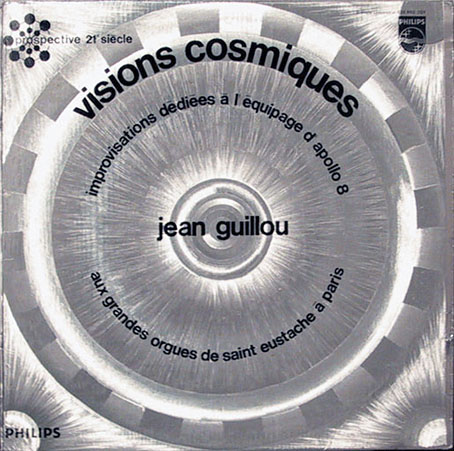
Visions Cosmiques—Improvisations Dédiées À L’équipage D’Apollo 8 (1969) by Jean Guillou. No designer credited.

• 50 years ago this weekend Apollo 8 was on its way to the Moon. Jean Guillou’s album of organ improvisations took the mission as its inspiration although his turbulent music seems more suited to the near-disaster of Apollo 13 than the weightless drift of space travel. The album has been out-of-print for decades but may be heard in full here and here. Related: the Discogs listing for the Philips’ Prospective 21e Siècle series of avant-garde music. Most of the other albums in this series remain unreissued, and are now very collectible, not least because of their metallic “Heliophore” sleeves.

• Christmas cheer be damned: the spook season extends from Halloween to the end of the year. At These Unquiet Things, Sarah Chavez offers a list of favourite seasonal vampires, witches and ghosts. For those who prefer something televisual that isn’t more MR James, The Lorelei (1990) is a feature-length supernatural drama written by Nick Dunning. And speaking of the unavoidable James, Sarah K Marr presents an annotated analysis of A Warning to the Curious embellished with her excellent photos of the area of the Norfolk coast where the story is set.

• At Bandcamp: Voltaic Liturgies: “A symbiosis of flesh, machinery and umbral cosmic mysticism” by Primitive Knot and The Wyrding Module; and In The Sunshine We Rode The Horses by Rowan : Morrison (Rowan Amber Mill with Angeline Morrison): “The album explores themes of our beautiful natural surroundings, and how the pursuit of profit guides us to learn ‘the cost of everything and the value of nothing’, paving the way for the scarring of the landscape with fracking, HS2, retail parks, and so on…”

• “Influential Manga Artist Gengoroh Tagame on Upending Traditional Japanese Culture”. Tagame is also a prolific gay porn illustrator, a part of his career the headline avoids although it is acknowledged in Anne Ishii’s interview.

• Mixes of the week: Dream Perception Mix by Moon Wiring Club, Strange Great Snow: A Conjuror’s Hexmas by Seraphic Manta, December’s Reverie by Cafekaput, and Secret Thirteen Mix 275 by CoH.

• On the Scary Thoughts podcast: Erik Davis on philosophical pessimism, cosmic horror, police procedurals, serial killers, gnostic notions, and Louisiana as featured in the first season of True Detective.

• Manuscripts, letters and other documents by HP Lovecraft are now digitised and available for browsing at Brown University Library.

• William Hope Hodgson—The Essex-born Master of Horror: a biographical essay by Peter Berresford Ellis.

• The best ambient releases of 2018 according to FACT.

• At Dennis Cooper’s: Donald Sutherland Day.

• Sandspiel

• Rocket USA (1977) by Suicide | Ticket To The Moon (1981) by Electric Light Orchestra | From Ape to Apollo (1994) Thomas Fehlmann
Weekend links 443

gorey.jpg

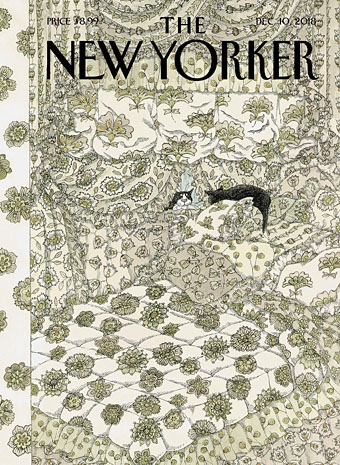
• Yet more Gorey: Mark Dery’s biography of the artist prompted The New Yorker to unearth a piece of cover art that Edward Gorey submitted 25 years ago. In the same magazine Joan Acocella reviews Dery’s book and examines Gorey’s life and art. At Expanding Mind, Erik Davis talks with Mark Dery about Surrealism, the gay voice, Penny Dreadfuls, and the occult and Taoist influences in Gorey’s work.

• Moving Through Old Daylight: Mark Fisher, Jim Jupp & Julian House of Ghost Box Recordings, and Iain Sinclair in conversation at the Roundhouse, Camden, London, 5 June 2010. Topics under discussion included Nigel Kneale, TC Lethbridge, John Foxx, BBC Radiophonic Workshop, alchemies of sound, the homogenisation of culture, imagining space and the impersistence of memory.

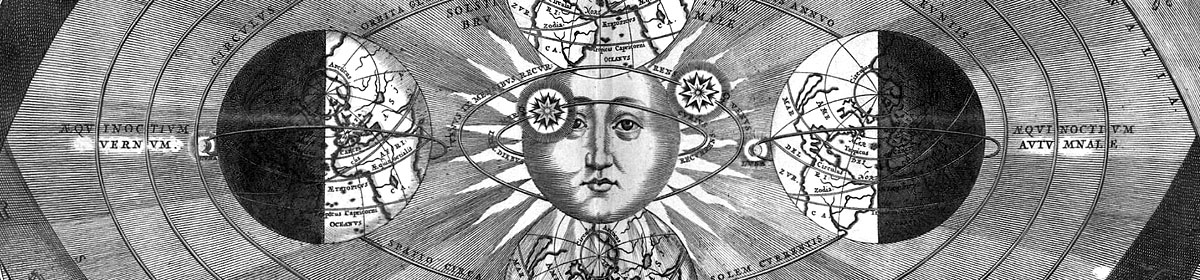
• “A radical retelling of our relationship with the cosmos, reinventing the history of astronomy as a new form of astrological calendar.” The Space Oracle by Ken Hollings.

There was a deliberate, almost prickly quality to Fisher’s writing and thinking that is rare nowadays, when criticism is more likely to involve open-minded rationalizing than steadfast refusal. He was not one to frolic in ambiguity or irony. “Just because something is current doesn’t mean it is new,” he writes in K-Punk, as he wonders if a time traveller from the nineties would find any contemporary music as radical as post-punk or jungle had once seemed to him. When everything is cheerfully “retro,” Fisher argued, we lose our grasp on history—and, without a sense of why the past happened the way it did, our anything-goes embrace of “happy hybridities” is an empty gesture. “What pop lacks now is the capacity for nihilation, for producing new potentials through the negation of what already exists,” he writes.

Hua Hsu on Mark Fisher’s K-Punk

• At Wormwoodiana: Mark Valentine on The Wind Protect You (1946), a novel by Pat Murphy which Mark describes as a forgotten precursor of Watership Down.

• “At once tiny and huge: what is this feeling we call ‘sublime’?” Sandra Shapshay explores the Romantic aesthetic.

• Dennis Cooper‘s favourite fiction, poetry, non-fiction, film, art, and internet of 2018. Thanks again for the link here!

• Mixes of the week: XLR8R Podcast 572 by Nastia, and FACT Mix 683 by Casino Versus Japan.

• A Child’s Voice (1978) by David Thomson, an overlooked ghost story starring TP McKenna.

• Jean Cocteau’s Orphée returns from the underworld via BFI blu-ray next month.

• Rated SAVX: The Savage Pencil Scratchbook

• Orpheus (1967) by The Walker Brothers | Orpheus (1987) by David Sylvian | Overture To Orpheus (2003) by Colin Booth

Borges in the Firing Line

borges.jpg

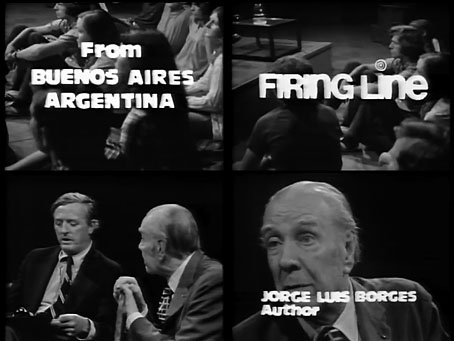
Jorge Luis Borges was interviewed on TV a number of times in later life but most of the available appearances are in un-subtitled Spanish. His 1977 meeting with William F Buckley on Buckley’s long-running debate and discussion show, Firing Line, is an exception, and a welcome one for being almost a whole hour of serious discussion. Buckley’s reputation has been reappraised in recent years. Gore Vidal famously accused him on live TV of being a “crypto-Nazi”, a barb that prompted Buckley to momentarily lose his usual composure. With American politics currently beset by actual Nazis, crypto- or otherwise, as well as people who wouldn’t crack open the spine of a book even if you offered them another tax break, Buckley now looks like an impossible figure: an American conservative who was also a genuine intellectual with a passion for literature.

The discussion on this occasion is less about Borges’ works than about language and literature. If you’ve read any Borges interviews then this is familiar territory, but Borges elaborates here on subjects that were only touched on elsewhere, especially the strengths of English over Spanish as a literary language, and the pros and cons of translation. This latter subject is a sore point for Borges readers such as myself who believe that the current translations (made after Borges’ death) are inferior to the earlier ones, many of which were prepared with the approval of the author. It’s painful to hear him say he thought his stories worked better in English, and it makes me wonder again what he might make of the present state of affairs.

Elsewhere, Buckley tries to lead Borges into a discussion of politics, a subject that he generally avoided because it didn’t interest him, and whenever he did mention the subject he’d usually get into trouble by saying something that would annoy one side of the political spectrum or the other. I was pleased to note a fleeting reference to Arthur Machen, mentioned in relation to the Julio Cortázar short story, Casa Tomada (House Taken Over), which Borges, Adolfo Bioy Casares and Silvina Ocampo reprinted in their Antología de la Literatura Fantástica (1977).

Previously on { feuilleton }
• La Bibliothèque de Babel
• Borges and the cats
• Invasion, a film by Hugo Santiago
• Spiderweb, a film by Paul Miller
• The Library of Babel by Érik Desmazières
• Books Borges never wrote
• Borges and I
• Borges documentary
• Borges in Performance

Weekend links 441

jakuchu.jpg

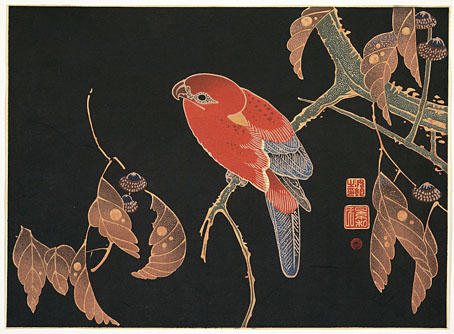
Red Parrot on the Branch of a Tree (c.1771) by Ito Jakuchu.

• Reporter John Stapleton (later a fixture of BBC TV) visits the Portobello Road offices of British underground newspaper Frendz for newsreel service British Pathé. The date says 1969 but it’s probably 1971 since earlier that year the magazine had changed its name from Friends. Among the unidentified interviewees is Rosie Boycott, later the founder of Britain’s first feminist magazine, Spare Rib, and now Baroness Boycott. She may have predicted the former in 1971 but I doubt she would have expected a seat in the House of Lords.

• At Expanding Mind: Erik Davis talks with martial artist and psilocybin explorer Kilindi Iyi about African martial arts, high dose psilocybin work, African-American psychedelia, Dr. Strange, and the metaphysics of darkness.

• Bloom, the generative music app by Brian Eno and Peter Chilvers, is given a tenth-anniversary relaunch this month. The new app will also (finally) be available for Android as well as Apple machines.

Early on, I realized my interest in [William] Burroughs’ work was less to do with the cut-up novels and more with the documented research and investigation of the human condition, technology, control, travel, dreams, drug culture, shamanism, and Hassan-I Sabbah. Books like The Job, The Electronic Revolution and especially, The Third Mind with Brion Gysin were particularly important to me. […] As for integrating Burroughs’ work into the music, it’s not about the history of a literary collaboration, but rather the complete fusion in a praxis of two subjectivities that metamorphosize into a third. From this collusion, a new author emerges—an absent third person, invisible and beyond reach, recording the silence.

From 2017: Bill Laswell in a satisfyingly lengthy interview with Anil Prasad

• Secret Satan, 2018: being the annual Strange Flowers “round-up of giftable cultural history with which you can unmistakably signal your degenerate cosmopolitan values”.

• Laurie Spiegel’s second album of electronic music, Unseen Worlds, was never given a proper release in 1990. This situation will be rectified in January.

• Mixes of the week: Secret Thirteen Mix 272 by Paulie Jan, and XLR8R Influences Podcast 12 by Ripperton.

• More Gorey: biographer Mark Dery and design historian Steven Heller discuss Edward Gorey’s life and work.

• Rumsey Taylor on Roger Excoffon’s Choc, “the mystery font that took over New York”.

• More Nicolas Roeg: David Thompson on one of Britain’s greatest film directors.

• John Waters picks his films of the year.

• RIP Bernardo Bertolucci

• In Bloom (1991) by Nirvana | Bloom (2001) by Brian Eno & J. Peter Schwalm | Violet Bloom (2010) by John Foxx

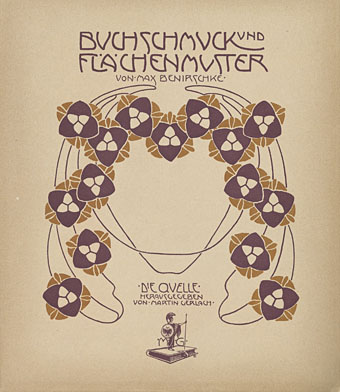
Buchschmuck und Flächenmuster by Max Benirschke

benirschke01.jpg

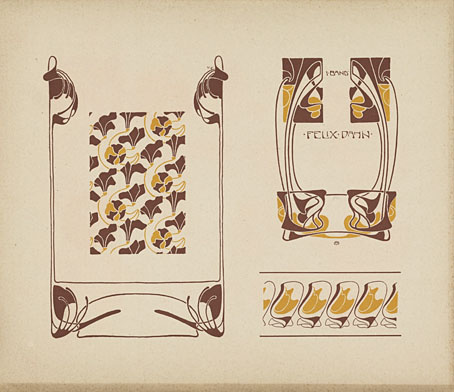
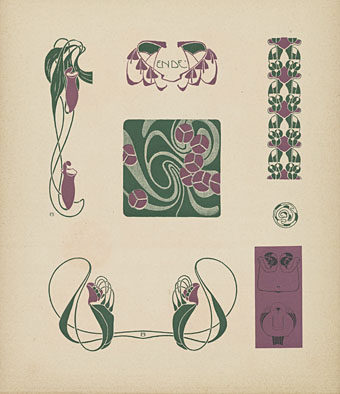
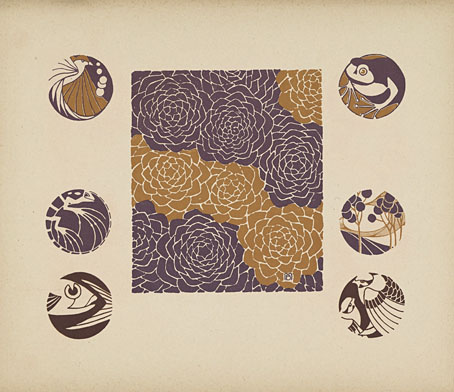
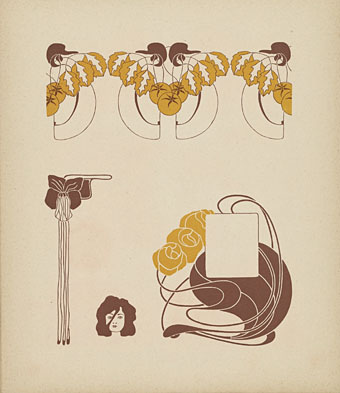
A recent arrival at the Internet Archive was this collection of Art Nouveau book decorations by Max Benirschke (1880–1961). Very welcome it is too, although I wish it had been accompanied by its companion volumes from Koloman Moser and Carl Otto Czeschka. The three books formed a series, Die Quelle (The Source), a Viennese equivalent of the design books produced by Alphonse Mucha and others in France. Both the Benirschke and Moser books have been available from Dover Publications at one time or another but the Benirschke one seems now to be out of print. There’s more about Die Quelle and its artists (plus related subjects) at the excellent Vienna Secession. Benirschke’s book may be browsed and downloaded here.

benirschke02.jpg

benirschke03.jpg

benirschke04.jpg

benirschke05.jpg

Continue reading “Buchschmuck und Flächenmuster by Max Benirschke”