Weekend links 67

hofstatter.jpg

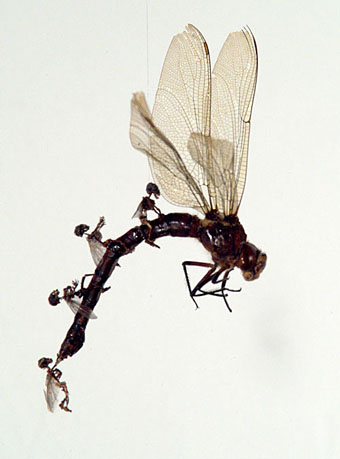
Neutron Drip (2011) by Amrei Hofstätter.

The Lavender Scare is “the first feature-length documentary film to tell the story of the U.S. government’s ruthless campaign in the 1950s and ’60s to hunt down and fire every Federal employee it suspected was gay”. A film by Josh Howard based on the book by David K Johnson which the author has made a free download here.

• “Annette Peacock, the avant garde American composer, collaborator with Salvador Dalí, friend of Albert Ayler and Moog-synth pioneer, brought this seismically influential session out in 1972…” John Fordham reviews Annette Peacock’s I’m The One which can be purchased here.

• Writer and graphic design historian Steven Heller looks at The Steampunk Bible (edited by SJ Chambers & Jeff VanderMeer) in his column for The Atlantic. He also talks to Galen Smith about the book’s design.

M John Harrison reveals more about his forthcoming sf novel Pearlent, a partial sequel to Light and Nova Swing. I just re-read Light, and I’m currently In The Event Zone with the follow-up, so I’m looking forward to this one.

The Raven, a book by Lou Reed & Lorenzo Mattotti (and Edgar Allan Poe). A Journey Round My Skull previewed this in 2009.

Orson Welles’ Falstaff film, Chimes at Midnight, emerges into the light once more. When do we get a decent DVD release?

• More of the usual concerns: Iain Sinclair’s struggles with the city of London and Erik Davis talks to Alan Moore about psychogeography, John Dee, comic gods, and the art of magic.

Eddie Campbell takes a tip from Jim Steranko. Related: “Hey! A Jim Steranko effect!

Lambshead Cabinet: Win Jake von Slatt’s Mooney & Finch Somnotrope!

• Tilda Swinton is The Woman Who Fell to Earth.

XXth Century Avantgarde [sic] Books at Flickr.

Sound sculptures & installations by Zimoun.

I’m The One (1972) by Annette Peacock.

The Thackery T. Lambshead Cabinet of Curiosities

lambshead-cover.jpg

Cover design by James Iacobelli.

The sequel to The Thackery T. Lambshead Pocket Guide to Eccentric & Discredited Diseases is published next week in the US but we have permission to write about it before the official release. The Thackery T. Lambshead Cabinet of Curiosities is a chunky hardback of 320 pages with a host of contributors including Holly Black, Greg Broadmore, Ted Chiang, Rikki Ducornet, Amal El-Mohtar, Minister Faust, Jeffrey Ford, Lev Grossman, N.K. Jemisin, Caitlín R. Kiernan, China Miéville, Mike Mignola, Michael Moorcock, Alan Moore, Garth Nix, Naomi Novik, James A. Owen, Helen Oyeyemi, J.K. Potter, Cherie Priest, Ekaterina Sedia, Jan Švankmajer, Rachel Swirsky, Carrie Vaughn, Jake von Slatt, Tad Williams, Charles Yu and others. I provided title pages for the various sections of the book, as well as a variety of found and bespoke illustrations. And seeing as how I seldom miss an opportunity to take a dig at Rupert Murdoch (especially this week), it would be remiss of me if I didn’t mention that it’s published by an imprint of HarperCollins which means I’m currently feeling somewhat tainted by the Evil Empire. Mea culpa. When you sup with the devil, use a long spoon.

lambshead-title.jpg

My title spread.

That aside, this is a treat for anyone who enjoys the more experimental, eccentric and surreal end of the fantasy spectrum:

After the death of Dr. Thackery T. Lambshead at his house in Wimpering-on-the-Brook, England, a remarkable discovery was unearthed: the remains of an astonishing cabinet of curiosities. Many of these artifacts, curios, and wonders related to anecdotes and stories in the doctor’s personal journals. Others, when shown to the doctor’s friends, elicited further tales from a life like no other. Thus, in keeping with the bold spirit exemplified by Dr. Lambs­head and his exploits, we now proudly present highlights from the doctor’s cabinet, reconstructed not only through visual representations but also through exciting stories of intrigue and adventure. A carefully selected group of popular artists and acclaimed, bestselling authors has been assembled to bring this cabinet of curiosities to life.

From what I’ve read so far the general tone is a lot less overtly wacky than the first book, and if set beside some of the more clichéd and pedestrian fantasy works being jobbed out at the moment will probably seem downright avant garde. Editors Ann and Jeff VanderMeer have been at pains to emphasise that this isn’t another steampunk collection although seeing as how many people now equate steampunk with any kind of antique graphics that’s the way some may take it. Alan Moore aficionados should know that Alan’s piece, Objects Discovered in a Novel Under Construction, is a riff on some of the contents of his forthcoming novel Jerusalem. My illustration for that entry is below.

Jeff had some blog posts this week related to the book, one looking back at the Disease Guide, the other with details of the US tour he and Ann will shortly be undertaking. A couple of my other contributions follow.

Continue reading “The Thackery T. Lambshead Cabinet of Curiosities”

Land art

spiral.jpg

Spiral Jetty.

Reading this story about an ownership dispute over Robert Smithson’s Spiral Jetty in Utah had me searching out his celebrated artwork on Google Maps. It’s easy to find since Google have many of the well-known pieces of 1970s land art marked on their satellite views. Having found Smithson’s construction I went looking for a few more.

city.jpg

City.

Less easy to find, since it’s not marked and the artist forbids visitors, is Michael Heizer’s enormous and enigmatic City, an earthwork complex he’s been constructing in the Nevada desert since the early 70s. From the air it looks like a secret military base, the art area being the diagonal arrangement of structures on this view while the squares to the right are the artist’s home. I’ve been fascinated by this creation ever since a part of it, Complex One, was featured in Robert Hughes’s The Shock of the New, not least for Hughes’s assertion that these remote works impel an act of pilgrimage on any would-be visitors. This page has more about City and some of the few photos which have been released of its structures. See also A Sculptor’s Colossus of the Desert and Art’s Last, Lonely Cowboy.

roden.jpg

Roden Crater.

Equally remote, and for the time being inaccessible to the public, is James Turrell’s Roden Crater in Arizona, an extinct volcano which Turrell has been converting into an enormous viewing space for astronomical events and the transitory effects of natural light. This was begun in 1978 and seems like it may actually get finished, unlike Heizer’s construction site. This NYT article discusses the work’s history while Paul Schütze has recent photos of site details as well as a free download of some of the music he’s composed for the interior.

Continue reading “Land art”

Weekend links 61

knaus.jpg

Marbles and Butterflies (2011) by Jennifer Knaus.

• “Cutter’s Way is a cinematic masterpiece” says John Patterson. Yes, it is, and it’s often been difficult to see (although it’s now on DVD) being one of those cult films that rarely surfaced on TV or video. Another cult film surfacing at last is Jerzy Skolimowski’s Deep End (yes, again…) which will be out on DVD & Blu-ray next month. I missed this Telegraph piece about the film. You want more? Lint: The Movie is showing at the Kino Club, Brighton, later this month.

• This week’s Eno haul: Developing Your Creative Practice: Tips from Brian Eno; Eric Tamm’s 1995 study Brian Eno: His Music and the Vertical Color of Sound is now available for free at the author’s website; Imagine New Times is an outtake from Eno’s forthcoming Drums Between the Bells which can be downloaded here.

• Mixtapes of the week: Demdike Stare with a suitably sinister and eclectic mix are out-curated by Current 93’s David Tibet who mashes together a unique blend of folk, prog, riffs, choral works and glam rock.

I began to realize the hypocrisy about sexual freedom in the feminist establishment was as bad as it is in the religious right. They do whatever they want. They look at whatever they want, they masturbate to whatever they want, they fuck whoever and however they like. I couldn’t even say everything I know in the book because it would just be too cruel and personally invasive. But I’ve had it with their lying. I spent so long trying to have these earnest conversations and now I’m like, “Fuck you — you’re as bad as the Vatican!”

Susie Bright interviewed by Tracy Clark-Flory at Salon sounding as happy and positive as she always does.

The Gnostic #4 is out this month featuring Alan Moore’s essay on magic and related matters, Fossil Angels, and a piece examining the Gnostic influences on Cormac McCarthy’s Blood Meridian.

• “Nobody should be sent to prison for taking drugs,” says Richard Branson. Many politicians agree with him but they’re all too cowardly to do anything about it.

eng.jpg

Untitled work by Kilian Eng.

The Adventures of Jerry Cornelius, The English Assassin (1969–70). A comic strip written by Michael Moorcock & M John Harrison with art by Mal Dean & Richard Glyn Jones.

The Lavender Scare: The Cold War Persecution of Gays and Lesbians in the Federal Government by David K Johnson is available as a free ebook here.

• “If I was to try to write a mainstream book I would be constantly bumping my elbows up against the restrictions.” Tim Powers is interviewed by Alison Flood.

HOMO Online, Adventures in Homosexuality: Fiction, Fact, Art and Porn.

Your Rainbow Panorama, a new work by Olafur Eliasson.

Self Suck, a poem by Angelo Nikolopoulos.

Map Of Dusk (1987) by Jon Hassell | Lam Lam (1998) by Baaba Maal (with Jon Hassell & Brian Eno) | All Is Full Of Love (1999) by Björk (Guy Sigsworth mix featuring Jon Hassell).

The Rock Drill

epstein.jpg

The Rock Drill (original version, 1913–1914).

Jacob Epstein’s Rock Drill (1913-15) was reconstructed in polyester resin by Ken Cook and Ann Christopher in 1973–74. It is the exemplary Vorticist art work. It shows a man on a tripod who is one with his machine. His drill is also his rigid proboscis, his hard, angled phallus. The tripod has weights (embossed Colman Bros Ltd Camborne England) on each leg, just above midpoint—which look like enlarged joints, or a bee’s pollen knee-pads (only available in black).

The rib cage of the figure is exactly like the twin cylinders on a motorbike. He is recognisably human, true, but the human body, with its curves and trim little bum, has been made-over to the angular machine: it is an armoured exoskeleton. The arms are like greaves. I thought of Seamus Heaney’s description of a motorbike lying in flowers and grass like an unseated knight. And I thought too of “Not My Best Side”, UA Fanthorpe’s marvellous poem about Uccello’s St George and the Dragon in the National Gallery. In it, Fanthorpe imagines the young girl being rather taken by the dragon’s equipment, when suddenly, irritatingly, “this boy [St George] turned up, wearing machinery”.

Thus Craig Raine on Jacob Epstein’s unforgettable sculpture. It’s astonishing to think that this piece in its various forms (lost, reworked, reconstructed) is now nearly a century old. Raine was writing about the forthcoming The Vorticists: Manifesto for the Modern World, an exhibition which will be opening at Tate Britain next month. Epstein’s truncated Torso in Metal from The Rock Drill (the full-figure version was destroyed) was one of the handful of sculptures which stood out for me when I first visited the Tate Gallery (as Tate Britain used to be) and it’s since become a piece I always enjoy seeing again. Epstein’s art was frequently controversial, his Oscar Wilde Memorial of 1911 was famously declared indecent, and The Rock Drill would have seem shockingly angular and aggressive to a British art world where aged academicians were still painting medieval fantasies or trying to sculpt like Praxiteles. To us today it looks unavoidably cybernetic even though the word “robot” didn’t arrive until 1920. Flickr has some views here of the reconstructed version which I’d hope is going to be on show at the Tate. In the meantime, there’s Anthony Gormley discussing the work on BBC Radio 3 (via iPlayer) which he regards as the first Modernist British sculpture, and a favourite work of art.

Previously on { feuilleton }
Wildeana #2
Against Nature: The hybrid forms of modern sculpture
Angels 2: The angels of Paris