Mister Jarman, Mister Moore and Doctor Dee

tempest.jpg

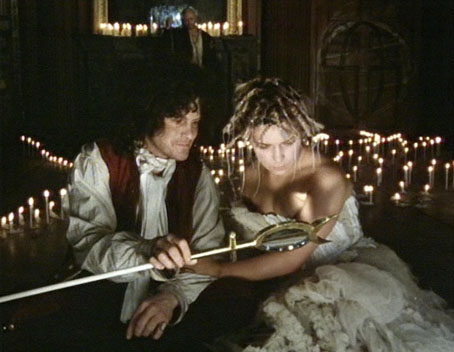
Prospero (Heathcote Williams) and Miranda (Toyah Willcox), The Tempest (1979).

The Shakespeare who spun The Tempest must have known John Dee; and perhaps through Philip Sidney he met Giordano Bruno in the year when he was writing the Cena di Ceneri—the Ash Wednesday supper in the French Ambassador’s house in the Strand. Prospero’s character and predicament certainly reflect these figures, each of whom in his own way fell victim to reaction. John Dee, with the greatest library in England, skrying for the angels Madimi and Uriel (so nearly Ariel)—all of which is recorded in the Angelic Conversations—ended up, in his old age, penniless in Manchester. Bruno was burnt for heresy.

Ten years of reading in these forgotten writers, together with a study of Jung and his disciples proved vital in my approach to both Jubilee and The Tempest. As for the black magic which David Bowie thought I dabbled in like Kenneth Anger, I’ve never been interested in it. I find Crowley’s work dull and rather tedious. Alchemy, the approach of Marcel Duchamp, interests me much more.

Derek Jarman, Dancing Ledge (1991).

Damon Albarn’s opera Doctor Dee has been all over the news this week following its premier as part of the Manchester International Festival. Last weekend one of the press ads was announcing this as an “untold story”, as though no one had given much thought to the Elizabethan magus prior to Mr Albarn’s arrival. Neither the ads nor anyone associated with the production will be in a hurry to tell you that the idea for the opera came from Alan Moore who’s had a fascination with John Dee’s life and work for many years. Albarn and fellow Gorillaz cohort Jamie Hewlett approached Alan about a collaboration a couple of years ago; Alan agreed to write something on the condition that Gorillaz provide a contribution to Alan’s magazine, Dodgem Logic. They agreed, Alan set to work, having suggested John Dee as a good subject then the whole thing fell apart: Gorillaz said they were too busy to accommodate themselves to the magazine’s generous deadlines so Alan told the pair that he was now too busy to have anything further to do with their opera. This is all old news (and being a Dodgem Logic contributor I have a partisan interest in the story) but it’s worth noting since the opera will be playing elsewhere once it’s finished its Manchester run so we’ll continue to hear about it. The point is that the subject matter was Alan Moore’s choice, not Damon Albarn’s; if Alan had decided to write something about Madame Blavatsky (say) we’d now be reading reviews of Blavatsky: The Opera. Albarn can at least be commended for staying with the subject. Despite John Dee’s exile in Manchester being part of the city’s history (among other things he helped organise the first survey of the streets) you can bet the apes from Oasis have never heard of him.
jubilee.jpg

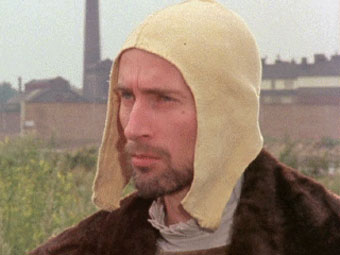
Richard O’Brien as John Dee in Jubilee (1978).

All of which had me thinking how John Dee, a maverick intelligence of the Elizabethan era, has a tendency to attract equally maverick intelligences in later eras. Derek Jarman’s work returns to John Dee often enough to make the magus a recurrent theme in his films, from the scenes in Jubilee (1978) (part of an earlier script) where he’s portrayed by Richard O’Brien showing Elizabeth I the future of her kingdom, to The Tempest (1979) where Prospero’s wand is modelled on Dee’s Monas Hieroglyphica, to The Angelic Conversation (1987) which borrows its title from Dee’s scrying experiments and finds via the sonnets another connection between John Dee and Shakespeare (Ariel being the contrary spirit whose magic allows a vision of the future in Jubilee). By one of those coincidences which make you think there must have been something in the air during the mid-70s, Michael Moorcock’s novel Gloriana, or The Unfulfill’d Queen was published the year Jubilee premiered, a fantasy in which the Elizabethan court is blended with its fictional counterpart from Spenser’s The Faerie Queen, and which features a Doctor John Dee as the queen’s Councillor of Philosophy. (If you want to stretch the connections further, Jenny Runacre who plays Elizabeth in Jubilee had earlier portrayed Miss Brunner in the film of Moorcock’s The Final Programme.)
mindscape_dee.jpg

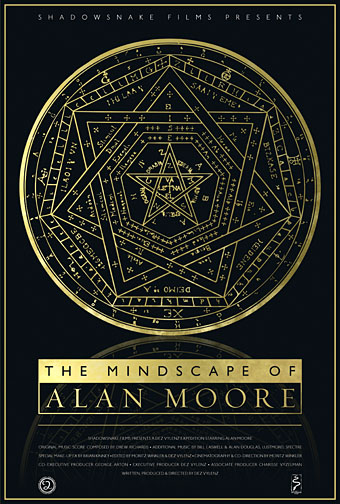
My 2009 poster design for The Mindscape of Alan Moore, a documentary by Dez Vylenz. John Dee’s Sigillum Dei Aemeth appears in the film so I used this as the principal motif for the packaging design and DVD interface.

Reading the reviews it’s impossible to tell how Alan’s libretto might have fared on stage compared to the work which is now showing, the content of which draws on Benjamin Woolley’s excellent biography, The Queen’s Conjuror. Alan and Benjamin Woolley can both be found among the interviewees in a Channel 4 documentary about John Dee broadcast in the Masters of Darkness (sic) series in 2001. For those keen to delve beyond the stage show, Derek Jarman’s films are all on DVD, of course, while fragments of Alan’s libretto can be found in the fourth edition of Strange Attractor along with his notes for the rest of the opera. Charlotte Fell Smith’s life of Dee from 1909, for many years the standard study of the man, can be found online here.

Previously on { feuilleton }
The Tempest illustrated
Robert Anning Bell’s Tempest
In the Shadow of the Sun by Derek Jarman
Designs on Doctor Dee
Derek Jarman at the Serpentine
The Angelic Conversation
The life and work of Derek Jarman
Weekend links 58

delpozo1.jpg

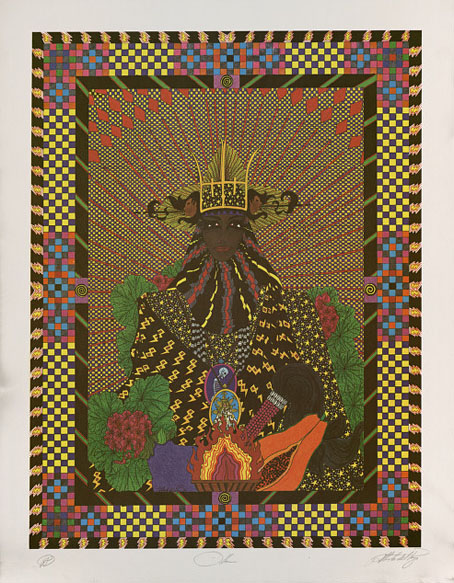
Oya by Alberto del Pozo (1945–1992). Also known as Yansa, Oya is Changó’s third wife. She is the goddess of the winds and of lightning and is mistress of the cemetery gates. Passionate and brave she fights by her husband’s side if needed. Her favorite offerings are papaya, eggplant and geraniums. From Santeria at BibliOdyssey.

Austin Osman Spare is a good example of the dictum that quality will out in the end, no matter how long it remains buried. Overlooked by the art establishment after he retreated into his private mythologies, a substantial portion of his output was equally ignored by occultists who wanted to preserve him as a weird and scary working-class magus. One group dismissed his deeply-felt spiritual interests in a manner they wouldn’t dare employ if he’d been a follower of Santeria, say (or even a devout Christian), while the other group seemed to regard his superb portraits as too mundane to be worthy of attention. Now that Phil Baker’s Spare biography has been published by Strange Attractor we might have reached the end of such short-sighted appraisals and can finally see a more rounded picture of the man and his work:

[Kenneth] Grant preserved and magnified Spare’s own tendency to confabulation, giving him the starring role in stories further influenced by Grant’s own reading of visionary and pulp writers such as Arthur Machen, HP Lovecraft, and Fu Manchu creator Sax Rohmer. Grant’s Spare seems to inhabit a parallel London; a city with an alchemist in Islington, a mysterious Chinese dream-control cult in Stockwell, and a small shop with a labyrinthine basement complex, its grottoes decorated by Spare, where a magical lodge holds meetings. This shop – then a furrier, now an Islamic bookshop, near Baker Street – really existed, and part of the fascination of Grant’s version of Spare’s London is its misty overlap with reality.

Austin Osman Spare: Cockney visionary by Phil Baker.

Austin Osman Spare: The man art history left behind | A Flickr set: Austin Osman Spare at the Cuming Museum | HV Morton meets Austin Spare (1927).

• More quality rising from obscurity: Jerzy Skolimowski’s Deep End. Skolimowski’s drama is one of unpleasant characters behaving badly towards each other. Anglo-American cinema featured a great deal of this in the 1970s when filmmakers disregarded the sympathies of their audience in a manner that would be difficult today. John Patterson looks at another example which is also given a re-release this month, the “feral, minatory and menacing masterwork” that is Taxi Driver.

delpozo2.jpg

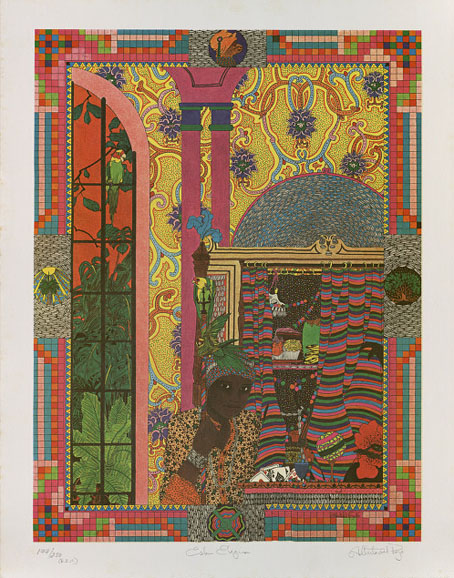
Echú Eleguá by Alberto del Pozo. Among the most ancient of the orishas Echú Eleguá is the messenger of the gods, who forges roads, protects the house, and is heaven’s gate-keeper. In any ceremony he is invoked first. He owns all cowrie shells and is the god of luck. A prankster, Echú Eleguá frequently has a monkey and a black rooster by his side. Like a mischievous boy he enjoys gossip and must be pampered with offerings of toys, fruit, and candy.

Minutes, a compilation on the LTM label from 1987: William Burroughs, Jean Cocteau, Tuxedomoon, Jacques Derrida, The Monochrome Set, and er…Richard Jobson. Thomi Wroblewski designed covers for a number of Burroughs titles in the 1980s, and he also provided the cover art for this release.

Mikel Marton Photography: a Tumblr of erotic photography and self-portraits.

From Death Factory To Norfolk Fens: Chris & Cosey interviewed.

NASA announces results of epic space-time experiment.

Oritsunagumono by Takayuki Hori: origami x-rays.

Plexus magazine at 50 Watts.

Mother Sky (1970) by Can | Late For The Sky (1974) by Jackson Browne.

Weekend links 47

beksinski1.jpg

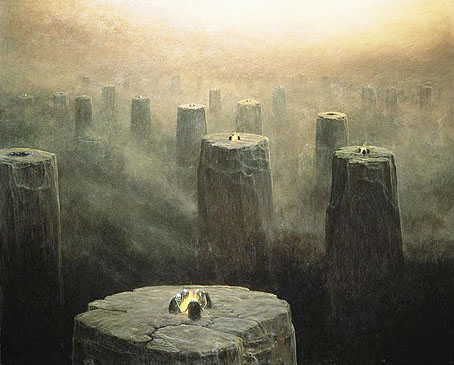
DG-2499 (1975) by the fantastic (in every sense of the word) Zdzisław Beksiński (1929–2005). See the Dmochowski Gallery for a comprehensive collection of the artist’s work. Thanks to BibliOdyssey for the tip.

• More ICA events: From Animism to Zos: Strange Attractor Salon will be “a series of weekly events, consisting of a talk and a film, exploring some lesser-known intersections of culture, history, mind and nature” running from 10 March–12 May, 2011.

• And on May 10, the London Word Festival presents a Dodgem Logic evening with entertainment provided by contributors to that magazine:

Alan Moore’s reinvigoration of the underground fanzine, Dodgem Logic, comes alive in the non-conformist surroundings of Hackney’s Round Chapel. A night of art, comedy, comment and put-something-back localism. (…) With Robin Ince heading up a colossal stand-up bill, artists Steve Aylett, Savage Pencil, Melinda Gebbie and Kevin O’Neill panel-up to talk about their comic work, while music comes from hyperactive racketeers The Retro Spankees. With an exhibition of artwork from the magazine, and conducted by editor-in-chief Alan Moore.

• Taschen publishes a collection of Dennis Hopper’s photographs this week. The Independent has a small selection here. Also new from Tachen, Alex Steinweiss, The Inventor of the Modern Album Cover.

Bass Notes: The Film Posters of Saul Bass at the Kemistry Gallery, London.

beksinski2.jpg

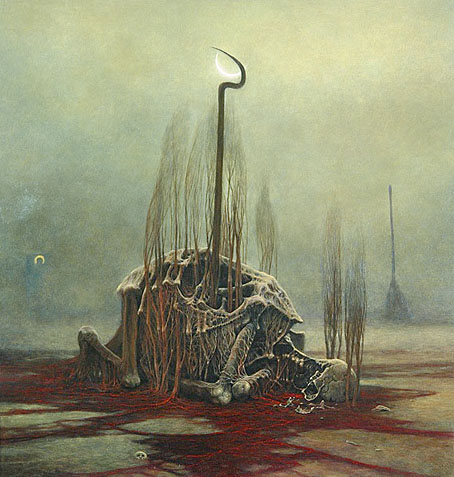
DG-2507 by Zdzisław Beksiński.

While riding through the bustling streets of London from 1603 to 1621, one was liable to hear the shout “Long live Queen James!” King James I of England and VI of Scotland was so open about his homosexual love affairs that an epigram had been circulated which roused much mirth and nodding of the heads: Rex fuit Elizabeth: nunc est regina Jacobus—”Elizabeth was King: now James is Queen.”

There’s more about the private life of the man who gave his name to the King James Bible here.

Addams and Evil, a Tumblr devoted to the great Charles Addams.

Hannes Bok again at Golden Age Comic Book Stories.

Caravaggio’s crimes exposed in Rome’s police files.

Deserted City, photographs by Kim Høltermand.

• The blue sand dunes of the planet Mars.

• A map of the ghost signs of Chicago.

The movie title stills collection.

The pitfalls of e-book buying.

Life On Mars? (1971) by David Bowie | Uncle Sam’s On Mars (1979) by Hawkwind | Eyes On Mars (1980) by Chrome | Cache Coeur Naif (1997) by Mouse on Mars.

Weekend links 45

sa4.jpg

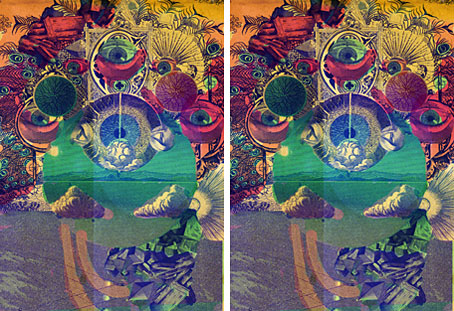
That essential journal of esoteric culture, Strange Attractor, announced a fourth number this week sporting a psychedelic cover which may be the work of Julian House (no credit is given on the SA site). As to the contents:

From Haiti and Hong Kong to the fourth dimension and beyond: discover the secrets of madness in animals; voodoo soul and dub music; ancient peacock deities; Chinese poisoning cults; the history of spider silk weaving; heathen mugwort magic; sentient lightning; Jesuit conspiracy theories; junkie explorers; Dali’s Atlantis; the resurgence of Pan (in London’s Crouch End); anarchist pirates on Madagascar; an ancient Greek Rip Van Winkle; French anatomical waxworks; Arthur Machen’s forgotten tales and Alan Moore’s unpublished John Dee opera.

Further details and the means to order a copy can be found here.

• Resonance FM’s Weird Tales For Winter has returned beginning with a presentation of The Gateway of the Monster, one of the better Carnaki tales by William Hope Hodgson. The story is read by Moon Wiring Club‘s Ian Hodgson (no relation) and the musical atmospheres are provided by The Advisory Circle. I ought to have posted this news yesterday since you’ll have missed the broadcasting of the first half but the second half will go out at midnight (UK time) on Monday. Details here, and the next release on the Café Kaput label in February will be the soundtrack, Music for Thomas Carnaki (Radiophonic Themes & Abstracts).

keepcalmcthulhu2.jpg

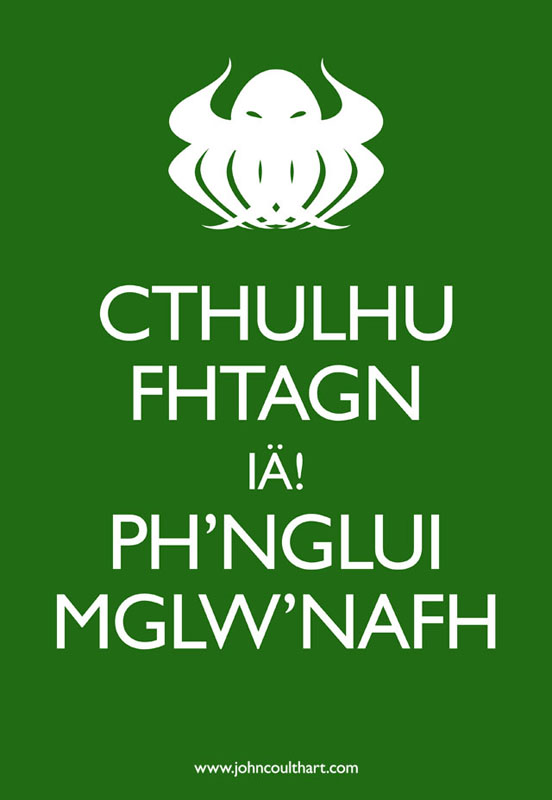
• The Keep Calm and Carry On Image Generator lets you work your own variations on the ubiquitous poster. It wouldn’t work for me, however, so I rolled up my sleeves and made my own. This may be good as a CafePress design, yes?

Interplay is an album by John Foxx and The Maths due to be released on March 21st. As with last year’s collection of Foxx instrumental pieces, DNA, the package design is by Jonathan Barnbrook. John Foxx first came to prominence as the lead singer in Ultravox (do I need to say “of course”? Okay…“of course”) and Ultravox’s debut album was part-produced by Brian Eno. It’s been painfully obvious recently (and it pains me to say it) that Foxx’s DNA was a far more accomplished and engaging work than Eno’s recent collection of over-hyped instrumentals. Related: Barnbrook Design’s albums of 2010.

Word Horde 2.0, “a substantial archive of manuscript material, correspondence, and books and printed matter, mostly signed” from the William Burroughs archives can be yours for $260,000. Related: William Burroughs’ Wild Boys photos. Also: Rudy Rucker on David Cronenberg’s Naked Lunch.

• “Nabokov described how ‘a modern taxonomist straddling a Wellsian time machine with the purpose of exploring the Cenozoic era’ would encounter the following series of events in the evolution of these butterflies…” The Royal Society confirms that a contentious theory of Vladimir Nabokov’s concerning the descent of butterfly populations was accurate.

• The work of Gérald Bertot aka Thomas Owen, a Belgian author of weird fiction, is explored at A Journey Round My Skull.

The Other Side of the Wind, Orson Welles’ unfinished film from 1972, may finally be given a release.

• Jon Savage celebrates Roy Harper and his extraordinary Stormcock album.

Philip Pullman wants the Tory philistines to leave our libraries alone.

• Rick Poynor takes a dérive through the arcades of Paris.

Space music new and old.

Young Savage (1977) by Ultravox | Clicktrack (2010) by John Foxx & Jonathan Barnbrook.

Illustrating Poe #4: Wilfried Sätty

satty_poe01

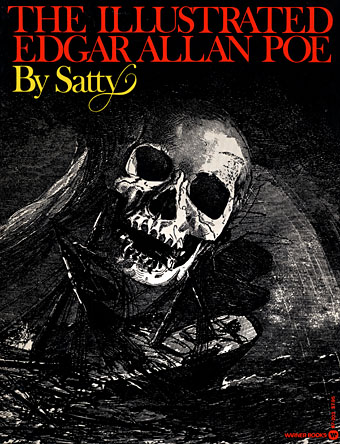
Here it is, the book that began my fascination with the collage art of Wilfried Sätty (1939–1982), a German artist and psychedelic poster designer resident in San Francisco during the 1960s and 1970s. Warner Books published his Poe collection in 1976 and for some reason omit the umlaut from his name even though it’s present in Thomas Albright’s introductory note. I bought my copy in 1979 at a time when I was writing a lot of unsuccessful “experimental” fiction, and the sight of these tremendous collages inspired a surge of writing activity which disregarded Poe’s stories altogether. I’d seen enough of Max Ernst’s engraving collages to know that Sätty was following Ernst’s example but something about Sätty’s work struck me in a manner I couldn’t articulate other than by trying to set down the thoughts they inspired. Personal obsessions aside, I’ve since come to regard this book as the only illustrated Poe which can approach Harry Clarke’s inimitable volume.

satty_poe02

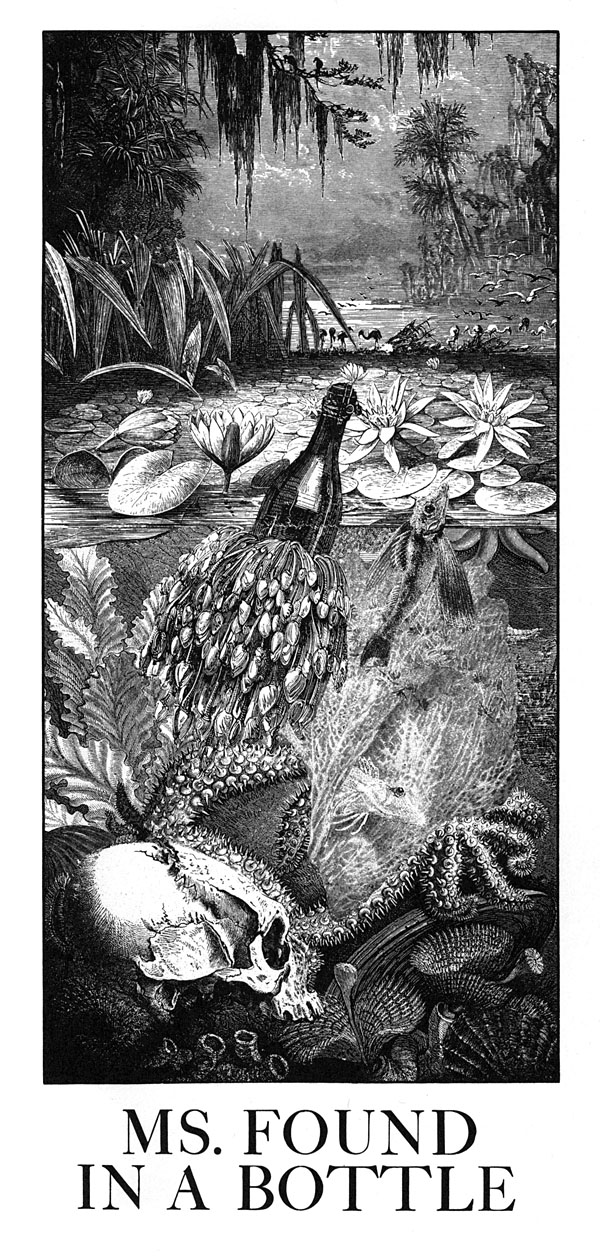
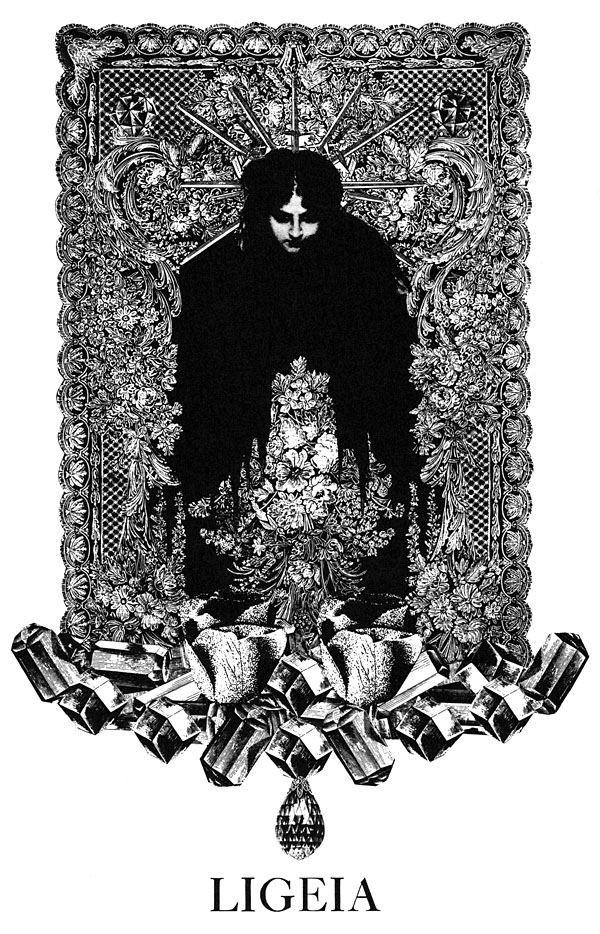
I’m fortunate to own two copies of this edition otherwise I wouldn’t have attempted to scan any pages when doing so involves bending the spine rather badly. The book is profusely illustrated, with many full-page or double-spread illustrations most of which I haven’t tried to reproduce. What you have here are the title pages from nearly all the pieces and a couple of additional illustrations. Sätty’s Poe is still the easiest of his books to find secondhand if you browse the dealer pages at AbeBooks. For more of his incredible work there’s this page at Ephemera Assemblyman, and for details of the artist’s life and career there’s my 2005 essay in Strange Attractor Journal Two.

• Sätty’s illustrations for The Annotated Dracula (1975) at Flickr.

satty_poe03

Continue reading “Illustrating Poe #4: Wilfried Sätty”