Weekend links 285

graphic.jpg

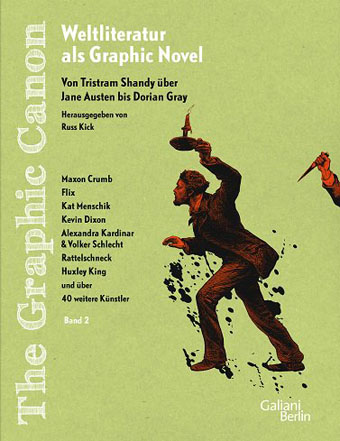
Some of the art from my collage adaptation of The Picture of Dorian Gray appears on the cover of The Graphic Canon: Volume 2, published this month in a German edition by Verlag Galiani. Out next month (although possibly available now) is the same book in a Brazilian edition from Boitempo Editorial. One of the disappointments this year was having to abandon plans to contribute to Russ Kick’s forthcoming graphic canon of crime fiction. I was overstretched during the summer, and what with projects slipping their deadlines and the trip to Providence there wasn’t any time left for other things.

• For those who missed the first edition, a second and final expanded edition of the Penda’s Fen study/celebration The Edge Is Where The Centre Is.

• Whipping up a storm: how Robert Mapplethorpe shocked America; Kevin Moore on the photographer’s Perfect Moment exhibition.

In the best scenario, metaphysical art distributes the work of understanding among cultural traditions and symbolic systems, and it is along these lines that Carrington’s work has been described as a productive combination of Mexican, Egyptian, Hebrew, Celtic, Greek, and Mesopotamian elements. Her paintings, plays, and stories mix the symbols of alchemy, astrology, Tarot, herbalism, magic, witchcraft, and a personal iconography.

Leif Schenstead-Harris on the life, art and fiction of Leonora Carrington

• Mixes of the week: Hieroglyphic Being collects favourite cosmic jazz of the 1970s; NTS Radio presents an hour of Annette Peacock.

• At Kill Your Darlings: Alexandra Heller-Nicholas enthuses about Dario Argento’s delirious masterwork, Suspiria.

Pye Corner Audio releases a new album (only limited vinyl at the moment—boooo!) and remixes Stealing Sheep.

• The Trip Planners: Emily Witt meets the founders behind Erowid, the online drug encyclopedia.

Woven Processional (1985), music on the Long String Instrument by Ellen Fullman.

• “The Paris attacks prove Charlie Hebdo’s critics wrong,” says Dorian Lynskey.

• Photographs by Danila Tkachenko of abandoned Soviet technology.

Come Wander With Me / Deliverance by Anna von Hausswolff.

• The collages of Guy Maddin.

CAN HALEN

Let’s Take A Trip (1965) by Godfrey | Trip On An Orange Bicycle (1968) by The Orange Bicycle | Last Trip (1968) by We Who Are
Seeing Calvino: Invisible Cities

seeing1.jpg

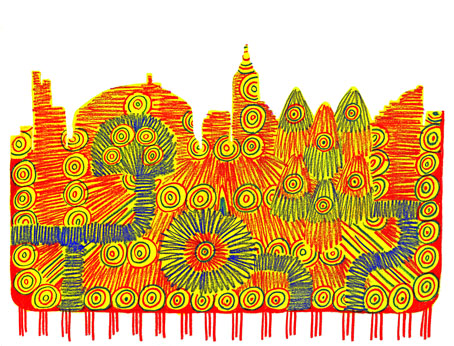
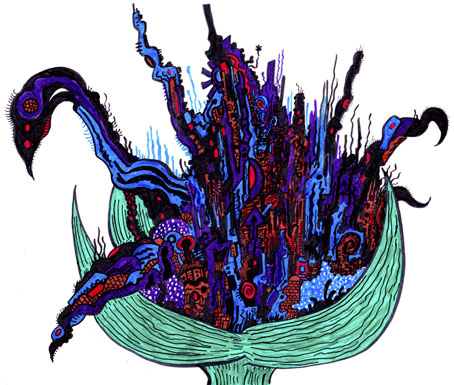
Continuous Cities 4: Cecilia by Leighton Connor.

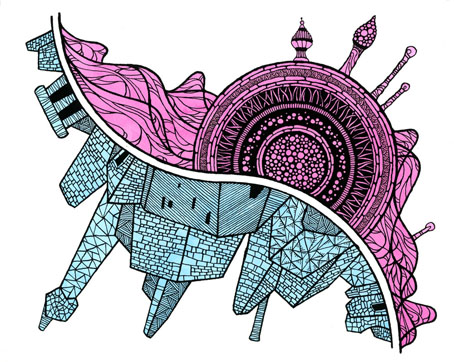
Seeing Calvino is the most recent of the illustration projects featured this week, a group effort by three artists—Leighton Connor, Matt Kish and Joe Kuth—dedicated to picturing all 55 of the Invisible Cities. Matt Kish has been mentioned here before since he and I were among the many artists adapting literary works for The Graphic Canon (2012), a huge three-volume endeavour edited by Russ Kick. (Matt chose Moby-Dick while I worked on the rather less daunting Picture of Dorian Gray.) The depictions for Seeing Calvino are bold, vivid, and almost abstract at times. The trio completed their Invisible Cities project in April this year but there’s a promise on their Tumblr to commence work on an adaptation of Calvino’s astronomical fantasia, Cosmicomics.

seeing2.jpg

Thin Cities 4: Sophronia by Matt Kish.

seeing3.jpg

Cities and the Sky 1: Eudoxia by Joe Kuth.

Elsewhere on { feuilleton }
The illustrators archive

Previously on { feuilleton }
Gérard Trignac’s Invisible Cities
Colleen Corradi Brannigan’s Invisible Cities
Le Città In/visibili
Mikhail Viesel’s Invisible Cities
Bookmark: Italo Calvino
Crossed destinies revisted
Crossed destinies: when the Quays met Calvino
Tressants: the Calvino Hotel

Weekend links 228

moss.jpg

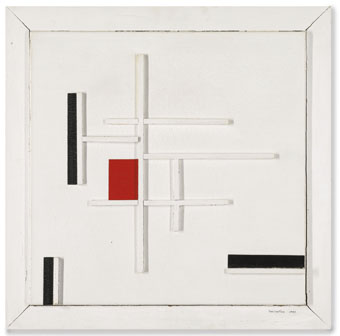
White, Red and Black (1949) by Marlow Moss.

• British television’s greatest director, Alan Clarke, rates on the cult scale here for his work on Penda’s Fen but his career was long, uncompromising and still hasn’t received the full appraisal it deserves. His more violent dramas—Scum, Made in Britain, The Firm, etc—have all appeared on DVD but many of his less notorious films can be hard to find. Paul Duane looks back at the remarkable Contact (1985), an hour-long study of the conflict in Northern Ireland, and a better film about soldiering than any number of big-budget features.

• I’ve wondered for years why one of the Daft Punk helmets seemed so familiar. It’s because they swiped the design from industrial designer and visual futurist, Syd Mead. Mark Wilson talked to Mead about wearable technology; Mr Mead, it seems, isn’t impressed by the French popsters. Related: paintings from Mead’s Sentinel (1979), and Syd Mead designs at Pinterest.

• Remembering that time in 1982 when Alan Moore interviewed Hawkwind. More interviews: Adam Bychawski talks to Jenny Hval about “sonic extremity, the violence of voyeurism and inhabiting bodies”, and Laurent Fintoni talks to (that man again) Bernard Szajner about Visions Of Dune, laser shows, and finding his way back to music.

Our attitudes towards work are extremely schizophrenic: we secretly aspire to sloth, while we loudly praise work. There isn’t an election poster that doesn’t promise more jobs. The call for more work is similar to the Stockholm syndrome, in which the victims of hostage-taking eventually develop a positive relationship with their captors.

Patrick Spaet on the universal employment fetish

• “Marlow Moss was one of Britain’s most important Constructivist artists…a radical lesbian and Drag King,” says Dal Chodha. An exhibition of Moss’s work has just opened at Tate Britain. Related: Marlow Moss: forgotten art maverick.

Yuki Koshimoto plays the Hang, aka the Spacedrum. Via Metafilter where there are more Hang links. The instrument was prominently featured in the score Cliff Martinez wrote for Solaris (2002).

• Broadcast’s Trish Keenan would have been 46 last week. James Cargill posted two demo songs for her birthday.

• At the BFI: Exclusive materials from the making of Powell and Pressburger’s The Tales of Hoffmann.

• Of Tutus and Tortures: Thoughts on the Decadent and the Weird by Christopher Burke.

Faber has launched a Modern Classics imprint with some smart cover designs.

• At Dangerous Minds: Good to see big scans of the Surrealists’ playing cards.

• Mix of the week: Afrofuturist Flowering by Nigel Rampant.

• Writer and editor Russ Kick has a new website.

Infographic: Why Readers Still Prefer Paper.

Superficial Music 1–3 (1981) by Bernard Szajner | Fahrenheit 451 (1982) by Hawkwind | Black Lake (2014) by Jenny Hval & Susanna

Weekend links 179

tomaselli.jpg

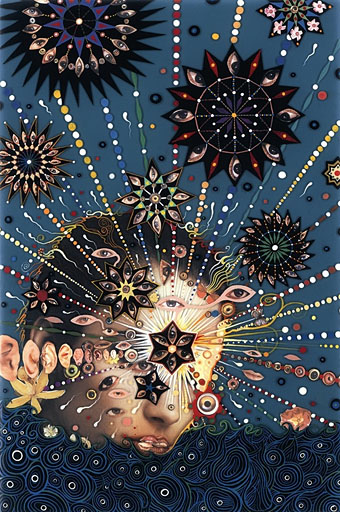
Summer Swell (2007) by Fred Tomaselli. The artist is interviewed at AnOther.

• Mixes of the week for the season of mists and mellow fruitfulness: Forever Autumn Mixtape by The Outer Church, and celebrating what would have been Trish Keenan’s 45th birthday: Trish’s Toys & Techniques Birthday Tape (with cover art by Julian House).

Jirí Kolár: His Life, Work and Cultural Significance to the Czech Republic. Leah Cowan looks into the life and work of this influential Czech artist. Related: Jirí Kolár: poet and collage artist, and collages, rollages and prollages by Jirí Kolár.

• “Name any well-known poet from any age, any country. He or she wrote at least one poem about death, most likely several poems.” Russ Kick introduces his new book, Death Poems.

[M]any pictures in the splendid exhibition at the British Museum show men having sex with men. One of the earliest erotic handscrolls, from the 15th century, shows a Buddhist priest casting longing glances at his young acolyte. Indeed, among some samurai, male love was considered superior to the heterosexual kind. Women were necessary to produce children, but male love was purer, more refined.

The question is why were Japanese – compared not just with Europeans, but other Asians, too – so much more open to depicting sex? One reason might be found in the nature of Japanese religion. The oldest native ritual tradition, Shinto, was, like most ancient cults, a form of nature worship, to do with fertility, mother goddesses, and so forth. This sometimes took the form of worshipping genitals, male as well as female.

Ian Buruma on The joy of art: why Japan embraced sex with a passion. Shunga: Sex and Pleasure in Japanese Art is a forthcoming exhibition at the British Museum.

Harold Offeh on how the cosmic life and music of Sun Ra inspired the artwork decorating the Bethnal Green, Notting Hill Gate and Ladbroke Grove Tube stations in London.

• Fearful symmetry: Roger Penrose’s tiling by Philip Ball. Related: Penrose Tiles Visualizer, and lots more Penrose tiling links at The Geometry Junkyard.

Masculine / Masculine. The Nude Man in Art from 1800 to the Present Day, a new exhibition at the Musée d’Orsay.

• Into the Croation Zone: more derives from Christina Scholz here, here, and here.

Stephen Eskilson on Heteronormative Design Discourse.

Applied Ballardianism

The Zero of the Signified (1980) by Robert Fripp | The League of Gentlemen (Fripp/Lee/Andrews/Toobad, 1981): Minor Man (with Danielle Dax) | Heptaparaparshinokh

Weekend links 137

jacobsen.jpg

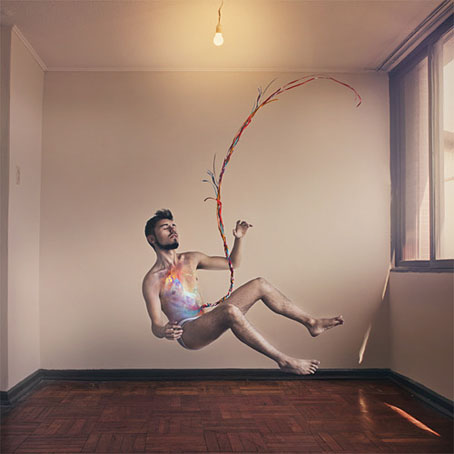
Self-portrait by Jon Jacobsen from his Home series.

Steven Arnold: Cabinet of Curiosities is “a retrospective exhibition of this groundbreaking yet under-recognized queer artist at the ONE Archives Gallery & Museum in West Hollywood. The exhibition celebrates Arnold’s radical imagination, presenting many of his tableaux vivant photographs alongside never before exhibited drawings, sketchbooks, paintings and original poster art. In conjunction with the exhibition, ONE will screen Arnold’s four films, including Luminous Procuress (1970), which featured The Cockettes and was lauded by Salvador Dalí.” The exhibition runs to  January 12, 2013.

• “The boundary-pushing techno/sound design duo Emptyset will transform London’s cavernous industrial space Ambika P3 into an immersive sound installation for one night only—and here’s how they’re going to do it”.

• “At one time he was a well-known figure in Montparnasse, where he had a reputation as a master of the occult sciences.” Aleister Crowley is interviewed about his expulsion from France in 1929.

Our normal waking consciousness, rational consciousness as we call it, is but one special type of consciousness, whilst all about it, parted from it by the filmiest of screens, there lie potential forms of consciousness entirely different. We may go through life without suspecting their existence; but apply the requisite stimulus, and at a touch they are there in all their completeness… No account of the universe in its totality can be final which leaves these other forms of consciousness quite disregarded… [T]hey forbid our premature closing of accounts with reality.

William James (1842–1910) quoted in What Should We Do With Our Visions of Heaven—and Hell? by John Horgan at Scientific American.

Screws is an album of piano music by Nils Frahm that’s currently available as a free download (inc. aiffs).

• At Pinterest: Art Visonnaire. Related: Ain’t We Got Fun: The magical surrealism of Jen Ray.

Rowan Somerville “challenges the purpose and legitimacy” of the Bad Sex Awards.

Jimmy’s End: the website for the film by Alan Moore & Mitch Jenkins.

Douglas Rushkoff in conversation with Genesis Breyer P-Orridge.

• Linda Rodriguez McRobbie explores The History of Boredom.

• Recreating the sounds of the BBC Radiophonic Workshop.

Alchemical Emblems, Occult Diagrams, and Memory Arts.

Rocaille: A Blog about Decadence, Kitsch and Godliness.

• A new video for Goddess Eyes II by Julia Holter.

• The complete audio recordings of Jean Cocteau.

The Rumpus interview with Russ Kick.

Forgotten Bookmarks

• RIP Spain Rodriguez

Astradyne (1980) by Ultravox (produced by Conny Plank) | Biomutanten (1981) by Les Vampyrettes (Conny Plank & Holger Czukay) | Never Gonna Cry Again (1981) by Eurythmics (feat. Holger Czukay, produced by Conny Plank).